



Marketing Isn't What You Think It Is


Ask most people what they think marketing is, they’ll usually tell you about the outputs that a marketer creates: advertising, social media, emails, billboards, public relations, etc. The list goes on and on.
But that’s not really what marketing is. It’s not the ads that you create or the social posts you do. Those are just the outcomes of a marketing strategy or campaign. They are tools that you use to try and persuade people to buy.
And those tools won’t work unless you take a different view of what marketing is and define it in a different way.
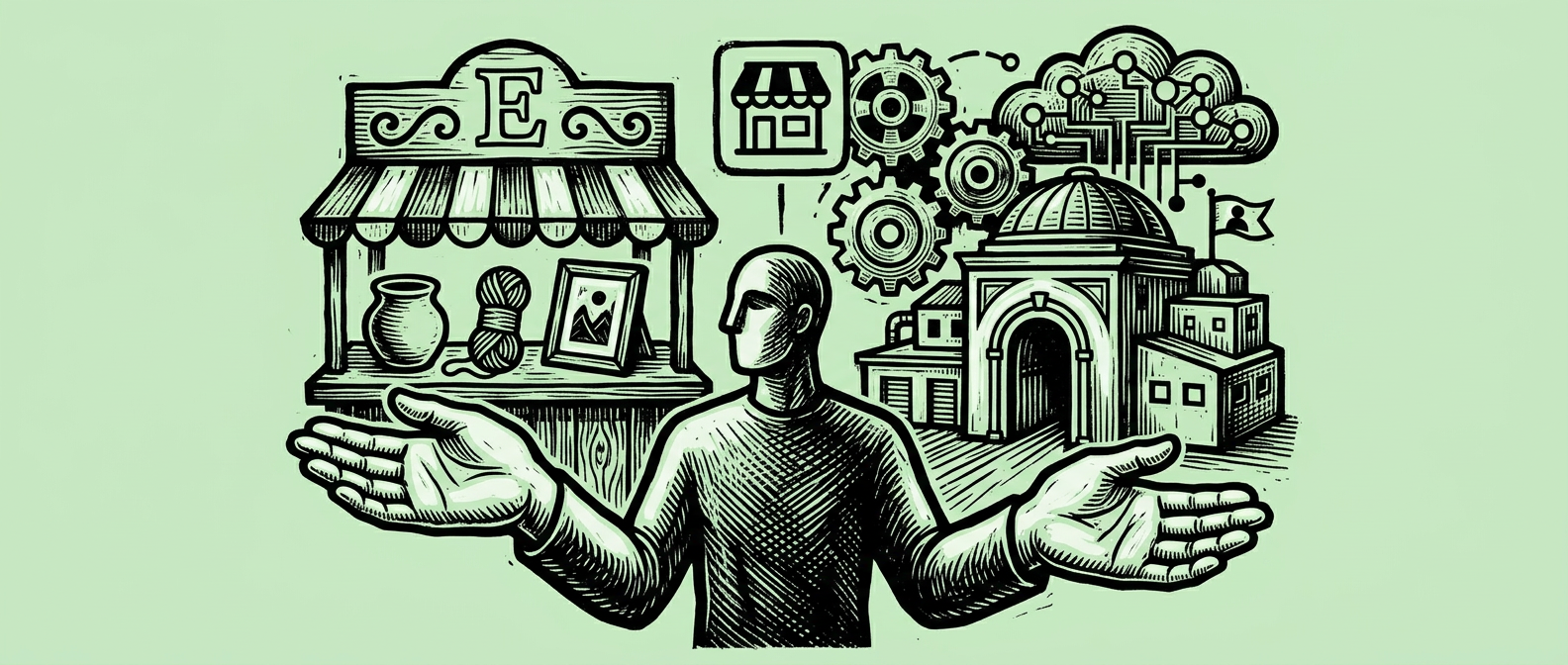
Instead of thinking of marketing as a tool of persuasion, think of marketing as the process of getting to know your customer and then solving a real problem for them.
Once you start thinking this way, defining your customer is the next step. Ideally, you want to start by picking a group that’s as small and specific as you can. Instead of “target market” where you define a group of people by broad demographics such as gender, age, income, etc., you want to think about your “smallest viable market.” You want to serve a narrow, specific, well-defined audience deeply rather than a broad audience shallowly.

One way to think about this process is to create your “ideal customer profile”, or ICP. Your ideal customer isn’t anyone with a credit card, it’s the perfect customer for your product. The one that’s going to love it and be thrilled that they found you and your product. They’re your biggest fan.
Having this kind of focus creates clarity, faster word-of-mouth, and makes you harder to compete with. Your job is to define who you serve, and then work to communicate what change you’re making for these customers, and why they should trust you. Your goal is to be “the obvious choice” for a specific niche. When you are the perfect fit for your customer, they’re going to tell other people like them and become your advocate.
Take Basecamp, for example. They didn't try to build project management software for everyone, or even “small businesses”. They focused on small design teams who were frustrated with generic planning tools that were overbuilt and had too many features. They became the obvious choice for that specific group, and those customers told other small design teams about them. Once they owned that niche, they could expand. Focusing on a very specific customer also allowed Basecamp to be opinionated. They had a reason not to build features because those features didn’t help their audience.
When you focus on a specific market, you are also no longer only competing on price. When you’re a generalist and aren’t focused on a specific market, your product starts to look the same as all the others and you end up competing on price. Instead, you want to be the specialist who competes on relevance and trust.
A narrow market focus makes it possible for you to focus on what Seth Godin coined as “permission marketing”. This is best defined as the ability to earn attention by being consistently useful, relevant, and anticipated. When you have a narrow market focus, you can easily develop educational content, build authority and develop trust with your audience. It’s not about interrupting your customer to communicate your message, it’s about helping your customer solve their problems..
Here's what it comes down to: successful entrepreneurs define their audience first. The more specific, the better.

Noah Parsons
Before joining Palo Alto Software, Noah Parsons was an early Internet marketing and product expert in the Silicon Valley. He joined Yahoo! in 1996 as one of its first 101 employees and become Producer of the Yahoo! Employment property as part of the Yahoo! Classifieds team before leaving to serve as Director of Production at Epinions.com. He is a graduate of Princeton University.Noah devotes most of his free time to his three young sons. In the winter you'll find him giving them lessons on the ski slopes, and in summer they're usually involved in a variety of outdoor pursuits.Noah is currently the COO at Palo Alto Software, makers of the online business plan app LivePlan.