




Auto Repair Shop Business Plan


Business Plan Summary
This auto repair shop business plan example features F & R Auto Repair, a two-bay shop in Seattle's Ballard neighborhood founded by ASE-certified master mechanics John Ford and Michael Ronald. It covers F & R's service menu spanning routine maintenance through hybrid and EV repair, its digital-estimate-and-text-update approach to customer trust, and a lean $32,000 launch blending owner equity and a small start-up loan. Use it as inspiration for your own plan, and read our guide on how to write an auto repair shop business plan for step-by-step advice. Download a free business plan template to get started, or browse more business plan examples.
F and R Auto Repair
Executive Summary
F & R Auto Repair is the shared venture of John Ford and Michael Ronald, two ASE-certified master mechanics with a combined 30 years of experience at dealership service departments and independent shops across the Seattle area. Both are ready to build a shop that treats customers as people, not repair-order numbers.
Objectives
The objectives over the next three years for F & R Auto Repair are the following:
- Grow sales revenue steadily each year as the shop's reputation and repeat-customer base build.
- Institute a program of superior customer service, including transparent digital estimates and text-based repair updates, backed by regular review of service experience.
- Grow the team from two founding mechanics to a staff that includes an apprentice mechanic and part-time office support, adding additional technicians as volume allows.
Keys to Success
In the auto repair industry, a company builds its client base one customer at a time, largely through word of mouth and online reviews. With this in mind, the keys to success for F & R Auto Repair are:
- High-quality, ASE-certified repair work backed by a workmanship guarantee.
- Constant, proactive communication with clients — including digital repair-status updates — so they always know the state of their vehicle and the job.
- Knowledgeable mechanics who are friendly, customer-oriented, and take the time to explain the repair in plain language before any work begins.
Mission
The mission of F & R Auto Repair is to provide high-quality, convenient, and comprehensive auto repair — from routine maintenance to hybrid and EV service — at a fair price. Trust is the foundation of the business. F & R aims for 100% customer satisfaction on quality, friendliness, turnaround time, and finding new ways to exceed client expectations.
Opportunity

Problem Worth Solving
Vehicle owners shopping for auto repair care about price, but their overriding concern is trust: will this shop tell them the truth about what's actually wrong, and will the repair be done right the first time. Years of well-documented upselling and inconsistent diagnoses at dealership service counters and chain shops have left many drivers skeptical, and that skepticism now shows up publicly — in Google and Yelp reviews that follow a shop for years.
A dependable vehicle is tied directly to a person's ability to get to work, school, and family obligations, so most owners are willing to pay a fair premium for a mechanic they trust to do quality work and communicate clearly. At the same time, the repair itself is often seen as a commodity — from the customer's seat, one shop's brake job looks like any other — which keeps price competition intense and margins tight across the industry.
The market is also shifting under shops that don't adapt: hybrid and EV registrations continue to grow year over year, and many independent shops still aren't equipped or certified to service them, pushing owners of newer vehicles back toward higher-priced dealership service departments by default. Barriers to entry remain moderate — a shop needs certified technicians, a facility, and diagnostic equipment — which keeps the field fragmented and competitive on both price and trust.
Our Solution
F & R Auto Repair offers a full range of services, including scheduled maintenance, wheel alignments, tire and rim service, brake repair, comprehensive engine repair, transmission work, and diagnostic and repair service for hybrid and EV drivetrains. Most jobs are booked by appointment through online scheduling, with a limited amount of capacity held open each day for drive-in and same-day repair work.
What sets F & R apart is the experience around the repair, not just the repair itself. Every customer receives a clear, itemized digital estimate before work begins, photo or video documentation of any issue found during inspection, and text updates as the job moves through the shop. Both owners are ASE-certified master mechanics who take the time to explain what's wrong and why, in plain language, before any work is authorized.
The long-term goal is a one-stop shop for all routine and major auto service needs in Ballard, staffed entirely by trained, certified mechanics who combine technical skill with genuine customer care.
Market Overview
Because F & R can service nearly any car, truck, or SUV on the road — including hybrids and EVs — it makes little sense to segment the market narrowly. The addressable market is every vehicle-owning household in Ballard and the surrounding Seattle neighborhoods, a base that includes tens of thousands of registered vehicles across King County. The industry is largely non-seasonal, though winter months typically bring a modest bump in battery, heating, and traction-related repairs.
The independent repair segment continues to hold up well against dealership service departments on price and personal service, even as vehicles get more complex. The clearest structural shift in the market is the growing share of hybrid and electric vehicles on the road, which rewards shops that invest early in the certifications and diagnostic equipment needed to service them — a gap most small independent shops in the area have not yet closed.
As in the broader industry, price matters, but the deciding factor for most customers is whether they trust the shop to be straight with them about what actually needs fixing.
Competitors
The Seattle-area auto repair market is highly fragmented. Chief competitors include dealership service departments (Rodham's Toyota, Lester Ford, Woodmark's Chrysler), which offer manufacturer-trained technicians and genuine parts but charge premium labor rates and are often criticized for upselling; independent local shops (Dave's Auto Repair, Kirkland Auto and Body, Vancouver Auto), which compete mainly on price and proximity; and a growing number of online-booked mobile mechanics and repair marketplaces that appeal to customers who want convenience without visiting a shop at all.
F & R competes by combining independent-shop pricing with dealership-level technical credentials — both owners are ASE-certified master mechanics — plus a customer experience (digital estimates, proactive updates, plain-language explanations) that most local competitors don't offer. Rather than compete purely on being the cheapest option, F & R positions itself as the shop that costs less than the dealer and communicates better than the shop down the street.
Execution
Market Plan Overview
F & R Auto's competitive edge lies in the vision of its two owner-mechanics, who understand that a service visit is the entire experience — not just the repair itself. Marketing centers on channels that build local trust and search visibility: a Google Business Profile actively managed for reviews, local SEO, targeted social media and neighborhood Facebook/Nextdoor groups, referral partnerships with nearby businesses (body shops, tire retailers, car washes), and a modest budget for direct mail and community sponsorships in Ballard.
Online reviews are treated as a core marketing asset, not an afterthought — every completed job includes a follow-up request for a review, and the owners personally respond to feedback, positive or negative. Existing relationships from Ford's and Ronald's prior positions are expected to bring an initial base of loyal clients who want to keep working with mechanics they already trust.
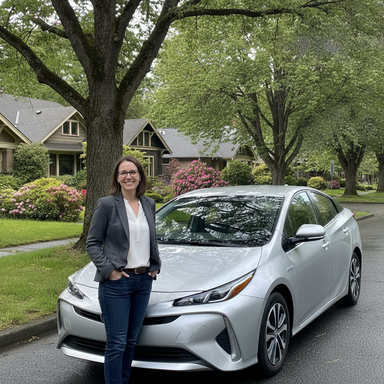
The Eco-Conscious Early Adopter
Sarah Jenkins
Sarah is a sustainability-focused professional who recently transitioned to a hybrid vehicle to align with her values. She is frustrated by the lack of independent shops in Ballard capable of servicing her car, often feeling forced back to the high-priced dealership where she feels like just another number.
Age
34
Location
Ballard, Seattle, WA
Family Status
Married, no children
Education
Master's in Environmental Science
Profession
Sustainability Consultant at a regional non-profit
Opportunities
- Position F & R as the local alternative to dealerships for specialized hybrid battery checks and EV cooling system maintenance.
- Utilize digital estimates with photos to prove the necessity of specialized repairs, building trust in a segment wary of 'dealer-only' mystique.
Pain Points
- Limited options for independent hybrid service in the Seattle area
- High dealership labor rates that exceed the $185/hr local average
- Lack of personal connection and technical explanation at large service centers
Needs
- Certified technicians who understand complex hybrid powertrains
- Clear, text-based updates that fit into her busy consulting schedule
- A shop that values environmental responsibility and vehicle longevity
“I want a mechanic who understands my hybrid's tech as well as the dealership does, but treats me like a neighbor instead of a revenue target.”
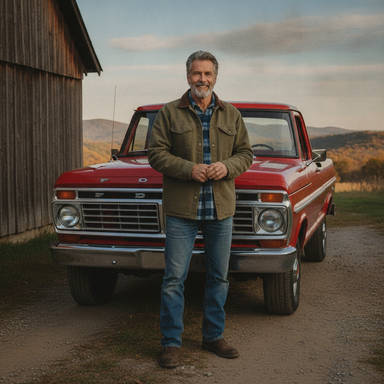
The Skeptical Traditionalist
Robert 'Bob' Halloway
Bob is a retired transit worker who knows his way around a traditional internal combustion engine but finds newer vehicle electronics and sensors overwhelming. He is deeply skeptical of the automotive industry due to years of witnessing inconsistent diagnoses and hidden fees.
Age
62
Location
Magnolia, Seattle, WA
Family Status
Empty nester, widowed
Education
High School Diploma, Vocational Training
Profession
Retired King County Metro Operator
Opportunities
- Leverage the founders' 30 years of experience to walk Bob through repairs in person, showing him the worn parts to build definitive trust.
- Market labor rates that are transparently lower than dealership premiums while emphasizing ASE-certified mastery.
Pain Points
- Feeling patronized by younger service advisors at large dealerships
- Difficulty finding shops that still value 'old-school' customer service and craftsmanship
- The rising volatility and cost of auto parts in the current market
Needs
- Face-to-face interaction with the person actually working on his vehicle
- A fair price that respects his fixed retirement income
- Assurance that the shop isn't 'fixing' things that aren't broken
“I've been driving Seattle streets for forty years. I don't need a fancy waiting room or a car wash; I just want a straight answer and a fair shake.”
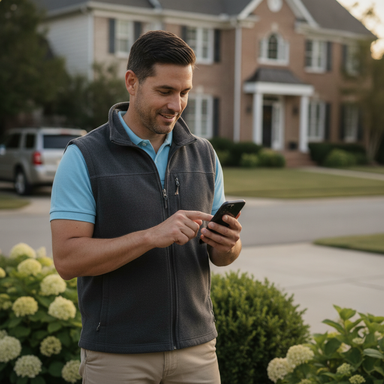
The Reliability Strategist
David Miller
David manages a hectic household and a demanding career in Seattle's biotech sector. He views his family's SUV as a critical tool for survival, used for everything from school drop-offs to weekend trips to the Cascades, and he cannot afford an unexpected breakdown.
Age
42
Location
Phinney Ridge, Seattle, WA
Family Status
Married, 2 children (ages 7 & 10)
Education
Bachelor's in Business Administration
Profession
Senior Project Manager
Opportunities
- Offer 12,000-mile safety inspection bundles that align with King County safety standards to prevent emergency repairs.
- Use text-based repair updates so he can approve work silently during back-to-back corporate meetings.
Pain Points
- The high cost of vehicle ownership in Seattle, currently averaging $6,900 annually
- The stress of coordinating schedules when a car is in the shop for multiple days
- Aggressive upselling at chain shops that makes him doubt the urgency of repairs
Needs
- A workmanship guarantee to ensure the repair is done right the first time
- Plain-language explanations of what repairs are safety-critical vs. cosmetic
- Fast turnaround times to minimize disruption to the family schedule
“My car is the engine of our family's life. I need a mechanic who tells me the truth so I'm never stranded on the side of the I-5 with my kids.”
Sales Plan
Because auto repair operates as a job-shop business, sales are estimated at the shop level rather than by individual product line — each repair is unique and only begins once a customer authorizes an estimate. The sales forecast (see Financial Plan) is built on several key assumptions:
- The number of existing clients Ford and Ronald can bring with them from their prior positions.
- The effect of planned digital marketing, referral partnerships, and word-of-mouth growth over time.
- Current local labor rates and parts costs, benchmarked against comparable independent shops in the Seattle area.
- The mix of routine maintenance, small repairs, and larger repair jobs expected to come through two service bays each month.
Sales are relatively steady year-round, with a modest seasonal uptick in battery, heating, and traction-related work during winter months. Shop capacity — two bays and a growing technician roster — is the primary constraint on growth in the first two years, more than demand.
Locations and Facilities
F & R Auto Repair operates from 1312 1st Ave NW in Ballard, a Seattle neighborhood with strong foot and drive-by traffic and easy access for commuters. The facility includes a two-bay garage, a customer-facing office and waiting area, and dedicated storage for tools, parts, and supplies.
The two bays are equipped to handle routine maintenance and major mechanical work side by side, with layout designed so a lift-based job and a walk-in diagnostic can run at the same time without one blocking the other. As the shop grows, expanding to a third bay is the first physical-capacity milestone the owners plan to evaluate, once technician headcount and appointment volume justify it.
Technology
Technology is now a standard part of running a competitive shop, not a differentiator on its own — so F & R invests in it as basic infrastructure. The shop runs on cloud-based shop management software that handles digital estimates, repair-order tracking, appointment scheduling, and automated text/email updates to customers throughout a job.
On the technical side, F & R maintains OEM-level diagnostic scan tools capable of servicing modern vehicle systems, including advanced driver-assistance systems (ADAS) calibration and hybrid/EV battery and drivetrain diagnostics — a capability many small independent shops in the area still lack. Digital vehicle inspection reports, complete with photos and video, are shared with customers before any repair is authorized. As vehicle technology continues to evolve, the owners budget for ongoing manufacturer-specific certification training to keep pace, particularly around EV service.
Equipment and Tools
Much of the core equipment — hand tools, air compressors, and diagnostic scan tools — is already owned by the two founding mechanics and will be contributed to the business. Start-up equipment and asset needs (detailed in the Financial Plan) include the additional lifts, alignment equipment, and shop management hardware needed to outfit a two-bay garage from day one.
The two-bay facility at 1312 1st Ave NW in Ballard includes office space and dedicated storage for tools, parts, and supplies. F & R equips its bays with OEM-level diagnostic scan tools and ADAS calibration equipment so the shop can service hybrid and EV systems alongside traditional repair work, rather than turning that business away.
Milestones
Institute superior customer service program | June 30, 2026 |
Hire first apprentice mechanic | July 15, 2026 |
Hire three additional mechanics | Dec 31, 2026 |
Key Metrics for Success
F & R Auto Repair tracks the following key metrics to measure business health and progress toward its objectives. Specific targets and current performance are detailed in the Financial Plan.
Financial Metrics
- Total revenue growth year over year
- Gross margin on parts and labor
- Net profit and net profit margin
- Monthly break-even revenue and fixed vs. variable cost mix
Operational Metrics
- Customer satisfaction scores from post-service follow-up
- Repeat customer rate and referral volume
- Online review volume and average rating
- Average repair job value
- Mechanic and bay utilization rate across the shop's service bays
- Time to completion for scheduled maintenance vs. larger repair jobs
Company
Ownership and Structure
F & R Auto Repair will operate as an LLC registered in the state of Washington, with John Ford and Michael Ronald each owning 50% of the company. The firm operates from 1312 1st Ave NW in Ballard, a neighborhood of Seattle, from a facility with a two-bay garage, office space, and storage for tools and parts.
The company is seeking start-up financing to cover initial equipment, facility setup, and working capital, with each owner also contributing personal capital as equity. Full funding requirements and sources are detailed in the Financial Plan.
Management Team
John Ford began his career as an apprentice mechanic in his father's shop and has since worked at a range of independent shops and dealerships, earning multiple ASE certifications across engine, brake, and transmission repair. He holds an Associate's degree in business administration from Bellevue Community College, which he draws on for the shop's day-to-day operations and financial management.
Michael Ronald holds a certificate in electronics and diagnostic repair and has carried ASE certifications across multiple automotive specialties for over a decade, with recent continuing education focused on hybrid and EV diagnostics. He is currently completing coursework in digital marketing at Seattle University, which directly informs F & R's approach to online reviews and local search visibility.
Initial staffing consists of Ford and Ronald as owner-mechanics, supported by a part-time office manager handling scheduling, billing, and customer communication. The company plans to bring on an apprentice mechanic shortly after opening and add additional certified technicians as appointment volume grows.
Advisors
F & R Auto Repair does not maintain a formal board of advisors at this stage. Accounting, bookkeeping, and payroll are outsourced to a local small-business accounting firm, and the company uses cloud-based shop management and bookkeeping software to keep financial records current between reviews.
John Ford's business administration background and Michael Ronald's ongoing digital marketing coursework provide day-to-day internal expertise for operations and customer acquisition. As the business grows, the owners plan to bring on an informal advisor with independent-shop ownership experience to help guide decisions around hiring, expansion to a third bay, and further investment in EV service capability.
Financial Plan
Revenue
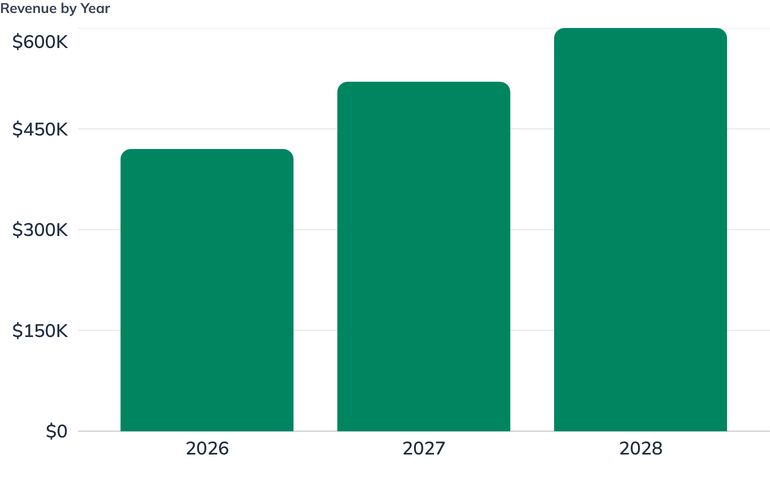
Need real milestones? We recommend using LivePlan as the easiest way to create milestones for your own business plan.Create your own business plan
Expenses & Costs
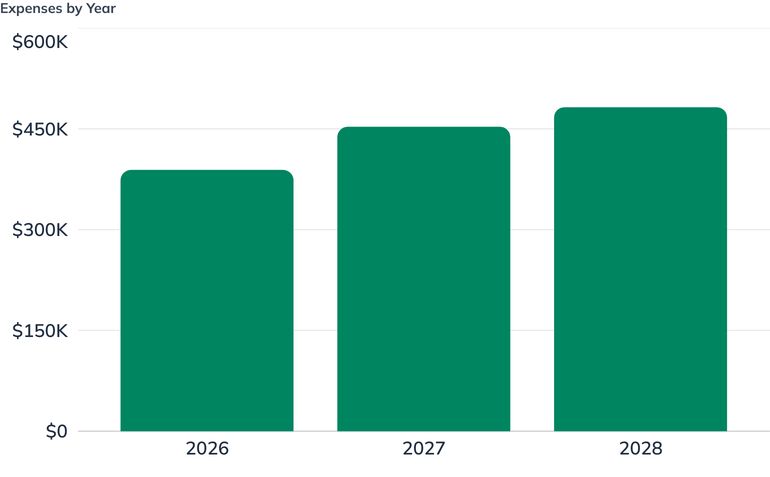
Need real milestones? We recommend using LivePlan as the easiest way to create milestones for your own business plan.Create your own business plan
Profitability
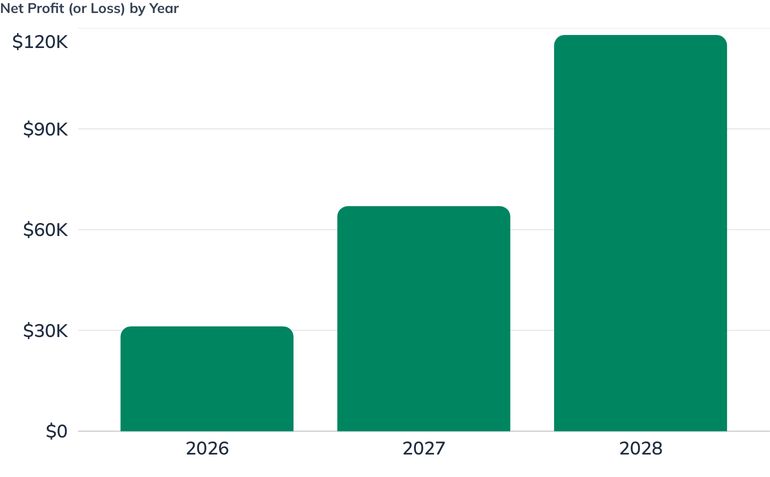
Need real financials? We recommend using LivePlan as the easiest way to create financials for your own business plan.Create your own business plan
Use of Funds
Total start-up funding required is $32,000, allocated as follows:
Start-up Expenses ($9,100):
Expense | Amount |
|---|---|
Legal | $500 |
Stationery etc. | $200 |
Advertising | $600 |
Phone | $200 |
Insurance | $800 |
Rent | $4,000 |
Utilities | $200 |
Computer | $2,000 |
Other | $600 |
Total Start-up Expenses | $9,100 |
Start-up Assets ($22,900):
Asset | Amount |
|---|---|
Cash Required | $2,900 |
Start-up Inventory | $0 |
Other Current Assets | $0 |
Long-term Assets | $20,000 |
Total Assets | $22,900 |
Much of the equipment such as tools and air compressors are currently owned by the two partners, reducing the need for additional capital expenditure at launch.
Sources of Funds
F & R Auto Repair requires $32,000 in total funding, sourced as follows:
Owner Investment ($12,000):
Owner | Amount |
|---|---|
John Ford | $6,000 |
Michael Ronald | $6,000 |
Total Planned Investment | $12,000 |
Start-up Loan ($20,000):
- Principal: $20,000 received at plan start
- Interest rate: 10% annually
- Term: 10 years (120 monthly payments)
Loan Payment Schedule (from forecast):
Year 1 (2026) | Year 2 (2027) | Year 3 (2028) | |
|---|---|---|---|
Interest Payments | $1,788 | $1,828 | $1,688 |
Principal Repayments | $1,116 | $1,340 | $1,480 |
Remaining Balance (year-end) | $18,000 | $16,000 | $14,000 |
Each owner contributes equity alongside the loan to finance start-up expenses and long-term assets.
Projected Statements
Key Assumptions
General Assumptions:
Assumption | Value |
|---|---|
Plan Start Date | January 2026 |
Long-term Interest Rate | 10.00% |
Direct Cost of Sales | 10% of revenue |
Payroll Tax Rate | ~15% of salaries |
Corporate Tax Rate | N/A (LLC pass-through entity) |
Revenue Assumptions:
- Average repair price: approximately $400 per vehicle
- Revenue ramp in month 7 as apprentice mechanic is hired
- Steady year-round sales with no significant seasonality
- Three revenue streams: routine maintenance, small repair jobs, large repair jobs
Expense Assumptions:
- Rent: $2,000/month ($24,000/year)
- Insurance: $600/month ($7,200/year)
- Utilities: $400/month ($4,800/year)
- Sales and Marketing: $500/month ($6,000/year)
- Leased Equipment: $500/month in Year 1, declining to ~$83/month in Years 2–3
Financing Assumptions:
- Start-up loan: $20,000 at 10% interest, 10-year term
- Owner investment: $12,000 ($6,000 each from Ford and Ronald)
- Year 1 interest expense: $1,788; Year 2: $1,828; Year 3: $1,688
Frequently Asked Questions
An auto repair shop business plan should cover your technicians' credentials, service menu, competitive positioning against dealerships and other independent shops, and a funding structure. F & R Auto Repair's plan, for example, centers on its two ASE-certified master mechanic founders, a service menu spanning routine maintenance through hybrid and EV diagnostics, and a lean $32,000 launch combining owner equity and a small start-up loan.
F & R Auto Repair launched on just $32,000: $12,000 in owner equity, split evenly between founders John Ford and Michael Ronald, plus a $20,000 start-up loan at 10% annual interest over a 10-year term. That's a notably lean figure for the industry, reflecting a two-bay leased facility in Ballard rather than a larger multi-bay shop or ground-up construction.
Auto repair shops typically need a general business license, environmental permits for handling used oil, coolant, and refrigerants, and liability insurance, which F & R Auto Repair budgets as a standing operating expense. ASE certification isn't legally required to open a shop, but both F & R founders hold it as a credibility differentiator against competitors who don't.
F & R Auto Repair earns revenue across three lines — routine maintenance, heavy diagnostics and repair, and commercial fleet servicing. Its five-year forecast projects about $1.54 million in total revenue against roughly $1.32 million in expenses, netting approximately $216,100 in cumulative profit over the model period.
F & R Auto Repair's plan doesn't name a specific profitable month, but it structures growth patiently — expanding from two founding mechanics to include an apprentice mechanic and part-time office support only as appointment volume allows, alongside a 10-year loan amortization built for steady, sustainable repayment rather than an aggressive early ramp. Its forecast shows healthy profitability building over its model period, with about $216,100 in cumulative net profit.
F & R positions itself between two extremes: dealership service departments that charge premium labor rates and are often criticized for upselling, and price-focused independent shops that compete mainly on proximity. F & R combines independent-shop pricing with dealership-level ASE-certified technical credentials, plus digital itemized estimates, photo and video documentation of issues found during inspection, and text updates as a job moves through the shop — summed up in the plan as costing less than the dealer and communicating better than the shop down the street.
F & R Auto Repair serves essentially every vehicle-owning household in Ballard and the surrounding Seattle neighborhoods, a base of tens of thousands of registered vehicles across King County, with demand that's largely non-seasonal aside from a modest winter bump in battery, heating, and traction-related repairs. A growing share of these customers own hybrid or electric vehicles that many small independent shops in the area aren't yet equipped or certified to service — a gap F & R is positioned to close.
Every F & R customer gets a clear, itemized digital estimate before any work begins, photo or video documentation of whatever issue is found during inspection, and text updates as the job moves through the shop. Both founders, as ASE-certified master mechanics, also take time to explain what's wrong and why in plain language before authorizing work — addressing the trust gap the plan identifies as the industry's biggest customer complaint.

Business Plan Outline
Start your plan