





Handyman Maintenance Business Plan


Business Plan Summary
This handyman maintenance business plan example features HandyMan Stan, a one-person handyman service in Duluth, Minnesota run by owner Stan Roberts. It covers HandyMan Stan's one-hour minimum pricing model against competitors' two- to three-hour minimums, its repair-first approach across plumbing, electrical, and general home maintenance, and a lean $25,000 launch funded through owner equity and a small business loan. Use it as inspiration for your own plan. See also our plumbing business plan example for another perspective. Download a free business plan template to get started, or browse more business plan examples.
HandyMan Stan
Executive Summary
HandyMan Stan is a Duluth, Minnesota-based handyman service offering home owners and property managers a fast, trustworthy alternative to waiting on a general contractor for small repairs. By building a reputation as a qualified, fairly priced, and reliable service provider, HandyMan Stan generates market penetration quickly and builds a solid base of repeat customers.
The Market HandyMan Stan's target market is segmented into home owners and property managers. Duluth-area home owners represent roughly 24,000 potential customers, growing at about 5% annually. Property managers running smaller residential rental portfolios add another 1,200+ potential customers, growing at roughly 4% annually.
Services As a handyman, Stan offers a wide range of home repair services — the kind of jobs that are too minor or too specialized for a general contractor to take on economically. If a job turns out to be more extensive than expected, HandyMan Stan pre-screens and refers a qualified contractor at no charge, which builds trust so the customer calls Stan again next time something smaller comes up. Stan handles plumbing, electrical, fences, windows, decks and patios, painting, weatherproofing, and flooring repairs.
Competitive Edge HandyMan Stan differentiates on responsiveness and a low minimum charge rather than on being the cheapest option in town. Stan bills $75 an hour — a rate that reflects current Duluth-market labor costs, insurance, and vehicle overhead, and one that supports paying himself a livable wage as the business grows to full-time. His one-hour minimum compares favorably with competitors who often require two- to three-hour minimums, giving customers an incentive to call about small problems before they turn into bigger ones.
Keys to Success
- Treat every customer as if they were the business's most important customer.
- Honestly assess whether a job is within scope, referring it to a trusted contractor rather than taking on work that can't be done right.
- Work efficiently, guarantee all work, and aim for full customer satisfaction — profitability follows from that discipline.
Objectives
- Transition HandyMan Stan into full-time employment within 12 months of launch.
- Reach steady, sustainable annual revenue by the end of year two that supports a full-time, livable-wage income for Stan.
- Build repeat customers to more than 20% of total business.
Mission
HandyMan Stan's mission is to provide knowledgeable, convenient, and fairly priced handyman service to the Duluth, Minnesota community — while running a business that pays its owner a genuinely livable wage for the work. HandyMan Stan gives every customer an honest day's work and stands behind anything that isn't done right.
Opportunity

Problem Worth Solving
Home owners and property managers in Duluth regularly face home repair needs that fall into an awkward middle ground: the job is too small or specialized for a general contractor, yet too complicated or time-consuming for the property owner to tackle safely or effectively.
Home owner pain points:
- 47% attempt small repairs themselves, often starting work and realizing they lack the skills to finish.
- 73% wait until several small problems accumulate before calling for help, largely because they do not want to pay a large minimum charge for a single minor fix.
- Many competing handymen require two- to three-hour minimums, which discourages early intervention on small issues.
Property manager pain points:
- Managers of three to 20 rental units rarely employ in-house maintenance staff to control overhead.
- Periodic maintenance needs arise across multiple units, but full-service contractors often impose long minimum job lengths and higher rates.
- Property managers need a reliable, reasonably priced provider they can call for small repairs without waiting for a backlog of problems to build up.
These gaps create demand for a trusted handyman who can respond quickly, charge a fair hourly rate with a low minimum, and handle a wide range of minor repair tasks across plumbing, electrical, carpentry, painting, and general maintenance.
Our Solution
HandyMan Stan offers Duluth home owners and property managers dependable home repair and maintenance work at a rate that reflects what it actually costs to run a licensed, insured, one-person service business in 2026. Services start at $75 an hour plus parts, with every customer guaranteed at least one hour of work at their property — well below the two- to three-hour minimums common among competing handymen and contractors.
For jobs that exceed handyman scope, HandyMan Stan pre-screens and refers a qualified contractor at no charge to the customer.
HandyMan Stan's philosophy is to repair first and replace only when a repair genuinely isn't possible — the opposite of the replace-everything-first approach common among general contractors, and a meaningfully cheaper path for the customer. All work carries a one-year guarantee: if something goes wrong, HandyMan Stan makes it right, with the goal of zero unsatisfied customers.
Offered services include:
Minor plumbing | Leaky faucets, fixture repair and replacement, sprinkler repair, minor drain clearing, garbage disposal installation, ice-maker line installation. |
|---|---|
Minor electrical | Ceiling fan repair and installation, outlets and switches, vanity and motion lights, low-voltage cable and network jack installation. |
Fence repair | Metal and wood fence repair and installation, electric dog fence setup, gate and latch installation. |
Window, wall, and door repairs | Small hole and drywall repair, door installation, window maintenance and repair. |
Decks and patios | Deck repair and maintenance, chemical cleaning, pressure washing, wood replacement, handrail installation. |
Painting | Interior and exterior touch-up and room-scale painting (short of a full exterior repaint). |
Weatherproofing | Weather stripping, caulking, minor insulation gaps. |
Flooring | Carpet and hardwood repair. |
Market Overview
HandyMan Stan has identified two distinct market segments: home owners and property managers. These are the most attractive customer segments because they regularly face repairs that are too small or too specialized for a general contractor to take on economically, but too complex or time-consuming for the owner to handle safely.
The handyman industry competes with general contractors for home repair work, though the two typically serve different job sizes — handymen for small, quick repairs; contractors for larger or more technical projects.
Because customers tend to call whoever they already know or trust — regardless of whether that provider is actually the best fit for the job — word of mouth referrals are the most important channel in this market. Potential customers ask neighbors, friends, and fellow property managers for recommendations before searching online. HandyMan Stan capitalizes on this by consistently exceeding expectations on every visit, turning satisfied customers into a referral engine, while also maintaining a Google Business Profile and Nextdoor presence so customers who don't have a personal referral can still find and vet Stan online.
Service Business Analysis
Handymen operate within the broader home repair and maintenance industry alongside general contractors, though the two serve different jobs. Handymen handle a wide range of minor repairs — the kind of work that doesn't require a building permit, extensive demolition, or highly specialized tools. General contractors are better suited to larger, more technical projects: additions, full remodels, structural work, and anything requiring a permit or licensed trade specialist beyond general repair scope.
A handyman is fundamentally a generalist, capable of handling plumbing, electrical, carpentry, painting, and general maintenance tasks within a single visit — which is exactly the value proposition for customers juggling a list of small, unrelated repairs. In Minnesota, handyman work of this scope does not require a state contractor license the way larger construction projects do, though liability insurance and, for any electrical or plumbing work beyond minor fixture-level repairs, awareness of when a licensed trade professional is legally required is essential. HandyMan Stan stays within the legally defined scope of general repair work and refers anything requiring a licensed specialist.
Competition and Buying Patterns
Buying decisions in Duluth's handyman market are driven almost entirely by relationships and referrals, not advertising. A home owner or property manager typically calls whoever they already know, or asks a neighbor, friend, or fellow property manager for a recommendation — and once they find someone reliable, they tend to stick with that person rather than shop around.
This matters for how HandyMan Stan competes: word of mouth is the primary channel, so every job is also a marketing opportunity. A single bad experience with a competitor (a no-show, a rescheduled appointment, inconsistent quality from a multi-technician crew) tends to send that customer looking for a new provider and asking around for who's reliable — which is exactly the moment HandyMan Stan wants to be the name that comes up.
Customers also tend to delay calling for small repairs specifically because of high minimum charges elsewhere in the market — many competing handymen and contractors require two- to eight-hour minimums, which discourages a customer from calling about a single loose cabinet hinge or a running toilet. HandyMan Stan's one-hour minimum removes that barrier and encourages customers to call before small problems compound into bigger, more expensive ones.
It's worth noting that larger contracting outfits don't out-price HandyMan Stan on a per-job basis despite their scale: their broader service range requires more specialized tools, more skilled staff, and higher overhead, which shows up in their billable rates. A focused, low-overhead solo operator can hold a competitive rate while still paying a sustainable, livable wage.
Target Market Segment Strategy
The two customer segments — home owners and property managers — are targeted because they are the most likely and most frequent consumers of handyman services in the Duluth market.
Unless a home owner is particularly handy, they typically lack the skills, time, or interest to tackle most repairs themselves and prefer to hire someone to take care of it. Property managers are similarly reliable customers: anyone managing a portfolio of rental units needs periodic maintenance, and property managers running fewer than about 20 units rarely justify an in-house maintenance hire, making an on-call handyman the more economical choice.
Most of HandyMan Stan's business comes from within Duluth city limits. Farther out into more rural Saint Louis County, home owners tend to have more free time, more do-it-yourself skills, and more space for a home workshop — all of which make them less likely to hire out small repairs.
Market Segmentation
The market is segmented into two distinct customer groups:
Home owners
- Home values in the Duluth area generally range from $200,000 to $500,000.
- Roughly half of home owners attempt small repairs themselves before calling a professional, often after realizing partway through that they lack the tools, skill, or time to finish the job.
- A majority have owned their home for more than two years, meaning routine maintenance and small breakdowns (not just move-in punch lists) drive most calls.
- Many wait until several small problems accumulate before calling a handyman, largely to avoid paying a minimum charge for just one minor fix — which is exactly the behavior HandyMan Stan's one-hour minimum is designed to change.
Property managers
- Typically manage between 3 and 20 rental units.
- Rarely employ in-house maintenance staff, since it's cheaper to call a handyman as needed than to carry a maintenance employee on payroll for occasional work.
- Manage units renting in a range affordable to Duluth's local rental market, where controlling repair costs directly affects unit-level profitability.
Market Analysis | |||||||
|---|---|---|---|---|---|---|---|
Year 1 | Year 2 | Year 3 | Year 4 | Year 5 | |||
Potential Customers | Growth | CAGR | |||||
Home owners | 5% | 24,090 | 25,295 | 26,560 | 27,888 | 29,282 | 5.00% |
Property managers | 4% | 1,234 | 1,283 | 1,334 | 1,387 | 1,442 | 3.97% |
Total | 4.95% | 25,324 | 26,578 | 27,894 | 29,275 | 30,724 | 4.95% |
Competitors
HandyMan Stan faces competition from both handyman services and general contractors in the Duluth market.
Handyman Competitors
Jack Of All Trades — A six-person handyman company. Larger scale means less personal service; repeat customers may see a different technician on each visit.
Fix-It-Up — A one-person operation specializing in plumbing and electrical. Does not offer painting or patio work. Customer reviews are mixed.
General Contractor Competitors
Duluth Contractors — Full-service general contractor with 17 employees serving commercial and residential clients. Requires an eight-hour minimum, making them impractical for small repairs.
Red Rock Contractors — Smaller residential contractor with six employees and a four-hour project minimum.
Competitive Position
While larger contractors might appear to offer better hourly rates through economies of scale, their broader service scope requires more specialized tools and skilled workers, increasing overhead and billable rates. HandyMan Stan competes by offering a $30 hourly rate with a one-hour minimum — well suited to the small, frequent repairs that contractors and many handymen decline or overprice.
Execution
Market Plan Overview
HandyMan Stan's strategy for building market share centers on responsiveness and a low one-hour minimum, which encourages customers to call for small jobs rather than let them pile up.
Marketing is built around communities where trust is already established — social clubs, neighborhood groups, and property manager networks — reinforcing the idea that HandyMan Stan's growth comes primarily from word of mouth and repeat business rather than paid advertising. Sales strategy, in turn, focuses on showcasing Stan's broad range of qualified skills so existing customers call him for a wider variety of repairs over time rather than using him for just one type of job.
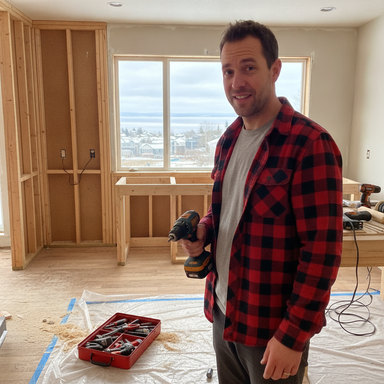
The Frustrated DIYer
Jordan Miller
Jordan recently purchased a $300,000 home in Duluth's Lakeside neighborhood. While he enjoys the idea of home improvement, he often starts projects—like replacing a light fixture or fixing a leaky faucet—only to realize he lacks the specialized tools and time to finish them safely.
Age
34
Location
Lakeside, Duluth, MN
Family Status
Married, 1 toddler
Education
Bachelor's in Marketing
Profession
Marketing Manager at a local healthcare firm
Opportunities
- Market a 'half-finished project' service specifically for homeowners who started a repair but need a professional to finalize it correctly.
- Offer a quarterly 'Home Health Check' where Stan spends 2 hours fixing 3-4 minor issues before they escalate into major contractor jobs.
Pain Points
- Wasting entire weekends on repairs that should take an hour
- Feeling embarrassed calling a major contractor for a 'small' mistake
- Competitors requiring a 3-hour minimum charge for a 20-minute fix
Needs
- A reliable professional who doesn't judge DIY mistakes
- Low one-hour minimum billing for single-task visits
- Trustworthy advice on when a job actually requires a licensed general contractor
“I thought I could fix that sink with a YouTube video, but now the kitchen is a mess and I just need someone I can trust to finish it by Monday.”

The Maintenance-Minded Senior
Robert 'Bob' Anderson
Bob lives in a high-value historic home in Congdon Park. As part of the 45-64 age demographic with the city's highest median income ($80,315), he has the budget for maintenance but can no longer safely perform tasks like weatherproofing or deck repairs himself.
Age
63
Location
Congdon Park, Duluth, MN
Family Status
Married, adult children
Education
Master's in Education
Profession
Retired High School Principal
Opportunities
- Offer a specialized Duluth winter-prep service focusing on weatherstripping, window sealing, and outdoor faucet protection.
- Leverage Stan's contractor pre-screening to become Bob's primary consultant for selecting high-end remodelers for larger projects.
Pain Points
- Physical safety concerns regarding ladders and heavy lifting
- Difficulty finding contractors willing to do 'small' carpentry or electrical tweaks
- Fear of being overcharged or scammed by fly-by-night providers
Needs
- High-quality workmanship that matches the value of his $400k+ home
- A provider with clear insurance and a professional reputation
- Consistent communication and 'honest day's work' values
“I want to keep this house in perfect shape for the grandkids, but I'm done climbing up on the deck to fix loose boards myself.”

The Small-Portfolio Pro
Sarah Gustafson
Sarah manages a portfolio of three duplexes in the East End and Central Hillside areas. She is part of the growing segment of property managers who don't have enough units to justify full-time maintenance staff but need a reliable 'on-call' partner for tenant repair requests.
Age
48
Location
East End, Duluth, MN
Family Status
Single, business owner
Education
Associate's in Business Administration
Profession
Independent Property Manager
Opportunities
- Create a standardized 'Turnover Package' including paint touch-ups, flooring repairs, and fixture checks to get units rent-ready faster.
- Offer a sliding scale or travel-fee waiver when she schedules repairs across multiple properties on the same day.
Pain Points
- Losing rental income because units are offline for minor repairs
- Contractors prioritizing large renovations over her small maintenance tickets
- Rising insurance and maintenance costs squeezing her 4% growth margins
Needs
- Rapid response times for tenant-reported issues like broken window latches
- Transparent billing at a fair $75/hour rate to keep overhead predictable
- A provider who can pre-screen larger issues to save her time on site visits
“I can't afford a full-time maintenance guy for eight units, but I need someone who shows up when they say they will so my tenants stay happy.”
Milestones
HandyMan Stan has identified several specific milestones which will function as goals for the organization. The milestones will provide a target for achievement as well as a mechanism for tracking progress. The following table will provide a timeframe for each milestone.
Milestones | |||||
|---|---|---|---|---|---|
Milestone | Start Date | End Date | Budget | Manager | Department |
Business plan completion | 1/1/2026 | 2/15/2026 | $0 | Stan | Marketing |
First customer | 2/15/2026 | 3/15/2026 | $0 | Stan | Department |
Full time work threshold | 3/15/2026 | 6/30/2027 | $0 | Stan | Department |
Revenues exceeding $75,000 | 3/15/2026 | 7/15/2027 | $0 | Stan | Department |
Totals | $0 |
Sales Strategy
HandyMan Stan's sales strategy focuses on converting a customer who first calls for one specific repair into a customer who calls Stan for a wide range of work. This happens in a few deliberate ways.
First, Stan completes every job with a level of professionalism that's uncommon in this trade — showing up on time, communicating clearly about scope and pricing, and leaving the work area as clean as he found it. That impression matters more than any advertisement.
Second, Stan proactively flags other small issues he notices while on-site (a loose railing, a drafty window, an aging caulk line) and offers to address them, since a customer already comfortable having Stan in their home is often glad to knock out a few more items in the same visit rather than schedule separate appointments later.
The combination of demonstrated skill, fair pricing, and trustworthiness — enough that customers are comfortable having Stan in their home even when they're not there — is what grows both average ticket size per visit and the word-of-mouth referrals that drive new customer acquisition.
Marketing Strategy
HandyMan Stan's marketing blends community relationships with a modern digital presence:
- Community and referral marketing. Stan builds awareness through organizational newsletters and social channels for groups like the Lions Club, local congregations, and neighborhood associations. Once several members of a group have had a good experience with HandyMan Stan, word travels fast within that community — friends and neighbors routinely ask each other for a trusted handyman recommendation, and a strong reputation inside even one or two organizations compounds into steady referral volume.
- Digital presence. A Google Business Profile and Nextdoor presence let customers who don't have a personal referral still find, vet, and book Stan online, backed by a steady stream of customer reviews. Before-and-after photos from completed jobs, posted to Instagram and included in the Google profile, do double duty as both marketing material and a portfolio for prospective customers who want to see the quality of Stan's work before they call.
- Listing platforms. A verified profile on Thumbtack and Angi captures demand from customers actively searching for a handyman rather than relying on a personal referral, particularly useful for reaching new Duluth residents who haven't yet built a local network of trusted service providers.
Competitive Edge
HandyMan Stan's competitive edge is a fair, sustainable hourly rate paired with a one-hour minimum, which encourages customers to call whenever a problem arises rather than waiting for a list to build up. At $75 an hour, a one-hour minimum call is long enough to knock out several small repairs in a single visit, while remaining priced to reflect real 2026 labor, insurance, and vehicle costs in the Duluth market — and to support paying Stan a genuinely livable wage once the business is running full-time.
Most competing handymen carry two- to three-hour minimums, which creates a real barrier: customers don't call about a single loose hinge or running toilet because it doesn't feel worth the minimum charge. HandyMan Stan's one-hour minimum removes that barrier and trains customers to call early, before small problems compound.
This edge is especially relevant for property managers running lower-cost rental units, who often delay calling a handyman until several maintenance items have piled up across a property.
To develop good business strategies, perform a SWOT analysis of your business. It's easy with our free guide and template. Learn how to perform a SWOT analysis
Sales Plan
Revenue is driven by Stan's $75-per-hour billing rate across all repair categories — plumbing, electrical, fences, windows, decks and patios, painting, weatherproofing, and flooring. Needed parts are billed separately at cost plus a markup; incidental consumables (nails, caulk, tape) are bundled into the hourly rate and captured in direct costs as a percentage of service revenue.
Stan bills a single hourly rate across all service types rather than varying rates by trade. While this may leave a little painting-specific volume on the table compared to painters who charge less, it keeps pricing simple and encourages customers to bundle multiple repair types into a single visit.
Sales ramp gradually in year one as Stan builds toward full-time hours and word-of-mouth referrals compound, then grow steadily through year two and three as his customer base and repeat-business rate mature. See the Financial Plan chapter for the detailed revenue forecast by category and year.
Locations and Facilities
HandyMan Stan operates as a mobile handyman service based in Duluth, Minnesota. Stan travels to customer properties for all work — there is no retail storefront or dedicated office facility.
Service area: Primarily Duluth city limits, where home owners and property managers are most likely to hire out repairs rather than attempt them personally. Rural Saint Louis County is a lower priority, since residents there tend to have more time and do-it-yourself skills.
Home base: Stan operates from his residence, using a smartphone and a tablet running Jobber to schedule jobs, send estimates, and collect payment on-site immediately after completing work.
Vehicle: Stan's service vehicle carries tools and equipment to each job site. Fuel and vehicle costs are budgeted as ongoing operating expenses.
No leased commercial space is required. See the Financial Plan chapter and Equipment and Tools for the full asset and start-up cost breakdown.
Technology
HandyMan Stan runs on a lean, mobile-first technology stack built for a solo operator:
- Jobber for scheduling, estimates, invoicing, and online payment collection — customers can book a service call, get a text reminder, and pay by card on the spot.
- Google Business Profile and Nextdoor as the primary digital storefront, carrying customer reviews, service listings, and before-and-after photos that let prospective customers vet Stan's work before they ever call.
- Thumbtack and Angi profiles to capture demand from customers actively searching for a handyman without a personal referral.
- Smartphone and tablet for on-site scheduling, photo documentation, and payment — replacing the laptop-and-portable-printer setup a solo handyman would have needed a decade ago.
This stack keeps overhead low while giving Stan the same professional booking and payment experience customers now expect from any local service business.
Website Marketing Strategy
HandyMan Stan's online presence is built on Squarespace, using a template Stan customizes himself rather than commissioning custom development — a practical, low-cost approach for a solo operator that keeps ongoing hosting and maintenance costs to a low monthly subscription fee rather than a one-time developer project. The site's core job is simple: list services clearly, showcase before-and-after photos, and surface customer reviews so a visitor who found Stan through a Google search or a Nextdoor recommendation can quickly decide to call. HandyMan Stan's website and online presence work together through two main channels:
- Local search visibility. A complete, verified Google Business Profile and a well-optimized website help HandyMan Stan surface in "handyman near me" searches — the first stop for both people unfamiliar with Stan and existing customers looking up his number or service list.
- Consistent branding across every touchpoint. Stan's website address, Google Business Profile, and Thumbtack/Angi listings all appear on invoices, vehicle signage, and any printed material, so every customer touchpoint reinforces the same professional identity and makes it easy to find and re-book Stan later.
Equipment and Tools
Stan uses his personal tools for most jobs but purchases additional equipment at start-up. Key tools and equipment include:
Plumbing: Slip wrenches, drain snakes, Teflon tape, assorted caps, nuts, and bolts.
Electrical: Electrical test meters, wire cutters and strippers, assorted wire and wire caps, soldering iron.
Painting: Brushes, rollers, a pneumatic paint sprayer, air compressor, sandpaper, spackle tools, and masking supplies.
General maintenance: Pressure washer, assorted hand tools, power tools (drill, saw, sander, rotary tool), assorted nails, bolts, screws, and fixtures.
Business operations: Smartphone and tablet running Jobber for scheduling, invoicing, and on-site payment collection.
Long-term assets (tools and equipment) are capitalized and depreciated on a straight-line basis; see the Financial Plan chapter for the full asset schedule. Stan maintains his tools in good working order to support professional service across plumbing, electrical, carpentry, painting, and general repair work.
Milestones
Business plan completion Complete the HandyMan Stan business plan. Budget: $0. Department: Marketing. | Stan Feb 15, 2026 |
First customer Secure the first paying customer, coinciding with the start of billable hours in the financial forecast. | Stan June 15, 2026 |
Full time work threshold Reach the threshold where handyman work becomes Stan's full-time employment. Budget: $0. | Stan June 30, 2027 |
Revenues exceeding $75,000 Achieve trailing-12-month revenue exceeding $75,000 as billable hours ramp toward full-time utilization. | Stan Oct 1, 2027 |
Key Metrics for Success
HandyMan Stan tracks the following key metrics to measure business health and progress toward objectives:
Financial Metrics:
Metric | Year 1 | Year 2 | Year 3 |
|---|---|---|---|
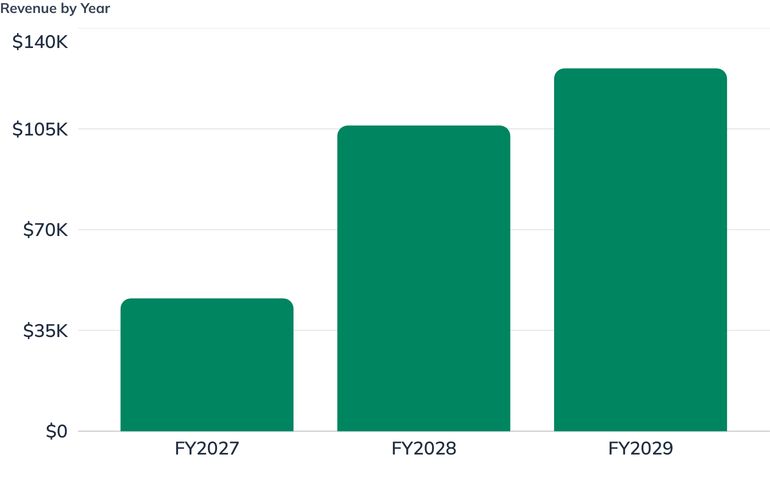
Total Revenue | $46,125 | $106,125 | $126,000 |
Gross Margin % | ~88% | ~88% | ~88% |
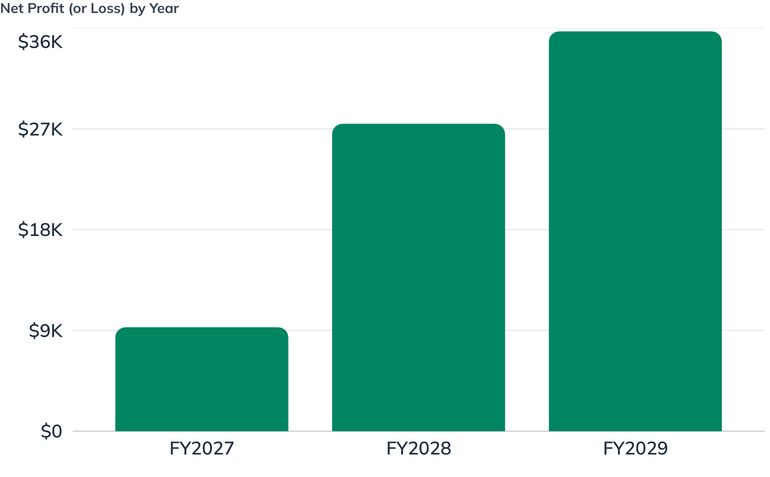
Net Profit Margin | 20.1% | 25.9% | 28.3% |
Owner Compensation | Ramping from part-time to ~$45,000/yr full-time equivalent | ~$45,000/yr (full-time) | ~$52,500/yr |
Operational Metrics:
- Customer satisfaction: Maintain a one-year guarantee on all work with zero unsatisfied customers.
- Service call minimum: One-hour minimum at $75/hour to encourage frequent small repairs.
- Full-time threshold: Transition to full-time billable hours within 12 months of launch.
- Livable wage floor: Stan's effective hourly compensation stays at or above $30/hour throughout the plan — comfortably above the $21.20/hour living wage for a single adult in the Duluth, MN area, and rises further as the business matures.
Cash on hand never dips negative during the ramp — the lowest point is approximately $15,800, a few months after launch, before climbing steadily to roughly $84,700 by the end of year three as billable hours and repeat business compound.
Company
Ownership and Structure
Stan Roberts owns 100% of HandyMan Stan, LLC. Start-up capital is funded through a combination of personal savings and a small business loan — see Sources of Funds in the Financial Plan chapter for the full breakdown. The company will remain a one-person operation for the foreseeable future, with Stan's own compensation set to meet at least a livable wage for the Duluth area once the business reaches full-time hours.
Legal structure: Single-member LLC
Owner: Stan Roberts
Location: Duluth, Minnesota (home-based, mobile service model)
Start-up Summary
HandyMan Stan's start-up needs cover LLC formation and licensing costs, initial tools and equipment (detailed in Equipment and Tools), basic liability insurance, and enough working cash to cover Stan's living expenses and vehicle costs during the ramp to full-time hours. The full start-up cost breakdown, funding sources, and opening balance sheet are maintained in the Financial Plan chapter (Use of Funds and Sources of Funds).
Management Team
Stan Roberts is the founder and sole employee of HandyMan Stan. He got his start right out of high school working for a general contractor in the Duluth area — without formal construction training, he started out as general help, assisting across a wide range of tasks on job sites.
Over the following decade, Stan became genuinely skilled across the trade, earning his journeyman plumber and journeyman electrician licenses and building a broad, hands-on repertoire of general repair skills that most single-trade specialists never develop.
To round out the business side, Stan completed small-business and bookkeeping coursework at Lake Superior College over two years of night classes. That combination — a decade of hands-on trade experience plus real business fundamentals — is what gave him the confidence to launch HandyMan Stan as a focused, professional alternative to the informal, word-of-mouth handymen who dominate the Duluth market.
Advisors
HandyMan Stan does not maintain a formal advisory board, but Stan draws on a small, practical support network:
- Accountant — handles tax planning, bookkeeping setup, and financial reporting, and assisted with forming the Minnesota LLC and setting up initial business records.
- Small business attorney — available on an as-needed basis to review any customer contract templates and liability questions as the business grows.
- Lake Superior College instructors and fellow small-business owners — Stan completed small-business coursework there and continues to informally check in with instructors and classmates for advice as the business scales.
As HandyMan Stan grows toward hiring its first additional technician, Stan expects to formalize a relationship with a payroll/HR service provider to handle that transition correctly.
Financial Plan
Revenue
Need real milestones? Establish a clear path for your business with real-world examples.Create your own business plan
Expenses & Costs
Need real milestones? We recommend using LivePlan as the easiest way to create milestones for your own business plan.Create your own business plan
Profitability
Need real financials? We recommend using LivePlan as the easiest way to create financials for your own business plan.Create your own business plan
Use of Funds
HandyMan Stan requires $25,000 in total start-up funding, allocated as follows:
Start-up Assets ($9,000):
Item | Amount |
|---|---|
Tools and Equipment | $9,000 |
Working Capital Reserve (~$16,000):
Covers LLC formation and licensing costs, initial liability insurance, and enough operating cash to keep the business running through the ramp to full-time hours — without requiring Stan's own compensation to dip below a livable hourly rate for the Duluth area at any point.
The reserve is sized so cash on hand never runs dry during the ramp-up: the model's lowest projected cash point is approximately $15,800, reached a few months after launch, before climbing steadily as billable hours and repeat business grow.
Sources of Funds
HandyMan Stan's start-up funding blends a small business loan with a personal equity contribution from Stan.
Source | Type | Amount |
|---|---|---|
Owner Investment | Equity | $8,000 |
Start-up Loan | Loan (8% APR, 60-month term) | $17,000 |
Total Funding | $25,000 |
Debt: The $17,000 start-up loan carries a monthly payment of approximately $345 and is fully amortized within the five-year plan horizon.
Cash position: Starting cash of $25,000 dips to a low of roughly $15,800 shortly after launch, then climbs steadily as billable hours ramp toward full-time utilization — reaching approximately $84,700 by the end of the three-year forecast horizon.
Projected Statements
Key Assumptions
The following financial assumptions underpin the HandyMan Stan forecast:
General Assumptions | Year 1 | Year 2 | Year 3 |
|---|---|---|---|
Loan Interest Rate | 8.00% | 8.00% | 8.00% |
Income Tax Rate | 0% (pass-through LLC) | 0% | 0% |
Additional assumptions reflected in the forecast:
- Hourly billing rate: $75 per hour across all service categories, with parts billed separately.
- Direct costs: Parts and consumables estimated at approximately 12% of revenue.
- Owner compensation: Stan's pay is tied to billable hours worked rather than a flat salary — ramping from part-time during the first year (at $30/hour) to roughly $45,000/year on a full-time basis in Year 2, then rising to roughly $52,500/year in Year 3 as the business matures. This stays comfortably above the MIT Living Wage Calculator's $21.20/hour living wage for a single adult in the Duluth, MN area throughout the plan.
- Start-up loan: $17,000 principal at 8% interest, amortized over 5 years (60 months), paired with an $8,000 owner equity investment.
- Depreciation: $9,000 in tools and equipment depreciated over 5 years (60 months).
- Tax treatment: HandyMan Stan is a single-member LLC taxed as a pass-through entity — profits flow to Stan's personal return rather than being taxed at the company level, so no corporate income tax is modeled.
Actual results from the forecast: Year 1 net profit $9,280 (20.1% margin), Year 2 net profit $27,447 (25.9% margin), Year 3 net profit $35,700 (28.3% margin). Cash on hand never goes negative and climbs from a low of about $15,800 to roughly $84,700 by the end of Year 3.
Frequently Asked Questions
A handyman business plan should cover your service scope and pricing strategy, target customer segments, competitive differentiation, and funding plan. HandyMan Stan's plan, for example, details its $75-an-hour, one-hour-minimum pricing against competitors' two- to three-hour minimums, two customer segments of homeowners and property managers, and a lean $25,000 funding plan blending owner equity and a small business loan.
HandyMan Stan raised $25,000 in total start-up funding: $8,000 in owner equity plus a $17,000 start-up loan at 8% APR over a 60-month term, with monthly payments of about $345. Cash dips to roughly $15,800 shortly after launch before climbing steadily as billable hours ramp toward full-time utilization.
It depends on the scope of work — HandyMan Stan budgets separate license fees for electrical and plumbing work specifically, since those trades typically require licensing even for minor repairs, alongside liability and tools insurance as a standing operating expense. General handyman work like painting or drywall patching often needs only a basic business license in many states, but licensing requirements for specific trades vary significantly, so confirming with local authorities is an essential early step.
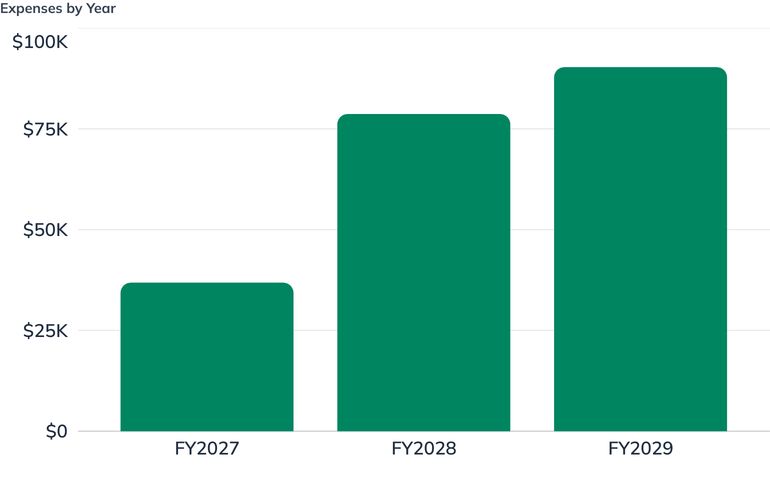
HandyMan Stan earns revenue entirely from billable handyman labor, charged at $75 an hour plus parts with a one-hour minimum per visit. Its five-year forecast projects about $278,250 in total revenue against roughly $205,823 in expenses.
HandyMan Stan's plan targets transitioning the business to full-time employment within 12 months of launch, and reaching steady, sustainable annual revenue that supports a full-time, livable wage by the end of year two. Its five-year forecast shows about $72,427 in cumulative net profit over that model period.
Most competing handymen in Duluth carry two- to three-hour minimums, and general contractors like Duluth Contractors and Red Rock Contractors require four- to eight-hour minimums that make them impractical for small repairs. HandyMan Stan's one-hour minimum, paired with a repair-first philosophy rather than defaulting to replacement, and a free referral to a vetted contractor for jobs that exceed handyman scope, is built to earn repeat business rather than compete purely on being the cheapest option in town.
HandyMan Stan targets two segments in the Duluth market: homeowners, representing roughly 24,000 potential customers who typically lack the skills, time, or interest to tackle small repairs themselves, and property managers running three to 20 rental units, adding another 1,200-plus potential customers who rarely justify an in-house maintenance hire.
A one-hour minimum removes the barrier that keeps customers from calling about a single loose hinge or running toilet, since a two- or three-hour minimum charge doesn't feel worth it for one small fix — the plan notes 73% of homeowners wait until several small problems accumulate before calling for exactly this reason. That's especially valuable for property managers, who often delay calling a handyman until multiple maintenance items have piled up across a property.

Business Plan Outline
Start your plan