





HVAC Business Plan




Business Plan Summary
This HVAC business plan example features ClimateTech HVAC Solutions, a Portland, Maine-based contractor specializing in cold-climate heat pump installation and oil-to-heat-pump conversion. It covers ClimateTech's manufacturer-certified technical depth, its end-to-end Efficiency Maine rebate navigation for homeowners and property managers, and a $510,000 launch funded through an SBA 7(a) loan and owner equity. Use it as inspiration for your own plan, and read our guide on how to write an HVAC business plan for step-by-step advice. Download a free business plan template to get started, or browse more business plan examples.
ClimateTech HVAC Solutions
Executive Summary
ClimateTech HVAC Solutions is a Portland, Maine-based HVAC contractor specializing in cold-climate air-source heat pump installation and oil-to-heat-pump conversion for residential and light-commercial clients across Cumberland County. We combine manufacturer-certified technical depth with hands-on Efficiency Maine rebate navigation, giving homeowners and property managers a single, trusted partner for electrifying and modernizing their heating and cooling systems.
Financial Summary
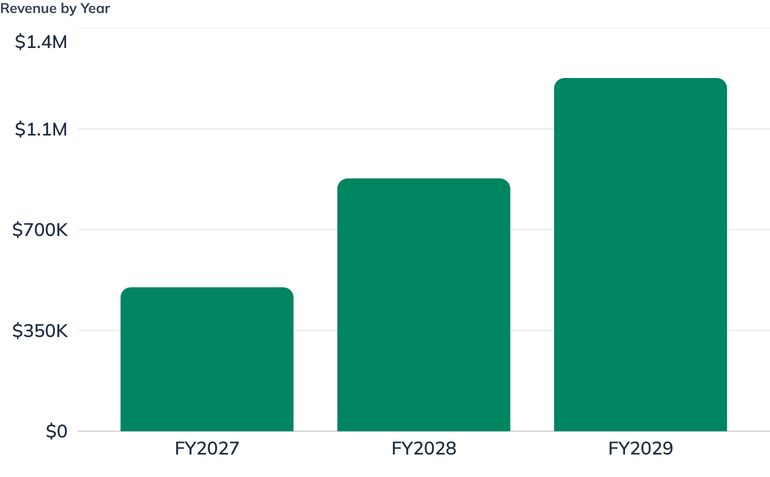
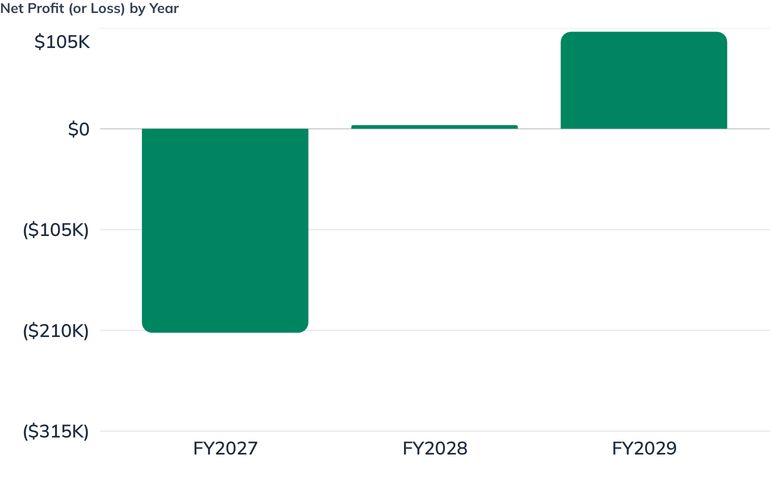
We project revenue growing from $500,000 in Year 1 to $878,000 in Year 2 and $1,227,000 in Year 3, driven by a growing mix of heat pump conversions, traditional HVAC service, and recurring maintenance contracts. Year 1 carries a planned net loss of roughly $213,000 (after loan interest) as we build out the team, fleet, and facility; the business turns net profitable in Year 2 (~$4,000) and grows to ~$101,000 in net profit by Year 3 as revenue scales faster than our fixed costs.
Funding Needed
We require $510,000 in startup funding: a $260,000 SBA-style term loan and $250,000 in owner equity. Funds cover our winter-equipped service vehicle fleet, heat pump inventory and installation tools, our Portland dispatch facility buildout, marketing, and working capital to carry the business through its first profitable year.
Problem We Solve
Maine has the highest reliance on heating oil in the country, and many Portland-area homeowners and commercial property owners are stuck with aging, inefficient systems and rising fuel costs. State rebate programs make heat pump conversion financially attractive, but most property owners lack a contractor who can confidently size a cold-climate system correctly, manage the rebate paperwork, and back the installation with real local support.
Team
Led by a CEO/founder with hands-on HVAC industry experience and Maine licensing, our team includes a Service Manager overseeing technical operations and manufacturer certification, a Sales and Marketing Manager driving business growth, and certified HVAC Technicians cross-trained on both traditional and cold-climate heat pump systems.
Target Market
We serve homeowners across Greater Portland looking to convert from oil or propane heat to cold-climate heat pumps, as well as commercial property owners and managers in Portland's Old Port, Bayside, and industrial corridors who need reliable service for aging rooftop units and boilers.
Company Purpose / Mission Statement
To help Greater Portland homeowners and businesses move confidently off oil heat and onto reliable, efficient cold-climate heat pump systems — backed by accurate sizing, manufacturer-certified installation, and hands-on rebate support.
Opportunity

Problem Worth Solving
Maine leads the nation in dependence on heating oil, with a majority of homes still burning oil or propane to stay warm through winters that regularly drop below zero. That dependence means volatile fuel bills, environmental impact, and equipment that's often decades old and failing right when homeowners need it most.
At the same time, the State of Maine and Efficiency Maine have pushed hard to get homeowners onto heat pumps, offering meaningful rebates for qualifying installations. But the incentive alone doesn't solve the problem: most Portland-area homeowners don't know whether a cold-climate heat pump can actually replace their oil furnace here, how to navigate the rebate paperwork, or which contractor to trust with a multi-thousand-dollar system that has to perform through a Maine January.
Commercial property owners in Greater Portland face a parallel issue — aging rooftop units and boilers in older brick buildings downtown, rising energy costs, and a shrinking pool of technicians who understand both traditional systems and newer heat pump technology.
The result is a market full of homeowners and property managers who want to electrify or upgrade their HVAC systems but lack a contractor who can confidently guide them from assessment through installation, rebate capture, and long-term maintenance.
Our Solution
ClimateTech HVAC Solutions is Greater Portland's cold-climate heat pump specialist. We design and install ducted and ductless air-source heat pump systems built to perform in Maine winters, using cold-climate rated equipment from Mitsubishi Electric and Fujitsu that we back with manufacturer training and certification.
Our core service lines:
- Heat pump conversions — replacing oil and propane furnaces with cold-climate heat pumps, including dual-fuel setups that pair a heat pump with existing backup heat for the coldest stretches of winter
- Ductless mini-split installation — for additions, older homes without ductwork, and room-by-room comfort control
- Traditional HVAC installation, maintenance, and repair — furnaces, boilers, and central AC for clients not yet ready to convert
- Commercial HVAC service — rooftop units, packaged systems, and boiler maintenance for Portland's office buildings, retail spaces, and light-industrial properties
- Efficiency Maine rebate navigation — we handle the paperwork and site documentation needed to capture available heat pump rebates, so clients don't have to figure out the program on their own
Every installation includes a Manual J load calculation specific to the home or building, not a generic sizing estimate, which is where a lot of underperforming heat pump installs in this region go wrong.
Market Overview
Our primary service area is Greater Portland and Cumberland County, Maine — including Portland, South Portland, Westbrook, Falmouth, Cape Elizabeth, and Scarborough — with secondary reach into York and Sagadahoc counties.
Residential segment: Owner-occupied single-family and multi-family homes, a large share still heated primarily by oil. Homeowners here skew toward being informed but overwhelmed — they've heard about heat pumps and Efficiency Maine rebates from neighbors or the news but need a contractor who can tell them plainly whether it'll work for their specific house.
Commercial segment: Small and mid-size commercial properties in and around Portland's Old Port, Bayside, and industrial corridors along Riverside Street — office buildings, retail, restaurants, and light-industrial tenants running aging rooftop units and boilers.
Market trends shaping demand:
- Efficiency Maine's heat pump rebate program continues to drive residential conversion demand, and the state has repeatedly expanded its adoption targets
- Heating oil price volatility keeps pushing homeowners to price out alternatives every winter
- Maine's aging housing stock (much of it pre-1960 construction) means a steady replacement cycle for both traditional systems and first-generation heat pump installs from the early rebate years that are now due for service or upgrade
- Commercial landlords are increasingly factoring energy costs into tenant retention, creating an opening for efficiency-focused HVAC upgrades
Competitors
National franchise operators — brands like One Hour Heating & Air Conditioning and ARS/Rescue Rooter have a presence in southern Maine. They bring name recognition and financing options but generally lack deep cold-climate heat pump specialization and often subcontract installation work.
Regional and local HVAC contractors — a number of established Maine-based oil and HVAC companies still generate most of their revenue from traditional furnace and boiler service. Many are only beginning to add heat pump capabilities, and few market Efficiency Maine rebate assistance as a core part of their offering.
Independent heat pump installers — a growing number of smaller shops have entered the market specifically to capture rebate-driven demand, but many are thinly staffed, leading to long lead times during peak (fall and spring) installation seasons.
DIY and off-the-shelf alternatives — window AC units, portable heaters, and big-box store ductless kits appeal to price-sensitive homeowners but don't qualify for Efficiency Maine rebates and typically underperform in Maine winters.
Our positioning relative to competitors: we compete on cold-climate technical depth, manufacturer-backed training, and handling the rebate process end-to-end — areas where the national franchises and DIY options fall short, and where many local shops are still building capability.
Our Advantages
Cold-climate specialization. Our technicians are trained and certified specifically on cold-climate air-source heat pump systems — not general HVAC equipment adapted for Maine winters. We know which systems actually hold their rated output at -5°F and which ones are marketed as "cold climate" but underperform.
Rebate navigation as a built-in service. We manage Efficiency Maine rebate paperwork and site documentation as part of every qualifying installation, removing the administrative barrier that causes many homeowners to delay or abandon a conversion.
Accurate sizing, every time. Every project starts with a Manual J load calculation for that specific building — not a rule-of-thumb estimate. This is the single biggest factor in whether a heat pump conversion actually keeps a Maine home comfortable through winter, and it's a step some competitors skip.
Dual-fuel expertise. For clients not ready to fully abandon their oil or propane backup, we design dual-fuel systems that automatically switch to backup heat during extreme cold snaps, giving homeowners efficiency most of the year without sacrificing reliability in a true deep freeze.
Local accountability. As a Portland-based company, we're servicing systems in the same neighborhoods where our team lives, with maintenance plans and warranty support that don't require waiting on a call center.
Execution
Market Plan Overview
We position ClimateTech HVAC Solutions as Greater Portland's go-to cold-climate heat pump specialist — the contractor homeowners and property managers call when they want a straight answer about whether a heat pump will actually work for their building, not just a sales pitch. Our marketing and sales efforts center on education (helping prospects understand cold-climate heat pump performance and Efficiency Maine rebates), local trust-building through referrals and community presence, and converting one-time installation projects into recurring maintenance relationships.
Sales Plan
Our sales strategy is built around education and trust rather than high-pressure selling, since a heat pump conversion is a significant purchase most homeowners only make once.
Lead generation:
- Search and local SEO targeting terms like "heat pump installer Portland Maine" and "oil to heat pump conversion," where demand is high and rebate-driven
- Partnerships with local home performance and weatherization contractors, who often identify oil-heated homes as good conversion candidates during energy audits
- Referral relationships with Portland-area real estate agents and home inspectors, who regularly encounter aging oil systems during resale inspections
- Presence at regional home shows and Efficiency Maine community events
- Customer referral incentives for existing maintenance plan clients
Sales process: Our Sales and Marketing Manager qualifies inbound leads and schedules an in-home or on-site assessment, where a technician performs a Manual J load calculation and walks the client through system options, expected Efficiency Maine rebate eligibility, and dual-fuel considerations. We provide a written proposal within 48 hours.
Conversion to recurring revenue: Every installation is offered a maintenance plan at time of sale, and our technicians are trained to flag additional service opportunities (aging backup systems, ductwork issues) during routine visits — turning one-time installs into long-term client relationships.
Locations and Facilities
ClimateTech HVAC Solutions is headquartered in Portland, Maine, in a warehouse and dispatch facility along the Riverside Street industrial corridor — positioned for quick access to I-295 and I-95 so technicians can efficiently reach both downtown Portland and outlying towns across Cumberland County.
The facility houses our dispatch and scheduling operations, a climate-controlled parts inventory (heat pump indoor/outdoor units, refrigerant, ductless line sets, and common repair parts), a small technician training and staging area, and vehicle parking for our service fleet. Centralized inventory lets us stock cold-climate heat pump equipment locally rather than waiting on manufacturer shipping, which matters during peak fall and spring installation season.
Our service radius covers Portland, South Portland, Westbrook, Falmouth, Cape Elizabeth, and Scarborough, with secondary coverage extending into York and Sagadahoc counties as our technician team grows.
Technology
We run our field and back-office operations on a modern, connected stack rather than paper work orders:
- Field service management — ServiceTitan for dispatch, scheduling, technician GPS tracking, and digital invoicing, giving customers real-time appointment windows and technicians instant access to job history and equipment records
- Load calculation and design software — Manual J-compliant sizing tools used on every quote, so system recommendations are based on the specific building rather than rule-of-thumb estimates
- Smart thermostat and monitoring integration — Ecobee and manufacturer app integration for Mitsubishi and Fujitsu systems, allowing clients (and, with permission, our team) to monitor performance and catch issues before they become no-heat emergencies
- Refrigerant diagnostics — digital gauges and combustion analyzers that feed directly into our service records for warranty and maintenance history
- AI-assisted scheduling and customer communication — automated appointment reminders, follow-up surveys, and rebate-document status updates, reducing administrative load on our small office team
This stack lets a lean staff run a high volume of appointments accurately, which matters most during Maine's compressed fall conversion season.

The Heritage Modernizer
Margaret Sullivan
Margaret lives in a 1920s Victorian home in Portland's West End and is tired of the 'clank' of her aging oil boiler and the smell of fuel in the basement. As a consultant with an eye for architecture, she wants to modernize her home's efficiency without compromising its historic character or worrying about system failure during a Maine deep freeze.
Age
58
Location
West End, Portland, ME
Family Status
Married, adult children no longer living at home
Education
Master's in Architecture
Profession
Senior Consultant at a regional non-profit
Opportunities
- Provide a comprehensive cold-climate heat pump solution that completely replaces the need for oil heat, emphasizing reliability at -20°F.
- Offer custom indoor unit placement and line-set covers that respect the architectural integrity of historic Portland properties.
Pain Points
- Extremely high winter oil bills reaching $800+ per delivery
- Uneven heating and cold spots in drafty, high-ceiling rooms
- Fear that heat pumps cannot handle the -15°F temperatures common in Maine winters
Needs
- Expert sizing calculations that account for older home insulation levels
- A contractor who manages the entire Efficiency Maine rebate process from start to finish
- Manufacturer-certified installation to ensure long-term warranty protection
“I love my historic home, but I don't love the rising oil prices or the constant worry that my 30-year-old boiler will quit in January.”

The Asset Optimizer
Sarah Jenkins
Sarah manages a portfolio of older commercial brick buildings and lofts in Portland's Old Port. She is under pressure to reduce operating costs and improve tenant retention by upgrading aging rooftop units and boilers that are increasingly expensive to repair.
Age
47
Location
Old Port, Portland, ME
Family Status
Single
Education
MBA
Profession
Property Manager for a mid-sized real estate firm
Opportunities
- Design and install Variable Refrigerant Flow (VRF) systems to achieve high-efficiency heating and cooling in multi-unit brick buildings.
- Secure recurring revenue through multi-site maintenance agreements for both traditional and heat pump systems.
Pain Points
- High tenant turnover due to uncomfortable temperatures in older commercial spaces
- Shrinking pool of local technicians who understand both legacy boilers and modern heat pumps
- The high cost of emergency repairs for aging rooftop HVAC units
Needs
- Detailed energy audits to present to property owners and investors
- A single trusted partner for both traditional HVAC service and new electrification projects
- Assistance navigating commercial-tier Efficiency Maine incentives for large-scale retrofits
“Modernizing our HVAC isn't just about efficiency; it's about keeping our commercial tenants happy and our operating costs predictable.”

The Efficiency Strategist
David Miller
David is a logistics manager living in a mid-century Cape in South Portland. With a growing family and a household income that qualifies for moderate-income incentives, he is focused on the long-term ROI of switching to heat pumps to stabilize his monthly utility budget.
Age
41
Location
South Portland, ME
Family Status
Married, 2 children (ages 7 & 10)
Education
Bachelor's in Business Administration
Profession
Logistics Manager at a regional shipping firm
Opportunities
- Help the client secure the $2,000 Efficiency Maine moderate-income rebate to lower upfront installation costs.
- Offer low-interest financing options that allow the monthly energy savings to offset the loan payment.
Pain Points
- Volatile heating oil prices making it impossible to budget for winter
- The high upfront cost of new HVAC equipment (ranging from $4,900 to $7,200+)
- Confusion over which specific heat pump models qualify for the $500 whole-home bonus
Needs
- Clear data showing the $500+ annual savings potential of switching from oil
- A reliable partner for recurring annual maintenance to protect his investment
- A quick 1-3 day installation window to minimize disruption to his family's schedule
“If I can get a $2,000 rebate and save $500 a year on my electric bill, this isn't just a repair—it's a smart financial move for my family.”
Equipment and Tools
ClimateTech HVAC Solutions requires a fully equipped fleet and workshop to deliver professional HVAC and heat pump services through Maine's winter conditions:
- Service vehicles — winter-equipped vans with all-wheel or four-wheel drive, fully stocked for installation, maintenance, and repair calls in snow and ice
- Heat pump equipment — cold-climate rated outdoor and indoor units from Mitsubishi Electric and Fujitsu, line sets, and mounting hardware rated for Maine's freeze-thaw cycles
- Diagnostic equipment — refrigerant gauges, combustion analyzers, airflow meters, and digital multimeters
- Installation tools — pipe cutters, brazing equipment, vacuum pumps, and EPA-compliant refrigerant recovery units
- Safety and winter-access gear — PPE, roof/ladder safety equipment rated for icy conditions, and portable heaters for job-site comfort during cold-weather installs
- Office equipment — computers, phones, and ServiceTitan field service software
Startup equipment purchases are funded through our initial investment; ongoing replacement and expansion of the fleet and heat pump inventory are built into our operating budget as the maintenance client base grows.
Milestones
Launch of business | June 15, 2026 |
Partnership with construction firms | July 15, 2026 |
Securing 450 active maintenance plan subscribers Build a recurring revenue base by growing to roughly 450 active maintenance plan subscribers across residential and commercial clients, matching the financial plan's Year 2 target. | Sales and Marketing Manager Dec 31, 2027 |
Third HVAC technician hired Add a third HVAC technician (the second dedicated hire beyond the founding two-technician team) to support higher installation volume as revenue scales into Year 3, per the financial plan's phased hiring schedule. | CEO/Founder June 30, 2028 |
Key Metrics for Success
ClimateTech HVAC Solutions tracks the following key metrics to measure business health and growth:
Metric | Year 1 | Year 2 | Year 3 |
|---|---|---|---|
Revenue | $500,000 | $878,000 | $1,227,000 |
Net Profit (after loan interest) | -$213,000 | $4,000 | $101,000 |
Net Profit Margin | -43% | 0% | 8% |
Maintenance Plan Subscribers (active) | ~230 | ~450 | ~650 |
Our primary success metrics are revenue growth, the path to and maintenance of positive net profit margin, and the number of active recurring maintenance plan subscribers, since that recurring base is what smooths out our seasonal installation cycle. Year 2 is a thin-margin transition year as debt service ramps up alongside our expanding technician team; margin strengthens meaningfully in Year 3 as the maintenance plan base matures.
Pricing
We use a blend of project-based and recurring pricing depending on the service:
Heat pump installation and conversion (project-based): Priced per project based on system size, number of zones, and complexity of the installation (ductless vs. ducted, single-head vs. multi-zone). A typical single-zone ductless mini-split installation runs $4,500–$7,500 before Efficiency Maine rebates; a whole-home ducted or multi-zone conversion typically runs $12,000–$22,000 before rebates, which can offset a meaningful portion of the project cost for qualifying homeowners. Dual-fuel setups that integrate with an existing oil or propane backup system carry an additional integration fee.
Traditional HVAC repair and installation: Priced using a flat-rate book for common repairs, so clients know the cost before work begins rather than being billed hourly. Furnace and boiler replacements are quoted per project based on equipment and ductwork/piping needs.
Maintenance plans (recurring): Tiered annual plans — a Basic plan covering a single seasonal tune-up and priority scheduling, and a Complete plan covering two seasonal visits, discounted repair rates, and extended warranty support on parts we've installed. Maintenance plan clients are also given priority scheduling during peak fall conversion season.
Commercial service: Priced per contract based on the number and type of units serviced, typically structured as a quarterly or semi-annual maintenance agreement with time-and-materials repair billing outside the contract.
Our pricing is positioned competitively with regional HVAC contractors, and we're transparent that our per-project rates reflect the additional time we spend on accurate load calculations and rebate documentation — work that protects the client from an undersized system or a missed rebate.
Regulatory Requirements
Operating an HVAC business in Maine requires meeting a specific set of state, federal, and local requirements:
- Maine oil and solid fuel / HVAC technician licensing — technicians performing oil-fired equipment work must hold a Maine Master or Journeyman Oil Burner Technician license through the Maine Office of Professional and Occupational Regulation; refrigeration and heat pump work requires appropriate state refrigeration technician licensing
- EPA Section 608 certification — required for any technician handling refrigerants, covering proper handling, recovery, and disposal
- Local permitting — City of Portland and surrounding municipalities require permits for HVAC installations and any electrical work tied to new heat pump equipment; we handle permit applications and inspections as part of every installation
- Efficiency Maine registered vendor status — to make our installations eligible for customer rebates, we maintain active registration and stay current on program requirements, which are updated periodically
- General liability and workers' compensation insurance — maintained at levels appropriate for a field service business with technicians working in occupied homes and commercial properties
- Manufacturer certification — Mitsubishi and Fujitsu both require dealer training and certification for technicians installing and servicing their cold-climate heat pump lines, which we maintain to ensure warranty coverage for our clients
We track renewal dates for all licenses, certifications, and registrations centrally to avoid lapses that could interrupt our ability to operate or issue rebate-eligible installations.
Company
Ownership and Structure
ClimateTech HVAC Solutions is organized as a Maine limited liability company (LLC), headquartered in Portland. Ownership is held by our founder and CEO, with the company structured to bring on key operating staff as equity participants as the business scales past its initial growth milestones.
Our organizational structure is deliberately lean at launch: a CEO/Founder providing strategic direction and key partnerships (including our Efficiency Maine and manufacturer relationships), a Service Manager overseeing all technical operations and technician training, a Sales and Marketing Manager driving business development, and a field team of certified HVAC Technicians. As we grow, we plan to add a dedicated office/rebate coordinator role to manage the administrative volume of Efficiency Maine paperwork independently of field scheduling.
Management Team
CEO/Founder — Brings hands-on HVAC industry experience and Maine market knowledge, responsible for overall company direction, manufacturer and Efficiency Maine partnerships, and financial oversight. Holds NATE certification and a Maine Master Oil Burner Technician license.
Service Manager — Oversees all technical operations, technician scheduling, quality control, and ongoing manufacturer certification training for the field team. EPA Section 608 certified and Mitsubishi/Fujitsu factory-trained.
Sales and Marketing Manager — Drives business development, digital marketing, local partnerships with home performance contractors and real estate agents, and maintenance contract growth.
HVAC Technicians — Certified professionals delivering installation, maintenance, and repair services in the field, each holding or working toward EPA 608 certification and relevant Maine state licensing for the systems they service.
We prioritize hiring technicians who are willing to cross-train on both traditional oil/gas systems and cold-climate heat pump technology, since versatility across both is what lets us serve the full range of Portland-area demand.
Advisors
We plan to formalize a small advisory group as the business establishes its early track record:
- HVAC industry veteran — a Maine-based contractor with decades of experience in both traditional heating systems and the state's heat pump transition, providing guidance on technical standards, hiring, and supplier relationships
- Maine Small Business Development Center (SBDC) advisor — for guidance on growth planning, financing options, and operational best practices as we scale from a single dispatch location
- Efficiency Maine program contact — an ongoing working relationship (not a formal board seat) to stay current on rebate program changes, which directly affect our sales process and customer messaging
- Accountant/financial advisor — a Maine-based small business accountant to support cash flow management, tax planning, and financial reporting as we grow
We intend to bring on a formal advisor or two, beyond these working relationships, once we've completed our first full year of operations and have a track record to offer in exchange for their time.
Financial Plan
Revenue
Need actual charts? We recommend using LivePlan as the easiest way to create graphs for your own business plan.Create your own business plan
Expenses & Costs
Need real milestones? We recommend using LivePlan as the easiest way to create milestones for your own business plan.Create your own business plan
Profitability
Need real milestones? We recommend using LivePlan as the easiest way to create milestones for your own business plan.Create your own business plan
Use of Funds
Our $510,000 in startup funding is allocated toward launching a fully equipped, Portland-based HVAC operation:
Category | Allocation |
|---|---|
Service vehicle fleet (3 winter-equipped vans) | $135,000 |
Diagnostic & installation tools | $35,000 |
Warehouse/dispatch facility buildout | $25,000 |
Office equipment & software setup | $8,000 |
Marketing and advertising (Year 1) | $35,000 |
Working capital / operating expense buffer | $272,000 |
Total | $510,000 |
The working capital buffer is sized deliberately generous: as a heat pump and HVAC contractor, we carry meaningful payroll and materials costs from day one while revenue ramps seasonally, and our forecast shows cash needs bottoming out around month 16 before climbing steadily as the business reaches profitability in Year 2.
Sources of Funds
ClimateTech HVAC Solutions is funded through a blend of debt and owner equity:
Source | Amount | Terms |
|---|---|---|
SBA 7(a) Term Loan | $260,000 | 9% APR, 7-year (84-month) amortization |
Owner Equity Investment | $250,000 | One-time contribution at startup |
Total | $510,000 |
This mix keeps our debt service manageable relative to projected cash flow while preserving owner equity for reinvestment as the business scales past its first profitable year.
Projected Statements
Key Assumptions
General Assumptions
Assumption | Value |
|---|---|
Plan start date | June 2026 |
Forecast period | 3 years |
Revenue growth | ~76% Year 1→2, ~40% Year 2→3 |
Direct costs (COGS) | Materials and equipment only (50% of heat pump revenue, 35% of traditional HVAC revenue, 15% of maintenance plan revenue); technician labor is booked separately as personnel |
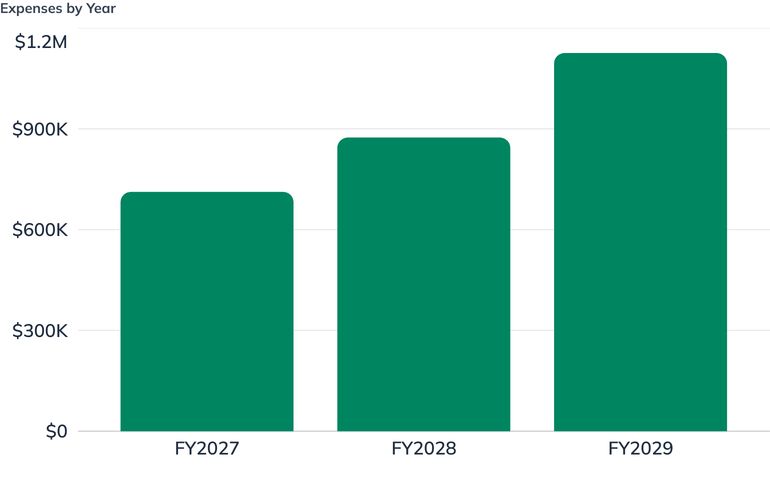
Operating expenses (incl. payroll) | ~$705K / $868K / $1.12M annually |
Total startup funding | $510,000 ($260,000 SBA loan + $250,000 owner equity) |
Revenue Assumptions
- Three revenue streams: Heat Pump Installation & Conversion (~56% of revenue), Traditional HVAC Repair & Installation (~30%), and Maintenance Plans (~14%, recurring)
- Year 1 revenue of $500,000, reflecting a spring/fall-weighted installation ramp typical of a first-year HVAC launch in a seasonal cold-climate market
- Year 2 revenue of $878,000, driven by a full year of maintenance plan subscriber growth and continued heat pump conversion demand tied to Efficiency Maine rebates
- Year 3 revenue of $1,227,000, aided by the addition of a third HVAC technician to support higher installation volume
Expense Assumptions
- Personnel costs include a CEO/Founder, Service Manager, Sales & Marketing Manager, and two HVAC Technicians from launch, with a third technician added in Year 3
- Owner and management compensation increases each year as the business reaches sustained profitability
- Operating expenses include facility rent, marketing, commercial auto insurance, field service software, vehicle fuel/maintenance, licensing, and office administration
Funding Assumptions
- $260,000 SBA 7(a) term loan at 9% APR over 7 years
- $250,000 one-time owner equity investment
- Cash on hand never goes negative across the 3-year forecast; the low point is ~$33,000 in month 15 (August 2027), after which cash climbs to roughly $147,000 by the end of Year 3
- After loan interest, the business is a net loss in Year 1 (-$213,000), turns thinly profitable in Year 2 ($4,000) as debt service ramps up, and reaches a healthier ~$101,000 net profit in Year 3
Frequently Asked Questions
An HVAC business plan should cover your service-line specialization, the local regulatory and rebate landscape, competitive positioning, and funding plan. ClimateTech HVAC Solutions' plan, for example, centers on its cold-climate heat pump specialization, Maine's Efficiency Maine rebate program, its positioning against national franchises and DIY alternatives, and a $510,000 funding plan blending an SBA loan and owner equity.
ClimateTech HVAC Solutions raised $510,000 in total start-up funding: a $260,000 SBA 7(a) term loan at 9% APR over a seven-year amortization, plus $250,000 in owner equity. That covers a winter-equipped service vehicle fleet, heat pump inventory and installation tools, its Portland dispatch facility buildout, marketing, and working capital through its first profitable year.
Yes — HVAC contractors typically need state HVAC contractor licensing, EPA refrigerant handling certification, and manufacturer-specific certification for the equipment they install. ClimateTech HVAC Solutions' CEO and founder holds Maine licensing, and the plan budgets licensing, permits, and certifications as a standing operating expense.
ClimateTech HVAC Solutions earns revenue across three lines: heat pump installation and conversion, traditional HVAC repair and installation, and recurring maintenance plans. Its five-year forecast projects about $2.61 million in total revenue against roughly $2.71 million in expenses.
ClimateTech HVAC Solutions' plan projects a year-one net loss of about $213,000 while it builds out its team, fleet, and facility, turning profitable in year two with roughly $7,000 in net profit and growing to about $105,000 by year three as revenue scales faster than fixed costs. Its full five-year forecast still shows a net loss overall, since the size of the year-one investment outweighs the thinner margins of the early profitable years.
National franchises like One Hour Heating & Air Conditioning bring name recognition but often subcontract installation and lack deep cold-climate specialization, while many local contractors still generate most revenue from traditional furnace and boiler work and don't market rebate assistance. ClimateTech HVAC Solutions differentiates through manufacturer-certified training on cold-climate equipment from Mitsubishi Electric and Fujitsu, handling Efficiency Maine rebate paperwork end-to-end, and running a property-specific Manual J load calculation on every installation rather than a generic sizing estimate.
ClimateTech HVAC Solutions serves homeowners across Greater Portland converting from oil or propane heat to cold-climate heat pumps, plus commercial property owners and managers in Portland's Old Port, Bayside, and industrial corridors who need reliable service for aging rooftop units and boilers.
Maine has the highest reliance on heating oil in the country, leaving many homeowners with volatile fuel bills and aging equipment that often fails during the coldest stretches of winter. State and Efficiency Maine rebate programs make heat pump conversion financially attractive, but most property owners still lack a contractor who can confidently size a cold-climate system correctly for a Maine January and navigate the rebate paperwork on their own.

Business Plan Outline
Start your plan