





Planet-Friendly Hauling


Business Plan Summary
This junk removal business plan example features Planet-Friendly Hauling, a Portland, Oregon hauling company founded by Mara Ellison and Devon Okafor that documents exactly where every load ends up. It covers Planet-Friendly Hauling's itemized diversion reports proving what's donated, recycled, or landfilled, its hybrid and electric truck fleet, and a $470,000 launch funded through founder equity and an SBA 7(a) loan. Use it as inspiration for your own plan. Download a free business plan template to get started, or browse more business plan examples.
Planet-Friendly Hauling
Executive Summary
Planet-Friendly Hauling is a junk removal and hauling company serving homeowners, property managers, and small businesses across the Portland, Oregon metro area. We built the company around a standard the industry has been slow to adopt: nothing goes to the landfill until it has been checked for donation and recycling value first. Every job includes an itemized diversion report showing exactly what was donated, recycled, or landfilled, which builds trust with customers and gives us a genuine point of difference against national franchises that only market sustainability without documenting it.
We operate a small fleet of hybrid and electric box trucks, dispatch through a modern field-service platform, and price every job with a transparent, volume-based calculator customers can quote themselves online before booking. Our two-person haul teams handle same-day and next-day residential cleanouts, estate and moving cleanouts, and recurring commercial pickups for property managers and real estate agents preparing units for turnover.
Portland's environmentally conscious consumer base, strong municipal recycling infrastructure, and large multifamily rental market make it an ideal launch city for a hauling company that treats sustainability as an operating standard rather than a marketing slogan. We are raising funding to acquire our initial fleet, build out a sorting and staging facility, and fund working capital through our first year of operations while we establish recurring commercial accounts.
Need real financials? Explore a spreadsheet-free path to generating financial data for your business.Create your own business plan

Opportunity
Problem Worth Solving
Homeowners, landlords, and small businesses in the Portland metro regularly need large volumes of unwanted items removed quickly, but the two options available to them are unsatisfying. National franchise haulers such as 1-800-GOT-JUNK? and College Hunks Hauling Junk advertise recycling and donation but rarely disclose what actually happens to a load once it leaves the driveway, and their pricing stays opaque until a crew arrives to give an in-person quote. Independent, often unlicensed haulers found through Craigslist and Thumbtack are cheaper, but many take everything straight to the transfer station regardless of what could have been donated or recycled, and offer no consistent insurance coverage if something is damaged during the job.
At the same time, Oregon Metro (the Portland region's waste and recycling authority) has repeatedly flagged that bulky household items and construction debris account for a large share of landfill volume, much of which is recoverable metal, wood, textiles, and functional furniture. Customers increasingly want to know that items they can no longer use will find a second life, but they have no easy way to verify a hauler's actual diversion rate, and no hauler currently operating in the Portland market publishes one.
The verification gap is the real problem. Sustainability claims in this industry are almost entirely unfalsifiable at the point of sale. A customer choosing between two haulers sees the same language on both websites — "we donate and recycle whenever possible" — with no mechanism to tell which one actually sorts a load and which one drives straight to the transfer station because sorting costs time the crew isn't paid for. The economics quietly push against diversion: every minute spent triaging a load is a minute not spent on the next job, so a hauler paid per job and measured on jobs per day has a standing incentive to skip the sorting step. Customers who care are effectively asked to take it on faith, and many have learned not to.
The problem compounds for the repeat buyers. Property managers turning over units, real estate agents clearing homes before listing photography, and contractors handling renovation debris are all buying on compressed timelines where a missed pickup cascades into a missed listing date or a delayed tenant move-in. They need reliability and documentation more than they need the lowest price — many now carry sustainability commitments of their own that they have to report against — and the fragmented, largely unlicensed low end of the market cannot supply either. They are left choosing between a franchise that is dependable but expensive and opaque, and an independent operator who may or may not show up.
Two structural pressures are making all of this more acute. Disposal costs are rising across the region, which widens the cost gap between a hauler who diverts and a hauler who landfills everything, and turns diversion from a marketing posture into an operating advantage. And the Portland metro's dense multifamily rental stock keeps generating turnover volume regardless of the housing cycle: units change hands, tenants leave furniture behind, and someone has to clear them. The demand is durable. What is missing is a hauler who can serve it professionally and prove where the material went.
Our Solution
Planet-Friendly Hauling solves this with three commitments no competitor in the Portland market currently makes public. First, every load is triaged on-site by our haul team before it reaches the truck: donatable furniture and household goods go to partner organizations including the Habitat for Humanity Portland Region ReStore network and St. Vincent de Paul of Portland, scrap metal and appliances go to certified metal recyclers, and construction debris is sorted for the wood-waste and aggregate recycling programs Metro operates locally. Second, every customer receives an itemized diversion report by email within 24 hours of their job, showing the percentage of their load that was donated, recycled, or landfilled — turning what other haulers treat as a marketing claim into a documented receipt. Third, our fleet is built around hybrid and electric box trucks, lowering the fuel cost and emissions per job and reinforcing the brand promise for the customers who chose us specifically because of it.
Booking is entirely self-service: customers get an instant, photo-based volume estimate through our website, confirm a same-day or next-day slot, and pay digitally once the job is complete. For recurring commercial customers — property managers and real estate agents who need repeat turnover cleanouts — we offer standing service agreements with priority scheduling and consolidated monthly invoicing.
The diversion report is the part that makes the rest work, so it is worth being specific about how it is produced. Our crews log each load into categories on a tablet at the job site as they sort — furniture and housewares, metal and appliances, e-waste, wood and construction debris, textiles, and landfill — and record the destination for each category. That log generates the customer's report automatically and simultaneously feeds our company-wide diversion rate. Because the same entry drives both the customer receipt and our internal metric, the number cannot drift away from what actually happened on the job. A competitor who wanted to match this would have to change how crews spend time on-site, not just what the website says.
We resolve the incentive problem that keeps other haulers from sorting by building sorting time into how the job is priced and how crews are paid. Our crews are salaried rather than paid per job, so the twenty minutes a proper triage adds to a cleanout does not come out of anyone's earnings, and our covered sorting bay lets crews finish separating a mixed load back at the facility rather than making the call under time pressure in a customer's driveway. Sorting is a step in the standard job, not an optional extra a rushed crew can quietly skip.
Our commercial service agreements are designed around what repeat buyers actually need. Property managers get guaranteed response windows so a unit turnover can be scheduled against a known date, a named account contact rather than a general dispatch line, consolidated monthly invoicing instead of per-job receipts to reconcile, and a quarterly roll-up of diversion across all their properties — a document several of them can use directly in their own sustainability reporting. Real estate agents and stagers get the same response guarantee sized to listing timelines, where the constraint is usually a photography appointment that cannot move.
Everything above rests on being a genuinely professional operator, which in this market is itself a differentiator against the low end. We carry general liability, commercial auto, and workers' compensation coverage on every crew member and vehicle; we hold the City of Portland waste hauler permit; and our crews arrive uniformed, in branded trucks, at a confirmed appointment time. Customers comparing us to an unlicensed independent are not just comparing sustainability practices — they are comparing whether anyone is covered if a couch goes through a stairwell wall.
Target Market
Our customers fall into three segments within roughly a 25-mile radius of central Portland. Residential customers make up our largest segment: homeowners and renters handling move-outs, estate cleanouts, garage and basement decluttering, and post-renovation debris removal, concentrated most heavily in close-in neighborhoods (Southeast, Northeast, and North Portland) where household income and environmental consciousness both run above the metro average. Property managers and landlords are our highest-value recurring segment, needing fast unit turnover between tenants across the Portland metro's large multifamily rental stock; a single property management account can generate dozens of jobs per year. Real estate agents and home stagers are a smaller but valuable segment, needing fast, reliable cleanouts ahead of listing photography and open houses, often on compressed timelines.
Across all three segments, the customers most likely to choose us over a lower-priced independent hauler are the ones who actively care where their items end up — a segment that regional survey data consistently shows makes up a strong majority of Portland-metro consumers, and nationally over 70% of junk removal customers now say eco-friendly disposal factors into their choice of hauler.
Residential. These jobs arrive as urgent, one-off decisions rather than planned purchases. Someone inherits a house, closes on a sale, finishes a bathroom remodel, or finally deals with a garage — and then wants it gone this week. The purchase is emotional as often as it is practical, particularly on estate cleanouts, where the customer is disposing of a parent's belongings and the assurance that usable items go to a ReStore rather than a landfill carries real weight. This segment finds us through search and neighborhood referral, decides quickly, converts on availability, and pays on the spot. Our typical residential customer is a homeowner aged 35 to 65 in a close-in neighborhood, choosing between us and a franchise, with price a factor but not the deciding one.
Property managers and landlords. This is where the durable revenue is. A property management company running several hundred units generates continuous turnover work that is scheduled rather than urgent, and the buying decision is made once — at the account level — rather than repeated per job. The decision-maker is a regional or portfolio manager who is evaluated on turn time and cost predictability, and who increasingly has an ESG or sustainability line item to report against. Consolidated monthly invoicing and a quarterly diversion roll-up map directly onto how they are already measured. These accounts take longer to win, but they retain, and they smooth the residential segment's seasonality because tenant turnover continues through the winter months when discretionary residential cleanouts drop off.
Real estate agents and stagers. The smallest of the three by volume and the most time-sensitive by nature. An agent clearing a property before listing photography is working against a fixed appointment, and reliability outweighs everything else in the decision. This segment is disproportionately valuable as a referral channel: agents talk to each other, and they hand our name to sellers who then become residential customers in their own right.
We are deliberately not pursuing a fourth segment that a hauler our size could chase — large-scale construction and demolition debris. Those jobs are high-volume and low-margin, run on roll-off containers rather than crewed box trucks, and produce material streams that do not suit our sorting model. We will take renovation debris as part of a residential or commercial cleanout, but we are not competing for general contractor accounts.
Competition
The Portland junk removal market includes national franchise operators — 1-800-GOT-JUNK?, College Hunks Hauling Junk, and JDog Junk Removal — alongside a long tail of independent, often unlicensed, single-truck operators found through Craigslist, Nextdoor, and Thumbtack. The franchises compete on brand recognition and professionalism (uniformed crews, liability insurance, online booking) but charge premium prices and set marketing decisions at the corporate level, which limits how specifically they can speak to a Portland customer's values. Independent operators compete almost entirely on price, with inconsistent insurance coverage, no standardized disposal practices, and no verifiable sustainability claims.
Planet-Friendly Hauling occupies the gap between the two: franchise-level professionalism, insurance, and online booking, combined with a documented sustainability practice neither the franchises nor the independents currently offer. Our itemized diversion report is not offered by any hauler currently operating in the Portland metro, and it is difficult for a national franchise to replicate quickly, since it requires real changes to on-the-ground sorting practice rather than just marketing language.
Why the franchises are structurally slow to respond. Franchisees pay a meaningful share of gross revenue in combined royalty and marketing fees before covering labor, trucks, insurance, and disposal, which creates a permanent overhead floor and pushes them toward maximizing jobs per truck per day. Adding a sorting step to every job cuts directly against that. More to the point, a franchisee cannot unilaterally change the operating standard — sorting protocols, crew compensation structure, and the customer-facing reporting product would all have to be adopted at the corporate level and rolled out across a national network. Their advantage is national brand recall and ad spend, which is real and which we do not attempt to match head-on.
Why the independents cannot follow. The low end competes on price precisely because it carries no insurance overhead, no permit, no facility, and no salaried crew. Sorting requires all of those things: somewhere to stage a mixed load, a crew whose pay does not shrink when a job takes longer, and relationships with donation partners who will only accept goods in usable condition delivered on a schedule. An operator whose entire cost advantage comes from not having infrastructure cannot add ours without becoming us and losing the price gap that is their only argument.
Where we are genuinely at a disadvantage. We will not be the cheapest quote a customer receives, and for price-led buyers we will lose. We are starting without brand recognition in a market where the franchise names have a decade of ad spend behind them, and we are building recognition from a standing start. We are also a single-market operator, which means we cannot serve a property management company's portfolio outside the Portland metro if they consolidate vendors regionally.
What protects our position over time. Our advantage is not the sustainability claim itself — anyone can make one — but the operating system that produces the evidence: the sorting workflow, the crew compensation structure that makes sorting sustainable, the facility that makes it practical, and the partner relationships that give diverted material somewhere to go. Each of those is individually copyable and collectively slow to assemble. Alongside it, our commercial accounts accumulate a switching cost as their diversion history with us becomes the record they report against, and our repeat residential customers accumulate the ordinary trust that comes from a hauler who showed up when they said they would.
Execution
Marketing Plan
Our marketing is built for a category where demand is unplanned and urgent. People do not shop for junk removal in advance; they decide they need it and then look for someone who can come quickly. That means the priority is being findable and credible at the moment of intent, not building awareness months ahead of a purchase. Our second job is to make the sustainability difference legible in the few seconds a customer spends comparing us to the alternatives.
Search — our primary residential channel. Google Search and Google Local Services Ads capture customers at the moment they decide, and they carry the majority of our paid budget. Local Services Ads matter disproportionately here because the Google Guaranteed badge signals licensing and insurance, which is precisely the reassurance that separates us from the unlicensed low end of the market. Alongside paid search we invest in local SEO — a complete Google Business Profile, consistent listings, neighborhood-level service pages, and steady review generation — because organic local results carry a meaningful share of this category's clicks and compound rather than resetting each month.
Reviews. Reviews are effectively the buying criterion in local home services. We ask every residential customer for a review at job completion, when satisfaction is highest and the crew is still there, and we respond to every review including the critical ones. Our diversion report gives customers something specific to write about, which produces reviews that describe what makes us different rather than generic praise.
Nextdoor and neighborhood referral. Close-in Portland neighborhoods are exactly where Nextdoor recommendations drive real decisions, and they overlap precisely with our target residential geography. We participate as a local business rather than an advertiser, and we treat a branded truck parked in a driveway for two hours as the neighborhood advertising it genuinely is.
Content and social. We publish practical, locally specific content — what actually happens to a mattress in Portland, which items require special handling, how to prepare for a cleanout — that answers real questions and reinforces our expertise. On social channels we show the work: sorted loads, donation drop-offs, and monthly diversion totals. This is not a lead-generation engine at our scale and we do not treat it as one; it is credibility that supports conversion from other channels.
Partnership marketing. Our donation partners, including the Habitat for Humanity Portland Region ReStore network and St. Vincent de Paul of Portland, reach exactly the audience most likely to value what we do. Co-marketing with them is low-cost and highly aligned. We pursue the same logic with real estate brokerages and staging companies, where a referral relationship serves both sides.
Commercial marketing. The commercial segment is not won through advertising. Mara works a named target list of Portland-area property management companies and brokerages directly, supported by a small amount of trade association presence and case-study material built from our own accounts. The quarterly diversion roll-up doubles as marketing collateral — a document an account contact can carry into their own sustainability reporting is more persuasive than any brochure.
How we manage spend. Marketing budget grows as the business does, weighted heavily toward search early while organic visibility and referral volume build. We measure customer acquisition cost by channel per booked job rather than per lead, and we reallocate quarterly based on what that number says. Channels that cannot be measured this way are held to a small share of budget and judged on their contribution to conversion elsewhere.
What we deliberately avoid. We do not make sustainability claims we cannot document — the whole point of the diversion report is that our claims are checkable, and vague green marketing would undercut it. We do not chase discount-led promotions that attract price-sensitive customers we cannot serve profitably. And we do not buy broad awareness advertising, which is poorly matched to a category where the customer's decision window is measured in minutes.

The Strategic Portfolio Owner
Principal Property Manager
Oversees a large portfolio of multifamily residential properties across the Portland metro area. They are focused on maximizing Net Operating Income (NOI) through efficient unit turnovers and maintaining the brand's reputation for sustainable, high-end urban living.
Priorities
- Reducing unit turnover time to minimize vacancy loss
- Ensuring 100% compliance with Oregon Metro waste regulations
- Controlling operational costs through predictable, transparent pricing
Evaluation Criteria
- Proof of comprehensive liability and workers' comp insurance
- Volume-based predictable pricing models
- Documented diversion rates to include in annual ESG (Environmental, Social, and Governance) reports
Pain Points
- Opaque 'on-site' quotes from national franchises that blow the maintenance budget
- Liability risks from using uninsured, independent haulers found on Craigslist
- Tenant complaints regarding overflowing bulky waste in communal areas
Common Objections
- Concerned that 'eco-friendly' services carry a significant price premium over standard hauling
- Worried about the vendor's ability to handle high-volume 'move-out' months like June and August
“I need a partner who protects my bottom line and my property's reputation without me having to micromanage where the trash goes.”

The High-Stakes Listing Agent
Senior Residential Realtor
Specializes in high-end listings in Southeast and Northeast Portland. They need homes cleared of decades of clutter instantly to meet photography and staging deadlines, while satisfying their environmentally conscious clients' desire to avoid the landfill.
Priorities
- Securing immediate, reliable service to keep listing timelines on track
- Providing a 'white-glove' experience for stressed sellers during estate cleanouts
- Using eco-friendly vendors as a marketing differentiator for the property
Evaluation Criteria
- Availability for 24-48 hour service windows
- Professionalism and appearance of the crew on-site
- Provision of donation receipts that clients can use for tax deductions
Pain Points
- Last-minute cancellations from unreliable independent haulers
- Clients feeling guilty or paralyzed by the thought of throwing away functional items
- Property damage (scuffed walls/floors) caused by unprofessional hauling crews
Common Objections
- Is the pricing simple enough for me to explain to a client who is already overwhelmed by closing costs?
- Do you have the equipment to handle heavy, awkward items without damaging the hardwood floors?
“My clients in Laurelhurst care deeply about where their things go. Being able to tell them we're using a local, eco-friendly hauler is a huge value-add for my service.”
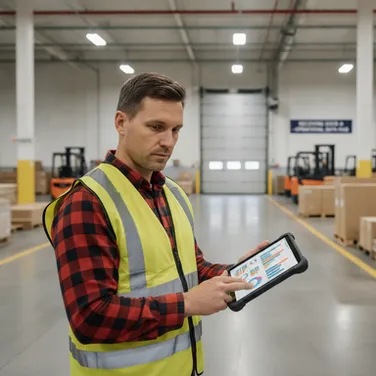
The Compliance Specialist
Sustainability & Facilities Coordinator
Responsible for the day-to-day logistics of waste management and sustainability initiatives for large-scale developments. They vet vendors based on their ability to meet Portland's strict recycling mandates and provide data for corporate sustainability goals.
Priorities
- Maximizing landfill diversion for wood, metal, and textiles
- Streamlining the logistics of bulky item removal from tight urban loading docks
- Verifying the ethical downstream path of donated furniture and electronics
Evaluation Criteria
- Detailed reporting on weight and material type for every load
- Established partnerships with local Portland nonprofits for furniture donation
- Technical knowledge of Oregon Metro's life cycle evaluation requirements
Pain Points
- Lack of transparency from current haulers regarding actual recycling vs. landfilling
- Difficulty coordinating multiple pickups for different material types (metal, e-waste, furniture)
- Pressure from the executive board to meet 'Zero Waste' targets
Common Objections
- How do I prove to my auditors that your diversion rates are accurate?
- Will your trucks fit in our height-restricted underground parking garages?
“If I can't track the diversion rate with hard data, it didn't happen. I need a hauler who treats waste as a resource, not a nuisance.”
Sales Plan
Residential sales move through a self-service funnel: a customer requests a quote online or by phone, receives a photo-based volume estimate within minutes, and books directly into our scheduling calendar without needing to speak to a salesperson unless they have questions. Same-day and next-day availability is a core conversion lever, since junk removal is frequently an urgent, same-week decision.
Commercial sales run through a standard account-based process: our sales lead identifies target property management companies and brokerages, proposes a standing service agreement with guaranteed response times and consolidated monthly billing, and reviews account performance quarterly to look for expansion opportunities. We track quote-to-booking conversion rate, average revenue per job, and commercial account retention as our core sales metrics, and we expect commercial accounts to carry a materially higher lifetime value than one-off residential jobs given their repeat-visit frequency.
The residential funnel in detail. Most residential demand originates as a search — someone typing a variation of "junk removal near me" on a phone, often standing in the garage they are trying to clear. Speed of response is the whole game at that moment. Our photo-based estimator lets a customer upload two or three pictures and receive a volume-based price range without waiting for a callback, which removes the single biggest drop-off point in this category: the in-home estimate appointment that franchise operators require before quoting. From there the customer picks a slot from live availability and confirms with a card on file. Crews confirm the final price on-site before starting work, since photos routinely understate what is actually behind the couch, and any adjustment is agreed with the customer rather than presented after the fact.
The commercial pipeline. Mara leads commercial development directly during our first two years, working a named target list rather than a broad outbound campaign — the Portland metro has a finite number of property management companies operating at the scale we want, and they are individually identifiable. The sequence is a short discovery conversation about turn volume and current vendor pain points, a trial job at standard pricing, and then a service agreement proposal built around their actual turnover cadence. The trial job matters: this segment does not sign an agreement with an unproven vendor, and a clean first turnover does more than any proposal document. Once an account is signed, we review performance quarterly with the account contact, and use that review to expand into adjacent properties in their portfolio.
Handoffs between the two. The segments feed each other more than they compete for capacity. Agents and property managers refer residential work constantly — a tenant leaving furniture behind becomes a resident's own cleanout, a seller clearing a house becomes a homeowner in a new one. We ask for those referrals explicitly at the quarterly account review rather than hoping for them.
Scheduling as a sales constraint. Our commercial commitments carry guaranteed response windows, so we hold capacity for them rather than filling every slot with first-come residential bookings. In practice this means reserving a portion of each week's schedule against contracted accounts and releasing unclaimed capacity back to residential availability a short window ahead. Managing that release well is what lets us honor commercial guarantees without idling trucks, and it is a discipline we expect to tune continuously as the commercial book grows.
Locations & Facilities
Planet-Friendly Hauling operates from a single leased facility in Southeast Portland's industrial corridor, chosen for direct access to I-5 and I-205 and proximity to our primary donation and recycling partners. The facility includes secured outdoor space for fleet parking and EV charging, a covered staging and sorting bay where every load is triaged before disposal, and a small office for dispatch and administration. We do not operate a retail storefront; all customer interaction happens on-site at the job location or through our online booking system, which keeps our facility overhead low relative to a business that needed walk-in retail space.
Why this location. Highway access is the operational constraint that matters most for a business whose crews spend the day crossing the metro. Southeast Portland's industrial corridor sits within a short drive of the close-in neighborhoods that generate the bulk of our residential demand, while keeping I-5 and I-205 available for jobs in Gresham, Beaverton, and Clackamas without routing crews through downtown. It is also zoned appropriately for a waste hauling operation with outdoor vehicle storage, which materially narrows the field of viable sites in the city.
The sorting bay. The covered staging area is the piece of infrastructure the business model actually depends on. It lets crews bring a mixed load back and separate it under cover rather than making disposal calls in a customer's driveway on a rainy afternoon, which is the difference between a diversion practice that holds up year-round and one that quietly degrades every winter. The bay is laid out with labeled bins by material stream — furniture and housewares, metal and appliances, e-waste, wood, textiles, and landfill — so that a sorted load can be staged for the appropriate partner run rather than consolidated and hauled to the transfer station by default.
EV charging and fleet parking. Secured outdoor parking holds our trucks overnight along with charging infrastructure sized for the fleet. Charging overnight on commercial off-peak rates is what makes the hybrid and electric fleet economically sensible rather than merely symbolic, and having it on-site rather than relying on public charging removes a scheduling dependency we would otherwise carry into every route.
Office and dispatch. A small office houses dispatch, scheduling, and administration. It is deliberately modest — most of the work is coordinated through our field-service platform on crew tablets rather than from a desk, and neither founder needs a dedicated office to do their job. Administrative work that does not require the facility is handled remotely.
Room to grow. The site is sized to accommodate our second truck and crew without relocation, which is a deliberate choice: moving a waste hauling operation is expensive and disruptive, and taking slightly more space than we need at the outset is cheaper than a mid-plan move. Beyond that expansion point, additional capacity would require either a larger site or a satellite yard on the west side of the metro, and we would expect the west-side option to make sense first, since it would cut deadhead miles on Washington County jobs rather than simply adding square footage.
Technology
Our operations run on a cloud-based stack rather than paper job tickets or spreadsheets. Jobs are scheduled and dispatched through Workiz, a field-service platform built for home-service businesses, which handles online booking, route optimization, digital invoicing, and payment collection through Stripe. Customer photo-based quoting runs through the same platform's mobile app, letting haul teams confirm final pricing on-site. We track diversion outcomes — what was donated, recycled, or landfilled per job — in a lightweight internal tracker that feeds each customer's diversion report, and we use QuickBooks Online for accounting and payroll. Marketing performance across Google, Nextdoor, and social channels is monitored through each platform's native analytics, keeping our software overhead proportional to our size.
The diversion tracker. This is the only piece of our stack that is not off-the-shelf, and it is deliberately simple: a structured form on the crew tablet where the team logs each load by material category and destination as they sort. It writes to a single database that serves two outputs — the customer's diversion report, generated and emailed within 24 hours of the job, and our company-wide diversion rate. We built it as a thin layer rather than a custom application because the value is in the discipline of capture, not in software sophistication, and because a simple tool is one crews will actually use on a cold morning with gloves on. As volume grows we expect to fold the same data into our quarterly commercial account reviews without changing how it is collected.
Why Workiz rather than a general-purpose alternative. Field-service platforms handle the specific things this business needs — dispatching crews against live availability, sequencing multi-stop routes, quoting from the field, and taking payment at job completion — that a generic CRM or calendar tool does not. Running booking, dispatch, quoting, and invoicing through one system rather than stitching several together is what lets us operate without a dedicated administrator in the early years.
Payments and cash handling. Payment is collected digitally at job completion through Stripe, which keeps our receivables cycle short for residential work and removes cash handling from the truck entirely. Commercial accounts are the exception by design: they are invoiced monthly on consolidated statements, which is what the segment expects and what makes us easy to buy from.
Security and continuity. Customer contact details, job photos, and payment records live in vendor-hosted systems with their own access controls rather than on crew devices; tablets are used as access points, not as storage. Access is provisioned per person and removed when someone leaves. Payment card data never touches our systems — Stripe handles it — which keeps our compliance surface small and appropriate to our size.
How we use AI day to day. We use AI assistance for the ordinary administrative load a two-founder business generates: drafting customer correspondence and follow-ups, summarizing quarterly account performance ahead of commercial reviews, and drafting marketing copy for review. It is a productivity tool that keeps administrative overhead down, not a differentiator, and it makes no decisions about pricing, disposal routing, or what appears in a customer's diversion report — those numbers come from what the crew logged on the job.
Equipment & Tools
Our equipment needs fall into three groups: the fleet, the on-the-job gear that lets a two-person crew move heavy items safely, and the software and facility infrastructure that supports sorting and dispatch.
Equipment / Tool | Purpose |
|---|---|
Hybrid/electric box trucks (e.g., Ford E-Transit, Isuzu NPR HV) | Primary haul fleet |
Furniture dollies and hand trucks | Safe, efficient item handling |
Appliance dollies with stair-climbing straps | Moving refrigerators and washers out of basements and walk-ups |
Moving blankets and tie-down straps | Protecting customer property and cargo |
Safety gear (gloves, high-visibility vests, back-support belts) | Crew safety on every job |
Hand tools and cordless power tools | Breaking down furniture and fixtures that will not fit through a doorway intact |
Crew tablets | On-site quoting, job logging, and diversion capture |
Workiz field-service platform | Scheduling, dispatch, quoting, invoicing |
Stripe payment terminal | On-site and digital payment collection |
QuickBooks Online | Accounting and payroll |
Recycling and donation sorting bins | On-site load triage at our facility |
EV charging infrastructure | Overnight fleet charging at our facility |
Fleet. We launch with one hybrid/electric box truck and add a second when demand supports a second crew. Box trucks in this class sit below the weight threshold that would require a commercial driver's license, which meaningfully widens our hiring pool for haul team leads compared to operators running heavier equipment. Each truck is branded, since a marked truck parked in a driveway for two hours is among the most effective neighborhood advertising this business has.
Crew gear. A two-person crew clearing a third-floor walk-up needs the right lifting equipment more than it needs muscle. Appliance dollies with stair straps, furniture sliders, and proper back support are what keep jobs on schedule and keep injuries — the single largest operational risk in this business — from becoming routine. Gear is inspected on a set schedule and replaced on wear rather than on failure.
Maintenance. Vehicle downtime is the failure mode that most directly costs revenue, since a truck out of service is a crew with nowhere to go. We run scheduled preventive maintenance rather than repairing on breakdown, and Devon owns the maintenance calendar directly given his fleet background. Hybrid and electric drivetrains reduce some conventional wear items but add their own service requirements, and we budget for both.
Milestones
Secure LLC formation, business license, and waste hauler permit Complete Oregon LLC formation, City of Portland waste hauler permit, and general liability, commercial auto, and workers' comp insurance. | Mara Ellison Sept 15, 2026 |
Lease facility and build out sorting/staging bay Sign lease on Southeast Portland facility and complete sorting bay, EV charging, and office build-out. | Devon Okafor Sept 30, 2026 |
Acquire initial hybrid/electric fleet Purchase our first hybrid/electric box truck and outfit it with hauling equipment. | Devon Okafor Oct 1, 2026 |
Launch online booking site and begin residential service Go live with Workiz-powered booking site and begin taking residential jobs across the Portland metro. | Mara Ellison Oct 15, 2026 |
Sign first commercial property management account Close first standing service agreement with a Portland-area property management company. | Mara Ellison Jan 31, 2027 |
Reach monthly break-even Achieve first month where revenue covers all operating expenses. | Mara Ellison Mar 31, 2028 |
Add second haul crew and second truck Expand to a second truck and crew once demand supports it. | Devon Okafor Apr 1, 2028 |
Key Metrics
We track a small set of metrics that reflect both business health and our core differentiator. Diversion rate — the percentage of each load donated or recycled rather than landfilled — is our defining metric, and we track it company-wide as well as per job so it stays a genuine operating discipline rather than a one-time claim. Alongside it, we track average revenue per job, quote-to-booking conversion rate, jobs completed per truck per day, commercial account count and retention rate, and customer acquisition cost by channel. Reviewed together, these metrics tell us whether we are growing efficiently (jobs per truck, acquisition cost), whether our commercial pipeline is becoming a larger share of revenue over time (account count and retention), and whether we are living up to the promise the brand is built on (diversion rate).
Diversion rate. Measured by weight where our partners provide weights and by logged volume otherwise, calculated per job and rolled up monthly. We watch the trend more closely than the absolute number, because a diversion rate that drifts down over a quarter is the earliest signal that sorting discipline is slipping under schedule pressure — which is exactly the failure mode that turns a differentiated hauler into an ordinary one. We review it at the crew level as well as company-wide, since a divergence between crews points at training rather than at demand mix.
Jobs per truck per day. Our primary capacity and efficiency measure, and the number that tells us when a second crew is justified. It has a natural ceiling — a crew that sorts properly cannot run as many stops as one that does not, and pushing this number past a sensible range would cost us the diversion rate that is the reason customers chose us. We treat it as a utilization check, not a target to maximize.
Quote-to-booking conversion rate. Tracked by channel and by segment. A falling residential conversion rate usually means our quoted range has drifted out of line with the market or that response speed has slipped; both are correctable quickly once visible.
Average revenue per job. Watched alongside job count so that revenue growth can be attributed to either more work or better-priced work. A rising job count with a falling average often means we are winning small, low-margin jobs at the expense of schedule capacity.
Commercial account count and retention. The count tells us whether the pipeline is building; retention tells us whether the service is holding. Retention matters more — a churned commercial account represents lost recurring volume and a much longer replacement cycle than a lost residential customer.
Customer acquisition cost by channel. Calculated per booked job, not per lead, and compared across paid search, local services ads, organic and referral. This is the number that decides where marketing spend goes each quarter.
Safety and injury rate. Not a growth metric, but one we watch deliberately. This is physically demanding work, and crew injury is both the most serious operational risk we carry and a direct cost through workers' compensation experience rating. We track near-misses alongside recordable incidents, since near-misses are the leading indicator.
We review the operating metrics monthly as a founding team and share diversion performance with commercial accounts quarterly.
Pricing
We price residential and light-commercial jobs primarily by volume — how much of our truck a job fills — since that's the model customers find easiest to understand and quote themselves online. A quarter-truckload (a few bulky items, like a couch or mattress set) starts around $150; a half-truckload (a garage or small room cleanout) runs $250–$400; and a full-truckload job (an estate cleanout, a full apartment, or major renovation debris) runs $450–$700+. Across our full job mix — residential and light-commercial combined — our average completed job comes in around $460. Customers who prefer a single flat number for a well-defined job (a mattress pickup, an appliance haul-away) can also get a flat-rate quote instead of a volume estimate; we hold flat rates to the same per-unit economics as the volume calculator so pricing stays consistent either way.
Commercial accounts — property managers and real estate agents with recurring turnover cleanouts — are priced differently: a standing monthly service agreement rather than a per-job quote, averaging roughly $750 per account per month based on typical visit frequency and volume, with consolidated monthly invoicing rather than per-job billing. This gives commercial customers predictable costs and gives us predictable recurring revenue.
We do not compete on being the cheapest option in the Portland market. Independent, unlicensed haulers routinely undercut us, but without our insurance coverage, professional booking experience, or documented diversion practice. Our pricing sits close to the national franchise operators, which is the honest comparison: we're offering the same professionalism at a similar price point, plus a sustainability practice they don't document.
What a quoted price has to cover. Every job carries disposal fees for whatever cannot be donated or recycled, fuel and vehicle wear, the crew's time including the sorting step, and a share of insurance, facility, and marketing overhead. Quoting below that floor to win a price-sensitive customer is the most common way operators in this category lose money while looking busy, and we hold the line on it. Our diversion practice helps here in a way worth stating plainly: material routed to donation partners or metal recyclers carries little or no tipping fee, so a well-sorted load costs us less to dispose of than the same load taken straight to the transfer station. Sorting is not only the brand promise — it is part of how the unit economics work.
Surcharges and exceptions. A small number of items cost materially more to dispose of than their volume suggests, and we price them separately rather than burying the cost in the base rate: mattresses and box springs, refrigerators and other appliances containing refrigerant, tires, and certain electronics all carry specific handling or recycling fees. We disclose these at quote time rather than at the truck. Jobs requiring extended carries, stair access above the second floor, or disassembly may also carry an adjustment, which the crew confirms with the customer before starting work.
What we do not charge for. We do not charge for estimates, we do not charge a fuel surcharge, and we do not add a fee for producing the diversion report. Those are all part of the price.
How pricing will evolve. Disposal costs across the region are rising, and we expect to revisit our rate card annually against tipping fees, wages, and fuel or electricity costs rather than holding prices flat and quietly absorbing margin compression. Commercial agreement pricing is set per account against actual turnover volume and reviewed at the annual renewal.
Company
Ownership & Structure
Planet-Friendly Hauling is organized as an Oregon limited liability company (LLC), headquartered in Portland, Oregon. Ownership is held by co-founders Mara Ellison and Devon Okafor, who each hold a 50% membership interest. The company holds an Oregon business license, a City of Portland waste hauler permit, and general liability, commercial auto, and workers' compensation insurance covering all crew members and vehicles.
Why an LLC. The structure gives us liability protection appropriate to a business whose crews work inside customers' homes and operate commercial vehicles daily, without the governance overhead of a corporation. As a pass-through entity, profits and losses flow to the members and are taxed at the individual level rather than at the company level. We reviewed the alternative of electing S-corporation treatment as owner compensation grows, and expect to revisit that election with our accountant once the business reaches sustained profitability rather than deciding it in advance.
Governance between the founders. An operating agreement executed at formation sets out capital contributions, profit and loss allocation, decision rights, and buy-sell provisions covering death, disability, or a member's voluntary exit. Day-to-day decisions sit with whichever founder owns the relevant function — Mara for commercial, financial, and strategic matters, Devon for operations, fleet, and field staffing. Decisions that bind the company materially, including additional debt, a facility change, adding a vehicle, or hiring above a set salary threshold, require both members' agreement. With two equal members, deadlock is a real structural risk, and the operating agreement specifies a mediation step before any dissolution remedy.
Licensing and compliance. Waste hauling in the Portland metro is a permitted activity, and we operate under a City of Portland waste hauler permit alongside our Oregon business registration. We comply with Oregon employment law as a W-2 employer, including the Portland metro regional minimum wage tier, paid sick time, and Paid Leave Oregon contributions. Our vehicles are registered and insured commercially, and crew members are covered by workers' compensation from their first day. Regulatory requirements in this space change — particularly around electronics, appliances containing refrigerant, and construction debris — and Mara owns keeping our practices current rather than treating compliance as a one-time launch task.
Insurance. We carry general liability covering damage to customer property, commercial auto on every vehicle, and workers' compensation on every employee. For our commercial accounts this is not a formality: property management companies typically require a certificate of insurance naming them as an additional insured before a vendor sets foot on a property, and carrying proper coverage is a precondition of competing for that segment at all.
Management Team
Mara Ellison, Co-Founder and CEO, spent six years in operations leadership at a regional waste-and-recycling hauler before starting Planet-Friendly Hauling, and holds a certification in solid waste management from the Solid Waste Association of North America. She leads strategy, commercial partnerships, and financial oversight. In practice during our first two years that also means she personally runs commercial account development, handles marketing, and manages the relationships with our donation and recycling partners — a founding CEO at this scale does the work rather than delegating it.
Devon Okafor, Co-Founder and Head of Operations, previously managed dispatch and fleet operations for a Portland-area moving company and brings hands-on experience in route optimization, crew scheduling, and vehicle maintenance programs. He oversees day-to-day haul operations, the sorting and disposal process, and the field team. He owns crew hiring and training, the maintenance calendar, and the safety program, and works jobs directly during our early months both to cover demand peaks and to set the operating standard the crews will inherit.
Field team. We launch with one two-person haul crew: a haul team lead who drives, runs the job, confirms pricing on-site, and supervises the sorting process, paired with a haul team member handling loading and triage. Our box trucks sit below the weight class requiring a commercial driver's license, which widens the pool of candidates we can hire into the team lead role and lets us select for judgment and customer manner rather than for a credential the equipment does not require. A second crew of the same shape is added in our second year as demand supports a second truck.
Operations Manager. We add a dedicated Operations Manager in our third year, once two crews and a growing commercial book make scheduling and dispatch a full-time job rather than something Devon absorbs alongside everything else. This role takes over daily dispatch, crew performance management, and route planning, freeing Devon to focus on fleet, safety, partner logistics, and the next stage of expansion. Hiring this role earlier would add fixed overhead before there is enough volume to justify it; hiring it later would make Devon the bottleneck on growth.
How we hire crew. We hire for reliability and customer manner first and train the rest. The work is physically demanding and takes place inside people's homes on what is sometimes a difficult day for them, and the sorting discipline our model depends on only holds if crews actually believe in it. We pay above the market rate for comparable hauling and material-handling roles in the Portland metro deliberately — the sorting step is a skilled judgment task, turnover in this category is expensive in both recruiting cost and lost diversion consistency, and salaried crew rather than per-job pay is what removes the incentive to rush past the part of the job that differentiates us.
Gaps we know we have. Neither founder has a formal finance background, and we rely on an outside accountant for tax planning, entity structure guidance, and monthly bookkeeping review. Neither has run a business through a downturn as an owner. We have structured our advisory relationships specifically around these gaps.
Advisors
We have assembled a small advisory group chosen specifically against the gaps in our own experience rather than for titles. Each advises informally on a quarterly cadence, with additional access as specific questions arise.
Renee Castillo — Sustainability and Compliance. Former regional sustainability director for a Pacific Northwest waste management company. Renee advises on recycling partnerships, municipal compliance, and diversion-rate measurement methodology. Her contribution matters most on the question that underpins our entire differentiator: how to define and calculate a diversion rate that is honest, defensible, and consistent enough to publish. She also helps us anticipate regulatory changes around electronics, refrigerant-containing appliances, and construction debris, where requirements shift and a hauler who is slow to adapt takes on real liability.
Tom Whitfield — Small Business Operations. Portland-based small business advisor and former owner of a residential moving company. Tom advises on fleet economics, crew management, and local market positioning. Having built and eventually sold a business with nearly identical operating characteristics — trucks, two-person crews, physical work inside customers' homes, seasonal demand — he is our most direct source on the operational failure modes that sink businesses in this category: undercharging to fill a schedule, growing headcount ahead of demand, and letting vehicle maintenance slip until a breakdown costs a month of profit.
Accountant and bookkeeping support. We engage an outside accounting firm for monthly bookkeeping review, tax planning, and entity structure guidance, including the question of whether and when to elect S-corporation treatment. Neither founder has a finance background, and this is the gap we are least willing to leave uncovered.
What we still need. We have no advisor with deep experience in the property management sector — the segment we most want to grow — and are actively looking to add one. We would also benefit from someone who has scaled a service business beyond a single operating location, which is the transition we expect to face at the far end of this plan and the one neither founder has personally navigated.
Financial Plan
Revenue
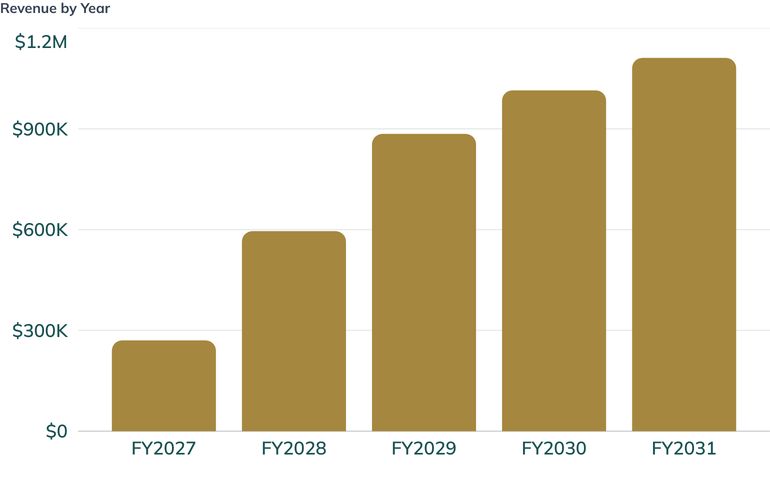
Need impressive charts? Discover the simplest way to create detailed graphs for your business plan.Create your own business plan
Expenses & Costs
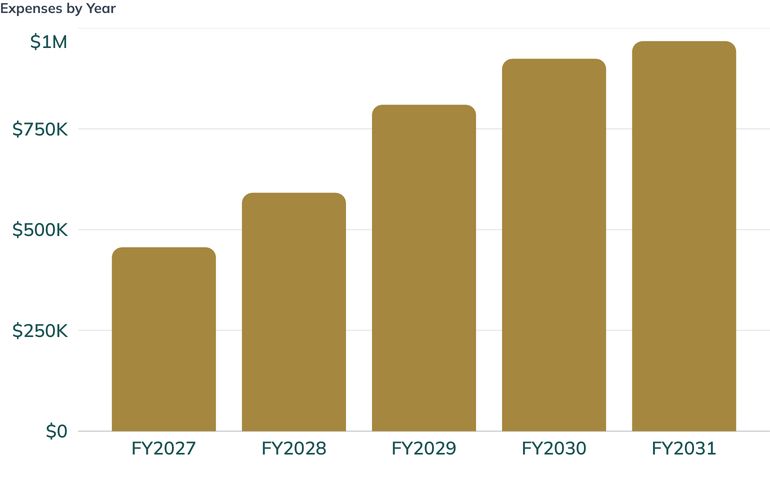
Need real milestones? Establish a clear path for your business with real-world examples.Create your own business plan
Profitability
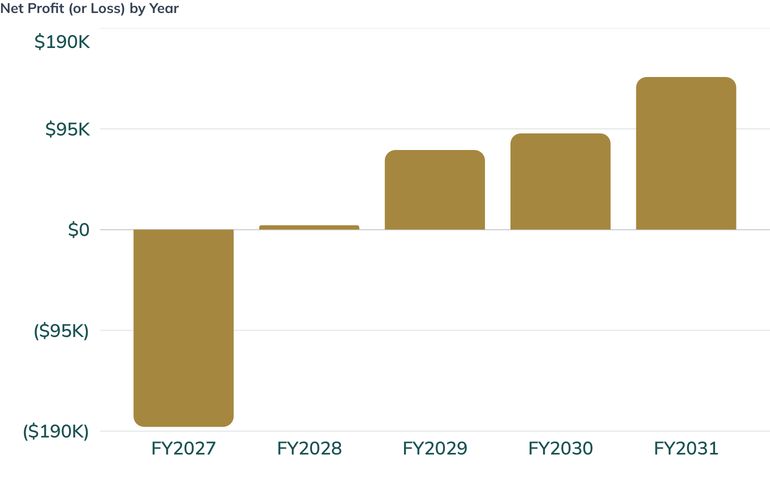
Need real milestones? We recommend using LivePlan as the easiest way to create milestones for your own business plan.Create your own business plan
Use of Funds
We are raising $470,000 to launch Planet-Friendly Hauling and fund operations through our first eighteen months, before the business becomes self-sustaining on operating cash flow. Funds will be used for: our initial hybrid/electric box truck and hauling equipment; the build-out of our Southeast Portland sorting and staging facility, including EV charging infrastructure; a second truck and crew added once demand supports it; and working capital to cover payroll, marketing, insurance, and loan payments during our ramp-up period. The largest single use of funds is vehicles and facility build-out, reflecting our commitment to a hybrid/electric fleet and a proper on-site sorting operation from day one rather than growing into sustainability practices later.
Vehicles. Our first hybrid/electric box truck is purchased at launch, and a second truck follows in our second year alongside the second crew. These are the largest individual line items in the raise. We are buying rather than leasing because the trucks are core operating assets we expect to hold well beyond this plan's horizon, and because ownership avoids the mileage constraints a lease would impose on a business that runs its vehicles hard across a metro area every day.
Facility build-out. The Southeast Portland site requires a covered sorting and staging bay, labeled material-stream bins, EV charging infrastructure sized to the fleet, secured fleet parking, and a modest dispatch office. This is leasehold improvement spending on a leased site, which is a real consideration in the raise: we are investing in a facility we do not own, so the lease term and renewal options were negotiated to match the useful life of what we are building into it.
Hauling equipment and safety gear. Dollies, appliance dollies with stair straps, moving blankets and straps, hand and power tools, crew tablets, and safety gear for both crews. Individually small, collectively material, and replaced on wear rather than on failure.
Working capital. The largest non-asset use, and the one that determines whether the plan survives contact with reality. A junk removal business ramps over months rather than weeks — demand builds with search visibility and referral, and commercial accounts take a full sales cycle to land — while payroll, rent, insurance, and loan payments begin immediately. We are carrying two salaried founders and a full crew from launch, which is a deliberate choice to operate professionally from day one rather than bootstrap through an owner-operator phase, and it means the working capital requirement is larger than a leaner launch would need.
Why this raise is larger than typical for the category. A conventional junk removal launch — a used truck, insurance, and a solo owner-operator — can start for a fraction of this. Three deliberate choices account for the difference: a hybrid/electric fleet rather than used conventional trucks, a leased facility with a purpose-built sorting bay rather than parking a truck at home, and salaried crew from launch rather than owner labor. Each of those is load-bearing for the business we are describing. The diversion practice does not work without the sorting bay and salaried crews, and the brand promise does not hold with a diesel fleet. We would rather be honest that this is a more capital-intensive version of the business than pretend the model works on a bootstrap budget.
Reserve. The raise includes a genuine cushion beyond our projected requirement rather than sizing exactly to the forecast. Our tightest cash period coincides with the purchase of the second truck, and a business whose revenue depends on vehicles cannot afford to be at the edge of its reserves in the month it buys one.
Sources of Funds
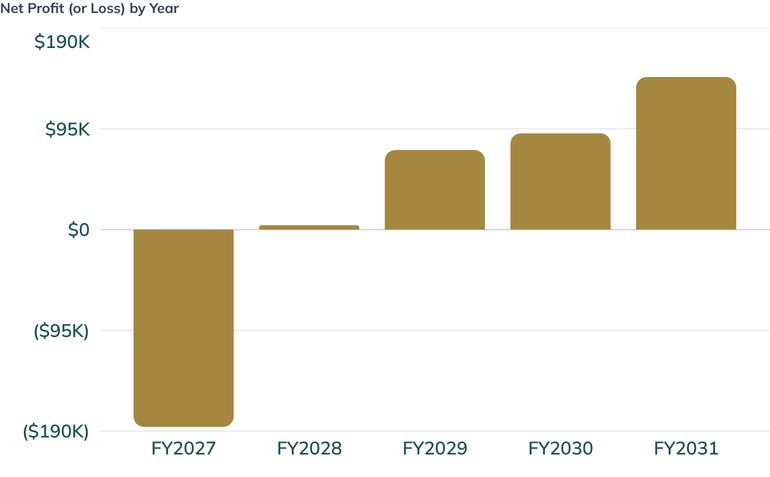
Our funding is a blend of founder equity and debt financing typical for a capital-equipment-intensive small business. Co-founders Mara Ellison and Devon Okafor are contributing $120,000 in founder equity. The remainder, $350,000, comes from an SBA 7(a) loan, which we chose over a shorter-term conventional loan because its terms are better suited to financing vehicles and leasehold improvements for an early-stage small business. We expect to reach profitability in our second year of operation, at which point loan payments are comfortably covered by operating cash flow.
Founder equity — $120,000. Contributed in cash at formation and split evenly between the two members, preserving the 50/50 membership structure. This is the founders' own capital rather than friends-and-family money, and it carries no repayment obligation or preference. Putting real equity in ahead of the debt is also what makes the loan financeable: SBA lenders expect meaningful owner injection on a startup, and a borrower with no capital at risk is not a serious applicant.
SBA 7(a) loan — $350,000. Structured as a ten-year term at 10.5%, amortizing monthly from the first month of operations. SBA 7(a) rates are set as a base rate plus a lender spread capped by loan size; at a 6.75% prime rate, the ceiling for a loan in this size band is 11.25%, so our modeled rate sits modestly below the maximum — appropriate for a well-collateralized borrower with equity in the deal and strong personal credit, but not an optimistic assumption. Every member holding 20% or more of the business provides a personal guarantee, as SBA rules require, and the loan is secured by the vehicles and business assets it finances.
Why 7(a) rather than the alternatives. A conventional equipment loan would carry a shorter term and a larger down payment, pushing monthly debt service up during precisely the ramp-up months when we can least absorb it. An SBA 504 loan prices attractively but is designed for owner-occupied real estate and heavy fixed assets, and we are leasing our facility rather than buying it. Equity investment beyond the founders' own contribution would mean giving up ownership in a business with predictable, financeable cash flows and no need for venture-scale capital — the wrong instrument for this business.
Repayment and risk. Debt service begins immediately while revenue is still ramping, which is the central financial risk in this plan and the reason the raise includes a working capital cushion rather than sizing exactly to projected need. The ten-year term is a deliberate choice to keep monthly payments manageable through the ramp; we expect to be able to prepay if cash flow allows, and SBA 7(a) loans of this term carry no prepayment penalty on the schedule we are borrowing under. Both founders provide personal guarantees, so the downside is not theoretical to us.
What we are not doing. We are not financing the second truck separately, and we are not opening a line of credit at launch. Both remain available if circumstances change, and a working capital line is something we would expect to establish once we have operating history a lender can underwrite against — but neither is required for the plan as modeled.
Projected Statements
Frequently Asked Questions
A junk removal business plan should cover your differentiation strategy, target customer segments, competitive positioning against franchises and independent haulers, and funding plan. Planet-Friendly Hauling's plan, for example, centers on its itemized diversion reporting system, a split between residential and recurring commercial customers, its positioning against 1-800-GOT-JUNK? and unlicensed Craigslist haulers, and a $470,000 funding plan blending founder equity and an SBA loan.
Planet-Friendly Hauling raised $470,000 in total start-up funding: $120,000 in founder equity split evenly between co-founders Mara Ellison and Devon Okafor, plus a $350,000 SBA 7(a) loan at 10.5% interest over a 10-year term. That covers hybrid and electric box trucks, a covered sorting bay facility build-out, and initial hauling equipment and safety gear.
Yes — junk removal businesses need general liability, commercial auto, and workers' compensation insurance, plus a local waste hauler permit. Planet-Friendly Hauling holds the City of Portland waste hauler permit and carries all three insurance types on every crew member and vehicle, explicitly positioning being fully licensed and insured as a differentiator against the unlicensed independent haulers common in this market.
Planet-Friendly Hauling earns revenue across two lines: residential and on-demand hauling jobs, and commercial recurring accounts — standing service agreements with property managers and real estate agents who need repeat turnover cleanouts. Its five-year forecast projects about $3.88 million in total revenue against roughly $3.75 million in expenses.
Planet-Friendly Hauling's plan expects to reach profitability in its second year of operation, at which point loan payments are comfortably covered by operating cash flow. Its five-year forecast shows about $127,609 in cumulative net profit on roughly $3.88 million in revenue.
National franchises like 1-800-GOT-JUNK? advertise recycling and donation without disclosing what actually happens to a load, while unlicensed independent haulers found through Craigslist are cheaper but often take everything straight to the transfer station with no consistent insurance coverage. Planet-Friendly Hauling emails every customer an itemized diversion report within 24 hours showing exactly what percentage of their load was donated, recycled, or landfilled, made credible by paying crews a salary rather than per job so sorting time never costs anyone's earnings — turning what competitors treat as a marketing claim into a documented receipt.
Planet-Friendly Hauling serves homeowners, landlords, and small businesses across the Portland metro who need large volumes of unwanted items removed quickly. Its priority commercial segment is repeat buyers on compressed timelines — property managers turning over rental units, real estate agents clearing homes before listing photography, and contractors handling renovation debris — who need reliability and documentation more than the lowest price, and who often carry their own sustainability commitments to report against.
Crews log each load into categories on a tablet at the job site as they sort — furniture and housewares, metal and appliances, e-waste, wood and construction debris, textiles, and landfill — and record the destination for each category. That same entry automatically generates the customer's diversion report and simultaneously feeds the company's overall diversion rate, so the number can't drift from what actually happened on the job — a system a competitor would have to change how crews spend time on-site to copy, not just update their website copy to claim.

Business Plan Outline
Start your plan