






Clothing Retail Business Plan


Business Plan Summary
This clothing retail business plan example features Mahogany Western Wear, a Houston, Texas western apparel store founded by Chandra E. Miller and Derrick L. McCoy that centers its assortment around plus and big-and-tall sizing for the city's African-American cowboy community. It covers Mahogany's cultural-representation differentiation, its positioning against three named local western wear competitors, and a $132,000 launch funded through owner equity, an ACCION loan, and a line of credit. Use it as inspiration for your own plan. Download a free business plan template to get started, or browse more business plan examples.
Mahogany Western Wear
Executive Summary
Problem
Houston's African-American cowboy community has grown steadily for decades, yet the city's western wear retailers — from big-box chains to boutique saddleries — have never built inventory, styling, or marketing around this customer. Fit is the clearest gap: plus and big-and-tall sizing is consistently thin on the sales floor at the major chains, and the culture, community events, and heritage that define African-American and Hispanic western life are largely invisible in how those stores market themselves.
Solution
Mahogany Western Wear is a new western apparel store serving the African-American cowboy community in southern Houston, TX, with the Hispanic western community as a strong secondary market. We carry name-brand western wear and accessories in a full range of sizes, styles, and fits, paired with the kind of personalized, relationship-driven service that's disappeared from most western retail. We are Houston's first African-American-owned western apparel store, and our goal is to become the community's shopping destination and gathering place — in the store, and online through our website and social channels.
Market
Our primary customer is the African-American cowboy community concentrated in southern Houston, where our store is located. Our secondary market is the area's fast-growing Hispanic community, which has a strong, loyal affinity for western brands. We also expect to draw a broader "other" segment — curious shoppers, neighborhood residents, and seasonal buyers during rodeo season — as our reputation builds.
Competition
Mahogany Western Wear competes with three western apparel retailers within a 15-mile radius — Cavender's Boot City, the Barbecue Hall of Fame retail outlet, and Turner Saddlery — plus the growing reach of national chains like Boot Barn and e-commerce/DTC boot and apparel brands. None of these competitors are built around our target customer's fit needs or cultural identity.
Why Us?
We are African-American owned, and we're building Mahogany Western Wear to be a central hub for the local African-American cowboy community and everyone who loves western apparel — with the inclusive sizing, curated brands, and personal service the bigger players have left behind.
Expectations
Forecast
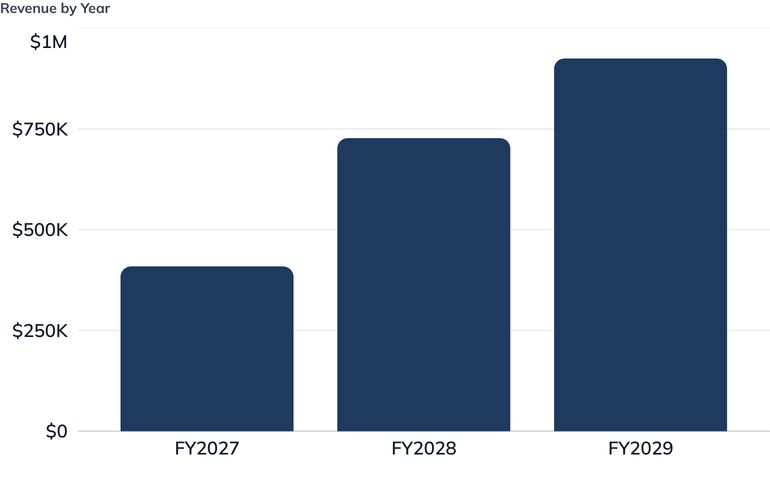
We will spend June through August 2026 finalizing our lease, permits, inventory orders, and store build-out, opening our doors on September 1, 2026 with three months of inventory on hand for apparel and accessories, our main revenue driver. Sales ramp up over our first few months in business as we build awareness in the community, reaching our full run rate by December 2026. Opening-day cash on hand is $18K. We're investing more heavily than originally planned in our team and in marketing to build awareness quickly, which pushes Year 1 into a modest loss — but it sets up a well-staffed, well-marketed store that returns to strong double-digit margins from Year 2 on.
Financial Highlights by Year
Year 1 | Year 2 | Year 3 | |
|---|---|---|---|
Revenue | $408,714 | $727,000 | $924,372 |
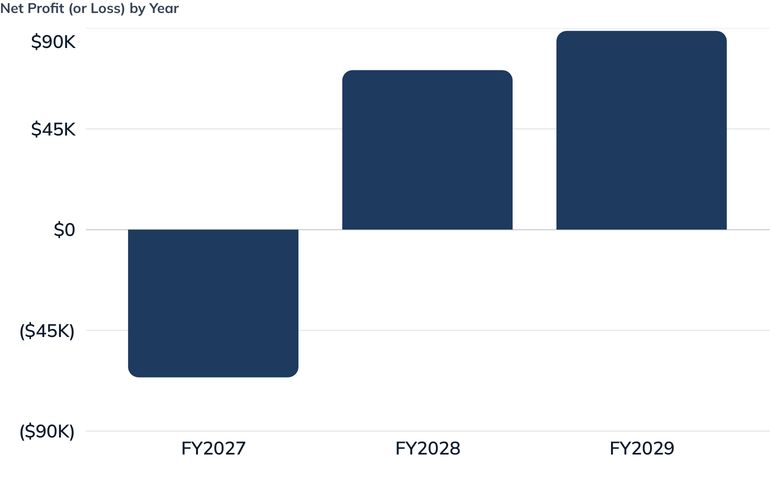
Net Profit | ($65,961) | $71,198 | $88,711 |
Net Profit Margin | -16% | 10% | 10% |
Year 1 reflects a September 1, 2026 grand opening with a gradual ramp to full sales volume by December 2026, plus a larger, better-staffed team and a bigger marketing push than our original plan — both funded up front by additional owner investment.
Financing Needed
The purpose of this business plan is to secure a $27,000 ACCION loan, needed for site preparation, inventory, and early operating expenses. The loan appears in the long-term liability row of the start-up summary. Additional financing includes an $85,000 owner investment — sized to fund our expanded staffing and marketing plans and to carry the business through its pre-launch and ramp-up period before sales reach full volume — and a $20,000 short-term revolving line of credit for inventory replenishment during high-volume months.
Opportunity

Problem Worth Solving
There are several important needs in the western wear apparel business that are currently underserved or not met at all in Houston:
- Sizing. A large, well-stocked assortment of plus and big-and-tall sizing to fit the actual body shapes of our target community. This size range is consistently thin at the larger western wear chains in the city, forcing customers to special-order, settle for an ill fit, or shop online without ever trying the garment on.
- Personal service and retention. High employee turnover at the mass retailers has eroded the kind of personal attention — remembering a customer's size, style preferences, and past purchases — that builds loyalty in specialty apparel. We treat this as a core operating discipline, not an afterthought.
- Cultural representation. The African-American cowboy tradition in Texas is generations deep, but it's rarely reflected in how western retailers merchandise, market, or staff their stores. Customers want a store that understands and celebrates that heritage, not just sells to it.
- A convenient, omnichannel path to purchase. Customers increasingly expect to check availability online, reserve an item, or order for in-store pickup before making the trip — an option most independent western retailers in the area still don't offer.
Our Solution
Mahogany Western Wear is a new apparel store serving the African-American cowboy community in Houston, Texas. As our name suggests, our focus is western wear apparel and accessories, with the goal of becoming the top retail destination for this market in the city.
We are the first African-American-owned western apparel store in Houston. Our goal is to build a durable, loyal customer base within our core community and become a central hub — both in-store and online — for the local African-American cowboy population and anyone who loves western apparel. We back that with a companion website and social presence so customers can check inventory, browse new arrivals, and reserve items ahead of an in-store visit — meeting today's shopper where digital and in-person browsing happen together.
Market Overview
Market Description
Our primary target customer is the African-American cowboy community located in southern Houston, TX. Since our store sits at the center of this residential community, we expect it to make up the largest share of our customer base.
Our secondary target customer is the area's Hispanic community. The Hispanic population in south-central Houston continues to grow, and this community has a well-documented, longstanding loyalty to western apparel brands.
Our third segment is labeled "other" — as awareness of the store builds, we expect curious shoppers, local residents outside our core communities, and seasonal buyers during rodeo season.
Market Segmentation
We plan to serve three market segments:
First, the African-American cowboy population, concentrated heavily in southwestern Houston, represents the highest concentration of our customer base.
Second, the Hispanic community — a growing population in the neighborhood surrounding our store — has statistically shown strong loyalty to major western brands such as Wrangler.
Last, "other" potential customers. Because Mahogany Western Wear carries a range of western and southwestern apparel, accessories, and gifts, we expect to attract curious shoppers as well. Our atmosphere and customer service are built to turn first-time visitors into repeat customers.
Target Market Segment Strategy
Our goal is to serve the local African-American cowboy community, who often have difficulty finding western clothing that fits their larger frames, alongside the Hispanic community, whose frame tends to run slimmer and shorter. Both markets are underserved by the major western retail chains.
Market Needs
There are several important needs in the western wear apparel business that are underserved or unmet today, and Mahogany Western Wear is built to address them:
- A large assortment of sizes to fit the range of body shapes and sizes in the communities we serve — a size range largely missing from the bigger western retailers in the city.
- Focus and attention to each customer's personal preferences. High employee turnover at mass retailers has eroded the customer service and personal detail that specialty shoppers value, and we intend to make that our differentiator.
Market Trends
Western apparel remains one of the most recognizable, enduring styles in American fashion — jeans, boots, and hats that have outlasted every passing trend, even as the culture around them has modernized (today's cowboys are as likely to manage cattle from a truck or helicopter as from horseback). Western and southwestern style has also had a sustained moment in mainstream fashion and music over the past several years, putting boots, hats, and western tailoring back on runways and in everyday wardrobes well beyond ranching communities — widening our potential customer base beyond our core market.
At the same time, the visibility of Black cowboys and cowgirls in professional rodeo, music, and film has grown substantially, from world-champion competitors with Houston ties to a wave of mainstream cultural moments celebrating African-American western heritage. Mahogany Western Wear is positioned to ride that visibility and become a recognized part of how Houston's African-American cowboy culture is represented and celebrated.
Market Growth
Houston's economy continues to grow, though at a more measured pace than in past cycles. Regional forecasts for 2026 point to roughly 30,000 new jobs across the metro area, with healthcare consistently cited as a leading driver of that growth, even as broader national factors — including trade policy and immigration trends — add some uncertainty to the outlook. Houston remains one of the most active markets in the country for new business formation, and its diversified, non-energy-dependent job base continues to support steady population and retail growth in the communities south of downtown where Mahogany Western Wear is located.
Competitors
Current Alternatives
There are three direct western wear alternatives to Mahogany Western Wear within a 15-mile radius:
Cavender's Boot City, roughly 7.1 miles from our location, is our closest competitor. Cavender's is one of the largest western wear chains in Texas, operating dozens of stores selling mainstream western apparel and boots to the general market. Its scale gives it significant market share, but it caters mostly to standard sizing — plus sizing for women and big-and-tall for men can be hard to find — and it tends to lag on contemporary western styling. Store-level customer service has also suffered from high employee turnover typical of large chains.
Barbecue Hall of Fame, about 9.3 miles away, pairs a retail outlet with the Goode Co. BBQ restaurant and a well-known tourist draw. It carries an eclectic mix of old-west and new-west apparel, grills, cookware, and gift items, but does little advertising of the retail side — most shoppers only discover it through a restaurant visit.
Turner Saddlery, about 12.1 miles away and the farthest of the three, is a family-owned western retailer with two Houston-area locations and one in Conroe, TX. Its customer base skews more upscale, carrying higher-end labels such as Lucchese alongside housewares and bedding that Cavender's and BBQ Hall of Fame don't stock. Like the others, it carries limited plus and big-and-tall sizing and does minimal advertising.
Beyond these local competitors, national chains such as Boot Barn continue to expand their footprint and e-commerce presence in the Texas western wear market, and direct-to-consumer boot and apparel brands compete for the same customer online. None of these — local or national — build their assortment, marketing, or in-store experience around our specific target community.
Our Advantages
Our key advantages over the competition:
- A size assortment built around the fuller frames common in our target customer base — not an afterthought to a standard size run.
- Top-notch, personalized customer service delivered with genuine southern hospitality.
- Marketing and advertising placed specifically where our target customers will see it, rather than generic mass-market campaigns.
- A companion online presence (website and social) that lets customers check what's in stock before they visit — something most of our local competitors don't offer.
- Continuous review of inventory and sales data so we adjust stock levels quickly rather than carrying dead inventory.
Execution
Market Plan Overview
Our marketing strategy focuses on sales promotion, niche positioning within our target community, and building customer loyalty and retention through service.
- The marketing budget will not exceed 5% of gross annual sales.
- Every promotion stays aligned with our company objectives and mission.
We maintain a flexible pricing strategy: the product lines we carry are chosen for their reputation and quality as western wear, and we generally follow manufacturer-suggested retail pricing.
Our digital presence runs on Instagram and TikTok, alongside a Facebook page and Google Business Profile listing, all kept current with community-focused content — rodeo events, styling tips, customer features — rather than constant sales pushes. Paid promotion will be used sparingly and only when it's clearly targeted at our core community.
Our retail location remains the foundation of our customer base, supported by a direct mail program targeting our top 50% of customers with in-house sales and promotions.
Sales Plan
Our sales strategy includes:
- Point-of-sale and customer data. We use the Retail ICE POS system on every transaction, capturing customer name, address, and purchase history to power our direct mail and loyalty programs.
- Loyalty and returns. A 14-day return/exchange policy builds trust, and a simple loyalty program rewards repeat purchases to drive retention.
- Omnichannel convenience. A lightweight e-commerce storefront lets customers check inventory and reserve items online for in-store pickup, reducing friction for customers who want to confirm sizing or availability before making the trip.
- Seasonal and event selling. We plan targeted promotions and in-store events timed to rodeo season and other community events, when western wear demand and foot traffic both peak.
Locations and Facilities
Mahogany Western Wear will be located at 13328 1/2 Almeda Rd., Houston, TX 77045. This space has 1,020 square feet and has been leased for two years. This location is central to the geographical location for the African-American cowboy community in the southern part of Houston, TX. We feel it is essential to our initial and ongoing success that we locate ourselves in the heartbeat of the community. We also strive to create an atmosphere of acceptance and community, as well as a retail environment where individuals can identify and bond with their culture.
All business deliveries and shipments will be handled through the store. The company office will also be housed at this location.
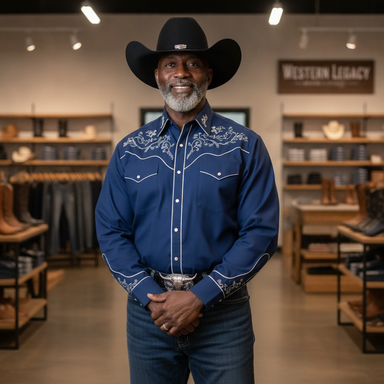
The Legacy Trail Rider
Marcus "Big Tex" Robinson
A lifelong member of a local Black trail riding club, Marcus views western wear as a vital part of his cultural heritage. He has the disposable income to invest in quality gear but is constantly frustrated by the lack of 'Big and Tall' options and cultural representation at major retail chains.
Age
54
Location
South Houston (Sunnyside), TX
Family Status
Married, 3 adult children
Education
Associate Degree in Logistics
Profession
Operations Manager at a Port of Houston shipping firm
Opportunities
- Stock a deep inventory of Big & Tall shirts and extended-waist denim (44+) that competitors like Cavender's rarely keep on the floor.
- Partner with local Black trail riding associations for 'Fitting Nights' to build community loyalty and word-of-mouth marketing.
Pain Points
- Major retailers only carry his size via special order, preventing him from trying items on
- Marketing in big-box stores feels disconnected from the Black cowboy experience
- High employee turnover at chains means no one knows his name or style preferences
Needs
- Reliable access to 3XL-5XL western shirts and extended boot widths
- A retail environment that celebrates African-American western history
- Personalized styling advice for formal rodeo events and community trail rides
“I've been riding these trails for thirty years, but walk into a big-box store and they act like I don't exist because I'm not a size 32.”
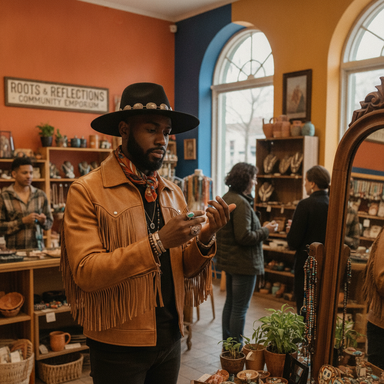
The Seasonal Rodeo Enthusiast
Jordan Miller
A young professional who is part of the 'Other' market segment, Jordan is drawn to western wear through its recent surge in mainstream culture. He wants to support Black-owned businesses and needs guidance on how to build a 'Rodeo Ready' wardrobe for the season.
Age
27
Location
Downtown Houston, TX
Family Status
Single
Education
Bachelor's in Marketing
Profession
Social Media Coordinator for a Tech Startup
Opportunities
- Create bundled 'starter kits' (hat, belt, boots) for first-time buyers looking to dress for the Houston Livestock Show and Rodeo.
- Design 'Instagrammable' moments within the store to encourage young shoppers to share their outfits and tag the business.
Pain Points
- Intimidated by the 'gatekeeping' or overly technical atmosphere of traditional saddleries
- Doesn't know how to properly shape a hat or care for leather boots
- Wants to support local, minority-owned businesses but finds them harder to locate than national chains
Needs
- Education on western wear basics (hat etiquette, boot care, denim styles)
- A welcoming, non-judgmental environment for newcomers to the culture
- Accessible price points for high-quality entry-level pieces
“I want to show out for the Rodeo this year and support a Black-owned shop, but I honestly don't know where to start with my first pair of real boots.”
The Style-Focused Vaquero
Elena Garza
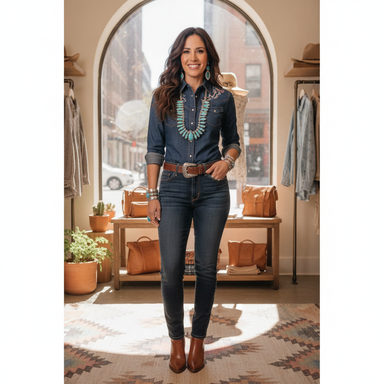
Elena represents the fast-growing Hispanic market in South Houston that values authentic western brands. She looks for high-end, slim-fit tailoring and unique accessories that blend traditional vaquero styles with modern fashion trends.
Age
31
Location
South-Central Houston, TX
Family Status
Single, living near extended family
Education
Bachelor of Science in Nursing
Profession
Registered Nurse at Texas Medical Center
Opportunities
- Focus on premium, tapered western cuts and artisanal leather goods that appeal to the aesthetic preferences of the Hispanic community.
- Employ bilingual staff to provide high-touch, relationship-driven service that respects the cultural traditions of her family.
Pain Points
- Generic western wear often feels too boxy or poorly tailored for her frame
- Online shopping makes it difficult to judge the quality and texture of premium leather boots
- Lack of stores that bridge the gap between traditional ranch wear and modern city-western style
Needs
- High-end, artisanal boots and belts that serve as status symbols
- A boutique shopping experience that feels more exclusive than a warehouse
- Knowledgeable staff who understand the nuances of different leather types and fits
“Western wear is in my blood, but I want pieces that look as good at a nice dinner as they do at the livestock show.”
Technology
Mahogany Western Wear relies on several technology systems to run daily operations:
- Retail ICE POS software — records customer name, address, and purchase history with every transaction, powering our direct mail program and customer loyalty tracking.
- TeleCheck Services — check guaranty system to reduce losses on bad checks.
- Lightweight e-commerce storefront — lets customers browse inventory and reserve items online for in-store pickup.
- Social media — Instagram and TikTok for visual, community-first content, with a Facebook page and Google Business Profile for local discovery.
- Direct mail program — targets our top 50% of customers with in-house sales and promotions.
Equipment and Tools
Key equipment and tools for store operations include:
- Retail ICE POS system — point-of-sale software for tracking sales and customer data
- Computer and cash register — front-counter hardware for processing transactions
- Store fixtures — furniture, shelves, and signage ($20K in startup assets)
- Inventory management tools — integrated with POS for tracking top-selling items and reorder levels
Milestones
Secure D.B.A. | Chandra E. Miller Aug 1, 2026 |
Secure Retail Location Lease | Chandra E. Miller Aug 1, 2026 |
Apply for Occupancy Permit | Chandra E. Miller Aug 5, 2026 |
Place Inventory Orders | Chandra E. Miller Aug 10, 2026 |
Contact Utility Company | Chandra E. Miller Aug 15, 2026 |
Purchase ICE Retail Program | Chandra E. Miller Aug 15, 2026 |
Contact Telecheck Guaranty Services | Chandra E. Miller Aug 20, 2026 |
Create Store Policies | Chandra E. Miller Aug 20, 2026 |
Order Color Flyers or Postcards | Chandra E. Miller Aug 25, 2026 |
Purchase Computer / Cash register | Chandra E. Miller Aug 28, 2026 |
Grand Opening Official store opening at 13328 1/2 Almeda Rd., Houston, TX 77045 | Chandra E. Miller Sept 1, 2026 |
Key Metrics for Success
The Key Metrics that help us identify good performance:
Have sales keep track of our top 6 most popular items that bring in the most sales. Buying inventory on credit will comprise no more than 20 to 25 percent of our overall cost of goods. We need to focus on keeping our most popular items always in our store.
We will engage customers on Instagram, TikTok, and Facebook, backed by a significantly larger marketing budget than a typical store our size to build awareness quickly in our first year. We will aim to have social-media-only promotions comprise 5 percent of sales and 15 percent of inquiries. Our website will show how traffic flows and we will make sure to engage and link to our partners.
Return customers should comprise 20 percent of sales rising to over 45 percent. We want our customers to come back for our sales and the new styles. We can keep track of that by customer loyalty programs, have them register in our system so their account comes up whenever they purchase. We give them incentive to sign up by giving those who return specialized sales.
Financial targets: A Year 1 net loss of -16% of revenue, reflecting our September grand opening, ramp-up period, and expanded team and marketing investment, turning to a 10% net profit margin in Year 2 and holding at 10% in Year 3, with gross margin steady at 45%.
Company
Ownership and Structure
Mahogany Western Wear is organized as an LLP with two founding partners, Chandra E. Miller and Derrick L. McCoy. Chandra handles all administrative and managerial duties day-to-day; Derrick is a silent partner providing capital and strategic input without an operational role.
At launch, we will have one additional full-time staffer assisting Chandra with customers on the sales floor, plus one part-time worker covering lunch shifts and peak-traffic hours. We expect to add one or two additional positions as demand grows.
Management Team
Chandra E. Miller, co-owner and general manager, is responsible for all administrative functions, purchasing, inventory control, and promotions, and also works part-time on the sales floor. She has spent over 10 years in accounting, finance, and operations management, and previously owned Tattletale's, an e-commerce toy store, for three years. That background gives her hands-on experience in purchasing, inventory control, and marketing directly relevant to running Mahogany Western Wear.
Derrick L. McCoy, co-owner, is a silent partner who provided founding capital and brings a background in small business finance. He is not involved in day-to-day operations but is available to Chandra for strategic and financial decisions, including future expansion.
Advisors
Mahogany Western Wear has not identified formal outside advisors at launch. Chandra E. Miller's extensive experience in accounting, finance, operations management, and retail (including her prior e-commerce venture, Tattletale's) provides the leadership team with the expertise needed to operate the store. We may engage legal and accounting professionals on an as-needed basis during startup.
Financial Plan
Revenue
Need real milestones? Establish a clear path for your business with real-world examples.Create your own business plan
Expenses & Costs
Need real financials? Explore a spreadsheet-free path to generating financial data for your business.Create your own business plan
Profitability
Need impressive charts? Discover the simplest way to create detailed graphs for your business plan.Create your own business plan
Use of Funds
We anticipate $8,000 of pre-launch startup expenses including:
- Pre-launch rent: $3K — one month of prepaid rent
- Pre-launch fixup: $2K — we will do most of the work ourselves
- Legal: $1K
- Prelaunch marketing expense: $2K — includes branding, logo, social media, pre-launch marketing. We plan to do most of this ourselves.
We also need $70K pre-launch assets:
- $18K cash on hand
- $30K inventory
- $2K other current assets
- $20K furniture, shelves, signage, etc.
Total starting costs are $78K.
Sources of Funds
Mahogany Western Wear will be funded through a combination of owner equity, a small business loan, and a revolving line of credit:
- Owner Investment: $85,000 in founder equity from Chandra E. Miller and Derrick L. McCoy — sized to fund a larger founding team and marketing budget than our original plan, and to carry the business through the September–December 2026 ramp-up period before sales reach full volume
- ACCION Loan: $27,000 at 8% interest over 60 months — Year 1 interest expense of $1,843, declining to $1,240 by Year 3 as principal is repaid
- Line of Credit: $20,000 revolving credit for inventory replenishment during months of high receipts
Total funding: $132,000
Projected Statements
Frequently Asked Questions
A clothing retail business plan should cover your underserved target niche, sizing and merchandising strategy, competitive positioning, and funding plan. Mahogany Western Wear's plan, for example, centers on its plus and big-and-tall western wear focus, its positioning against three named Houston-area competitors, and a $132,000 funding plan blending owner equity, an ACCION loan, and a line of credit.
Mahogany Western Wear raised $132,000 in total start-up funding: $85,000 in founder equity from Chandra E. Miller and Derrick L. McCoy, a $27,000 ACCION loan at 8% interest over 60 months, and a $20,000 revolving line of credit for inventory replenishment during high-sales months.
Clothing retailers typically need a general business license, a sales tax permit for retail sales, and a certificate of occupancy for the storefront — standard retail requirements rather than industry-specific licensing. Requirements can vary by city and county, so it's worth confirming specifics with local business licensing offices.
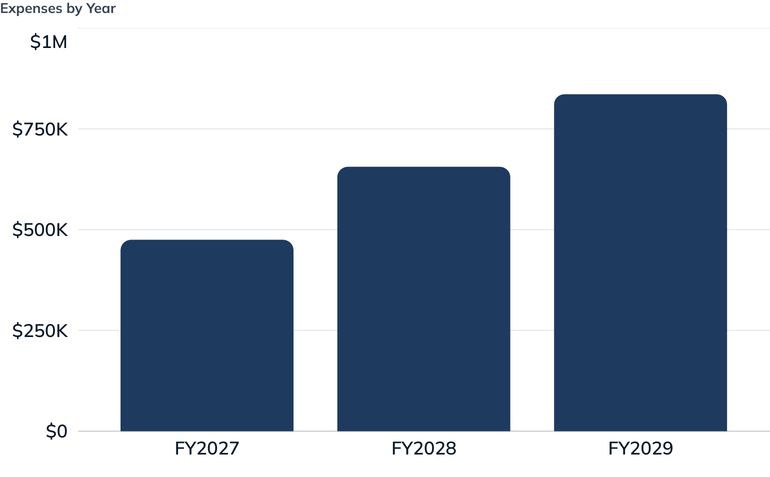
Mahogany Western Wear earns revenue entirely from retail sales of western apparel and boots. Its five-year forecast projects about $2.06 million in total revenue against roughly $1.97 million in expenses.
Mahogany Western Wear's plan doesn't name a specific profitable month, but its funding is deliberately sized to carry the business through a September–December 2026 ramp-up period before sales reach full volume. Its five-year forecast shows about $93,948 in cumulative net profit on roughly $2.06 million in revenue.
Cavender's Boot City, the closest competitor at about 7 miles away, caters mostly to standard sizing with thin plus and big-and-tall options and has seen customer service erode from high employee turnover, while Turner Saddlery, the more upscale option, also carries limited larger sizing. Mahogany Western Wear builds its assortment around the fuller frames common in its target community, pairs it with high-touch personalized service, and represents the African-American cowboy tradition in its merchandising, marketing, and staffing — plus an online presence letting customers check stock before visiting, something most local competitors don't offer.
Mahogany Western Wear serves Houston's African-American cowboy and western wear community, customers who want western apparel and boots that actually fit their body shapes in plus and big-and-tall sizes, personalized service that remembers their preferences, and a store that celebrates their cultural heritage rather than merely selling to it.
ACCION is a community lender focused on underserved entrepreneurs, which aligns with founders Chandra E. Miller and Derrick L. McCoy's mission of serving a retail niche larger western wear chains have left underserved. The $27,000 ACCION loan at 8% interest over 60 months supplements the founders' own equity and a revolving line of credit sized specifically for inventory replenishment during the store's high-sales months.

Business Plan Outline
Start your plan