






Custom Jewelry Business Plan




Business Plan Summary
This custom jewelry business plan example features Contemporary Ti Design, a titanium jewelry studio run from a home workshop in Chicago's Pilsen neighborhood by founder Steve Artificer. It covers Contemporary Ti Design's hand-fabricated pendants, pins, and earrings, its dual sales strategy across gallery wholesale accounts and direct-to-consumer sales, and a lean $17,000 all-equity launch. Use it as inspiration for your own plan. Download a free business plan template to get started, or browse more business plan examples.
Contemporary Ti Design
Executive Summary
Introduction
Contemporary Ti Design designs and manufactures original titanium jewelry — pendants, pins, and earrings — from a home workshop in Chicago's Pilsen neighborhood. Every piece is designed and hand-fabricated by Steve Artificer, who sells directly to collectors online and builds long-term wholesale relationships with galleries and boutiques across the country. Over the next three years, the company is focused on:
- Placing designs in at least 40 galleries and specialty retailers nationwide.
- Growing the active design catalog by roughly 8% per year.
- Building a direct-to-consumer audience through the company website and social channels, reducing reliance on any single sales channel.
The Company
Contemporary Ti Design is a custom titanium jewelry studio based in Chicago, Illinois. Steve Artificer designs and fabricates every piece himself, working out of a home studio that keeps overhead low while giving him full control over quality and turnaround. Chicago's dense concentration of galleries, art fairs (including SOFA Chicago and the Chicago Artisan Market), and design-conscious buyers makes it a strong home base for direct sales and gallery relationships alike. Steve sells through his own e-commerce site, at juried art shows, and through a growing network of galleries and boutiques; he plans to bring on an independent sales representative around month eight to expand gallery outreach while he focuses on design and production.
The Market
The artisan jewelry market is highly fragmented, with thousands of independent designers competing for gallery placement, show visibility, and direct consumer attention — some sell locally, others build national wholesale networks, and a growing share sell primarily through their own websites and social platforms. Competition for Contemporary Ti Design takes three main forms:
- Designers who create pieces that are then manufactured at scale and distributed nationally.
- Companies with in-house design, marketing, and wholesale teams.
- Independent artist-makers like Steve, who design, fabricate, and sell every piece themselves.
Contemporary Ti Design focuses on two customer groups: individual collectors, who discover and purchase pieces through the website, social media, and in-person at shows; and galleries and boutiques, who become ongoing wholesale accounts after meeting Steve at exhibitions or through direct outreach.
Financial Considerations
Contemporary Ti Design is funded entirely through equity capital from Steve Artificer, with no outside debt. Personnel costs — including a full, livable Chicago wage for Steve from day one and fair pay for the sales representative once hired — mean the business runs at a loss in Year 1 while sales volume ramps up, then turns profitable in Year 2 and grows from there. Revenue is built to comfortably outpace costs by Year 3, and cash on hand stays positive throughout thanks to sufficient starting capital.
Mission
Contemporary Ti Design's mission is to create original, well-crafted titanium jewelry that earns lasting relationships with collectors and gallery partners. Every piece is made to exceed the expectations of the person who buys it — in design, in craftsmanship, and in the experience of working directly with the artist.
Objectives
Objectives for the first three years of operation:
- Build a jewelry design and manufacturing business defined by exceeding customer expectations.
- Place designs in at least 40 galleries and specialty retailers.
- Grow the active design catalog by roughly 8% per year.
- Build a durable, profitable home-based studio business in Chicago that pays a livable wage from day one.
Opportunity

Problem Worth Solving
The artisan jewelry market is highly fragmented, with thousands of independent designers competing for gallery placement, exhibition visibility, and direct consumer sales. Buyers seeking distinctive, handcrafted jewelry often struggle to find pieces that combine artistic originality with durable, hypoallergenic materials.
Mass-produced jewelry and generic artisan offerings fail to deliver the combination of creative design, titanium's unique properties, and direct access to the artist that discerning customers value. Galleries need reliable artisan partners who can supply consistently innovative work and maintain long-term wholesale relationships.
Our Solution
Contemporary Ti Design manufactures original titanium jewelry — primarily pendants and pins, with earrings added to the catalog as designs develop. Every piece is designed and made by Steve.
Steve builds in titanium for its properties as much as its look: it's stronger than steel, close to aluminum in weight, and inert and hypoallergenic, so pieces can be worn comfortably by people with metal sensitivities.
Most pieces are left in titanium's natural grey, which reads as a clean, modern finish on its own. Others are anodized, a process that runs an electrical current through the titanium in an electrolyte bath; the resulting oxide layer refracts light to produce color without paint or plating, giving Steve a broad palette to work with while keeping the material's inherent durability.
Each piece is cut from titanium sheet — the outline with a saw blade, interior details by piercing a small starter hole and threading the blade through. Multi-piece designs are joined with rivets: small holes are drilled through the stacked pieces, a wire rivet is inserted, and the ends are hammered to set it. Beyond holding the piece together, the rivets are a visible, intentional part of the design.
Market Overview
The U.S. artisan and fine jewelry market spans a wide range of buyers, from gift shoppers to serious collectors, and has increasingly shifted toward direct-from-artist purchasing as social platforms and e-commerce make it easier for makers to reach buyers without a traditional retail intermediary. Within that market, titanium jewelry occupies a small but distinct niche: buyers who want sculptural, modern design plus practical advantages — hypoallergenic, lightweight, durable — that precious-metal jewelry doesn't offer.
Contemporary Ti Design sits at the intersection of the artisan/craft jewelry market and this materials-driven niche. Demand comes from two directions: individual collectors discovering the work online, at shows, or through gallery visits, and galleries and boutiques looking for distinctive, consistently available work to round out their jewelry offerings. Chicago's active gallery and art-fair scene — including SOFA Chicago, the Chicago Artisan Market, and neighborhood gallery walks in Pilsen — gives Steve consistent, low-cost access to both audiences without needing a storefront.
Market Segmentation
Contemporary Ti Design has two targeted groups of people, galleries and individuals:
Market Analysis | |||||||
|---|---|---|---|---|---|---|---|
Year 1 | Year 2 | Year 3 | Year 4 | Year 5 | |||
Potential Customers | Growth | CAGR | |||||
Retailers (Galleries) | 7% | 2,525 | 2,702 | 2,891 | 3,093 | 3,310 | 7.00% |
Individuals | 9% | 165,475 | 180,368 | 196,601 | 214,295 | 233,582 | 9.00% |
Other | 0% | 0 | 0 | 0 | 0 | 0 | 0.00% |
Total | 8.97% | 168,000 | 183,070 | 199,492 | 217,388 | 236,892 | 8.97% |
Industry Analysis
The jewelry and broader craft/art industry is large, fragmented, and increasingly digital. Independent makers across the country sell through a mix of channels: personal websites and online stores, marketplaces like Etsy, social platforms such as Instagram and TikTok that double as discovery and sales tools, wholesale relationships with galleries and boutiques, and in-person sales at craft fairs, art festivals, and juried shows. Few individual artisans hold significant market share; competitive advantage comes from a distinctive point of view, consistent quality, and reliable fulfillment rather than scale.
Titanium as a jewelry material remains uncommon relative to precious metals, which limits direct material-based competition but also means Contemporary Ti Design spends some of its marketing effort on educating buyers about why titanium is worth considering in the first place. Metal-focused and material-driven jewelry brands have grown a modest but loyal following online in recent years, suggesting room for a design-forward titanium studio to build a similar niche audience.
Target Market Segment Strategy
Contemporary Ti Design is targeting galleries and individuals because they are the most likely purchasers of the jewelry. Galleries typically purchase works of art from many different artisans. The galleries will first come into contact with Contemporary through examples of the work at an exhibition, or the retailer is contacted by Steve (or sales rep) and shown samples. If there is interest, the gallery will place an order for a few representative pieces. This is hopefully the beginning of a long-term relationship where the gallery will then reorder more pieces to replenish their stock as well as to hopefully broaden their product offering.
Contemporary’s target segment strategy for the individuals will also be based on exhibitions. The individual will see examples of Steve’s work and either purchase the product right then, or will be referred to the website where a complete product listing is available and all pieces are sold. Additionally, individuals will come across our website, either from a referral or a targeted Web search. The individual is able to make a purchase, or find out what galleries carry Contemporary’s pieces to view them in person.
Competition and Buying Patterns
The artisan jewelry market is composed of thousands of independent makers — some work and distribute locally, others have national distribution systems set up, and some design for larger companies to manufacture rather than making pieces themselves. See the Competitors section for how Contemporary Ti Design's competitive landscape breaks down and how the company differentiates itself within it.
Buying patterns for this category fall into two dominant types: gifts and impulse purchases. A gift purchase happens when the buyer is shopping for someone else, sees the piece, and buys it with that person in mind. An impulse purchase happens when someone browsing without a specific need sees a piece and buys it on the spot — common at shows and exhibitions where buyers are already primed to discover something new. A less frequent pattern is a buyer seeking an accessory to match a specific outfit who discovers a piece and purchases it for that purpose. Understanding this mix matters for how Contemporary Ti Design merchandises and prices work at shows versus online, where the "just discovered it" impulse dynamic is harder to replicate.
Competitors
Competition for Contemporary Ti Design takes several forms:
- Large-scale manufacturers — Artists who create designs that are then manufactured on a large scale and distributed nationally.
- In-house design companies — Companies with their own designers handling design, marketing, and wholesaling entirely in-house.
- Independent artisan-producers — Artists such as Steve Artificer who design and make all pieces themselves, then handle wholesaling or retailing directly.
Because the artisan jewelry market is vast and geographically dispersed, it is impractical to catalog every competitor. Contemporary Ti Design differentiates itself through Steve's distinctive titanium designs, direct artist access, and a dual-channel strategy serving both gallery retailers and individual collectors.
Execution
Market Plan Overview
Contemporary Ti Design is Steve Artificer's design and manufacturing studio, and its market plan leans directly on his competitive edge: distinctive, well-executed titanium design that's genuinely uncommon in the jewelry market. Steve doesn't have a monopoly on artistic skill, but the combination of design sensibility and technical fabrication skill he brings to each piece is rare.
The go-to-market approach has two channels running in parallel from day one: direct-to-consumer sales through the company website and social media, and wholesale relationships with galleries and boutiques built through shows, exhibitions, and direct outreach. Chicago's art-fair calendar and gallery density give Steve consistent opportunities to show work in person without the overhead of a retail space. Around month eight, Steve plans to bring on an independent sales representative to take over gallery outreach and exhibition sales, freeing him to focus on design and production as order volume grows.

The Local Design Advocate
Elena Rodriguez
A creative professional living in Pilsen who prioritizes supporting the local artisan economy. She values the intersection of industrial materials and fine art and seeks unique pieces that reflect her neighborhood's gritty yet sophisticated aesthetic.
Age
34
Location
Pilsen, Chicago, IL
Family Status
Single, living in a loft
Education
Bachelor of Fine Arts in Graphic Design
Profession
Senior Art Director at a Chicago-based agency
Opportunities
- Leverage the 'Pilsen-made' story through neighborhood gallery walks and local pop-up events like the Chicago Artisan Market to build grassroots brand loyalty.
- Market the medical-grade titanium properties specifically to urban professionals who have developed metal sensitivities but still want edgy, contemporary designs.
Pain Points
- Frustrated by mass-produced jewelry that lacks a personal story or artist connection
- Sensitive skin makes most affordable 'artisan' jewelry (often containing nickel) unwearable
- Finding high-quality, modern jewelry that fits an 'industrial-chic' wardrobe without being overly delicate
Needs
- Jewelry that is both lightweight for all-day wear and durable enough for an active city lifestyle
- A direct line of communication with the maker for potential custom modifications
- Price points that feel accessible for self-gifting between $150 and $300
“I want my jewelry to be a conversation starter that supports the artist living three blocks away, not something from a mall catalog.”

The Sophisticated Collector
Dr. Sarah Jenkins
A high-earning medical professional and art enthusiast who attends international art fairs. She views jewelry as an extension of her art collection and values the technical mastery required to hand-fabricate difficult materials like titanium.
Age
56
Location
Mount Greenwood, Chicago, IL
Family Status
Married, adult children
Education
Doctor of Medicine (MD)
Profession
Chief of Surgery
Opportunities
- Create signed, numbered annual collections that appeal to the 'collector' mindset, encouraging repeat purchases to complete a set.
- Develop a high-end e-commerce experience with 'behind-the-scenes' fabrication videos that justify the premium for hand-fabricated artisan work.
Pain Points
- Statement jewelry is often too heavy and uncomfortable for long shifts or evening events
- Struggles to find 'fine' jewelry that doesn't look like traditional wedding or heirloom pieces
- Lacks the time to shop in person and needs a trustworthy, high-quality online purchasing process
Needs
- Feather-light statement pieces that provide high visual impact without physical weight
- The ability to buy directly from the artist to ensure authenticity and craft quality
- Jewelry that is durable enough to survive frequent travel and professional wear
“I've spent years collecting modern art; now I want my jewelry to reflect that same level of technical innovation and sculptural beauty.”
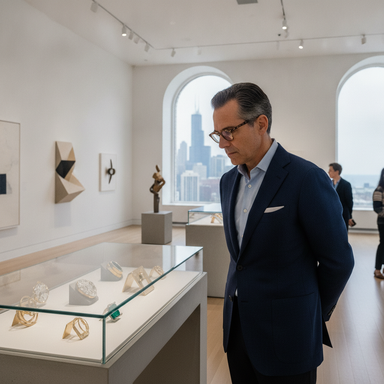
The Curatorial Tastemaker
Marcus Thorne
The owner of a high-end boutique in the Near North Side who caters to sophisticated collectors. He is constantly hunting for 'new-material' artists who can provide his gallery with exclusive, low-maintenance inventory that appeals to modern art buyers.
Age
48
Location
Near North Side, Chicago, IL
Family Status
Married
Education
Masters in Arts Administration
Profession
Gallery Owner and Independent Curator
Opportunities
- Establish a 'Gallery Partner' program with guaranteed lead times and exclusive catalog additions to secure long-term placement in high-traffic retail spots.
- Utilize presence at SOFA Chicago to transition one-time fair visitors into repeat wholesale leads for national expansion.
Pain Points
- Difficulty finding reliable independent makers who can keep up with wholesale demand without sacrificing quality
- Inventory that tarnishes or requires constant polishing in display cases
- The high commission structures of traditional fine jewelry make it hard to maintain margins on precious metals
Needs
- A consistent 8% annual catalog growth to keep the collection fresh for returning gallery patrons
- Professional marketing materials and 'artist story' cards to help his staff sell the pieces
- Jewelry made from materials (like titanium) that won't tarnish under hot gallery lights
“My clients are tired of gold and silver; they want sculptural pieces that feel like wearable architecture and won't require a polishing cloth every week.”
Sales Strategy
Contemporary Ti Design's sales strategy runs on two parallel tracks: building a wholesale gallery network and selling directly to individual collectors.
Galleries and boutiques: Steve builds relationships primarily by exhibiting at juried art and craft shows — buyers from galleries regularly attend these events to discover new artists. He supplements that with direct outreach: researching galleries and specialty boutiques whose existing collections fit Contemporary Ti Design's aesthetic, then reaching out with a portfolio and, where possible, samples. A first order is typically small and representative; the goal is a long-term reorder relationship rather than a one-time sale.
Individual collectors: The same shows that reach galleries also put pieces directly in front of end buyers, many of whom purchase on the spot. Outside of shows, the company website serves as a full digital catalog with detailed photography, and Instagram is used to show work in progress, new designs, and behind-the-scenes process — both to drive direct sales and to make it easy for gallery buyers and collectors met at shows to keep following the work. Buyers who want to see a piece in person before purchasing can also look up which galleries currently carry the collection.
Competitive Edge
Contemporary Ti Design’s competitive edge is fairly simple. It is based on creative, unusual designs. While this strategy can be replicated, it is not easy. Creative, unusual designs require skill. While not everyone has artistic skill, Steve is certainly not the only one graced with this skill. Regardless, Steve is very skilled in what he does, and every piece that he manufactures incorporates an element of creative, unusual, eye catching design that stands out from most jewelry.
To develop good business strategies, perform a SWOT analysis of your business. It's easy with our free guide and template.Learn how to perform a SWOT analysis
Sales Plan
Contemporary Ti Design's sales activity follows a deliberate ramp-up schedule:
Months 1–2: Set up the home workshop and build initial inventory. No sales activity during this preparation phase.
Month 3 onward: Begin selling through exhibitions and the company website. Steve travels approximately one week per month to galleries and art shows to establish distribution channels and sell directly to consumers.
Month 8: Hire an independent sales representative to handle gallery outreach and exhibition sales, allowing Steve to focus on design and production. This transition marks a significant increase in sales volume.
Sales channels:
Channel | Year 1 | Year 2 | Year 3 |
|---|---|---|---|
Retailers (Galleries) | $51,480 | $82,500 | $102,348 |
Individuals | $42,120 | $67,500 | $83,856 |
Total Sales | $93,600 | $150,000 | $186,204 |
Locations and Facilities
Contemporary Ti Design operates as a home-based business from Steve Artificer's residence in Chicago's Pilsen neighborhood, a part of the city known for its concentration of working artist studios and regular gallery walks. The workshop and design studio occupy a dedicated space in the home, set up for titanium cutting, anodizing, riveted assembly, and inventory storage.
The home-based model keeps rent at zero while still giving Steve easy access to Chicago's gallery and art-fair circuit for in-person selling. Because sales happen primarily through the website, galleries nationwide, and exhibitions, the studio's exact location isn't critical to the business — Steve chose Pilsen for its arts community, affordability relative to a commercial studio, and proximity to the city's major art fairs and gallery walks.
Technology
Technology supports both production and sales for Contemporary Ti Design, layered on top of the physical equipment covered in Equipment and Tools:
- E-commerce platform — A hosted online store (e.g., Shopify) gives customers a full, searchable catalog with direct checkout, and integrates with shipping and inventory tools.
- Social media and content scheduling — Instagram and Pinterest are used for product discovery, process content, and driving traffic to the online store; a lightweight scheduling tool keeps posting consistent without eating into studio time.
- Cloud-based business tools — Cloud backup, a business email and calendar, and a simple accounting platform (e.g., QuickBooks) handle order processing, gallery communications, and bookkeeping from anywhere.
- Photo editing and catalog management — Software to process and organize product photography before it goes live on the website and social channels, since image quality directly affects online conversion.
Equipment and Tools
Contemporary Ti Design's start-up equipment supports both the home office and the jewelry workshop:
Office & digital tools:
- Home office furniture (desk, storage, seating)
- Laptop with cloud backup and a dedicated business email
- Digital camera and lightbox for product photography
- E-commerce platform subscription and basic accounting software
Production tools:
- Titanium cutting tools and saw blades for piercing interior cuts
- Riveting tools (drill, wire rivets, hammer) for assembling multi-piece designs
- Anodizing equipment for color treatment
- Raw materials inventory (titanium sheet and wire)
Long-term assets: Production and anodizing equipment depreciated over the plan period.
Milestones
Business Plan Completion Complete the business plan as a roadmap for ongoing performance and improvement. Budget: $0. | Steve Artificer July 1, 2026 |
Set-up Office and Work Shop Set up home office and jewelry workshop including equipment and raw materials. Budget: $1,450. | Steve Artificer July 1, 2026 |
Set-up First Distribution Channel Establish the first gallery distribution channel through exhibitions and direct outreach. Budget: $600. | Steve Artificer Aug 1, 2026 |
Steve Begins Design and Manufacturing Full Time Steve transitions to full-time design and manufacturing, with sales handled by an independent sales representative. Budget: $0. | Steve Artificer Jan 1, 2027 |
Key Metrics for Success
Contemporary Ti Design tracks the following metrics to measure progress toward profitability and market penetration:
Financial metrics:
- Net profit margin — A Year 1 loss (roughly -15% of revenue) is expected while Steve and the sales representative are both paid a full, livable Chicago wage against still-ramping sales volume. Margin turns positive in Year 2 (around 7%) and strengthens to roughly 15% by Year 3 as revenue outgrows the fixed cost base.
- Gross margin — Maintain around 85% gross margin through efficient titanium sourcing and home-based production.
- Cash position — Keep cash on hand positive in every month of the forecast, funded by a sufficient owner investment cushion and growing sales.
- Break-even — Reach monthly break-even by the start of Year 2 as sales volume catches up to the cost of paying livable wages from day one.
Operational metrics:
- Gallery placements — Utilize designs in at least 40 different galleries
- Design catalog growth — Increase number of designs offered by 8% per year
- Sales channel mix — Balance gallery wholesale revenue with direct individual sales
Company
Ownership and Structure
Contemporary Ti Design is structured as a sole proprietorship owned and operated by Steve Artificer, based in Chicago, Illinois. All design, manufacturing, and initial sales activities are conducted from Steve's home-based workshop.
The sole proprietorship structure keeps administrative overhead low and aligns with the home-based business model. Steve provides all startup funding through personal equity investment, with no outside debt. Because both Steve and the independent sales representative are paid a full, livable Chicago wage from the start, the company operates at a loss in Year 1; it turns profitable in Year 2 and builds from there as sales volume grows into the cost base.
Start-up Summary
Contemporary Ti Design's start-up costs cover the essentials for a home-based jewelry studio — legal setup, e-commerce website development, and the office and production equipment detailed in Equipment and Tools — plus a working capital cushion large enough to cover payroll (including a full, livable Chicago wage for Steve) through the Year 1 ramp-up before revenue catches up.
Start-up | |
|---|---|
Requirements | |
Start-up Expenses | |
Legal | $500 |
Stationery etc. | $150 |
Website Development | $500 |
Internet Set-up | $100 |
Titanium Sheet | $200 |
Other | $0 |
Total Start-up Expenses | $1,450 |
Start-up Assets | |
Cash Required | $17,750 |
Start-up Inventory | $0 |
Other Current Assets | $0 |
Long-term Assets | $2,800 |
Total Assets | $20,550 |
Total Requirements | $22,000 |
Start-up Funding | |
|---|---|
Start-up Expenses to Fund | $1,450 |
Start-up Assets to Fund | $20,550 |
Total Funding Required | $22,000 |
Assets | |
Non-cash Assets from Start-up | $2,800 |
Cash Requirements from Start-up | $17,750 |
Additional Cash Raised | $0 |
Cash Balance on Starting Date | $17,750 |
Total Assets | $20,550 |
Liabilities and Capital | |
Liabilities | |
Current Borrowing | $0 |
Long-term Liabilities | $0 |
Accounts Payable (Outstanding Bills) | $0 |
Other Current Liabilities (interest-free) | $0 |
Total Liabilities | $0 |
Capital | |
Planned Investment | |
Steve | $22,000 |
Investor 2 | $0 |
Other | $0 |
Additional Investment Requirement | $0 |
Total Planned Investment | $22,000 |
Loss at Start-up (Start-up Expenses) | ($1,450) |
Total Capital | $20,550 |
Total Capital and Liabilities | $20,550 |
Total Funding | $22,000 |
Company Ownership
Contemporary Ti Design is a sole proprietorship, wholly owned by Steve Artificer. As a solo, home-based studio with no employees at launch and modest personal liability exposure, the added cost and paperwork of incorporating as an LLC don't currently outweigh the simplicity of sole proprietorship. Steve plans to revisit this decision as the business scales — particularly once he brings on a sales representative or starts carrying meaningful inventory value — since an LLC would separate his personal assets from business liabilities at that point.
Management Team
Contemporary Ti Design is owned and operated by Steve Artificer, structured as a sole proprietorship. Steve was drawn to making things from an early age — where other kids spent free time on sports, he was taking apart and rebuilding whatever objects he could find, and most of his time outside school went into crafting.
Steve earned his undergraduate degree from the Cleveland Institute of Art, studying graphic design while working at a local design firm that handled everything from company logos to furniture and product design. Unsure which direction in the art world to pursue after graduation, he went on to a Master's in product design at Iowa State University. There he met E. Douglas Wunder, a designer working primarily in titanium, and spent two years working alongside him — an apprenticeship that set the direction for the rest of his career.
After Iowa, Steve knew he wanted to build his own jewelry design and manufacturing studio centered on titanium. He and his wife relocated to Chicago for its dense community of working artists, galleries, and art fairs — an environment that gives a solo studio far more exposure and gallery access than a smaller market would, without requiring a storefront. He set up his workshop in the home he shares with his wife in Pilsen, one of the city's established artist neighborhoods.
Advisors
Contemporary Ti Design does not currently maintain a formal advisory board. Steve Artificer draws on relationships with mentors from the Cleveland Institute of Art and his two-year apprenticeship with titanium designer E. Douglas Wunder for creative and technical guidance. As the business grows, Steve may seek advisors with gallery distribution and artisan jewelry retail experience.
Financial Plan
Revenue
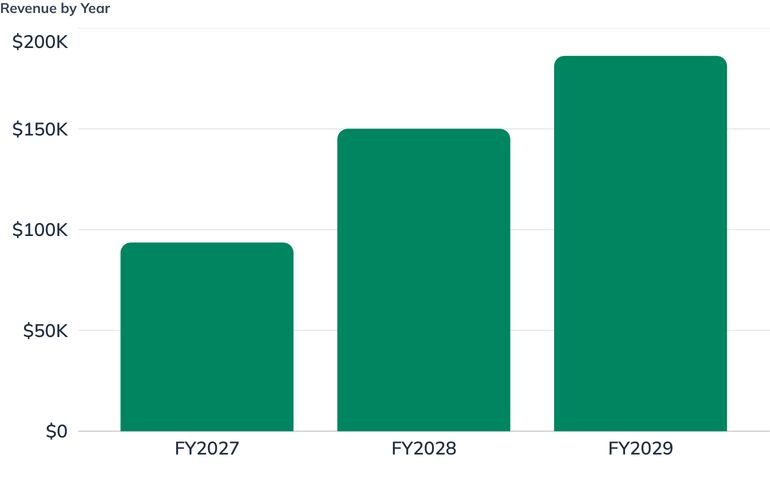
Need actual charts? We recommend using LivePlan as the easiest way to create graphs for your own business plan.Create your own business plan
Expenses & Costs
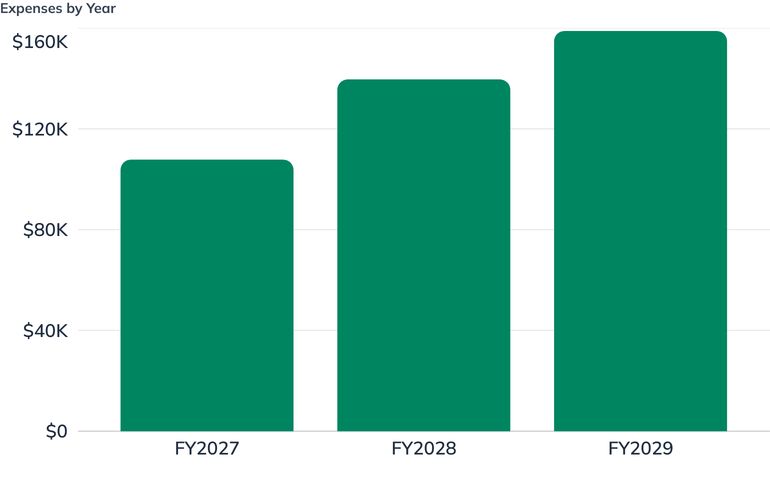
Need real milestones? We recommend using LivePlan as the easiest way to create milestones for your own business plan.Create your own business plan
Profitability
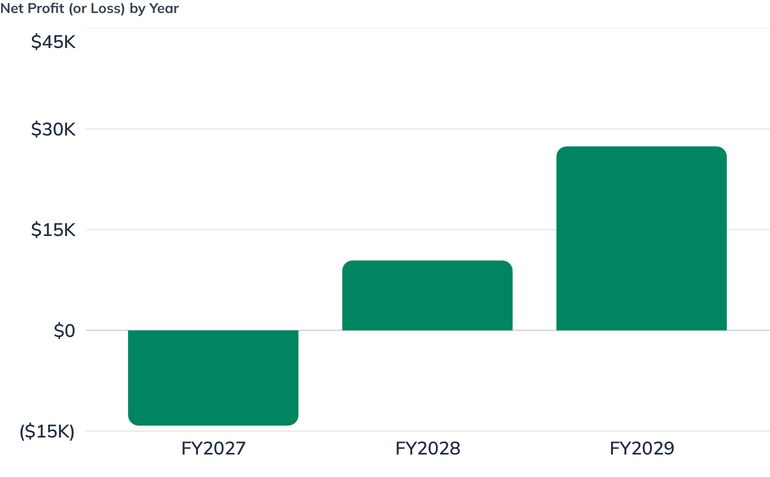
Need real milestones? We recommend using LivePlan as the easiest way to create milestones for your own business plan.Create your own business plan
Use of Funds
Steve Artificer's $17,000 owner investment covers all startup requirements:
Use of Funds | Amount |
|---|---|
Start-up Expenses | $1,450 |
Cash Required | $12,750 |
Long-term Assets (equipment) | $2,800 |
Total Funding Required | $17,000 |
Start-up expense detail:
Item | Amount |
|---|---|
Legal | $500 |
Stationery | $150 |
Website Development | $500 |
DSL Set-up | $100 |
Titanium Sheet | $200 |
Total Start-up Expenses | $1,450 |
No loans or outside investors are required. The home-based model minimizes facility costs, keeping the total capital requirement modest.
Sources of Funds
Contemporary Ti Design is fully financed by equity capital from owner Steve Artificer. There are no loans, lines of credit, or outside investors.
Source | Amount |
|---|---|
Steve Artificer (owner investment) | $17,000 |
Total Planned Investment | $17,000 |
Capital structure at start:
- Cash balance on starting date: $12,750
- Non-cash assets (equipment): $2,800
- Total assets: $15,550
- Total liabilities: $0
- Total capital: $15,550
Because the business carries no debt, there are no principal or interest payments. All operating costs are funded from revenue and the initial owner investment.
Projected Statements
Key Assumptions
The following table highlights important financial assumptions for Contemporary Ti Design:
General Assumptions | Year 1 | Year 2 | Year 3 |
|---|---|---|---|
Current Interest Rate | 10.00% | 10.00% | 10.00% |
Long-term Interest Rate | 10.00% | 10.00% | 10.00% |
Income Tax Rate | 0% | 0% | 0% |
Key modeling assumptions:
- Direct costs are 15% of total revenue (titanium sheet, wire, and materials)
- Gross margin target is 85%
- Payroll includes Steve Artificer at $24,000/year and an independent sales representative starting in month eight ($3,500 Year 1, $8,400/year thereafter)
- Employer payroll burden of approximately 20% applies to Steve's W-2 salary
- No debt financing — the business is fully equity-funded; interest expense is $0
- Depreciation on $2,800 of long-term equipment assets
- As a sole proprietorship, corporate income tax is not modeled; owner pays personal income tax separately
Frequently Asked Questions
A custom jewelry business plan should cover your production process and materials differentiation, sales channel strategy, and a funding plan. Contemporary Ti Design's plan, for example, details its titanium fabrication process, a dual-channel strategy serving both gallery wholesale accounts and individual collectors, and a lean $17,000 all-equity launch.
Contemporary Ti Design launched on just $17,000, entirely from founder Steve Artificer's own equity with no debt — $12,750 in starting cash plus $2,800 in production and anodizing equipment. Costs stayed low because the business operates from a home workshop rather than a leased studio or retail storefront.
Most custom jewelry makers need a general business license and a sales tax permit for retail sales, and Contemporary Ti Design operates within those standard small-business requirements from its home workshop. Metalworking processes like anodizing may carry basic workshop safety considerations, but jewelry fabrication itself has minimal jewelry-specific regulatory requirements compared to industries like food or health care.
Contemporary Ti Design earns revenue through two channels: wholesale sales to galleries and boutiques, and direct sales to individual collectors through its e-commerce site and juried art shows like SOFA Chicago and the Chicago Artisan Market. Its five-year forecast projects about $429,804 in total revenue against roughly $406,175 in expenses.
Contemporary Ti Design's plan is explicit that the business runs at a loss in year one, since it pays founder Steve Artificer a full, livable Chicago wage from day one, then turns profitable in year two as sales volume ramps up. Revenue is built to comfortably outpace costs by year three as the gallery network and direct-to-consumer audience mature.
Where large-scale manufacturers and in-house design companies handle design, production, and wholesaling as separate functions, Steve Artificer designs, fabricates, and sells every Contemporary Ti Design piece himself, giving collectors and galleries direct access to the artist. The work itself stands out through titanium's unique properties — hypoallergenic, lightweight, and stronger than steel — plus an anodizing process that produces color through an oxide layer rather than paint or plating.
Contemporary Ti Design targets two segments: individual collectors who discover pieces through the company website, social media, or in person at art shows, and galleries and boutiques that become ongoing wholesale accounts after meeting Steve at an exhibition or through direct outreach. The plan's three-year objective is to place designs in at least 40 galleries and specialty retailers nationwide.
Each piece is cut from titanium sheet — the outline with a saw blade, and interior details by piercing a small starter hole and threading the blade through. Multi-piece designs are joined with rivets: small holes are drilled through the stacked pieces, a wire rivet is inserted, and the ends are hammered to set it, with the rivets left visible as an intentional part of the design rather than hidden. Many pieces are then anodized, running an electrical current through the titanium in an electrolyte bath to produce color through the resulting oxide layer.

Business Plan Outline
Start your plan