





Bar And Tavern Business Plan


Business Plan Summary
This bar and tavern business plan example features Foosball Hall, Madison, Wisconsin's first dedicated foosball venue, led by owner Stan Spinner. It covers Foosball Hall's ten tournament-grade tables paired with full bar and food service, its two target segments of casual and competitive players, and a $185,000 all-equity launch. Use it as inspiration for your own plan, and read our guide on how to write a bar business plan for step-by-step advice. Download a free business plan template to get started, or browse more business plan examples.
Foosball Hall
Executive Summary
Foosball Hall is Madison, Wisconsin's first dedicated foosball venue — a gaming bar built around competitive and casual table soccer, full bar service, and elevated bar food. Foosball (table soccer) traces back to 1920s Germany and has grown into an organized global sport with sanctioned tournaments and a devoted following; Madison, with its large student population and thriving bar scene, has never had a venue built specifically around it.
Anyone who has waited in line for a foosball table at a house party or fraternity house has seen the demand first-hand: tables rarely sit empty, and players return again and again for the fast-paced, skill-based competition. Foosball Hall channels that demand into a proper venue — ten tournament-grade tables, a rotating tap list, and a food menu built for a night out — filling a gap that Madison's pool halls and bars have left wide open.
Mission
Foosball Hall's mission is to become Madison's go-to spot for table games, food, and drinks — a place where students, young professionals, and serious competitors alike can play, socialize, and unwind. We'll earn that position with abundant table access, a well-run bar program, and food and drink priced for a regular night out, built on the principle that a loyal, satisfied customer base is what makes a bar sustainable long-term.
Keys to Success
Four things are critical to Foosball Hall's success:
- Strict financial controls — cash and inventory discipline matter in any bar, where employee theft and pour variance are among the biggest drains on profitability. We run a modern POS with integrated inventory tracking to keep tight controls from day one.
- Customer-centric service — every guest is treated like a regular from their first visit, with staff empowered to resolve issues on the spot.
- A living-wage staff — every role, from bartenders to the bookkeeper, is paid at or above Dane County's living wage rather than the state minimum. It costs more up front, but it's core to keeping experienced, motivated staff who deliver the consistent service the business depends on.
- Continuous improvement — management regularly reviews table utilization, sales mix, and customer feedback to refine pricing, hours, and promotions.
Target Market
Foosball Hall serves two core segments:
- Casual players — a broad group who enjoy table games as part of a night out; this segment is growing at roughly 8% annually, with an estimated 54,889 potential customers in the Madison market.
- Competitive players — players who compete in leagues and tournaments and seek out well-maintained tables; this segment is growing at roughly 7% annually, with an estimated 12,445 potential customers regionally.
Management
Foosball Hall is led by Stan Spinner, who earned his undergraduate degree in Philosophy from the University of Wisconsin–Stevens Point and managed a pool hall throughout college. Stan later completed the University of Wisconsin's MBA Entrepreneurship Program, using the coursework to build the operating plan for Foosball Hall.
Objectives
- Become Madison's premier table-game venue for food, drinks, and competitive play.
- Grow organized foosball in Madison by hosting sanctioned tournaments and building ties to regional and national foosball associations.
- Pay every employee a living wage while reaching sustainable profitability by year two of operation.
Opportunity

Problem Worth Solving
While Madison has several pool hall bars, none are built around foosball — despite demand that's obvious to anyone who has looked for an open table. Wherever a foosball table exists in a public setting, lines form and the table stays in near-constant use.
Most foosball tables in Madison sit in private settings — fraternity houses, dorm basements, apartments — rather than public venues. Bar owners have historically hesitated to dedicate several thousand dollars per table to a single game, favoring formats with broader name recognition like pool or darts. That hesitation has left a gap: Madison has an active base of foosball players with almost nowhere public to play beyond pickup games at parties.
Nationally, the picture looks different — foosball is one piece of a broader "barcade" and social-gaming boom that has drawn renewed interest in table games, pinball, and skill-based bar entertainment in recent years. Madison's pool halls are the closest existing competitor: the games differ, but the reasons people show up — socializing, skill-based competition, an evening out over beer and food — are the same.
Our Solution
Foosball Hall offers ten tournament-grade foosball tables for casual and competitive play. Five days a week, tables run first-come-first-served; two nights a week, half the tables are reserved for league play and sanctioned tournaments. Customers pay an hourly table rate, either with their own group or matched with pickup opponents through our house sign-up sheet.
Table time and reservations are managed through Square, integrated with the same point-of-sale system handling food and beverage orders — this lets staff track table turnover in real time and gives management the data to right-size hours and pricing.
The bar serves a rotating tap of local and regional craft beer alongside bottled options, fountain soft drinks, and a bar-food menu of sandwiches and shareable appetizers built for a night of standing and playing rather than a sit-down meal.
Foosball is the draw — the reason customers choose Foosball Hall over another bar — but food and beverage sales are the primary revenue driver; table fees supplement the business, and profitability depends on strong food and drink attach rates per visit. Foosball offers the same skill-based, competitive appeal as pool or darts, but with faster, more physical gameplay that's approachable for a first-timer and genuinely competitive for a serious player.
Market Overview
Foosball Hall has identified two target customer segments:
Casual players — a broad group, historically skewing toward college-age men but increasingly mixed-gender as bar-based gaming and "barcade" concepts have gone mainstream. Most are current students or recent graduates in their late teens through late twenties, many of whom already play pool but are drawn to foosball's faster pace and lower barrier to entry for a first-time player.
Competitive players — a smaller, highly engaged group, typically in their mid-twenties through late forties, who play to compete and stay connected through manufacturer-sponsored circuits and state and regional foosball associations active in nearly every U.S. state.
Casual recreational players make up the bulk of Foosball Hall's customer base, but competitive players drive tournament traffic and off-peak table revenue.
Foosball Hall competes within the broader pool-hall and bar-based social gaming industry. Nationally, this category — sometimes called the "barcade" or social-gaming bar segment — has grown steadily on renewed interest in nostalgia entertainment, pinball, and skill-based table games, though foosball-specific venues remain rare; most foosball play still happens informally on college campuses rather than in dedicated commercial spaces, which is exactly the gap Foosball Hall is built to fill.
Competitors
Competition comes from two directions: pool halls and the broader foosball tournament circuit.
Pool Halls — the closest direct competitors, several of which serve Madison's student population and differentiate on theme, beer selection, music, or table quality. They compete for the same casual players seeking social, skill-based entertainment on a night out.
Foosball Tournaments — currently hosted in a community center recreation room with six tables and no food or bar service. Foosball Hall will offer a purpose-built facility with more tables, better lighting and playing surfaces, and food and drink, making it the natural new home for tournament play.
Indirect competition — other evening entertainment options including bars, movie theaters, bowling alleys, and, increasingly, at-home entertainment (streaming, gaming consoles) that competes for the same discretionary leisure time and spending.
Foosball Hall's competitive edge is being Madison's only dedicated foosball venue, with more tables and better facilities than any current alternative — a game with the same competitive draw as pool but faster, more physical, and more approachable for a first-time player.
Execution
Market Plan Overview
Foosball Hall targets two distinct segments with different outreach strategies. Competitive players are a smaller group but easy to reach and highly networked — they're active in regional foosball associations, always looking for new places to play, and quick to spread the word to other players.
Casual players are a broader, harder-to-target group who play table games primarily to socialize. The core target is Madison's college student population, chosen for its size and its existing base of informal foosball players. Students have disposable income, leisure time, and a strong social motivation to try a new spot — and foosball's format, which needs two to four players, fits naturally into group nights out.
Marketing Strategy
Casual players — reached primarily through Instagram and TikTok content (table time, tournament highlights, event promotion), a strong Google Business Profile and review-site presence for local search, and partnerships with student organizations, fraternities, and sororities for group bookings and event nights.
Competitive players — reached through tournament sponsorship. Foosball Hall will host sanctioned league and tournament play at least two nights a week, giving it visibility on local and state foosball association websites and event calendars. Staff will participate directly in association activities to build grassroots credibility within the competitive community.

The Social Connector
Maya Rodriguez
A young professional living on Madison's Near East Side who prioritizes work-life balance and active social outings. She is tired of traditional 'sit-and-drink' bars and seeks interactive environments where she can host her friend group without the chaos of a college dive.
Age
29
Location
Near East Side, Madison, WI
Family Status
Single, lives with a partner
Education
Bachelor's in Communications
Profession
Marketing Coordinator at a Madison Tech Startup
Opportunities
- Create group booking options for local tech firms that include table reservations and 'elevated' appetizer platters to capture the work-life balance market.
- Host low-pressure 'Intro to Foosball' nights with drink specials to lower the barrier to entry for casual female players.
Pain Points
- Traditional bars feel repetitive and lack engagement
- Difficulty finding venues that accommodate groups without a long wait
- Low-quality 'bar food' that doesn't meet her preference for 'elevated' dining
Needs
- A social activity that facilitates conversation and light competition
- High-quality food and cocktail menu that justifies a night out
- A clean, well-lit environment that feels professional yet fun
“Madison has a great bar scene, but I'm looking for a place where we can actually do something while we catch up, rather than just shouting over loud music.”
The Campus Contender
Tyler Jensen
A UW-Madison junior who is the 'reigning champ' of his fraternity house basement. He is looking for a more 'adult' venue to showcase his skills and escape the cramped, sticky environment of campus house parties, especially now that he is 21.
Age
21
Location
Langdon Street (Campus Area), Madison, WI
Family Status
Single, lives in a fraternity house
Education
Junior at UW-Madison (Economics)
Profession
Student / Part-time Library Assistant
Opportunities
- Offer mid-week discounts for students with valid IDs to fill the hall during off-peak hours.
- Organize a 'Battle of the Houses' tournament series to tap into existing campus rivalries and drive recurring group traffic.
Pain Points
- Waiting 45 minutes for a single game at a party or crowded campus bar
- Rising tuition costs making expensive 'night out' venues inaccessible
- Cheap, broken tables at frat houses that ruin the quality of play
Needs
- Affordable food and drink options (e.g., beer buckets, shared appetizers)
- Abundant table access so he can play multiple games in one night
- A 'cool' atmosphere that bridges the gap between a campus dive and a professional bar
“The table at our house is missing a man and the surface is warped. I'd rather spend a few bucks at a real hall where the beer is cold and the tables actually work.”
The Tournament Strategist
David 'Davey' Miller
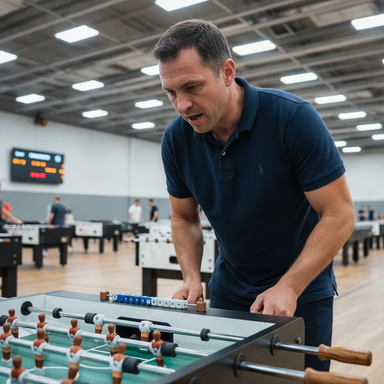
A dedicated foosball enthusiast who has been playing in regional leagues for over a decade. He currently frequents Pitcher's Pub in Fitchburg but is looking for a dedicated Madison venue that treats foosball as a serious sport rather than a basement afterthought.
Age
42
Location
Fitchburg, WI
Family Status
Married, 2 children
Education
B.S. in Civil Engineering
Profession
Project Manager for a Construction Firm
Opportunities
- Partner with the International Table Soccer Federation (ITSF) to host sanctioned tournaments that draw players from across the Midwest.
- Sell high-end foosball accessories (wraps, specialized balls) and offer table maintenance workshops for home-table owners.
Pain Points
- Frustration with poorly maintained, sticky, or unlevel tables in public bars
- Lack of dedicated 'competitive' space where casual players don't interrupt serious matches
- Limited venues that offer tournament-grade T-3000 tables
Needs
- Pristine, tournament-grade equipment maintained daily
- A community of high-skill players to practice and compete with
- Reliable scheduling for league nights and bracket-style tournaments
“I’ll drive past five bars to get to the one that actually levels their tables and cleans the rods. For us, it’s not just a game; it’s about the mechanics.”
Sales Plan
The sales strategy centers on converting first-time visitors into repeat customers — it costs far less to keep an existing customer coming back than to acquire a new one.
Consistent, customer-centric service is required of every employee: no customer should leave dissatisfied, and staff are empowered to resolve most issues on the spot without needing manager approval. Everyone on staff, not just bartenders, is treated as part of the sales team.
A simple punch-card and email loyalty program, tracked through our POS, rewards repeat table time and food and drink purchases, and gives management visibility into which customers and segments are driving repeat visits.
Against pool halls, Foosball Hall's edge is table volume and format: foosball asks for the same skill and strategy as pool but delivers faster, more physical gameplay that's approachable for a first-time player and genuinely competitive for a serious one.
Locations and Facilities
Foosball Hall is a start-up Wisconsin LLC operating as a table-game (foosball) venue offering beer, soft drinks, and light food in Madison, Wisconsin. Before opening, the business will secure a Wisconsin Class B liquor license, a food service permit from the local health department, and a certificate of occupancy for the leased space.
Start-up Requirements
Key start-up expenses include:
- Foosball tables — 10 tables at approximately $3,000 each, plus two tournament scoreboards
- Lighting — supplemental lighting for proper table play
- Furniture — stools, tables, counter tops and chairs for guests not actively playing
- Kitchen equipment — glasses, silverware, plates, microwave, convection oven, refrigerator/freezer, serving utensils, beer tap system, fountain dispenser
- POS and reservation system — POS terminals, card readers, and table reservation software
- Professional services — attorney fees for business formation, lease review, and liquor licensing; a business consultant for operating systems
- Marketing materials — signage and event materials
- Website — for tournament information, league schedules, and foosball community links
Technology
Technology at Foosball Hall serves two purposes: running day-to-day operations efficiently and keeping the business visible to the competitive foosball community, which is highly connected online.
Operations
Table time, food and beverage sales, and tabs are managed through a single POS system (Square), which also tracks inventory and gives management real-time visibility into table utilization and sales mix. Reservations for league nights run through the same system, cutting down on scheduling conflicts and no-shows.
Marketing & Community
The website and Google Business Profile are the primary channels for reaching competitive players, who actively search out new venues and stay connected to the foosball community online. The site lists tournament schedules, league standings, and hours, and carries reciprocal links to and from regional and state foosball associations to drive awareness among active players. Social media (Instagram, TikTok) handles day-to-day visibility with casual players and event promotion.
Development
The website runs on a low-maintenance platform (Squarespace) that Stan and staff can update directly for schedules and events, avoiding ongoing developer costs.
Equipment and Tools
Core equipment for Foosball Hall includes:
- Ten tournament-grade foosball tables from an established U.S. manufacturer (e.g., Tornado or Valley-Dynamo), selected through competitive bidding for durability and tournament-standard play
- Two tournament scoreboards for league and bracket play
- Supplemental lighting positioned over each table for proper visibility during play
- Bar and kitchen equipment — beer tap system, fountain dispenser, microwave, convection oven, commercial refrigerator/freezer, glassware, plates, and serving utensils
- POS and reservation hardware — POS terminals and card readers integrated with the table reservation system
- Seating and furniture — stools, tables, counter tops and chairs for guests not actively playing
Milestones
Completion of the business plan Finalize business plan documentation. Manager: SS, Business Development. | July 15, 2026 |
First tournament Launch inaugural foosball tournament. Manager: HP, Marketing. | July 29, 2026 |
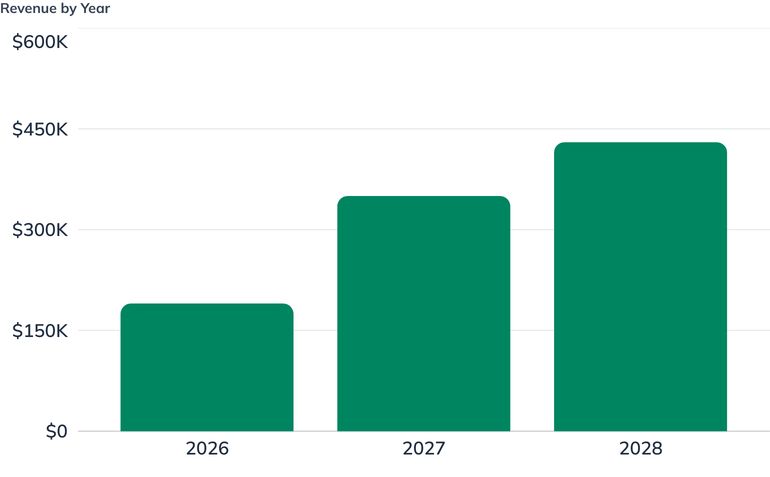
$250K in revenue Achieve $250,000 cumulative or annual revenue milestone. Manager: SS, Sales. | Oct 30, 2027 |
Profitability Reach sustainable profitability during second year. Manager: BK, Accounting. | Oct 30, 2027 |
Key Metrics for Success
Foosball Hall tracks a small set of metrics closely to gauge health and catch problems early:
- Table utilization — hours booked per table per week, tracked separately for casual walk-in play versus reserved league/tournament time
- Food and beverage attach rate — the share of table-paying customers who also purchase food or drinks, since food and beverage sales are the primary revenue driver
- Average check size — tracked by day part and by casual vs. competitive customer segment
- Monthly break-even revenue — reviewed monthly against actual fixed and variable costs to catch cost creep early
- Customer repeat rate — visits per loyalty-program member per month, used to gauge whether marketing and service are converting first-time visitors into regulars
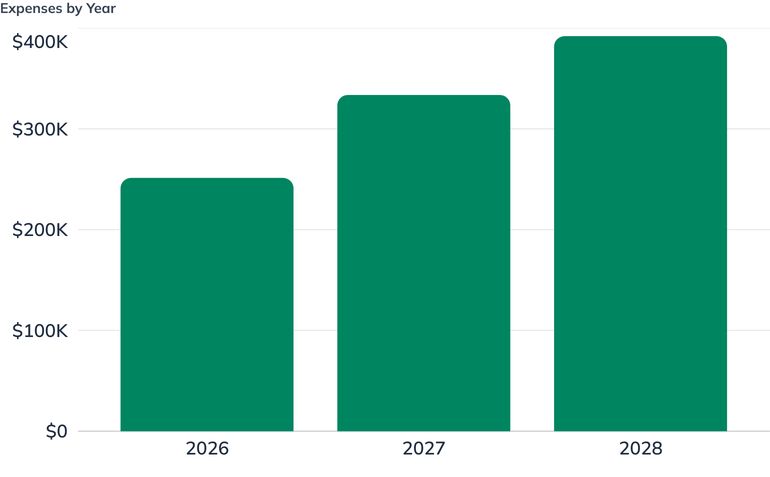
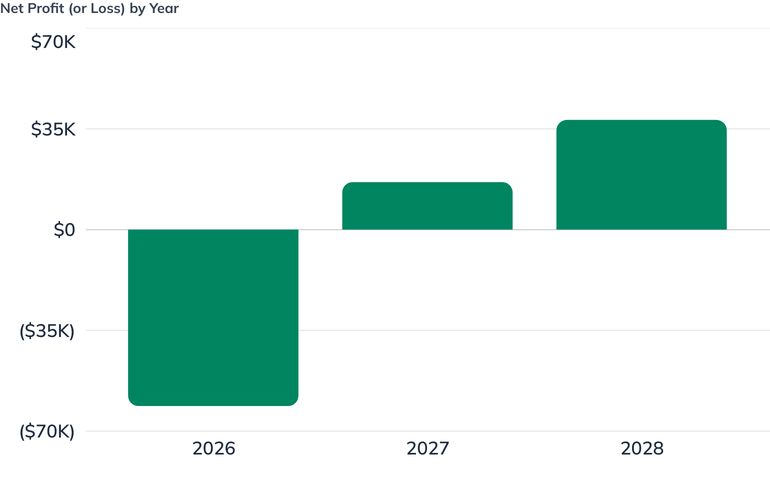
Foosball Hall pays every role at or above Dane County's 2026 living wage rather than the state minimum, which raises the payroll line relative to a typical bar's but is expected to pay back in lower turnover and more consistent service — a deliberate trade-off reflected in a larger year-one loss. The underlying sales forecast is intentionally conservative, keeping expenses covered under a worst-case ramp-up scenario. The first several months are expected to be slower as the business builds visibility and a regular clientele, with profitability targeted in year two and strengthening in year three. See the Financial Plan chapter for detailed revenue, cost, and profitability projections.
SWOT Analysis
Strengths: Only dedicated foosball venue in Madison; ten tournament-grade tables; Stan's tavern management background and MBA training; large, built-in student market; every role paid at or above Dane County's living wage, supporting lower staff turnover and more consistent service.
Weaknesses: New business with no established clientele; revenue depends more on food and beverage sales than table fees; limited brand awareness at launch; higher payroll costs relative to industry norms mean a larger year-one loss and a longer runway to profitability.
Opportunities: Untapped local foosball market; rising national interest in barcade-style social gaming as a growth category; tournament sponsorship visibility; growing casual and competitive player segments; first-mover advantage in Madison.
Threats: Pool halls as direct competitors; competitors replicating the foosball concept once demand is proven; employee theft and pour variance risk common to bar operations; a slower-than-planned ramp-up period.
Company
Ownership and Structure
Foosball Hall is an LLC registered in Wisconsin. The LLC structure was chosen as a personal liability shield for owner Stan Spinner. Stan is the majority owner with outside investors holding notes securing their investment.
Management Team
Foosball Hall is led by Stan Spinner. Stan earned his undergraduate degree in philosophy from the University of Wisconsin-Stevens Point, where his fraternity's foosball table first sparked his passion for the game.
During college, Stan managed a pool hall — gaining hands-on experience with bar and tavern operations, night-shift flexibility that let him finish school, and a close read on what keeps table-game customers coming back. Knowing he wanted to run his own business but needed a stronger operating foundation, Stan enrolled in the University of Wisconsin's MBA Entrepreneurship Program.
Stan identified the foosball hall opportunity early in the program but chose to finish his MBA first, using coursework in operations, marketing, and finance to build out the plan for Foosball Hall ahead of graduation. He holds current TIPS alcohol service certification and is completing Wisconsin's responsible beverage server training ahead of opening.
Advisors
Foosball Hall does not maintain a formal board of advisors. Professional support comes from:
- Business consultant — engaged during start-up to help set up operating systems, financial controls, and day-to-day tavern management processes.
- Attorney — handles business formation, lease review, and liquor licensing compliance for the Wisconsin LLC.
- CPA/bookkeeper — sets up accounting and payroll systems before opening and reviews financials monthly once the business is operating.
Stan Spinner's MBA Entrepreneurship coursework and pool hall management experience provide the primary strategic guidance for day-to-day operations and growth planning.
Financial Plan
Revenue
Need actual charts? We recommend using LivePlan as the easiest way to create graphs for your own business plan.Create your own business plan
Expenses & Costs
Need actual charts? We recommend using LivePlan as the easiest way to create graphs for your own business plan.Create your own business plan
Profitability
Need real financials? Explore a spreadsheet-free path to generating financial data for your business.Create your own business plan
Use of Funds
Total start-up funding required: $185,000
Start-up expenses ($9,500) cover legal, stationery, brochures, consultants, and expensed equipment. Start-up assets ($175,500) include $117,500 cash required, $3,000 other current assets, and $55,000 in long-term assets — ten foosball tables ($30,000) plus bar, kitchen, and POS equipment ($25,000).
The larger cash reserve, compared to earlier plans, exists specifically to fund a full year of living-wage staffing — every role is paid at or above Dane County, Wisconsin's 2026 living wage — while the business builds toward profitability in year two.
Sources of Funds
Total planned investment: $185,000
- Stan Spinner: $115,000 (majority owner)
- Investor 2: $70,000 (note-secured investment)
No long-term liabilities or current borrowing at start-up. All funding is equity investment.
Projected Statements
Key Assumptions
Key financial assumptions:
- Current interest rate: 10.00% (no debt incurred — all equity funded)
- Long-term interest rate: 10.00%
- Income tax rate: 30.00% (applied quarterly on profitable periods)
- Plan start: January 2026
- Forecast period: 2026–2028 (3 years)
The forecast assumes a slower year-one ramp followed by stronger growth in years two and three as the venue builds a regular customer base and tournament calendar. Gross margin is approximately 78% across all revenue streams.
Direct cost assumptions: Alcohol COGS at 25%, soft drinks at 15%, food at 33% of respective revenue streams.
Personnel: All four roles — Owner/GM, Bartenders, Bartender Assistants, and Bookkeeper — are paid at or above Dane County, Wisconsin's 2026 living wage of $24.46/hour (MIT Living Wage Calculator), well above the $7.25 state minimum wage. Payroll taxes are modeled at 15% of wages. Scheduled bartender hours scale from roughly 30/week in year one to over 55/week by year three as revenue grows.
Break-even monthly revenue is approximately $23,300, reflecting the higher, living-wage-based payroll built into the cost structure. The living-wage commitment pushes year-one to a larger loss than a minimum-wage staffing model would, with the business reaching profitability in year two and strengthening through year three.
Frequently Asked Questions
A bar and tavern business plan should cover your concept and differentiation, target market segmentation, a start-up funding breakdown, and licensing requirements. Foosball Hall's plan, for example, positions itself as Madison's first dedicated foosball venue, splits its market into casual and competitive players, details a $185,000 all-equity funding plan, and lays out the Wisconsin Class B liquor license and food service permit it needs before opening.
Foosball Hall raised $185,000 in total start-up funding — $115,000 from majority owner Stan Spinner plus $70,000 from a second, note-secured investor, all equity with no debt. Major costs include ten tournament-grade foosball tables at about $3,000 each, kitchen and bar equipment, a POS and table-reservation system, and professional fees for business formation, lease review, and liquor licensing.
Yes — Foosball Hall's plan requires securing a Wisconsin Class B liquor license, a food service permit from the local health department, and a certificate of occupancy for its leased space before opening, the combination typically needed by any venue serving both alcohol and food. Exact license classes and requirements vary by state and municipality, so it's worth confirming specifics with local authorities early in planning.
Foosball Hall earns revenue across four lines — alcohol, soft drinks, food, and hourly table fees — but the plan is explicit that food and beverage sales are the primary revenue driver, with table fees supplementing rather than carrying the business. Profitability depends on strong food and drink attach rates per visit, not just getting customers through the door to play.
Foosball Hall's stated objective is to reach sustainable profitability by year two of operation while paying every employee a living wage rather than state minimum. Its multi-year forecast lands close to breakeven overall — about $970,000 in projected revenue against roughly $977,000 in expenses — reflecting the thin margins typical of a bar that's committed to above-minimum-wage staffing from day one.
Madison has several pool hall bars, but none built around foosball, despite tables at house parties and fraternity houses rarely sitting empty. Foosball Hall is also positioned to absorb Madison's existing organized foosball scene, currently hosted in a community center recreation room with just six tables and no food or bar service, by offering ten tournament-grade tables, better lighting and playing surfaces, and full bar and food service.
Foosball Hall targets two segments: casual players, a broad group of roughly 54,889 potential customers in the Madison market growing about 8% a year, historically college-age men but increasingly mixed-gender as bar-based gaming has gone mainstream, and competitive players, a smaller but highly engaged group of about 12,445 potential customers connected to regional and manufacturer-sponsored foosball circuits.
Yes — every role at Foosball Hall, from bartenders to the bookkeeper, is paid at or above Dane County's living wage rather than the state minimum wage. The plan frames this as core to the business, not just a cost: paying more up front is meant to keep experienced, motivated staff who deliver the consistent service a bar depends on for repeat customers.

Business Plan Outline
Start your plan