





Brewery Business Plan


Business Plan Summary
This brewery business plan example features Sedibeng Breweries, a mid-scale brewer based in Selebi Phikwe, Botswana, founded by Kagiso Molefe and Thabo Ntsholo. It covers Sedibeng's three-product lineup — Phikwe Gold traditional sorghum beer, Tlhaka Ginger Brew, and the shelf-stable Sedibeng Mageu — and its freshness-and-distribution strategy for competing against a dominant national incumbent, backed by $1,131,700 in start-up funding. Use it as inspiration for your own plan, and read our guide on how to start a brewery for step-by-step advice. Download a free business plan template to get started, or browse more business plan examples.
Sedibeng Breweries
Executive Summary
Sedibeng Breweries is a mid-scale brewery based in Selebi Phikwe, one of Botswana's fastest-growing industrial centers. Founded by Kagiso Molefe and Thabo Ntsholo, we produce three distinct beverages rooted in Setswana brewing tradition but built with modern quality control: Phikwe Gold, a smooth traditional opaque (sorghum) beer; Tlhaka Ginger Brew, a naturally fermented ginger beer offered in both alcoholic and non-alcoholic versions; and Sedibeng Mageu, a shelf-stable cultured sorghum drink that needs no refrigeration and is suited to remote, off-grid retailers and school feeding programs.
Objectives: Deliver consistently high-quality brew through rigorous quality control, modern production technology, and a trained production and sales team; pursue SABS quality certification for regional credibility; build a distribution network that reaches communities the dominant national brewer underserves; and grow a workforce and community footprint we're proud of.
Keys to Success: A last-mile distribution network reaching remote and peri-urban shebeens and retailers; freshness and quality control that beats the mass-market incumbent; a lean, well-trained production team; disciplined financial management; and marketing that builds loyalty in underserved segments.
Mission: Create a welcoming, sociable drinking culture around high-quality, affordable local brews, while building genuine trust and a "license to operate" with the communities we serve.
We're targeting an initial market share in the mid-single digits against a dominant incumbent, growing steadily as our distribution network and brand recognition expand. We intend to be a fair, well-regarded employer — competitive pay, health coverage, profit sharing, and generous leave — and an equal-opportunity workplace from day one.
Opportunity
Problem Worth Solving
Opaque (sorghum) beer is traditional beer for most Batswana consumers, brewed and consumed for social, ritual, and everyday purposes across generations. The large rural and peri-urban population appreciates good traditional brew, but in most areas outside the main cities has access to only one option: a mass-produced product from Maru Breweries Group, whose >90% market share leaves remote and lower-income communities with little real choice on quality, freshness, or price point.
Maru's flagship traditional beer, Bogale, is manufactured at national scale and loses freshness quickly after packaging — a known frustration among consumers in areas with longer distribution chains. Rural and remote-area retailers frequently receive stock that has already turned by the time it reaches the shelf, and lower-income consumers are underserved by packaging sizes and price points designed for urban markets.
Sedibeng addresses this gap directly: we brew in smaller batches closer to the communities we serve, prioritize freshness over shelf life for our core traditional beer, and offer packaging sizes and price points built for lower- and middle-income households. Availability of an affordable, good-quality, genuinely fresh product is the single biggest factor in purchase decisions in our target markets — and it's the one place the dominant incumbent is structurally weakest.
Our Solution
Sedibeng Breweries produces and distributes three beverages, each built around a specific gap in the current market:
Phikwe Gold — Our traditional opaque (sorghum) beer, brewed for a smoother texture and more consistent quality than the mass-market standard, with no rough sediment. Brewed in smaller regional batches so it reaches retailers fresher, this is our flagship volume product and direct challenger to the dominant incumbent's traditional beer line.
Tlhaka Ginger Brew — A naturally fermented ginger beer sold in two versions depending on fermentation length: a "Family" non-alcoholic version with only trace alcohol, consumed fresh within about a week, and a lightly alcoholic "Reserve" version for adult consumers. Packaged in 250ml bottles, it's positioned as a distinctive, better-tasting alternative to imported sodas and ciders.
Sedibeng Mageu — A shelf-stable, cultured sorghum drink that requires no refrigeration, packaged similarly to long-life dairy products like Ultra Mel. Available in plain-sour, vanilla, and wild-fruit flavors, it's designed for school feeding schemes, spaza shops, and off-grid retailers in areas where cold-chain logistics are unreliable.
Every batch is tested at the National Food Laboratory for quality and safety before release. As we grow, we'll expand this lineup selectively — building on our existing brewing and distribution capability rather than diversifying for its own sake, with an eye toward licensing opportunities across Southern Africa once our home market is well established.
Market Overview
Botswana's economy continues to diversify away from mineral dependence, with government policy actively encouraging local manufacturing and value-added production — a favorable backdrop for a homegrown brewer investing in modern production techniques and local skills transfer.
Our core customers are working- and middle-income adults who value good-quality traditional beer: mineworkers, administrative staff, and managers in industrial centers like Selebi Phikwe who want accessible, consistently fresh brew without traveling to urban centers. A second segment is rural and remote-area consumers who currently have access to only one brand of traditional beer, regardless of quality or freshness. A third, smaller segment is domestic and international visitors interested in authentic Botswana food and drink culture, particularly around cultural and trade events.
We're targeting an initial market share in the mid-single digits nationally, with Tlhaka Ginger Brew expected to capture a higher relative share within its category given its distinctiveness — there's no direct equivalent on the market today. Given Maru Breweries Group's scale advantage, we're deliberately pursuing a niche strategy: winning specific underserved geographies and segments rather than competing head-on for the mass urban market.
Competitors
Botswana's beverage market is close to a monopoly: Maru Breweries Group controls more than 90% of the traditional and mass-market beer segment, backed by regional manufacturing scale that lets it produce at very low unit cost. Its flagship traditional beer, Bogale, is distributed nationwide and regionally, but its main weakness is well known among consumers: it doesn't hold its freshness for long, and that quality gap widens the further it travels from Maru's production hubs. Informal home brewers are the other source of competition, particularly in rural areas, though they lack consistent quality control and any real distribution reach beyond their immediate community.
We compete by deliberately not competing where Maru is strongest. Our strategy targets low- to middle-income customers and remote areas that Maru's centralized distribution model serves poorly, leading with superior freshness on our traditional beer, a genuinely differentiated ginger beer with no direct local equivalent, and a shelf-stable sorghum drink built specifically for markets without reliable refrigeration. This is a freshness-and-access play against a scale player, not a head-to-head price or volume war we could not win.
Market Trends
Consumers across our target markets are increasingly able to tell the difference between mass-produced and genuinely well-made traditional brews, and are willing to seek out the better product when it's actually available to them — freshness and quality are no longer "nice to have," they're expected.
Mobile money platforms (Orange Money, MyZaka) and WhatsApp-based ordering have become the default way small retailers and shebeen owners restock in Botswana, making it realistic for a smaller producer like Sedibeng to run an efficient, tech-enabled distribution operation without the fixed infrastructure a giant incumbent relies on. At the same time, demand for lower-alcohol and non-alcoholic options is rising among younger and health-conscious consumers, which plays directly to Tlhaka Ginger Brew's non-alcoholic "Family" version and to moderate-strength traditional beer generally.
Botswana's hot climate continues to support strong demand for refreshing, thirst-quenching beverages, particularly during the extended summer months, and rising awareness of the nutritional role traditional sorghum-based drinks play (a use case Sedibeng Mageu is built around) gives us an additional angle for marketing beyond just taste and price.
Execution
Market Plan Overview
Our marketing strategy is built around organic growth in local and remote markets, using a mix of advertising, in-person events, direct selling, public relations, and — from day one, not as a future add-on — digital and social media marketing.
Value Proposition: Genuinely fresh, good-quality local brew at a price and in a package size that fits our customers' budgets, backed by real relationships with the retailers who sell it.
Competitive Edge: Reach into remote and peri-urban areas that Maru Breweries Group's centralized distribution doesn't serve well, superior freshness on our traditional beer, and hands-on relationships with shebeen owners and independent retailers.
Promotion: A mix of traditional channels (Boccim Business Directory, Contacts Botswana, local newspapers) and digital channels (Facebook and WhatsApp Business, which are how most of our retail partners and end consumers already communicate), plus trade show presence at BITEC and the Botswana International Trade Fair, community road shows in remote areas, guided brewery tours, and our annual community festival.
Distribution: Regional production sited close to distribution hubs; a mixed wholesale/retail model; and direct, ongoing relationships with individual shebeen owners and spaza-style retailers, supported by WhatsApp-based ordering and mobile money payments to keep restocking simple for small operators.
Corporate Social Responsibility: Ongoing investment in community, education, health, environmental, and cultural programs in the areas where we operate, funded sustainably out of operating profit as we grow rather than treated as a one-off gesture.
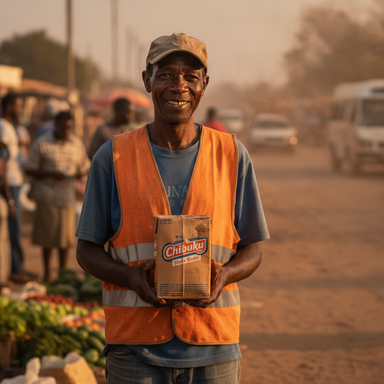
The Industrial Stalwart
Mothusi Molobi
A former BCL mine employee who now works in local construction, Mothusi views traditional sorghum beer as a vital part of his daily social ritual. He is loyal to tradition but frustrated by the declining quality and lack of freshness in the mass-produced brands that dominate the Selebi Phikwe market.
Age
48
Location
Selebi Phikwe, Botswana
Family Status
Married, 4 children
Education
Technical Certificate in Mining Operations
Profession
Independent Contractor and former Mine Worker
Opportunities
- Implement a 'Brewed Today' stamp and a loyalty card where every 10th carton of fresh Sedibeng brew is free to encourage daily post-work visits.
- Establish dedicated kiosks near former mining sites and industrial parks where workers congregate after shifts.
Pain Points
- Buying Bogale that has already turned sour due to poor distribution handling
- The high cost of premium lagers compared to his daily budget
- Lack of local pride in drinking a product manufactured hundreds of kilometers away
Needs
- A consistent, thick, and creamy texture that mimics home-brewed sorghum beer
- Affordable pricing that allows for daily consumption without impacting household savings
- Convenient access points near his commute routes
“I've spent my life building this town; I want a beer that is as fresh and hard-working as the people here, not something that sat in a truck for three days.”
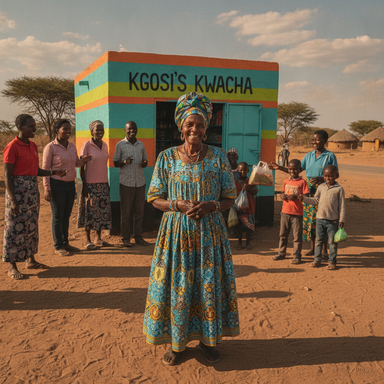
The Community Matriarch
Amantle Tlou
Amantle runs a small spaza shop in a rural village outside Selebi Phikwe. She is the gatekeeper for her community's consumption habits and is tired of receiving spoiled stock from national distributors that her neighbors refuse to buy.
Age
56
Location
Bobonong, Central District
Family Status
Widowed, Grandmother to 6
Education
Primary School Education
Profession
Spaza Shop Owner and Small-scale Farmer
Opportunities
- Offer smaller wholesale 'starter kits' for female-led spaza shops to reduce their financial risk when switching from Maru products.
- Provide 5-liter or 10-liter 'Celebration Packs' specifically marketed for local weddings and traditional ceremonies.
Pain Points
- Losing money on 'turned' beer that she cannot return to the national distributor
- Limited storage space for bulky, slow-moving urban-sized packaging
- Customer complaints about the lack of variety in traditional drinks
Needs
- Reliable, local delivery that guarantees the product is less than 48 hours old
- Packaging sizes that match the low-denomination coins her customers often use
- A non-alcoholic or low-alcohol ginger option for younger family members and events
“My customers know when the beer is old. If I sell them sour Bogale, they don't come back tomorrow. I need a partner who values my shop.”

The Modern Heritage-Seeker
Thabo Kgosi
Thabo is a young professional who recently moved back to the region for a government administrative role. He enjoys modern amenities but has a strong desire to reconnect with his cultural roots through authentic, high-quality local products.
Age
29
Location
Selebi Phikwe, Botswana
Family Status
Single
Education
Bachelor of Commerce
Profession
Administrative Officer, Local Government
Opportunities
- Position Tlhaka Ginger Brew as a sophisticated, locally-crafted alternative to imported soft drinks for social gatherings.
- Sponsor local trade fairs and cultural festivals with a 'tasting room' experience to elevate the image of sorghum beer.
Pain Points
- The 'cheap' social stigma associated with mass-produced shake-shake beers
- Lack of authentic Botswana-made beverages to serve to visiting friends or colleagues
- Poor branding on traditional products that doesn't appeal to his aesthetic
Needs
- Clean, modern packaging that honors traditional motifs but looks 'premium'
- A unique flavor profile (like the Tlhaka Ginger Brew) that stands out from generic brands
- Information about the local ingredients and 'small-batch' brewing process
“I want to support local businesses, but I won't sacrifice quality. Give me something traditional that I can be proud to put on my table.”
Sales Plan
Our near-term sales priority is building direct relationships with shebeen owners and independent retailers in the remote and peri-urban areas where Maru Breweries Group's distribution is weakest — this is where our freshness advantage is most visible and most valuable to the retailer. Personal selling by our Operations and Marketing Managers, backed by targeted local advertising, does the heavy lifting early on, since trust with individual retail partners is what actually drives repeat stocking decisions in this market.
We're targeting a market share in the mid-single digits in our first full year, concentrated in Selebi Phikwe, Kasane, and Palapye and the surrounding remote areas we distribute to. As our brand and distribution network mature — and as retailers see consistent freshness and reliable restocking — we expect sales growth to accelerate relative to our launch year, particularly as Tlhaka Ginger Brew and Sedibeng Mageu build their own distinct customer bases alongside Phikwe Gold.
Locations and Facilities
We currently operate plants and offices in three growing industrial centers — Selebi Phikwe, Kasane, and Palapye — chosen specifically for their proximity to the remote and peri-urban markets we're targeting. We plan to add a fourth site in Maun or Francistown as demand and lease availability allow, keeping production close to distribution rather than centralizing it the way our main competitor does.
The Selebi Phikwe facility houses four stainless steel fermentation vessels in a brewing floor designed to be visible to visitors — stakeholders and community members can observe the brewing process and take a guided educational tour during operating hours. Each site is equipped with offices, production and packaging equipment, and basic cold storage for our short-shelf-life products, alongside ambient storage for our shelf-stable Sedibeng Mageu line. We track batch and fermentation data at each site so we can maintain consistent quality as we add locations.
Technology
We invest in modern production technology to keep quality consistent and unit costs low across sites. Fermentation tanks are fitted with digital temperature and pH monitoring so our brewmaster can catch drift before it affects a batch, and we log batch data digitally at every site to keep quality consistent as we scale from three locations to four.
On the distribution side, we use route-planning software to keep last-mile delivery to remote shebeens and retailers efficient, and WhatsApp Business plus mobile money (Orange Money, MyZaka) to make ordering and payment simple for small retail partners who don't have traditional point-of-sale systems. We maintain ongoing relationships with brewing technology suppliers and training partners in South Africa to stay current on assembly and packaging technology relevant to our scale, rather than trying to match the capital-intensive automation of a national-scale competitor.
Equipment and Tools
Our core production assets are the brewing plant and machinery at each site — stainless steel fermentation and mash vessels, a bottling line for Tlhaka Ginger Brew, and a separate shelf-stable packaging line for Sedibeng Mageu — along with delivery vehicles for last-mile distribution to remote retailers, and standard office equipment and computers for operations and administration. Exact capital requirements for equipment, vehicles, and opening inventory are detailed in our financial plan.
Production is organized around consistent quality and food safety at every step, using digital batch tracking and up-to-date fermentation monitoring. Raw materials — primarily sorghum, maize, and ginger — are sourced from a mix of South African suppliers and, increasingly, local communal and commercial farmers in Botswana, both to manage input costs and to build the kind of local supply relationships that strengthen our standing in the communities we serve.
Milestones
Launch market introduction event Organize grand launch event inviting potential customers, senior officials including Minister of Industry and Commerce, and stakeholders to penetrate the market. | July 15, 2026 |
Participate at Botswana International Trade Fair Expose business to potential customers and suppliers at BITF in August. | Aug 15, 2026 |
Participate at BITEC trade exhibition Display products at BITEC specialized exhibition to exchange technologies, ideas, and contacts with potential partners and customers. | Marketing Manager Sept 15, 2026 |
Host October fest community event Community festival in hottest month promoting Botswana culture; proceeds donated to charities. | Oct 15, 2026 |
Launch brewery tours and road shows Arrange guided brewery tours for stakeholders and conduct road shows in remote areas to build community awareness and product recognition. | Operations Manager Nov 30, 2026 |
Launch retailer ordering platform and expand digital presence Build out a WhatsApp Business ordering channel and social media presence for retail partners and consumers, plus a website for investors and foreign customers, expanding on the informal digital channels used since launch. | June 30, 2027 |
Participate in regional trade shows Attend South African Exhibition Show and regional fairs to gain awareness and orders outside Botswana. | Aug 15, 2027 |
Key Metrics for Success
We track a focused set of metrics to know whether the business is on plan, reviewed monthly against the targets in our financial plan:
Financial metrics: net profit margin, gross margin, month-over-month sales growth, and progress toward our target market share — all detailed with specific targets in the Financial Plan section rather than restated here, so this section stays accurate as the forecast evolves.
- Retailer collection days, kept as short as possible to protect cash flow with our small-retailer customer base
- Price competitiveness and staff service quality, reviewed every six months
- Marketing program effectiveness, reviewed regularly against cost per new retailer relationship acquired
- Batch freshness and quality-control pass rate at the National Food Laboratory
Milestones we track: digital ordering and social media presence with retail partners, participation in regional trade shows, and expansion of our distribution network into new geographies.
Risks & Mitigation
Raw material cost and supply volatility. Sorghum, maize, and ginger prices can swing with regional weather and harvest conditions. We're building relationships with multiple South African suppliers and local Botswana farmers to reduce single-source risk, and we'll adjust our product mix or pricing if margins on a specific line come under sustained pressure.
Distribution and cold-chain risk in remote areas. Our freshness advantage depends on reliable last-mile delivery; poor roads or vehicle downtime in remote areas could undercut the exact advantage we're built around. We maintain route-planning discipline and are deliberately not over-extending into new geographies faster than our delivery capacity can support.
Competitive response from Maru Breweries Group. As the dominant incumbent, Maru has the scale to cut prices or improve its own distribution reach if it sees us as a real threat. Our mitigation is to stay genuinely differentiated on freshness and product range rather than compete on price, and to build retailer loyalty that's harder to displace with a price cut alone.
New entrants in our niche. Our positioning — freshness and access in underserved areas — is replicable if we don't move fast enough. We protect it with real relationships with individual retailers and continued product innovation, not just first-mover timing.
Regulatory and licensing risk. Alcohol production and distribution in Botswana is subject to licensing requirements that can change. We maintain active legal counsel and relationships with relevant government bodies to stay ahead of compliance requirements rather than react to them.
Labor disruption. As with any production business, we maintain clear grievance and communication channels with staff to minimize the risk and impact of any labor disruption.
Company
Ownership and Structure
Sedibeng Breweries is a private limited company incorporated in Botswana, founded by Kagiso Molefe and Thabo Ntsholo, who between them bring hands-on brewing know-how and business management experience to the venture. Ownership is held by the founding shareholders alongside a small group of outside investors who joined at incorporation.
Growth capital comes from a mix of founder and investor equity plus a modest amount of borrowing at start-up, with an intention to fund most ongoing growth from operating cash flow and equity rather than debt as the business matures. Full details on investment amounts, ownership split, and funding sources are set out in the Financial Plan.
Management Team
Our management team combines founder ownership with hands-on operating experience. Kagiso Molefe serves as President and CEO, leading strategy, government and stakeholder relations, and overall direction. Thabo Ntsholo serves as Operations Manager, overseeing day-to-day production and distribution. Two Brewmasters lead recipe development and quality control across all three product lines, supported by a Marketing Manager driving retailer relationships and brand-building, an Office Manager handling administration and finance coordination, and a production team handling brewing, bottling, packaging, and last-mile logistics.
We compensate our team competitively for the market, with health coverage, profit sharing, and generous leave — employee wellbeing matters to us both as a retention strategy and because it's the right way to run a business. We invest in continuous in-house and external training, including brewing and quality-control courses through partner institutes in South Africa, so our team's skills keep pace as we add sites and expand our product range.
Advisors
Sedibeng Breweries draws on outside expertise to complement our core team:
Brewing Training Partner — We work with the Highveld Brewing Academy in South Africa for ongoing brewmaster training and benchmarking of production and quality-control techniques, independent of any relationship with competing brewers.
Legal Counsel — External legal advisors support incorporation, alcohol production licensing, and ongoing regulatory compliance with Botswana beverage manufacturing requirements.
Accounting & Financial Advisors — Professional accountants support financial reporting, receivables management, and cash flow forecasting — important given the tight collection cycles typical of small-retailer distribution.
Government & Trade Bodies — We maintain active relationships with BEDIRA (Botswana Export Development and Investment Authority) and Boccim (Botswana Confederation of Commerce, Industry and Manpower) for market intelligence, export opportunities, and trade show participation.
Company History
Sedibeng Breweries was incorporated in Botswana in early 2026 by founders Kagiso Molefe and Thabo Ntsholo, and has been operating for about seven months. In that time we've stood up production capability across three sites — Selebi Phikwe, Kasane, and Palapye — and built the initial distribution relationships we need to launch. Start-up capital and initial asset investment (brewing plant and machinery, delivery vehicles, and office equipment) are detailed in the Financial Plan.
The company is committed to open, ethical governance and transparent management in the interest of all stakeholders. Our values: operate ethically and transparently; be a responsible corporate citizen in every community we enter; deliver products of genuinely uncompromising quality; build mutually beneficial relationships with suppliers and retail partners; and create fair, sustainable wealth for our team, investors, and communities alike.
Financial Plan
Revenue
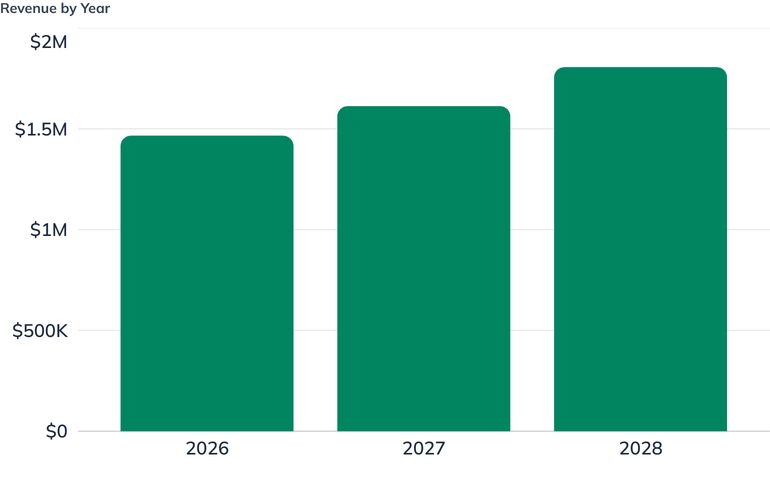
Need actual charts? We recommend using LivePlan as the easiest way to create graphs for your own business plan.Create your own business plan
Expenses & Costs
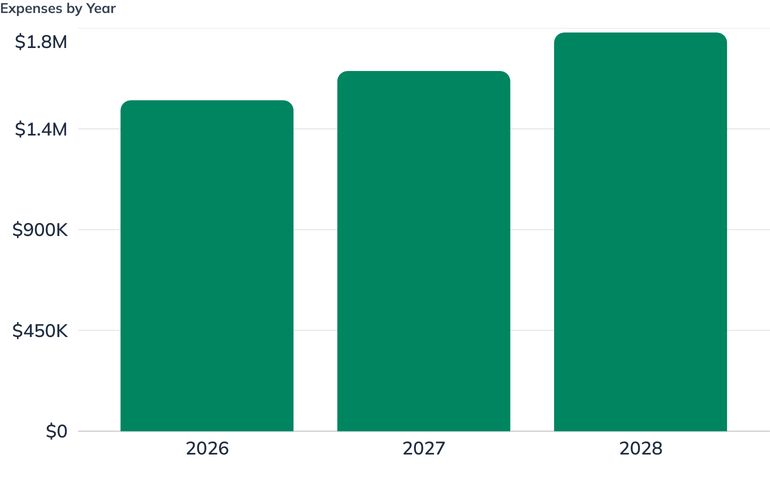
Need real milestones? We recommend using LivePlan as the easiest way to create milestones for your own business plan.Create your own business plan
Profitability
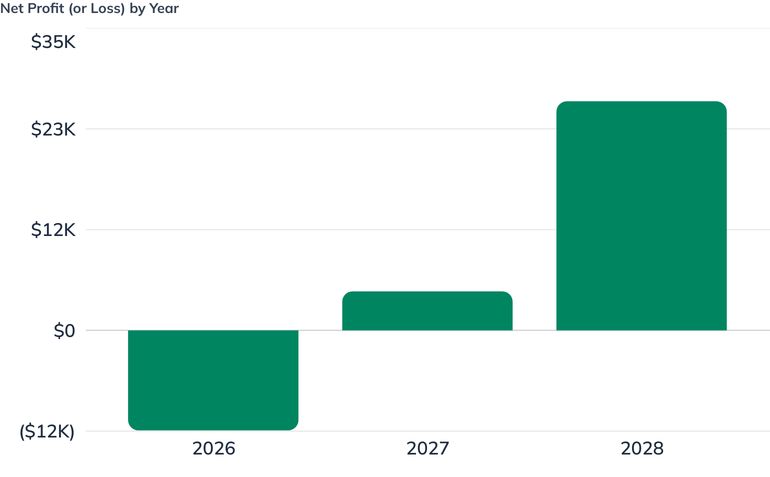
Need actual charts? We recommend using LivePlan as the easiest way to create graphs for your own business plan.Create your own business plan
Use of Funds
Total funding required: $1,131,700. This covers $855,000 in long-term production assets — brewing plant and machinery ($750,000), delivery vehicles ($90,000), and office equipment and computers ($15,000) — plus approximately $276,700 in opening working capital to carry the business through its ramp-up period before revenue reaches a steady monthly run rate.
Sources of Funds
Source | Amount | Timing |
|---|---|---|
Planned Investment (founders and initial investors) | $861,700 | Start-up |
Additional Investment | $250,000 | Month 2, Year 1 |
Current Borrowing | $20,000 | Start-up (10% interest) |
Total Funding | $1,131,700 |
Debt Service: Current borrowing of $20,000 at 10% interest generates modest monthly interest in year one, with the balance repaid within the first two years.
We intend to work with investors who are compatible with our growth plan and who respect realistic forecasts, conservative cash flow management, and cash flow as a first priority.
Projected Statements
Key Assumptions
Assumption | Year 1 | Year 2 | Year 3 |
|---|---|---|---|
Current Interest Rate | 10.00% | 10.00% | 10.00% |
Corporate Tax Rate | 22.00% | 22.00% | 22.00% |
Gross Margin | 44.00% | 44.00% | 44.00% |
Collection Days Target | < 30 days | < 30 days | < 30 days |
- We assume a stable Botswana economy without major recession or currency disruption.
- Collection days are important but not easily influenced given our reliance on small-retailer, cash and mobile-money-based sales.
- Cash flow discipline is critical to success — heavy upfront investment in brewing equipment means working capital needs careful management in the early years.
- Corporate income tax at 22% (Botswana's standard rate) is applied quarterly on taxable income.
- No unforeseen regulatory changes will materially restrict alcohol production or distribution.
Frequently Asked Questions
A brewery business plan should cover your product lineup, competitive positioning against larger incumbents, production and distribution strategy, and a funding plan. Sedibeng Breweries' plan, for example, lays out its three beverages, its freshness-and-access strategy against Maru Breweries Group's over 90% market share, its three production sites in Botswana, and $1,131,700 in combined equity and debt funding.
Sedibeng Breweries raised $1,131,700 in total start-up funding: $861,700 in planned investment from its founders and initial investors, a further $250,000 in additional investment in month two of year one, and $20,000 in borrowing at 10% interest. That funded brewing plant and machinery, delivery vehicles, and office equipment across its three production sites. Costs will vary widely by scale, location, and equipment, but this is a realistic benchmark for a multi-site regional brewery.
Yes — breweries typically need production and alcohol manufacturing licenses from local authorities, plus food safety clearance before selling to the public. Sedibeng Breweries tests every batch at Botswana's National Food Laboratory and is pursuing SABS quality certification for regional credibility, in addition to whatever local business registration its three production sites require.
Sedibeng Breweries sells three distinct beverages — Phikwe Gold traditional sorghum beer, Tlhaka Ginger Brew, and the shelf-stable Sedibeng Mageu — through direct relationships with shebeen owners and independent retailers in the remote and peri-urban markets its larger competitor serves poorly. Its five-year forecast projects roughly $4.88 million in total revenue against $4.87 million in expenses, reflecting an early-stage brewery still investing heavily in distribution reach.
Sedibeng Breweries' forecast is thin-margin in its early years — projecting about $19,000 in net profit against roughly $4.88 million in revenue over its first five-year model — as it prioritizes building out production capacity across three sites and a distribution network before scaling profitability. Timelines vary widely by brewery based on production scale, capital intensity, and how quickly distribution relationships mature.
Rather than compete head-on with Maru Breweries Group, which controls more than 90% of Botswana's traditional beer market, Sedibeng deliberately targets the geographies and segments Maru's centralized distribution serves poorly. It brews in smaller regional batches near the communities it serves so its beer reaches retailers fresher than Maru's flagship Bogale brand, which is known to lose freshness over longer distribution chains.
Sedibeng Breweries targets three groups: working- and middle-income adults in industrial centers like Selebi Phikwe who want consistently fresh traditional beer without traveling to urban centers, rural and remote-area consumers who currently have access to only one brand of traditional beer, and a smaller segment of domestic and international visitors interested in authentic Botswana food and drink culture.
Sedibeng operates across three growing industrial centers — Selebi Phikwe, Kasane, and Palapye — chosen for their proximity to underserved remote and peri-urban markets, with a fourth site planned for Maun or Francistown. Its Selebi Phikwe facility features four stainless steel fermentation vessels on a brewing floor designed for visitor tours, and its Sedibeng Mageu line uses shelf-stable packaging so it can reach off-grid retailers and school feeding programs without refrigeration.

Business Plan Outline
Start your plan