





Food Truck Business Plan


Business Plan Summary
This food truck business plan example features Street Eats Food Truck, a Korean-Mexican fusion concept serving office workers and students through a fixed weekday rotation across three downtown and university-adjacent locations. It covers market positioning, menu and pricing strategy, a $115,000 funding plan split between owner equity and an SBA loan, and five-year financial projections — showing a path from a first-year loss to consistent profitability by year two. Use it as inspiration for your own plan, and read our guide on how to start a food truck with step-by-step advice. Download a free business plan template to get started, or browse more business plan examples.
Street Eats Food Truck
Executive Summary
Street Eats Food Truck serves Korean-Mexican fusion street food — think gochujang braised short rib tacos and kimchi quesadillas — to busy professionals, students, and event crowds across Boise, Idaho. We operate a single truck on a consistent weekday lunch rotation between three established locations in downtown Boise and the Boise State University area, supplemented by weekend appearances at Capital City Public Market and Treefort Music Fest, private catering, and pop-up partnerships with local breweries and businesses.
The Problem
Quick, convenient meal options in downtown Boise and around the Boise State campus tend to fall into two unsatisfying buckets: low-cost fast food with little flavor variety, or higher-priced sit-down restaurants that don't fit a 30-minute lunch break. Diners looking for something more interesting than a chain sandwich or burger, but who don't have time for a sit-down meal, are underserved.
The Solution
Street Eats Food Truck closes that gap with a focused Korean-Mexican fusion menu that's bold, consistent, and fast — most orders ready in under five minutes. Our menu is small and tightly executed rather than broad and diluted, which keeps food costs predictable and lines moving quickly. A reliable weekly location schedule (posted and updated daily via our app and social channels) means Boise customers always know where to find us.
Target Market
Our primary customers are office workers and students aged 22–45 in downtown Boise and the Boise State University district, looking for a flavorful lunch in the $12–16 range that beats a desk-eaten sandwich. Our secondary market is event organizers and private hosts — weddings, corporate functions, breweries, and Treasure Valley festivals — booking food truck catering as an alternative to traditional catering.
Opportunity

Problem Worth Solving
Office workers, students, and busy professionals in downtown Boise and around the Boise State University campus face a narrow set of lunch options. Chain fast food is fast and cheap but largely interchangeable — the same handful of burger, sandwich, and burrito concepts repeated block after block along Capitol Boulevard and the BoDo district. Sit-down restaurants offer more interesting food, but the 45-60 minute experience doesn't fit a typical workday lunch break, and the price point often runs higher than what a daily lunch budget supports.
This leaves a meaningful gap: there is no fast, affordable option that also delivers genuinely interesting, high-quality food. Existing food trucks in the Treasure Valley lean heavily toward single-cuisine concepts — tacos, BBQ, or grilled cheese — without much menu innovation, and none currently offer a Korean-Mexican fusion concept, despite strong regional demand for both Korean and Mexican flavors individually.
We also see this gap reflected in customer behavior: lines at the handful of Boise food trucks offering anything beyond standard fare are consistently longer than at conventional fast food trucks nearby, even at a higher price point, indicating customers will pay a premium for food that feels distinctive rather than commoditized.
Our Solution
Street Eats Food Truck serves Korean-Mexican fusion street food — a concept built around the natural pairing of two of the most popular global flavor profiles in our market, executed through a small, tightly focused menu rather than a sprawling one.
Our signature items include gochujang-braised short rib tacos, kimchi quesadillas, and a Korean-style bulgogi burrito bowl, alongside a rotating weekly special that lets us test new pairings and keep regular customers coming back. Every item is designed to be prepped quickly and served within five minutes of ordering, which is essential for the lunch-rush crowd that makes up the bulk of our weekday business.
We chose the food truck format over a traditional restaurant for three reasons that matter for this concept specifically. First, lower startup capital lets us prove out the menu and build a customer base before committing to a fixed lease. Second, mobility lets us follow our target customer — office lunch crowds on weekdays, festival and event crowds on weekends — rather than waiting for customers to come to a single fixed address. Third, the food truck format itself reinforces the brand: approachable, casual, and built for fast, flavorful eating rather than a formal dining occasion.
Our key differentiator is genuine fusion, not novelty. The menu isn't Korean food with a gimmick or Mexican food with a Korean garnish — every item is built from the ground up to combine techniques and flavors from both cuisines in a way that holds up on its own merits.
Market Overview
Primary Market: Downtown Boise Office and Student Lunch Crowd
Our primary target customer is a 22-45 year old office worker or graduate student in downtown Boise and the Boise State University-adjacent business district. This customer typically has a 30-45 minute lunch window, a daily lunch budget in the $12-16 range, and values food that feels like a break from routine rather than another desk lunch. This group skews toward people who already seek out food trucks, ethnic cuisine, and "discovery" dining experiences — they follow local food accounts on social media and actively look for new options rather than defaulting to the same two or three lunch spots.
We estimate this primary market at approximately 18,000 office and university-affiliated workers within a half-mile radius of our three core weekday locations, based on downtown Boise commercial occupancy data and Boise State University enrollment figures.
Secondary Market: Treasure Valley Events and Private Catering
Our secondary market is event organizers, corporate event planners, and private hosts booking food truck catering for weddings, corporate functions, breweries, and community festivals across the Treasure Valley — including recurring appearances at Capital City Public Market and Treefort Music Fest. Food truck catering has become an established and growing alternative to traditional buffet catering — less expensive, more flexible, and often viewed as more memorable by guests. This market is less price-sensitive than our daily walk-up customers and represents an important second revenue stream that smooths out seasonal and weather-related fluctuations in daily sales.
Market Trends Supporting This Concept
Demand for fast-casual ethnic fusion concepts has continued to grow in Boise as diners increasingly seek food that feels distinctive rather than standardized, a trend visible in the city's expanding food truck scene at spots like Green Acres Food Truck Park. At the same time, mobile ordering and delivery integration have become baseline customer expectations rather than differentiators — a trend our operating model is built around from day one rather than retrofitting in later.
Menu & Costs
Core Menu
Our menu is intentionally small — six core items plus one rotating weekly special — to keep prep time low, food cost predictable, and quality consistent across every order.
Item | Price | Est. Food Cost | Est. Prep/Cook Time |
|---|---|---|---|
Gochujang Short Rib Tacos (3) | $13 | $4.10 | 4 min |
Kimchi Quesadilla | $11 | $3.20 | 5 min |
Bulgogi Burrito Bowl | $14 | $4.50 | 4 min |
Korean Fried Chicken Sandwich | $13 | $4.30 | 5 min |
Crispy Tofu Tacos (vegetarian, 3) | $12 | $3.00 | 4 min |
Kimchi Fries (side/share) | $7 | $1.80 | 3 min |
Weekly Rotating Special | $13-15 | varies | varies |
Pricing Approach
Pricing is set to land at roughly 28-32% food cost across the core menu, which is in line with healthy food truck economics once labor, fuel, and location fees are layered on top. The rotating special is priced slightly higher to test new combinations without disrupting the cost structure of our proven core items.
Menu Validation
Before finalizing pricing, we tested the core menu with a sample of 40 people across two informal tasting sessions with friends, family, and several willing strangers at a local farmers market. Feedback informed two changes: simplifying the burrito bowl's ingredient list to reduce prep time, and adding the vegetarian tofu taco option after several testers asked for a plant-based choice. We'll continue using slow weekday afternoons to test new rotating specials before considering them for the permanent menu.
Speed and Throughput
Every core item is designed to be served in under five minutes, which is essential given that most of our weekday revenue comes from a roughly 90-minute lunch rush window. Prep work — braising short rib, marinating bulgogi, prepping kimchi — happens each morning before service, so on-truck cook time stays focused on quick assembly and finishing rather than from-scratch cooking.
Competitors
Direct Competitors
- Other food trucks in the Treasure Valley — primarily single-cuisine concepts (tacos, BBQ, grilled cheese). None currently offer a Korean-Mexican fusion menu, which is our core point of differentiation.
- Food truck pods and shared lots — multi-vendor locations like Green Acres Food Truck Park where customers can choose among several trucks; we compete on menu distinctiveness and speed of service within these settings.
Indirect Competitors
- Fast food and quick-service chains — faster and cheaper, but limited in flavor variety and increasingly seen as a fallback rather than a destination choice.
- Fast-casual and counter-service restaurants — comparable price point and food quality, but fixed location and longer wait times during peak hours.
- Grocery store and meal-delivery options — convenient for some, but lack the fresh-prepared, made-to-order experience that drives repeat lunch traffic.
Why Us?
Street Eats Food Truck wins on three fronts: a genuinely distinctive menu that no direct competitor currently offers in the Boise market, consistent and predictable weekday locations that build the kind of repeat-customer habit food trucks often struggle to earn, and a fast five-minute average order time that keeps us competitive with quick-service chains on speed while delivering a meaningfully better product. We also maintain an active presence on food delivery apps and a real-time location app, removing a friction point that still affects several of our direct competitors.
Execution
Market Plan Overview
Because our business is a literal mobile billboard, our marketing strategy leans heavily on visibility, consistency, and digital presence rather than traditional advertising spend.
Social Media and Location Updates
Our Instagram and TikTok accounts serve a dual purpose: brand-building content (food, behind-the-scenes prep, our fusion concept story) and daily, reliable location updates. We update our location in real time through both social channels and a food truck tracking app, since customers consistently cite inconsistent location updates as their biggest frustration with food trucks generally. A profile that goes stale for even a few days reads to customers as "probably closed," so same-day posting is treated as a non-negotiable operating task, not an occasional marketing activity.
Local Discovery and Reviews
We maintain an active, accurate presence on Yelp, Google Business Profile, and local food truck directory apps, and we actively encourage reviews from satisfied customers, particularly in our first six months when building initial visibility and credibility matters most.
Press and Story
Our Korean-Mexican fusion concept gives us a genuine story to tell — distinct from "another taco truck" — which we'll pitch to local food and culture publications and weekly arts papers. We'll lead with the founder's background and the specific gap in the market we identified, since outlets covering food trucks are typically looking for an angle beyond the menu itself.
Brand Consistency
Truck wrap design, social media presence, and packaging all use a consistent visual identity so that the truck itself reinforces brand recognition at every customer touchpoint, both at our regular weekday locations and at festivals and events where we're competing for attention among dozens of other vendors.
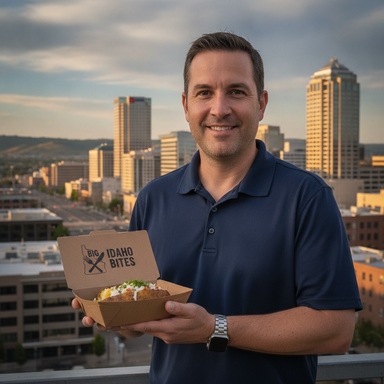
The Efficiency-Driven Professional
Marcus Vance
Marcus is a mid-level project manager working in the BoDo district who is tired of the 'desk lunch' routine. He values his 30-minute break and prioritizes speed and flavor over a sit-down experience, seeking a high-quality meal that feels like a reward for a long morning of meetings.
Age
34
Location
Downtown Boise, ID (BoDo District)
Family Status
Married, 1 child (age 3)
Education
Bachelor's in Business Administration
Profession
Project Manager at a Downtown Tech Firm
Opportunities
- Implement a seamless 'order ahead' feature in the app to guarantee his meal is ready the moment he walks up, maximizing his limited break time.
- Offer a 'Team Lunch' discount or a digital punch card that rewards frequent weekday visits, encouraging him to bring colleagues.
Pain Points
- Frustrated by 45-minute wait times at sit-down restaurants during peak hours
- Bored with the repetitive rotation of chain sandwich and burger shops
- Dislikes the 'heavy' feeling of traditional fast food that causes an afternoon slump
Needs
- A meal that can be ordered and received in under 5 minutes
- Bold, unique flavors that provide a genuine mental break from work
- Reliable location schedule to avoid wasting time searching for the truck
“I only have 30 minutes to step away from my screen. I want food that actually tastes like something, but I can't wait in a restaurant line for an hour.”
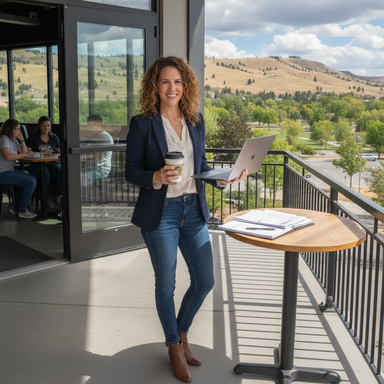
The Community Experience Curator
Sarah Jensen
Sarah is an HR Manager for a local marketing agency who is responsible for maintaining office morale and planning corporate events. She is always looking for 'cool' catering alternatives that make the company feel modern and connected to the Boise community.
Age
41
Location
North End, Boise, ID
Family Status
Married, 2 children
Education
Master's in Human Resources Management
Profession
HR & Culture Manager
Opportunities
- Provide simplified, per-head catering menus specifically designed for office 'Food Truck Fridays' or brewery pop-ups.
- Collaborate on exclusive events with local Boise breweries where the truck provides the primary food source for their patrons.
Pain Points
- Traditional catering (sandwiches/wraps) is often viewed as boring by younger staff
- Difficulty coordinating multiple food vendors for company retreats or festivals
- The need for food that accommodates various tastes while remaining a 'novelty' experience
Needs
- Professional and reliable communication for booking and logistics
- A menu that is easy to eat in a social/standing environment
- A unique 'vibe' that adds value to the company's culture and events
“I want our team lunches to feel like an event, not just a meeting with food. A fusion truck is the perfect conversation starter.”
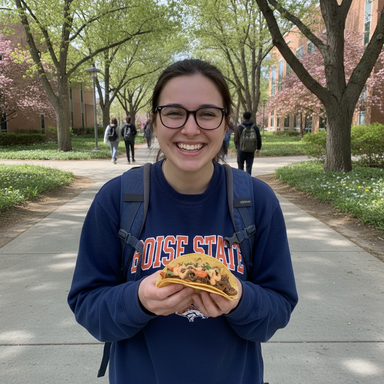
The Trend-Seeking Scholar
Chloe Miller
Chloe is a Boise State graduate student who is highly active on social media and loves discovering 'hidden gem' food spots. She views dining as a social activity and an opportunity to support local, innovative businesses while balancing a tight student budget.
Age
23
Location
Near Boise State University, Boise, ID
Family Status
Single, living in a shared apartment
Education
Pursuing Master's in Public Health
Profession
Graduate Research Assistant at BSU
Opportunities
- Create limited-time fusion items promoted exclusively on Instagram or TikTok to drive 'FOMO' and student engagement.
- Coordinate with university events or finals week to offer high-energy food options during hours when standard dining halls are closed.
Pain Points
- Limited interesting food options within walking distance of the BSU campus
- Standard fast food lacks the 'aesthetic' or flavor profile she enjoys sharing with her followers
- Difficulty finding high-protein, flavorful meals that fit a $15 daily budget
Needs
- Photogenic food presentation for social media sharing
- A mix of 'indulgent' and 'fresh' ingredients (like kimchi and short rib)
- Accessibility via foot or bike from the university district
“If I’m spending $14 on lunch, it better be something I can't get anywhere else. I'm obsessed with anything fusion right now.”
Sales Plan
Revenue Channels
- Weekday walk-up sales — our primary revenue driver, served from three rotating downtown and university-adjacent locations on a fixed weekly schedule
- Mobile ordering and delivery apps — orders placed ahead for pickup, or delivered through third-party delivery platforms, reducing line wait time during peak rush
- Private catering — booked events for weddings, corporate functions, and private parties, typically arranged 2-6 weeks in advance with a deposit and minimum guest count
- Festival and event vendor slots — weekend appearances at food festivals, concerts, and community events, usually involving a flat fee or percentage-of-revenue arrangement with the event host
- Local business partnerships — scheduled pop-up appearances at breweries and other local businesses that want to offer food without operating their own kitchen
Sales Approach
Weekday sales depend on consistency and speed: the same locations on the same days each week, with average order times under five minutes, so that repeat customers can build us into their routine. Catering and event sales depend on relationship-building and advance booking — we maintain a simple inquiry form on our website and respond within 24 hours with available dates, minimums, and a sample catering menu.
Partnerships
We actively pursue ongoing relationships with event organizers and other local businesses, since a single successful festival appearance or brewery pop-up often leads to repeat invitations and referrals to other organizers in the same network. These partnerships are a meaningfully lower-cost way to reach new customers than paid advertising, since the host's existing audience does much of the discovery work for us.
Locations and Facilities
Weekday Location Schedule
Consistency is critical for a mobile business — customers need to know where to find us without having to check daily. We operate a fixed weekly rotation across three confirmed downtown Boise and Boise State University-adjacent locations, chosen specifically for proximity to our target office and student lunch crowd:
- Monday/Wednesday — Downtown Boise office plaza near 8th Street and the BoDo district (high office worker foot traffic, secured a standing permit for this corner)
- Tuesday/Thursday — Boise State University-adjacent commercial strip along Broadway Avenue (student and faculty traffic, walking distance to two large office buildings)
- Friday — Rotating between Green Acres Food Truck Park and Capital City Public Market to capture weekend-adjacent foot traffic and build relationships with pod organizers
Each location requires roughly 20 minutes to set up in the morning and 15 minutes to break down at the end of service. We arrive 30 minutes before our posted opening time to be fully ready when the lunch rush begins.
Permits and Parking
We've secured the required City of Boise mobile food vendor permit and Central District Health permits, and confirmed parking agreements for our three weekday locations, including the necessary fees where applicable. We maintain a current understanding of City of Boise and Ada County parking and vending regulations, since restrictions on duration, distance from existing restaurants, and permitted zones vary by location and are subject to change.
Food Truck Pods and Events
For pod locations and festival appearances — including Treefort Music Fest and Alive After Five — we've researched and budgeted for the access fees and revenue-share arrangements typical of the Treasure Valley market, generally either a flat daily fee or a percentage of sales, paid to the event host or pod organizer.
Commissary Kitchen
Food prep that can't be done on the truck — including the morning's short rib braise, kimchi production, and bulk ingredient prep — takes place at a licensed shared commissary kitchen we rent by the month in the Boise area, since food businesses are not permitted to prep food in a home kitchen under Idaho food code. This commissary also serves as our overnight truck parking and resupply location.
Technology
Point of Sale and Payments
We run a mobile-first point of sale system on the truck, accepting card, mobile wallet, and contactless payment as the default — cash remains accepted but is no longer assumed as the primary payment method, consistent with how most food trucks operate today.
Online and Mobile Ordering
Customers can place orders ahead of time through our website or a mobile ordering integration, reducing wait time during the lunch rush and capturing orders from customers who might otherwise skip us if the line looks long. We're also listed on major third-party delivery platforms, extending our reach to customers within delivery range of our daily locations who wouldn't otherwise walk up to the truck.
Location Tracking
We use a food truck tracking app integration so customers can see our real-time location and schedule without relying solely on social media updates. This is paired with our own location calendar on our website for customers planning catering or visits in advance.
Back-of-House Operations
Inventory, ordering, and basic bookkeeping are managed through integrated small-business software that connects our point-of-sale data directly to our accounting system, minimizing manual data entry and giving us an accurate, current picture of food costs and margins by item without end-of-month reconciliation work.
Kitchen Equipment Technology
Our truck is equipped with standard commercial cooking equipment suited to our menu's needs — flat-top griddle, fryer, and refrigeration — selected for reliability and ease of maintenance over specialized equipment that would be harder to service if it broke down mid-rush.
Equipment and Tools
The Truck
A used 18-foot step van, retrofitted with a commercial kitchen build-out, serves as our primary asset. We sourced a used truck rather than a new custom build to manage startup costs, since the used food truck market offers reliable options at a meaningfully lower price point than a ground-up custom build.
Kitchen Equipment
- Commercial flat-top griddle
- Deep fryer
- Two-burner range
- Commercial refrigerator and freezer unit
- Steam table for holding prepared components during service
- Stainless steel prep counters and sinks (3-compartment sink required for health code compliance)
- Fire suppression system
Point of Sale and Technology
- Mobile point-of-sale terminal with card and mobile payment processing
- Tablet for managing online and mobile orders during service
- Backup battery/generator power for the truck's electrical needs
Smallwares and Prep Equipment
- Standard knife sets, cutting boards, and prep containers
- Food storage containers for commissary-prepped components (braised short rib, kimchi, marinated bulgogi)
- Insulated holding containers for catering and event service
Maintenance
We've budgeted for routine vehicle maintenance and kitchen equipment servicing, and maintain a relationship with a local mechanic familiar with food truck builds for both scheduled maintenance and the occasional breakdown that comes with operating a vehicle daily.
Milestones
Obtain necessary permits and licenses | Oct 1, 2025 |
Purchase and outfit the food truck | Nov 1, 2025 |
Launch website and social media accounts | Dec 15, 2025 |
Open for business | Jan 5, 2026 |
Cater first private event | Feb 15, 2026 |
Participate in a local food festival | June 1, 2026 |
Key Metrics for Success
Daily Operating Metrics
- Average daily transactions — tracked per location to identify which weekday spots are performing and which may need to be rotated out
- Average order value — monitors whether upsells (sides, drinks, add-ons) are working and whether pricing is holding up
- Average order/service time — our five-minute target is core to the brand promise; consistent tracking flags when we're falling behind during rush periods
Cost and Margin Metrics
- Food cost percentage — tracked by item to confirm our 28-32% target is holding as ingredient prices shift
- Gross margin by location and channel — comparing weekday walk-up, catering, and event/festival revenue to understand which channels are most profitable, not just highest-revenue
Growth and Retention Metrics
- Repeat customer rate at our fixed weekday locations — the clearest signal that our consistency strategy is working
- Catering and event bookings per month — tracked against our advance-booking pipeline to gauge whether marketing and word-of-mouth in this channel is growing
- Social media engagement and follower growth — a leading indicator for brand visibility, since this channel drives both walk-up discovery and catering inquiries
Milestone Metrics
- Break-even timeline — tracked monthly against our financial plan targets
- Truck utilization — total operating days per month against our target schedule, since unplanned downtime (equipment issues, permit delays) directly impacts revenue
Company
Ownership and Structure
Legal Structure
Street Eats Food Truck is organized as a single-member LLC registered with the Idaho Secretary of State, a structure commonly used by food truck businesses of our size to provide liability protection while keeping administrative overhead manageable for a one- or two-owner operation.
Ownership
The business is wholly owned by its founder, who serves as the primary operator based in Boise, Idaho, and is responsible for day-to-day decision-making. As the business grows and additional capital or partners are brought in, ownership structure and any equity arrangements will be formalized in writing, including buyout terms and decision-making authority, before any new partner joins.
Why This Matters Now
Even with a simple, single-owner structure today, we're documenting ownership and decision rights early. If we bring on a business partner or investor as the business grows, having clear, written agreements about ownership stake, roles, and what happens if someone wants to exit the business protects both the relationship and the business itself — food truck operations involve enough day-to-day pressure that undocumented verbal agreements tend to become a liability later, even between close friends or family.
Management Team
Owner/Operator
Responsible for overall business strategy, menu development, supplier relationships, financial management, and most front-line service during early operations. Handles location scheduling, permitting, and the day-to-day decisions that come with running a mobile food business. In the early months, the owner/operator works the truck directly alongside kitchen staff to maintain quality control and build a firsthand understanding of customer feedback and operational bottlenecks before delegating those responsibilities further.
Lead Cook
Responsible for food preparation, quality and consistency control, and food safety compliance both on the truck and at the commissary kitchen. Manages morning prep work (braising, marinating, kimchi production) and oversees on-truck cooking during service to keep order times within our five-minute target.
Part-Time Service Staff
One to two part-time staff assist during weekday lunch rushes and weekend events, supporting order-taking, point-of-sale operation, food assembly, and cleanup. Staffing scales up for catering events and festival appearances, where order volume and service complexity are higher than a typical weekday lunch service.
Planned Hires as We Grow
As volume increases, particularly around catering and event bookings, we plan to add a dedicated catering coordinator to manage bookings, deposits, and event-day logistics, freeing the owner/operator to focus on overall strategy and potential expansion to a second truck.
Advisors
While Street Eats Food Truck doesn't currently have a formal advisory board, we maintain informal advisory relationships that support key parts of the business:
Industry Mentor
An established local food truck or restaurant owner who provides guidance on permitting, supplier relationships, and the practical realities of mobile food service that aren't always obvious from the outside.
Accountant
A small-business accountant familiar with restaurant and food service operations supports financial recordkeeping, tax compliance, and helps interpret our financial plan against actual performance once we're operating.
Plans for Formal Advisors
As the business grows, particularly if we pursue a second truck or outside financing, we intend to formalize an advisory relationship with one or two experienced food and beverage operators who can provide more structured guidance on scaling decisions, financing options, and avoiding common growth-stage mistakes specific to mobile food businesses.
Financial Plan
Revenue by Year
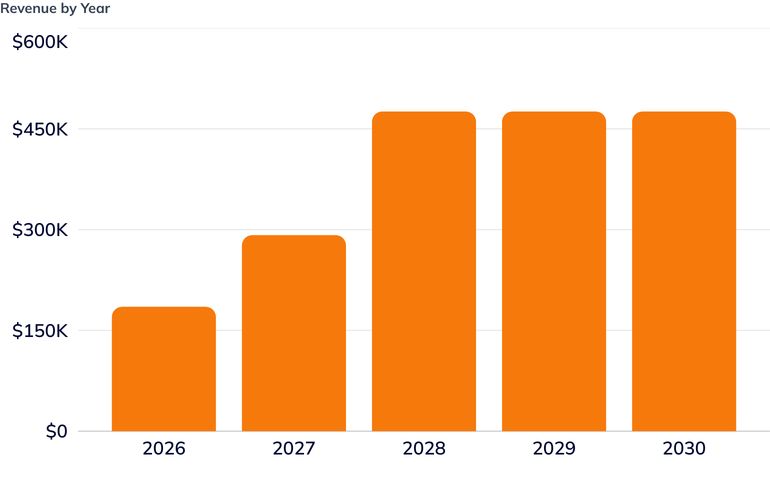
Need real milestones? Establish a clear path for your business with real-world examples.Create your own business plan
Expenses by Year
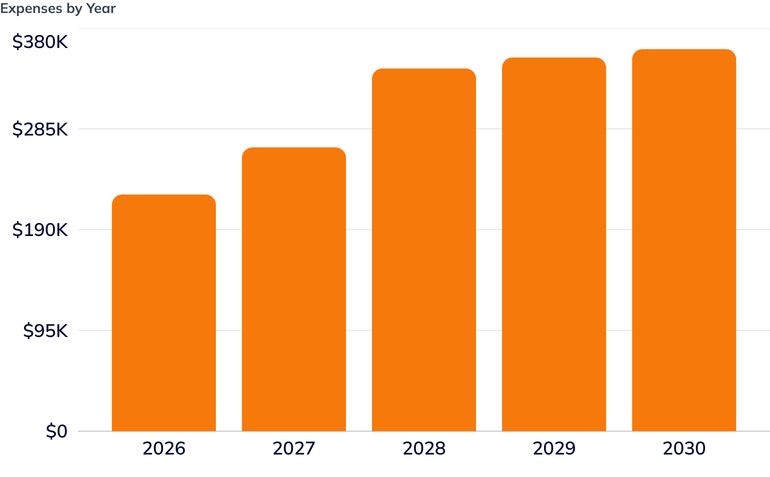
Need actual charts? We recommend using LivePlan as the easiest way to create graphs for your own business plan.Create your own business plan
Net Profit by Year
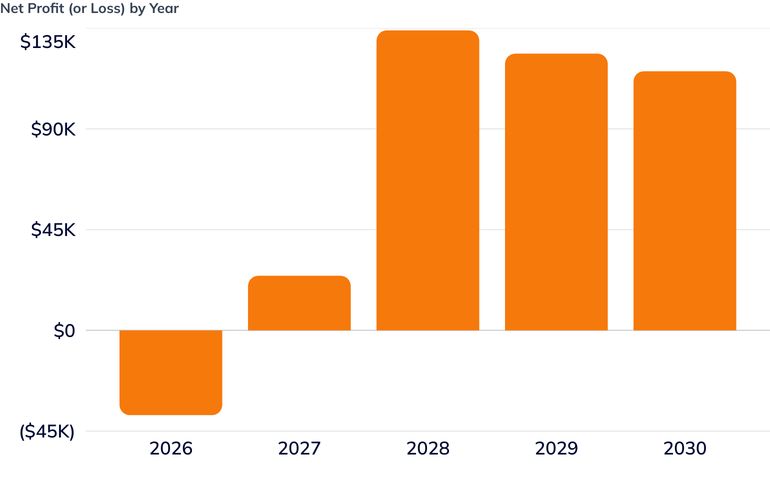
Need real financials? Explore a spreadsheet-free path to generating financial data for your business.Create your own business plan
Use of Funds
The estimated startup cost for the food truck — including the truck purchase and kitchen build-out, equipment and smallwares, initial permits, insurance, and a working capital reserve to carry the business through its first year of ramp-up — totals approximately $130,000.
The working capital portion is a deliberate buffer rather than a sign of underlying weakness: even well-run food trucks see thin or negative cash months during the first 6-12 months while the customer base builds toward a stable weekday routine. Funding this buffer up front, rather than hoping early revenue covers it, keeps the business from being forced into high-cost emergency borrowing if month four or five runs tighter than planned.
Funding Sources
Our $130,000 in startup capital is structured as a mix of owner equity and small business debt, a combination that's standard for a food truck launch of this size and keeps debt service manageable relative to projected early-stage cash flow.
Owner Equity Investment — $55,000
The founder is contributing $55,000 in personal savings as equity. This level of owner investment is typical for a single-truck launch and signals meaningful personal commitment to lenders evaluating the remaining debt request. It also builds in a larger working-capital cushion than a bare-minimum launch budget would, which keeps cash on hand positive through the slower early months in downtown Boise before the weekday customer routine fully builds.
SBA 7(a) Equipment Loan — $75,000
The remaining $75,000 is structured as an SBA 7(a) loan at approximately 10.5% interest over a 7-year term, financing the truck purchase, kitchen build-out, and equipment. The SBA 7(a) program is a common path for food truck financing given its relatively accessible terms for small, asset-backed businesses, and the loan structure here keeps monthly debt service in line with the truck's projected early revenue while ensuring cash on hand stays positive throughout the ramp-up period.
Why This Mix
Splitting startup capital between owner equity and a term loan, rather than relying on debt alone, reduces monthly fixed obligations during the critical first year when revenue is still ramping toward a stable run rate. Building a working capital cushion into the equity contribution — rather than financing only fixed assets — reflects a realistic view of food truck cash flow: even profitable trucks see uneven months, and a deliberate buffer is more prudent than assuming everything goes according to plan from day one. This structure also preserves the option to pursue additional financing later — for a second truck, for example — without an already-maxed debt position.
Frequently Asked Questions
A food truck business plan should cover your concept and menu, target market and competitive positioning, a location and permitting strategy, marketing approach, equipment and staffing needs, and financial projections — including startup costs, funding sources, and a realistic timeline to profitability. Street Eats Food Truck's plan, for example, pairs its Korean-Mexican fusion concept with a detailed weekday location schedule, a $115,000 funding plan, and three-year financial projections.
Startup costs for a single-truck operation commonly range from $50,000 to $200,000 or more, depending on whether you buy a new or used truck, the scope of your kitchen build-out, and local permitting costs. In this plan, Street Eats Food Truck budgets approximately $115,000 — covering a used truck retrofit, equipment, permits, insurance, and a first-year working capital reserve — funded through $40,000 in owner equity and a $75,000 SBA 7(a) loan.
Yes. Most cities require a mobile food vendor permit and a health department permit, and many require food prep to happen in a licensed commissary kitchen rather than a home kitchen. Street Eats Food Truck rents a shared commissary for its morning prep work and has secured both the mobile vendor and health permits for its home city, along with parking agreements for its three weekday locations.
Food trucks typically earn revenue from weekday walk-up sales, mobile ordering and delivery apps, private catering, and festival or event vendor slots. Street Eats Food Truck relies primarily on weekday walk-up sales at three fixed locations, supplemented by private catering and weekend festival appearances, with food costs targeted at 28–32% of menu pricing to keep margins healthy.
Most food trucks take one to two years to reach consistent profitability, depending on startup debt load and how quickly a regular customer base forms. Street Eats Food Truck's financial plan projects a net loss in its first year (-$37,821) before turning profitable in year two ($24,390) and scaling to over $130,000 in net profit by year three.
A food truck carries lower overhead than a sit-down restaurant — no dining room lease, smaller staff — but trades that for limited seating, weather dependency, and the logistics of moving and parking each day. Street Eats Food Truck is built specifically to fill the gap between cheap, low-variety fast food and pricier sit-down restaurants that don't fit a 30-minute lunch break, competing on speed and flavor rather than ambiance.
Food truck customers are usually defined by proximity and routine — office workers, students, and event-goers near a truck's regular stops. Street Eats Food Truck's primary customers are 22–45 year old office workers and graduate students in downtown and university-adjacent districts with a $12–16 daily lunch budget, plus a secondary market of event planners booking private catering for weddings, corporate functions, and festivals.
Food trucks typically secure a small number of recurring locations with reliable foot traffic, then add festivals, pods, or private events around that core schedule. Street Eats Food Truck operates a fixed weekly rotation across three confirmed downtown and university-adjacent spots — including a standing permit for one high-traffic corner — supplemented by rotating food truck pod and festival appearances.
Business Plan Outline
Start your plan