





Small Restaurant Business Plan


Business Plan Summary
This restaurant business plan example features Bistro Locale, a 45-seat, farm-to-table New American bistro on Haywood Road in West Asheville, North Carolina. It covers the neighborhood dining gap Bistro Locale fills, its two-seating service model, target customer profiles, startup funding, and a five-year financial forecast. Use it as inspiration for your own plan, and read our guide on how to start a restaurant for step-by-step advice. Download a free business plan template to get started, or browse more restaurant and food & beverage business plan examples.
Bistro Locale
Executive Summary
Bistro Locale is a 45-seat neighborhood bistro on Haywood Road in Asheville, North Carolina's West Asheville neighborhood. We serve a market-driven, seasonally rotating New American menu built from ingredients sourced at the Asheville City Market and small farms within roughly 100 miles, paired with a tightly curated list of Blue Ridge and regional wines.
The Problem
West Asheville's dining scene runs heavy on fast-casual chains and taco counters built for turning tables fast, not for a slow Tuesday-night dinner. Diners who want a sit-down meal built around what a specific farm harvested that week have to drive downtown, where seating is scarce, prices run toward special-occasion territory, and menus rarely change month to month.
The Solution
Bistro Locale runs a tight, chalkboard-updated menu of 10–12 dishes that changes with what our farm partners bring in, prepared by a kitchen small enough that the chef tastes every plate before it leaves. Two nightly seatings — an early service at 5:30 and a second at 8:00 — keep the 45-seat dining room intimate rather than turning it into a reservation lottery, so neighborhood regulars can get a table on a weeknight.
Target Market
Our primary customers are West Asheville residents within a short walk or drive of Haywood Road who want a quality sit-down dinner without crossing the river into downtown, plus the neighborhood's steady stream of weekend visitors drawn to the area's food and brewery scene. A secondary market is nearby small businesses and nonprofits booking our private dining nook for team dinners and off-site meetings.
Need real financials? We recommend using LivePlan as the easiest way to create financials for your own business plan.Create your own business plan

Opportunity
Problem Worth Solving
West Asheville's dining scene runs heavy on fast-casual chains and taco counters built for turning tables fast, not for a slow Tuesday-night dinner. Diners who want a sit-down meal built around what a specific farm harvested that week have to drive downtown, where seating is scarce, prices run toward special-occasion territory, and menus rarely change month to month. There's no neighborhood spot within walking distance of Haywood Road where a regular can get a genuinely seasonal, chef-driven plate on a weeknight.
Our Solution
Bistro Locale answers this with a tight, 10–12 dish menu that changes as our farm partners' harvests change — not a seasonal insert stapled onto a menu that otherwise stays the same all year. Two nightly seatings keep the 45-seat dining room small enough that the chef tastes every dish before it leaves the kitchen, and close enough to home that West Asheville residents can make it a Tuesday habit instead of an annual splurge.
Market Overview
West Asheville sits across the French Broad River from downtown Asheville, with Haywood Road as its commercial spine — a walkable strip of breweries, coffee shops, and independent restaurants that draws both neighborhood residents and the broader Asheville area's steady flow of weekend visitors. Buncombe County's food-and-drink tourism has grown the local dining market well past what its year-round population alone would support, but most of that growth has concentrated downtown, pushing prices and wait times up and leaving West Asheville comparatively underserved for sit-down, chef-driven dining relative to its foot traffic.
Our primary market is West Asheville residents within a short walk or drive of Haywood Road who want a quality dinner without crossing the river, supplemented by weekend visitors already walking the corridor for breweries and shops. A secondary market is nearby small businesses and nonprofits — the corridor has a growing base of offices and coworking space — booking our six-top private dining nook for team dinners and off-site meetings.
Our target customers:
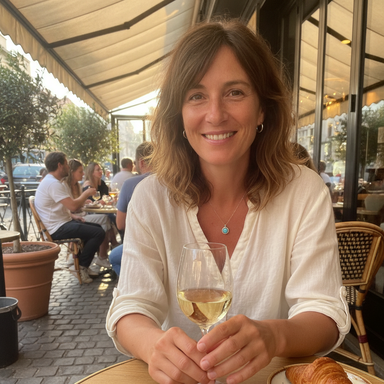
The Neighborhood Naturalist
Sarah Jenkins
A West Asheville resident who values sustainability and local sourcing. She is tired of the 'taco and burger' dominance on Haywood Road and seeks a refined, quiet weeknight dinner without the hassle of driving downtown.
Age
42
Location
West Asheville, NC (Walking distance to Haywood Rd)
Family Status
Married, 1 child (age 6)
Education
Master’s in Environmental Science
Profession
Program Director at a local environmental non-profit
Opportunities
- Host special evenings where diners who are members of local CSAs get a small discount or a 'chef's choice' appetizer using that week's harvest.
- Explicitly list the specific farm name for each protein and produce item to build trust and community connection.
Pain Points
- Frustrated by the lack of healthy, vegetable-forward sit-down options in West Asheville
- Dislikes the 'party' atmosphere and noise levels of local breweries when she just wants a quiet dinner
- Avoids downtown due to parking scarcity and 'tourist pricing'
Needs
- A rotating menu that reflects the actual current harvest in Buncombe County
- An intimate dining environment where conversation is possible without shouting
- Reliable weeknight availability that doesn't require booking weeks in advance
“I want to eat food that actually tastes like the Blue Ridge Mountains without having to fight for a parking spot downtown.”
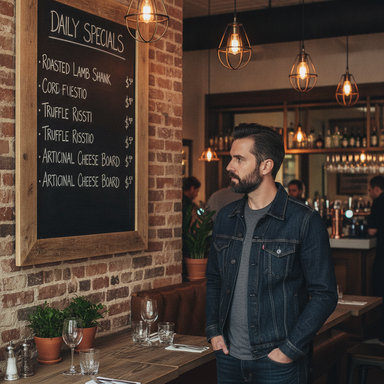
The Regional Explorer
Marcus Thorne
A weekend visitor from Charlotte who frequents Asheville for the craft beer scene but wants a 'real' meal to anchor his trip. He values the Michelin-recognized reputation of Asheville and looks for chef-driven experiences.
Age
31
Location
Charlotte, NC (Weekend visitor)
Family Status
In a relationship
Education
Bachelor's in Marketing
Profession
Digital Strategy Consultant
Opportunities
- Offer a pre-set pairing flight of Blue Ridge wines with the nightly chalkboard specials to educate visitors on regional viticulture.
- Market the 8:00 PM seating as a sophisticated way to end a day of brewery hopping, offering a more relaxed, multi-course pace.
Pain Points
- Finds fast-casual food too heavy after a day of visiting breweries
- Struggles to get reservations at 'big name' downtown restaurants on short notice
- Wants to experience the 'authentic' Asheville culinary scene, not just the tourist traps
Needs
- A curated, high-quality wine list that features regional North Carolina labels
- A meal that feels like an 'event' to highlight his weekend getaway
- A location that is walkable from the West Asheville airbnbs and breweries
“We spent the afternoon at the breweries, but for dinner, we want something that shows off why Asheville is such a food town.”

The Community Connector
Elena Rodriguez
A local West Asheville small business owner who needs a professional yet soulful place to host small team dinners and client meetings. She values the 'Bistro Locale' mission of supporting the local economy.
Age
54
Location
West Asheville, NC
Family Status
Empty nester
Education
MBA
Profession
Owner of a boutique design agency on Haywood Road
Opportunities
- Create a 'business-casual' prix-fixe menu for the six-top private nook to simplify billing and timing for working dinners.
- Utilize the kitchen during non-dinner hours to provide high-end boxed lunches for nearby coworking spaces and offices.
Pain Points
- Lack of professional-yet-intimate spaces for small group meetings in the neighborhood
- Tired of hosting clients at loud, crowded spots where business cannot be discussed
- Wants to support the local neighborhood economy rather than national chains
Needs
- A private or semi-private space for groups of 4-6 people
- A sophisticated atmosphere that impresses clients without being 'stuffy'
- High-quality service that understands the timing needs of a business dinner
“I need a place in my own neighborhood where I can treat my team to a great meal and actually hear what they're saying.”
Competitors
Current Alternatives
- Downtown Asheville's chef-driven restaurants — higher price points, harder-to-get reservations, and a 10–15 minute drive from West Asheville
- West Asheville's fast-casual and counter-service spots (taco counters, brewery food trucks, quick-serve breakfast spots) — convenient and inexpensive, but not built for a sit-down dinner
- National casual-dining chains along Patton Avenue and Tunnel Road — familiar and affordable, but no connection to local sourcing or seasonal menus
- Third-party food delivery — convenient for nights in, but strips away the dining-room experience entirely
Why Us?
Bistro Locale is the only sit-down, chef-driven restaurant on the Haywood Road corridor itself, so we compete on proximity as much as on food — we're the restaurant West Asheville residents can walk to rather than drive downtown for. Our menu changes with what local farms are actually harvesting rather than running a fixed menu with a seasonal special bolted on, and our two-seating model keeps the room small enough that regulars, not just special-occasion diners, can get a table on a weeknight.
Execution
Market Plan Overview
Bistro Locale's marketing plan combines a digital-first acquisition strategy with hands-on community engagement, since our target customer already discovers new restaurants through Instagram and Google before they discover them by driving past.
Marketing Activities
- Instagram and TikTok — behind-the-scenes farm visits, menu-change announcements, and short kitchen clips, since a rotating menu gives us a steady stream of native content
- Local SEO and Google Business optimization — capturing "West Asheville restaurant" and "Asheville farm-to-table" search traffic
- Collaborations with local farms and breweries — joint posts and cross-promotion with the farms we source from and neighboring Haywood Road breweries
- Email marketing and loyalty offers — a monthly "what's in season" newsletter tied to menu changes, plus a simple loyalty program for regulars
- Participation in local food festivals and events — the Asheville Wine & Food Festival and Haywood Road neighborhood events
Partnerships & Resources
These partnerships let a small kitchen punch above its weight without adding headcount:
- Local farmers and food suppliers — sourced through the Asheville City Market and direct farm relationships within roughly 100 miles, for fresh, seasonal ingredients and menu-planning input
- Third-party delivery platforms (DoorDash, Uber Eats) — extend reach for takeout without adding front-of-house labor
- Community organizations — charity dinners and neighborhood fundraisers that build local goodwill
- Nearby businesses and nonprofits — catering and private-dining partnerships for team dinners and off-sites
- Regional wine and beverage suppliers — Blue Ridge–area wines and beers that pair with the menu and reinforce the local-sourcing story
Sales Plan
Bistro Locale sells through four channels, all centered on the physical dining room rather than a delivery-first model:
- Dine-in service — our primary channel. Two nightly seatings (5:30 and 8:00) turn the 45-seat dining room roughly twice a night, which is the volume the kitchen and floor staff are sized around rather than maximizing cover count
- Online reservations — booked through OpenTable, integrated with our website and Google Business listing
- Takeout — ordered directly through our website or by phone, with a smaller "to-go" version of the core menu that travels well
- Catering — private dinners and off-site catering for nearby businesses and nonprofits, launching a few months after opening once the kitchen team has the core menu dialed in
Locations and Facilities
Bistro Locale operates from a leased, second-generation restaurant space on Haywood Road in West Asheville, North Carolina — a walkable corridor of breweries, shops, and independent restaurants with strong foot traffic from both residents and weekend visitors. The approximately 1,800–2,200 sq. ft. location includes:
- An intimate dining room seating 45 guests across a mix of two-tops, four-tops, and a small six-top private dining nook
- A fully equipped commercial kitchen sized for a tight, seasonally rotating menu rather than a sprawling one
- A small bar area featuring Blue Ridge and regional wines and beer
- Accessible restrooms and a layout that meets Buncombe County health department requirements
Bistro Locale is raising $580,000 in startup capital, combining owner investment with an SBA-backed term loan. Roughly $279,000 covers the security deposit, kitchen equipment, dining room and bar build-out, furniture, and technology; the remainder funds rent, payroll, insurance, and marketing through the buildout and ramp-up period before the restaurant reaches steady-state covers.
Technology
Bistro Locale runs on a lean technology stack sized for a 45-seat, owner-operated restaurant:
- Toast POS for order management, payments, and sales reporting
- OpenTable for online reservations, integrated with our website and Google Business listing
- MarginEdge for inventory tracking and food-cost management tied to local supplier invoices
- DoorDash and Uber Eats integrations for takeout and delivery orders
- Mailchimp for our monthly "what's in season" email newsletter and loyalty offers
- Google Business Profile and local SEO tools to drive discovery through search and maps
Equipment and Tools
Kitchen and dining room equipment, funded through Bistro Locale's startup capital, includes:
- Commercial range, ovens, refrigeration, and prep stations
- Dishwashing and sanitation equipment meeting health code requirements
- Smallwares, cookware, and serving ware for seasonal menu service
- Dining room furniture, lighting, and décor matching the intimate bistro atmosphere
- Bar equipment for regional wine and beverage service
- Point-of-sale terminals and kitchen display systems
Milestones
Obtain necessary permits and licenses | Aug 15, 2026 |
Complete renovations and set up | Oct 1, 2026 |
Launch website and social media accounts | Oct 15, 2026 |
Open for business | Nov 1, 2026 |
Start offering catering services | Mar 1, 2027 |
Achieve consistent monthly profitability | Aug 1, 2027 |
Participate in the Asheville Wine & Food Festival | Sept 1, 2027 |
Key Metrics for Success
Bistro Locale will track these operational and financial metrics against the forecast built in the Financial Plan:
- Table turns per night — two full seatings (5:30 and 8:00) across the 45-seat dining room on nights the restaurant is open, the core driver of revenue capacity for a room this size
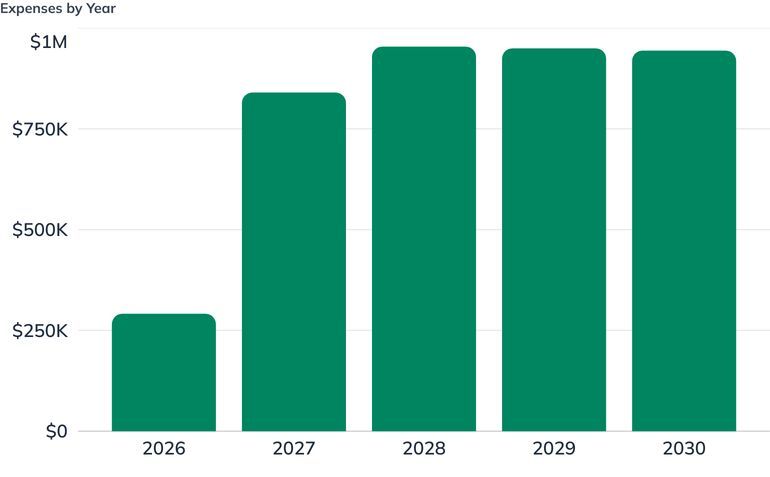
- Food & beverage cost (COGS) — 30% of revenue, plus roughly 2.5% in card processing fees, consistent with a seasonal, locally sourced menu at this price point
- Labor cost — roughly 33% of revenue at steady state, covering a lean team of an owner/operator, chef de cuisine, front-of-house manager, two line cooks, a prep cook, three part-time servers, and a bartender, hired in stages ahead of the November 2026 opening
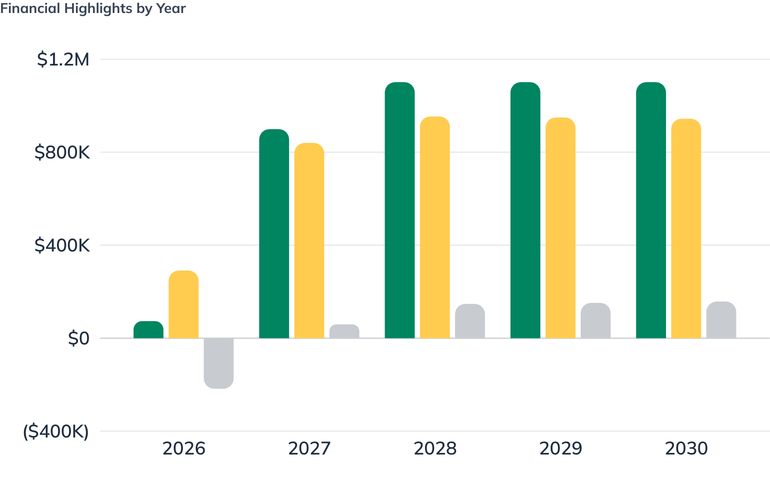
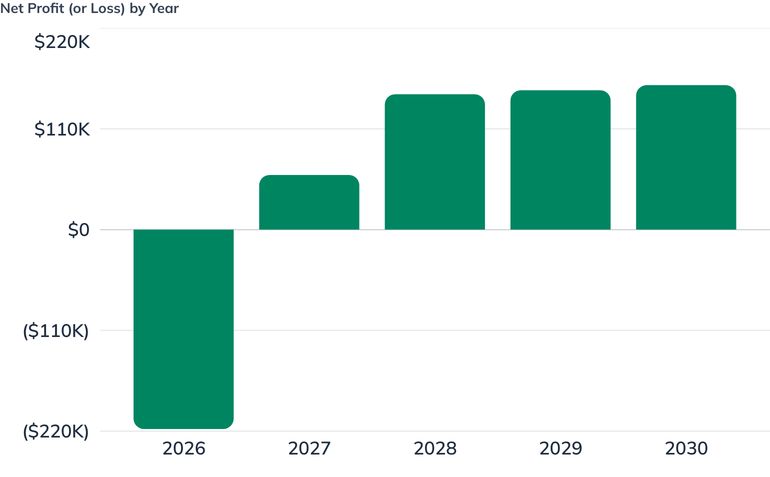
- Net profit margin — a Year 1 loss during the pre-opening and ramp-up period, turning to roughly 7% in Year 2 (the first full year of operation, as payroll ramps ahead of revenue) and settling in the 13–14% range by Year 3 as the restaurant reaches steady-state covers
- Consistent monthly profitability — targeted by mid-2027, roughly six months after opening
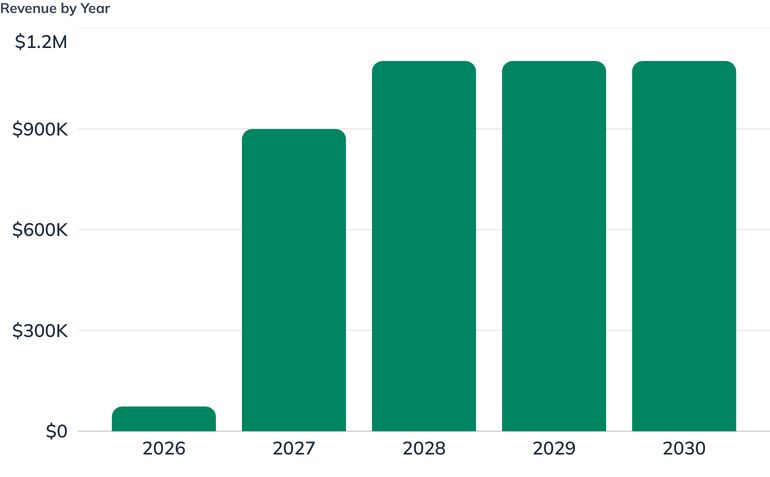
- Steady-state annual revenue — approximately $1.1 million once the restaurant is fully ramped, split roughly 90% dine-in food and beverage and 10% takeout and catering
Company
Ownership and Structure
Bistro Locale will be established as a single-member LLC owned and operated by the founder. This structure provides liability protection while keeping management decisions streamlined for a small restaurant operation.
The owner will serve as Owner/Operator, overseeing daily operations, menu planning, inventory management, and staff training. The Chef and Front-of-House Manager will report directly to the owner.
Management Team
Owner/Operator — Elena Marsh
Elena spent twelve years in Asheville and Charleston kitchens, including seven years as sous chef and then chef de cuisine at a farm-to-table restaurant in downtown Asheville, before opening Bistro Locale to run a smaller, more personal kitchen in her own neighborhood. She oversees daily operations, menu planning, supplier relationships, and staff training, and works the pass most nights the restaurant is open.
Chef de Cuisine — Marcus Webb
Marcus trained in classical French technique before spending six years cooking in the Blue Ridge region, focusing on whole-animal butchery and seasonal vegetable cookery. He runs kitchen operations day to day, manages food safety and the kitchen staff, and co-develops the menu with Elena as ingredients change week to week.
Front-of-House Manager — Dana Okafor
Dana has managed front-of-house teams at two independent Asheville restaurants and brings hands-on experience with OpenTable, staff scheduling, and wine service. She manages the dining room, trains and schedules front-of-house staff, and handles guest relations and service recovery.
Advisors
While Bistro Locale does not maintain a formal board of advisors, the business relies on a small set of working relationships that function as an extended support network:
- Farm partners sourced through the Asheville City Market — seasonal ingredient sourcing and weekly menu input
- Blue Ridge–area wineries and breweries — regional wine and beer pairings for the bar program
- West Asheville community organizations — charity dinners, neighborhood fundraisers, and local engagement
- Nearby businesses and nonprofits — catering and private-dining partnerships for team dinners and off-sites
- Third-party delivery platforms — DoorDash and Uber Eats, extending reach for takeout orders
Financial Plan
Revenue
Need real financials? We recommend using LivePlan as the easiest way to create financials for your own business plan.Create your own business plan
Expenses & Costs
Need real financials? Explore a spreadsheet-free path to generating financial data for your business.Create your own business plan
Profitability
Need real financials? We recommend using LivePlan as the easiest way to create financials for your own business plan.Create your own business plan
Use of Funds
The $580,000 in startup capital breaks down as follows:
- Kitchen equipment & refrigeration — $105,000
- Leasehold improvements & build-out — $100,000, reflecting a second-generation restaurant space that still needs a full dining room and bar renovation to create Bistro Locale's atmosphere
- Dining room furniture, lighting & décor — $35,000
- Bar equipment & smallwares — $12,000
- POS & technology hardware — $7,000
- Security deposit, permits & formation costs — $20,000
- Working capital — the remaining roughly $301,000 covers rent, payroll, insurance, and marketing during the pre-opening buildout period and the restaurant's ramp-up to steady-state covers, before dine-in revenue alone covers operating costs
Sources of Funds
Bistro Locale is funded through a combination of owner equity and debt financing:
- Owner Investment (equity) — $100,000, contributed at startup
- SBA 7(a) Term Loan — $480,000, a 5-year term at 8% annual interest, covering kitchen equipment, build-out, and working capital through the restaurant's pre-opening and ramp-up period
Total funding: $580,000.
Projected Statements
Key Assumptions
The forecast is built on these key assumptions:
- Plan period — January 2026 – December 2030, with the restaurant opening in November 2026 after a buildout and permitting period
- Table turns — two nightly seatings (5:30 and 8:00) across 45 seats, six nights a week
- Revenue ramp — roughly $74,000 across the two operating months of Year 1 (2026), $900,000 in Year 2 (2027) as covers ramp toward capacity, and approximately $1.1 million annually from Year 3 (2028) onward at steady state
- Food & beverage cost (COGS) — 30% of revenue, plus roughly 2.5% in card processing fees
- Labor cost — roughly 33% of revenue at steady state, fully loaded with employer payroll burden
- Staffing ramp — the owner draws modest pay from the start of 2026 while securing permits and the lease, ramping up through the buildout; the chef and front-of-house manager are hired in September 2026, roughly two months before opening, at ramping pay as they move from menu development and training into full service; hourly kitchen and service staff are hired in October 2026, with hours ramping alongside covers through the November opening and into 2027
- Startup capital — $580,000, combining $100,000 in owner equity and a $480,000 SBA 7(a) term loan at 8% interest over 5 years, sized to cover both the buildout and a realistic pre-opening operating runway
- Corporate taxes — not modeled at the entity level; Bistro Locale is a pass-through single-member LLC
- Net profit margin — a Year 1 loss during pre-opening and ramp-up, turning to roughly 7% in Year 2 as payroll ramps ahead of revenue, and settling in the 13–14% range from Year 3 onward as the restaurant reaches steady-state covers
Frequently Asked Questions
A restaurant business plan should cover the problem your concept solves for a specific neighborhood or market, your target customer profiles, competitors and what sets you apart, your service and sales model, staffing and locations, and a financial plan with startup costs, funding sources, and profitability projections. Bistro Locale's plan builds all of these around a single, walkable Haywood Road location and a farm-driven menu, rather than treating the restaurant as a generic concept.
In this plan, Bistro Locale raises $580,000 to open a 45-seat, roughly 1,800-2,200 sq. ft. bistro: about $105,000 for kitchen equipment and refrigeration, $100,000 for leasehold improvements and build-out, $35,000 for dining room furniture and decor, $12,000 for bar equipment, $7,000 for POS and technology, $20,000 for the security deposit and permits, and roughly $301,000 in working capital to cover rent, payroll, and marketing through the pre-opening and ramp-up period. Costs will vary with location, square footage, and how much renovation an existing space needs.
Yes. Bistro Locale operates in Buncombe County, North Carolina, so its plan accounts for a food service permit and health inspection meeting county health department requirements, a business license, and general liability, property, and liquor liability insurance to support its wine and beer bar program. Requirements differ by city and county, so confirm the specific permits and liquor licensing rules for your restaurant's location before opening.
Bistro Locale makes money primarily through dine-in service across two nightly seatings (5:30 and 8:00) in its 45-seat dining room, which the plan projects will drive about 90% of revenue once the restaurant is fully ramped. The remaining roughly 10% comes from takeout ordered through the website or phone and catering for nearby businesses and nonprofits, which launches a few months after opening. Steady-state annual revenue is projected at approximately $1.1 million.
Bistro Locale's plan forecasts a net loss in its 2026 opening year as it covers build-out and ramp-up costs on two months of revenue, moving to roughly 7% net profit margin in 2027 as payroll ramps ahead of covers, and reaching consistent monthly profitability by mid-2027, about six months after its November 2026 opening. Net margin then settles in the 13-14% range from 2028 onward once the restaurant reaches steady-state covers.
Bistro Locale positions itself as the only sit-down, chef-driven restaurant located directly on the Haywood Road corridor in West Asheville, competing on proximity as much as food quality against downtown restaurants a 10-15 minute drive away. Its 10-12 dish menu changes with what local farm partners actually harvest each week, rather than running a fixed menu with a seasonal item added on, and its two-seating model keeps the room small enough for weeknight regulars, not just special-occasion diners.
Bistro Locale's plan targets three customer groups: West Asheville residents like a 42-year-old environmental nonprofit director who wants a quiet, sustainably sourced weeknight dinner without driving downtown; weekend visitors from cities like Charlotte who come for the brewery scene and want a chef-driven meal to anchor their trip; and nearby small business owners who need a professional but soulful space to host team dinners and client meetings in the six-top private dining nook.
Marketing centers on Instagram and TikTok content from behind-the-scenes farm visits and menu-change announcements, since Bistro Locale's rotating menu naturally produces a steady stream of native content, alongside local SEO targeting searches like "West Asheville restaurant," a monthly "what's in season" email newsletter, and cross-promotion with the local farms and Haywood Road breweries it partners with. The plan also budgets for participation in the Asheville Wine & Food Festival to build regional visibility beyond the neighborhood.
Business Plan Outline
Start your plan