




Key West Senior Care


Business Plan Summary
This home care business plan example features Key West Senior Care, a licensed Florida nurse registry providing non-medical, in-home companion and personal care across Key West, Stock Island, and the Lower Florida Keys. It covers Key West Senior Care's formal Hurricane Continuity Program, its Snowbird Concierge tier for the Keys' large seasonal senior population, and a $580,000 launch funded through founder equity, angel investment, and an SBA loan. Use it as inspiration for your own plan, and read our guide on how to start a home healthcare business for step-by-step advice. Download a free business plan template to get started, or browse more business plan examples.
Key West Senior Care
Executive Summary
Key West Senior Care (KWSC) is a licensed Florida nurse registry providing non-medical, in-home companion and personal care to seniors across Key West, Stock Island, and the Lower Florida Keys corridor running north to Marathon. We exist because the Keys combine two facts that most home care operators never have to reconcile: nearly one in four Key West residents is 65 or older (21.4%, versus 16.8% nationally), and the same tourism economy that draws retirees to the islands also drains the caregiver labor pool, since hotels, restaurants, and charter operators routinely out-bid home care agencies for hourly workers.
We built KWSC around three realities of island life that generic home care franchises don't address. First, hurricane season isn't an abstraction here — it's an annual operational event that can force evacuation or shelter-in-place decisions for homebound elders with little notice, and many of our clients' adult children live off-island or out of state and can't get here quickly when a storm is bearing down. Second, roughly a third of the Keys' senior population is seasonal, wintering in Key West from November through April and needing a different care rhythm than year-round residents. Third, we cannot recruit or retain caregivers on the same wages a mainland Florida agency pays — Monroe County's cost of living and housing scarcity mean we have to pay meaningfully above the Florida caregiver average (roughly $16.80/hour) to compete with service-industry wages and keep experienced caregivers on the islands.
Our response is a locally licensed, RN-supervised caregiver team paid competitively for the Keys market, a formal Hurricane Continuity Program that gives every client a pre-season care and evacuation plan, and a Snowbird Concierge tier for part-year residents and their off-island families. We coordinate care through a family-facing app so a daughter in Atlanta or a son in Ohio can see visit notes and reach a caregiver in real time.
KWSC launches in 2026 from a Stock Island office, seeking startup capital to complete Florida nurse registry licensure, hire and train a founding caregiver cohort at above-market wages, and build referral relationships with Lower Keys Medical Center and Monroe County elder services. We expect to reach operating profitability within our first 18-24 months as our caregiver census and hurricane-season and snowbird retainer programs scale.
Opportunity

Problem Worth Solving
Key West is aging faster than the country around it. Census-based estimates put 21.4% of the city's population at 65 or older, compared with 16.8% nationally, and that share climbs further once you count the seasonal retirees who winter in the Lower Keys but aren't captured in year-round population counts. Most of these residents want to age in place in the homes and communities they've spent decades building on the islands, not relocate to an assisted living facility on the mainland — but the islands make that harder than it should be.
The caregiver shortage here is structural, not incidental. Monroe County's living wage for a single adult is roughly $26/hour, driven by housing costs that regularly rank among the highest in Florida, while the statewide average pay for a caregiver is closer to $16.80/hour. Tourism and hospitality employers routinely pay more for hourly service work than home care agencies traditionally offer, so agencies that don't adjust their wage structure lose staff to hotels and restaurants — and the existing national home care franchises operating in the Keys largely import a mainland pay scale that doesn't clear the local cost-of-living bar. The result is chronic understaffing, long waitlists, and high caregiver turnover, which for a frail senior means an unfamiliar face at the door every few weeks.
Layered on top of the labor problem is geography and climate. Key West sits roughly 160 miles from the nearest major hospital system in Miami, connected to the mainland by a single highway that can become an evacuation bottleneck. Hurricane season runs June through November, and a homebound senior living alone — especially one whose family lives off-island — needs a care plan that accounts for storm prep, possible evacuation, and the real chance of losing power, water, or cell service for days afterward. Few local care options build this into their standard offering; most treat it as an afterthought if they address it at all.
Finally, decision-making authority is often geographically split from the person receiving care. A large share of Key West's senior population has adult children living in Miami, the Northeast, or the Midwest, who are paying for and coordinating care remotely. They need visibility and communication tools that a phone-call-only referral agency doesn't provide.
Our Solution
Key West Senior Care is a Florida-licensed nurse registry that places screened, insured, Level 2 background-checked caregivers with senior clients across Key West, Stock Island, and the Lower Keys up to Marathon for companion care, personal care (bathing, dressing, mobility), medication reminders, transportation to appointments, light housekeeping, and respite care for family caregivers. An RN care manager builds each client's care plan and checks in regularly, so care quality doesn't depend solely on whichever caregiver is on shift that day.
We solve the Keys' specific problems directly rather than treating them as edge cases. Our Hurricane Continuity Program gives every client a written pre-season plan covering supply stockpiling, a "go bag" of medications and documents, a priority caregiver dispatch commitment in the 72 hours before landfall, and a standing partnership with a generator-equipped respite facility on Stock Island for clients who need to shelter off-property. It's a standard part of onboarding, not an upsell we mention only when a storm is already in the forecast.
Our Snowbird Concierge tier is built for the roughly one-third of our target market who split their year between the Keys and a northern home. For part-year residents, we offer seasonal-start care ramp-up in the fall, off-season property and wellness checks coordinated with a caregiver during hurricane season when the client is away, and care continuity notes handed off to whatever provider serves them up north.
To solve the labor side of the problem rather than just the client side, we pay caregivers above the Florida average and closer to what Monroe County's cost of living actually requires, and we reimburse mileage for the driving our caregivers do along the Overseas Highway between clients in different Keys communities. That wage strategy is core to our solution, not a cost we're trying to minimize — a caregiver we can retain for two years delivers dramatically better continuity of care than three caregivers we each keep for eight months.
Finally, our family portal gives the off-island decision-makers who pay for and coordinate most of our clients' care — adult children in Miami, Atlanta, or further afield — real-time visit notes, scheduling visibility, and a direct line to the caregiver and care manager, closing the distance gap that a phone-and-fax referral agency can't.
Target Market
Primary: year-round Key West and Lower Keys seniors, 65+. Key West alone counts roughly 5,500 residents 65 and older (21.4% of the city), and the Lower Keys corridor from Key West to Marathon adds several thousand more across Stock Island, Big Coppitt, Big Pine Key, and Marathon. Our core client is someone who wants to remain in their island home, typically needs 5-40 hours a week of non-medical support, and is either self-funding privately, drawing on long-term care insurance, or — given Key West's proximity to Naval Air Station Key West and a sizable veteran population — eligible for VA Aid & Attendance benefits.
Secondary: off-island adult children and family decision-makers. A large share of our actual buyers live in Miami, Orlando, or out of state entirely. They're the ones searching "home care Key West" from a phone at 11pm after a worried call from a parent, and they're the ones who need visit transparency and hurricane-season reassurance more than anyone physically on the island.
Tertiary: seasonal residents ("snowbirds") and their households. Key West's winter population swells well beyond its year-round Census count as retirees from the Northeast and Midwest return each November and depart by April or May. This group needs a different service shape: seasonal ramp-up and ramp-down, property and wellness checks during their months away, and continuity handoffs to a provider in their summer location.
Income-wise, the Keys' cost of living filters our market toward middle- and upper-middle-income households — Key West is not a low-cost market, and clients who can afford to live here year-round or maintain a second home generally have the means to pay privately for care, supplemented by VA benefits or long-term care insurance where applicable. We expect the market to keep growing: Florida's 65+ population is projected to keep expanding through the 2030s, and the Keys' appeal as a retirement and second-home destination shows no sign of slowing.
Competition
The Key West and Lower Keys home care market includes several national franchise operators with a local presence — Visiting Angels, Home Instead, Comfort Keepers, and Griswold Home Care all serve the Keys, alongside Florida Keys-specific operators like Granny Nannies. Listing sites such as A Place for Mom, SeniorCare.com, and CareListings show a modest handful of home health and home care agencies actually staffed to serve Key West itself, thinner still once you filter for agencies serving the Lower Keys beyond the city limits.
These incumbents share two structural weaknesses we're built to exploit. First, as franchise operations, most run a standardized national playbook — caregiver pay scales, marketing messaging, and service tiers designed for a generic Florida or U.S. market — that doesn't account for the Keys' distinctive cost of living or hurricane exposure. A franchisee following corporate wage guidance calibrated for, say, Orlando or Tampa will consistently lose caregivers to Key West's tourism and hospitality employers, and turnover shows up directly in care quality and family trust. Second, none of the agencies we could identify in the Key West market markets a formal hurricane continuity offering or a seasonal/snowbird-specific service tier — storm planning, where it exists, appears to be handled ad hoc rather than built into onboarding.
Our competitive position rests on wages set for the actual Keys labor market (which we expect will materially improve caregiver retention versus competitors), a Hurricane Continuity Program and Snowbird Concierge tier that speak directly to what makes this market different, and a locally headquartered, RN-supervised model rather than a remote franchise call center. We won't out-market national brands on brand recognition alone, so our go-to-market leans on referral relationships with Lower Keys Medical Center, local physicians, and Monroe County elder services — the trust channels that matter most when a family is choosing a caregiver for a parent.
Execution
Marketing Plan
Our marketing centers on the referral relationships that actually drive home care decisions, supplemented by digital presence and Keys-specific community outreach.
Clinical and institutional referrals. We build ongoing relationships with discharge planners and case managers at Lower Keys Medical Center (Key West's hospital), independent physician practices, and Monroe County Social Services' elder programs, positioning KWSC as the local option that understands both the clinical handoff and the logistics of island life.
Digital presence. We maintain an optimized Google Business Profile and local SEO presence for searches like "home care Key West" and "senior care Lower Keys," and we keep active, accurate listings on the directories families actually use to shortlist agencies — A Place for Mom, SeniorCare.com, and CareListings. Because so many of our buyers are searching from off-island, we invest specifically in making our hurricane-readiness and family-communication story visible in that first search, not buried on an interior page.
Community presence. We participate in the Key West Chamber of Commerce, local Rotary, and civic and congregation groups with concentrated senior membership — organizations like the ones centered around Old Town's neighborhood associations and The Studios of Key West — where word of mouth among retirees carries significant weight.
Seasonal campaigns. Each October, ahead of the winter snowbird return, we run a "welcome back" outreach campaign to part-year residents and their families. Each June, at the start of hurricane season, we run a continuity-planning awareness campaign aimed specifically at off-island adult children, since that's the audience most anxious about storm risk to a parent they can't quickly reach.

The Distance Care Coordinator
Sarah Miller
Sarah is a busy professional living in Atlanta whose 82-year-old mother lives alone in a historic Key West cottage. She is constantly anxious about her mother's safety, especially during hurricane season, and feels a deep sense of 'daughter guilt' being 600 miles away.
Age
54
Location
Atlanta, GA
Family Status
Married, 2 children in college
Education
MBA from Emory University
Profession
Marketing Vice President
Opportunities
- Provide Sarah with real-time visit notes and direct caregiver messaging to bridge the 600-mile gap and reduce her daily anxiety.
- Offer a premium subscription that guarantees a professional evacuation or shelter-in-place plan, removing the logistical burden from Sarah during storm threats.
- Leverage RN supervision to manage complex medical appointments at Lower Keys Medical Center, acting as Sarah's local 'eyes and ears'.
Pain Points
- Inability to physically check on her mother after a storm or power outage
- High turnover at previous agencies meant a stranger was in her mother's home every week
- The 160-mile distance to Miami hospitals makes emergency coordination terrifying
Needs
- A reliable, consistent caregiver who is paid enough to stay with the agency long-term
- A formal, documented emergency plan for the June-November hurricane window
- Digital visibility into daily care activities and medication adherence
“I spend half my workday worrying if my mom has water or if a storm is brewing. I need a local partner I can trust when I can't get down the Overseas Highway.”

The Aging Conchtowner
Elena Rodriguez
Elena is a lifelong Key West resident who worked for the county for 30 years. She owns her home outright but lives on a fixed income that is increasingly strained by the island's rising costs for food and basic services.
Age
79
Location
Stock Island, FL
Family Status
Widow, large local extended family
Education
Associate's Degree in Business
Profession
Retired Monroe County Clerk
Opportunities
- Help Elena maximize her long-term care insurance benefits to cover the higher hourly rates required for quality local care.
- Pair Elena with caregivers who are long-term residents, fostering a sense of community and shared 'island' identity.
- Partner with Lower Keys Medical Center to provide short-term recovery care for Elena after procedures, preventing readmission.
Pain Points
- The $26/hour living wage in Monroe County makes private care feel out of reach without expert guidance
- Fear of being forced to move to an assisted living facility in Miami, away from her community
- Previous caregivers constantly quit for higher-paying jobs at local hotels
Needs
- A caregiver who won't quit for a front-desk job at a resort because they are already paid a fair local wage
- Assistance with heavy housework and meal prep that allows her to remain in her family home
- A care provider that understands the unique culture and pace of Stock Island and Key West
“I've weathered every major hurricane since '60. I'm not leaving my home now just because I'm a little slower on my feet.”

The Seasonal Socialite
Robert 'Bob' Sterling
Bob is a high-net-worth 'snowbird' who winters in Key West from November to April. He values his independence and social life at the yacht club but is beginning to need help with mobility and daily tasks to maintain his lifestyle.
Age
78
Location
Key West, FL (Seasonal) / Greenwich, CT
Family Status
Widowed
Education
Juris Doctor (JD)
Profession
Retired Corporate Attorney
Opportunities
- Provide a specialized service that helps Bob 'open' his winter home and coordinate local medical transitions when he arrives in November.
- Focus on high-level companionship that includes driving Bob to social events and restaurants, ensuring he stays active in the community.
- Offer a flexible 6-month contract structure that aligns with his seasonal residency rather than a year-round commitment.
Pain Points
- Finding high-quality help for only part of the year is nearly impossible in a tight labor market
- Struggles to find caregivers who can engage in high-level conversation and match his lifestyle
- Difficulty navigating the local Key West healthcare landscape compared to his primary home
Needs
- Concierge-level service that feels like a personal assistant rather than a 'sitter'
- Reliable transportation and assistance for social outings in Old Town
- Seamless communication between his Florida care team and his family in Connecticut
“I've spent thirty winters in the Keys and I'm not stopping now. I just need a little help keeping the engines running while I'm down here.”
Sales Plan
Most of our sales process starts with a free in-home (or video) care assessment led by our RN care manager, which we use to build a personalized care plan and quote before a family commits. Because a large share of our actual decision-makers — adult children paying for and coordinating a parent's care — live off-island, we run a parallel phone- and video-first consultation track so a son in Ohio or a daughter in Miami can review the care plan, ask questions, and sign off without needing to be physically present in Key West.
Conversion typically follows one of three paths: a direct family inquiry after a health event or noticeable decline, a referral from a discharge planner at Lower Keys Medical Center after a hospital stay, or a seasonal inquiry from a snowbird household preparing for their winter return. We track close rate and time-to-first-visit separately for each channel, since hospital referrals typically need care to start within days while seasonal inquiries can be planned months in advance.
Every new client is enrolled in the Hurricane Continuity Program as part of onboarding rather than sold separately — it's built into our base service and reinforced in our sales conversations as a core reason to choose a Key West-based provider over a mainland franchise. The Snowbird Concierge tier is positioned as an add-on retainer for part-year residents, sold primarily during our fall welcome-back campaign and through referrals from clients' existing year-round contacts. Average client relationships in home care tend to run from several months to multiple years, and our retention strategy leans heavily on caregiver continuity — the same trained, well-paid caregiver seeing the same client consistently — since caregiver turnover is the single biggest driver of client churn in this industry.
Locations & Facilities
Key West Senior Care operates from a single administrative and dispatch office on Stock Island, immediately adjacent to Key West proper along US-1. We chose Stock Island specifically over Old Town or downtown Key West commercial space: it offers meaningfully lower commercial rent in a market where Old Town retail and office space commands some of the highest rates in Florida, while still putting us minutes from our client base and directly on the Overseas Highway corridor we use to reach clients throughout the Lower Keys, from Key West to Marathon.
Care itself is delivered entirely in clients' homes — we are not a facility-based operator — so our office footprint is deliberately lean: caregiver staging and check-in space, a locked medical records and equipment storage room, and space for our RN care manager to conduct assessments and care planning meetings when a home visit isn't practical.
Because operational continuity through hurricane season is central to our value proposition, our office selection prioritized storm resilience: a building above current flood-elevation requirements, hurricane-rated windows, and a generator sized to keep our dispatch operations, communications equipment, and medical equipment storage running through a power outage. The office also serves as our staging point for coordinating caregiver deployment and client welfare checks in the days immediately before and after a storm.
Technology
We run on a cloud-based home care management platform (in the mold of AlayaCare or WellSky) that handles scheduling, caregiver-client matching, care plan documentation, and Electronic Visit Verification (EVV) — GPS-timestamped check-in and check-out for every visit, which Florida increasingly expects of home care providers and which also gives families real confidence that a scheduled visit actually happened. Caregivers use a mobile app on a company-provided or BYO smartphone to clock in, log care notes, and flag concerns to the RN care manager in real time.
Our family portal, built on the same platform, gives the off-island decision-makers who pay for most of our care plans visibility into visit notes, upcoming schedules, and direct messaging with the caregiver and care manager — the single most requested feature from prospective clients' adult children during our early customer discovery conversations.
Because the Keys lose cell towers, landline service, and internet connectivity for days after a significant storm, our hurricane resilience plan includes a satellite-based backup communication system (Starlink or equivalent) at our Stock Island office, so dispatch and family communication can continue even when the islands' terrestrial network is down. We also maintain offline-capable versions of every active client's care plan and emergency contact information, since a scheduling platform is only useful if it still works when the power and internet don't.
Equipment & Tools
Caregivers use their own vehicles to travel between clients along the Overseas Highway, and we reimburse mileage at the IRS standard rate given how much driving distance separates clients across the Key West-to-Marathon service area — a meaningfully larger radius than a mainland urban home care route. Each caregiver carries a company-provided smartphone or tablet loaded with our scheduling and EVV app, a basic PPE and first-aid kit, and a hurricane go-kit (flashlight, battery bank, basic supplies) they keep in their vehicle throughout storm season.
We maintain a small loaner equipment closet at our Stock Island office — wheelchairs, walkers, shower chairs, bed rails, and similar mobility and safety equipment — so a client can get equipment same-day rather than waiting on a medical supply order, which matters especially for clients whose need arises suddenly after a fall or hospital discharge.
Ahead of each hurricane season, we assemble and distribute client-specific "go bags" as part of the Hurricane Continuity Program: a waterproof folder with medication lists, physician contacts, insurance information, and a laminated care plan summary that travels with the client whether they shelter in place or evacuate.
Milestones
Secure Florida AHCA nurse registry license Complete AHCA nurse registry licensure, including Level 2 background screening for founding owners. | Director of Nursing Sept 15, 2026 |
Sign Stock Island office lease Lease and outfit hurricane-resilient dispatch office, including generator and satellite backup communications. | CEO Sept 30, 2026 |
Hire and train founding caregiver cohort Recruit and onboard first cohort of caregivers at above-market Keys wages; complete Level 2 screening and orientation. | Operations Manager Oct 31, 2026 |
First paying client Onboard first client under a full Hurricane Continuity Program-inclusive care plan. | CEO Nov 15, 2026 |
Launch Hurricane Continuity Program ahead of storm season Ensure every active client has a reviewed pre-season care and evacuation plan on file before June 1. | Director of Nursing June 1, 2027 |
Launch Snowbird Concierge fall campaign Begin outreach to part-year residents ahead of the November-April seasonal return. | Community & Referral Liaison Oct 1, 2027 |
Reach operating break-even Achieve monthly operating break-even as caregiver census and client base scale. | CEO Mar 31, 2028 |
Key Metrics
We track a small set of metrics that matter most to a caregiver-supply-constrained, seasonally variable home care business:
Active client census and weekly billable caregiver hours, our core volume indicators. Caregiver retention rate / annual turnover, which we treat as a leading indicator of care quality and the clearest proof point for our above-market wage strategy — we benchmark this explicitly against industry-typical home care turnover, which tends to run high nationally. Caregiver utilization rate (billable hours as a share of hours available), which tells us whether our staffing level matches demand. Bill rate versus caregiver pay spread, tracked closely since our wage strategy is intentionally aggressive and our margin depends on efficient scheduling and low turnover rather than on minimizing pay.
Referral source mix and cost per acquired client, tracked separately for clinical referrals (Lower Keys Medical Center, physicians), digital/directory inquiries, and community/word-of-mouth channels, so we know where to concentrate marketing spend. Hurricane Continuity Program engagement (percentage of clients with a current, reviewed storm plan on file ahead of each June), a direct measure of whether we're delivering on our core differentiator rather than just marketing it. Snowbird Concierge retainer count and seasonal revenue smoothing, tracked month over month to monitor how effectively that tier offsets the spring drop-off in seasonal client volume.
Regulatory Requirements
Key West Senior Care operates as a Florida-licensed nurse registry under the Agency for Health Care Administration (AHCA), the regulatory path for businesses that refer independent, screened caregivers for non-medical and personal care services rather than delivering skilled nursing directly. Every owner and every caregiver referred through KWSC completes Florida's Level 2 background screening — a fingerprint-based check through both the Florida Department of Law Enforcement and the FBI — before working with a client, and we maintain that screening on an ongoing renewal cycle as required by AHCA.
Beyond state licensure, we maintain a City of Key West and Monroe County local business tax receipt, general and professional liability insurance, and workers' compensation coverage appropriate to our staffing model. We carry HIPAA-compliant documentation and communication practices throughout our scheduling and family-portal systems given the health information involved in care planning. For any clients whose care is paid through Medicaid programs, we maintain Electronic Visit Verification (EVV) compliance as required under Florida law.
Florida's absence of a state income tax and franchise tax is a meaningful operating advantage relative to home care businesses in higher-tax states, though it doesn't offset the higher wage floor we operate under to remain competitive in the Monroe County labor market. We treat our AHCA relationship as an ongoing compliance function, not a one-time licensing event — renewals, background screening cycles, and any changes to Florida home care regulation are reviewed quarterly by our RN care manager and outside compliance advisor.
Risks & Mitigation
Hurricane and named-storm disruption. This is our single largest operational risk given the Keys' geography. We mitigate it through the Hurricane Continuity Program built into every client relationship, a generator-equipped, storm-hardened office on Stock Island, a standing partnership with a generator-equipped respite facility for clients who need to shelter off-property, satellite-based backup communications, and general liability and business-interruption insurance sized for a multi-week disruption scenario.
Caregiver labor shortage and turnover. Monroe County's cost of living and workforce housing scarcity make caregiver recruitment our second-largest risk. We mitigate it structurally, not just tactically: wages set above the Florida caregiver average and calibrated to actually compete with local tourism and hospitality pay, mileage reimbursement for the Keys' longer service routes, flexible scheduling, and active exploration of a workforce housing partnership with local affordable-housing initiatives as we scale.
Revenue seasonality. Our snowbird-dependent segment creates a predictable seasonal swing in demand each spring as part-year residents depart. We mitigate this by prioritizing growth of our year-round local client base as the revenue foundation, with the Snowbird Concierge retainer structured to smooth some of that seasonal drop-off through off-season property and wellness-check billing.
Regulatory and licensing risk. Changes to Florida AHCA nurse registry rules, background screening requirements, or EVV mandates could affect our operating model. We mitigate this with a designated compliance function led by our RN care manager, an outside healthcare compliance advisor, and quarterly regulatory review.
Care quality and liability risk. As with any home care operator, the risk of a care-related incident is ever-present. We mitigate it through RN-led care plan oversight, Level 2 background screening on every caregiver, ongoing caregiver training, and professional and general liability coverage sized appropriately for our client census.
Pricing
Our rates reflect what it actually costs to recruit and retain caregivers in Monroe County, not a mainland Florida rate sheet. We price companion and personal care at $34-$38 per hour with a four-hour daily minimum, toward the upper end of Florida home care pricing, because our caregiver wages are set well above the statewide caregiver average of roughly $16.80/hour to compete with Key West's tourism-industry pay scale. Overnight and live-in care is quoted at a flat daily rate rather than hourly, and respite care is billed at our standard hourly rate with no minimum shift length for existing clients.
The Hurricane Continuity Program is included in every client's base service rather than priced as a separate line item — we treat storm readiness as core to what "Key West Senior Care" means, not an upsell. The Snowbird Concierge tier is priced as a monthly retainer covering seasonal ramp-up/ramp-down coordination and off-season property and wellness checks, positioned as materially less expensive than maintaining a private arrangement from out of state.
We expect our rates to sit above some incumbent franchise pricing in the market and are transparent with families about why: a caregiver we can afford to keep for two years, rather than lose to a hotel front desk in eight months, is the difference between consistent, trusted care and a rotating cast of strangers in a parent's home.
Company
Ownership & Structure
Key West Senior Care is organized as a Florida limited liability company, headquartered on Stock Island in Key West, and licensed with the Agency for Health Care Administration as a nurse registry. The company is founder-owned, with a co-founder equity stake reserved for the RN who serves as our clinical and compliance lead — a structure chosen deliberately so that clinical oversight has an ownership voice in the business, not just an operational role.
We operate as a Florida-based entity to take advantage of the state's absence of a personal or corporate income tax on pass-through earnings, a real if partial offset to the above-market labor costs required to operate in Monroe County. Ownership retains full control at this stage; the Sources of Funds section outlines how outside capital, if raised, would be structured relative to existing ownership.
Management Team
Founder & CEO — brings prior operating experience in Florida home care, responsible for overall strategy, referral-partnership development with Lower Keys Medical Center and local physicians, and the caregiver wage and retention strategy that underpins our competitive position. Draws a modest founder salary during our first operating year, scaling up as the business reaches sustained profitability.
Director of Nursing / RN Care Manager — a Florida-licensed RN and co-founder who leads every client's care plan, oversees caregiver training and clinical quality, and owns our AHCA nurse registry compliance, including Level 2 background screening administration and EVV compliance. Comes on part-time through our license and launch phase, moving to full-time as our caregiver census grows.
Operations Manager — joins as caregiver volume builds through 2027, managing day-to-day scheduling and dispatch across the Key West-to-Marathon service area, caregiver onboarding and mileage/wage administration, and coordinating the Hurricane Continuity Program's pre-season client outreach and caregiver deployment planning each storm season.
Community & Referral Liaison — comes on as we scale into 2028, building and maintaining relationships with hospital discharge planners, physician practices, Monroe County elder services, and the community and civic groups central to our word-of-mouth growth, and leading our seasonal snowbird welcome-back campaign each fall. In the interim, the CEO and Director of Nursing carry these referral relationships directly.
As our caregiver census and Operations Manager and Community & Referral Liaison roles both come fully online, our next planned hire beyond this three-year horizon is a second RN or LPN to support care plan oversight, since Florida nurse registry practice puts a practical ceiling on how many active clients one RN can adequately oversee — particularly during the November-to-April season when our census peaks with returning snowbird clients.
Advisors
Elder law attorney (Key West/Monroe County) — advises on client-facing legal considerations around powers of attorney, care agreements, and Florida elder law, and helps clients' families navigate the intersection of care planning and estate matters.
Healthcare compliance consultant — a Florida-focused advisor with AHCA licensing and nurse registry experience, supporting our Director of Nursing on regulatory filings, Level 2 background screening compliance, and any changes to Florida home care regulation.
CPA with Keys-based small business experience — familiar with the seasonal-tourism-economy cash flow patterns common to Monroe County businesses, advising on our own seasonal revenue management given our snowbird-dependent segment.
Former Lower Keys Medical Center administrator — provides insight into hospital discharge planning workflows and helps us build and maintain the clinical referral relationships central to our sales and marketing strategy.
Financial Plan
Revenue
Need impressive charts? Discover the simplest way to create detailed graphs for your business plan.Create your own business plan
Expenses & Costs
Need real milestones? We recommend using LivePlan as the easiest way to create milestones for your own business plan.Create your own business plan
Profitability
Need real financials? Explore a spreadsheet-free path to generating financial data for your business.Create your own business plan
Use of Funds
We're raising $580,000 in startup capital, sized to cover Florida nurse registry licensing and compliance setup, a fully outfitted Stock Island office, our founding caregiver and management team's payroll through the first operating years, and a working capital buffer generous enough to carry the business through the ramp-up period before caregiver billable hours reach a scale that covers overhead.
Licensing, legal & compliance setup ($15,000): AHCA nurse registry application and licensing fees, Level 2 background screening setup, business formation and elder-law-informed legal review, and initial insurance binders.
Office build-out & equipment ($39,600): Stock Island office build-out and furniture ($18,000), hurricane-resilient generator and satellite backup communications equipment ($12,000), a loaner closet of mobility and safety equipment for clients ($6,000), and office security deposit ($3,600).
Working capital ($525,400): Covers founding team payroll (CEO, RN Director of Nursing, and phased-in Operations Manager and Community & Referral Liaison roles), caregiver wages that scale directly with our higher-than-originally-modeled billable hours target, and operating expenses — rent, insurance, EVV/scheduling software, marketing, and compliance costs — through the ramp-up period before caregiver billable hours reach a scale that covers overhead. This is the largest single use of funds, reflecting both our deliberate choice to pay caregivers above the Florida average to compete with Key West's tourism-industry wages, and a more aggressive caregiver-hour growth target than a conservative first pass would assume — both lengthen our runway to profitability relative to a lower-wage, slower-growth competitor, but are core to our retention strategy and our path to a materially larger year-three revenue base.
Sources of Funds
We're funding Key West Senior Care with a blend of founder/investor equity and a single term loan, reflecting the mix typical of a small, local service business rather than a high-growth venture-backed model:
Owner & Founder Equity — $100,000. Contributed at formation to cover early legal, licensing, and pre-launch costs before outside capital is in place.
Friends & Family / Angel Investment — $260,000. Raised ahead of the Stock Island office build-out and generator/satellite equipment purchase in fall 2026, from investors who understand the Keys market and the multi-year runway home care startups typically need. Sized to fully cover working capital through our 2027 cash-flow trough as caregiver census builds toward our higher billable-hours target, with no repayment obligation or interest drag on the business.
SBA 7(a) Startup & Working Capital Loan — $220,000. An 8% APR, seven-year (84-month) term loan funded alongside the office lease in September 2026. We chose a seven-year term specifically to keep monthly debt service manageable while our margins are still thin from our above-market wage strategy.
Together, this $580,000 in combined equity and debt keeps cash on hand positive throughout the forecast — dipping to a low in the neighborhood of $75,000 in late 2027 before climbing to roughly $360,000 by the end of 2028 — with the working capital cushion large enough to absorb a slower-than-expected caregiver hiring ramp or a hurricane-season disruption without forcing a follow-on raise.
Projected Statements
Frequently Asked Questions
A home care business plan should cover any region-specific operational risks, your target market segmentation, competitive positioning against national franchises, and a funding plan. Key West Senior Care's plan, for example, details its Hurricane Continuity Program, a Snowbird Concierge tier for the Keys' seasonal residents, its positioning against national franchise operators, and a $580,000 funding plan blending founder equity, angel investment, and an SBA loan.
Key West Senior Care raised $580,000 in total start-up funding: $100,000 in owner and founder equity, $260,000 in friends and family and angel investment, and a $220,000 SBA 7(a) loan at 8% APR over a seven-year term. That funding is sized to keep cash on hand positive through a projected 2027 cash-flow trough as caregiver census builds.
Yes — Florida requires non-medical home care providers to hold nurse registry licensure through AHCA, along with caregiver background screening and RN supervision. Key West Senior Care budgets AHCA compliance and background screening as an ongoing operating expense and AHCA licensing, legal, and startup compliance fees directly into its start-up costs.
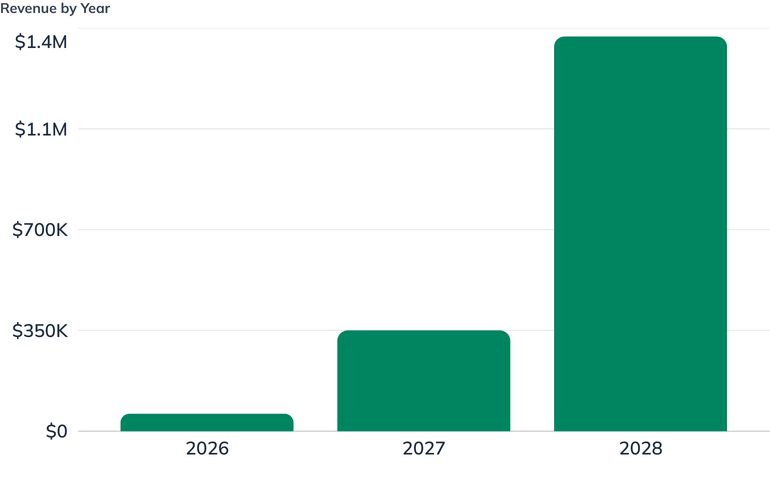
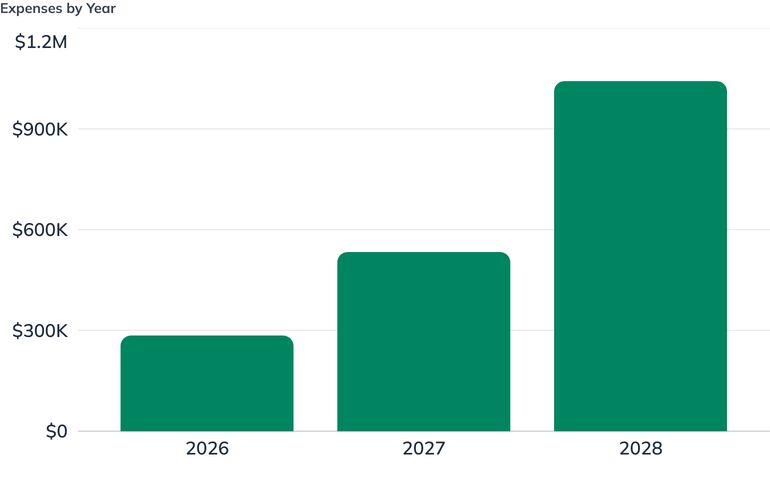
Key West Senior Care earns revenue across two lines: private-pay companion and personal care, and its Snowbird Concierge retainer for part-year residents and their off-island families. Its three-year forecast projects about $1.78 million in total revenue against roughly $1.86 million in expenses.
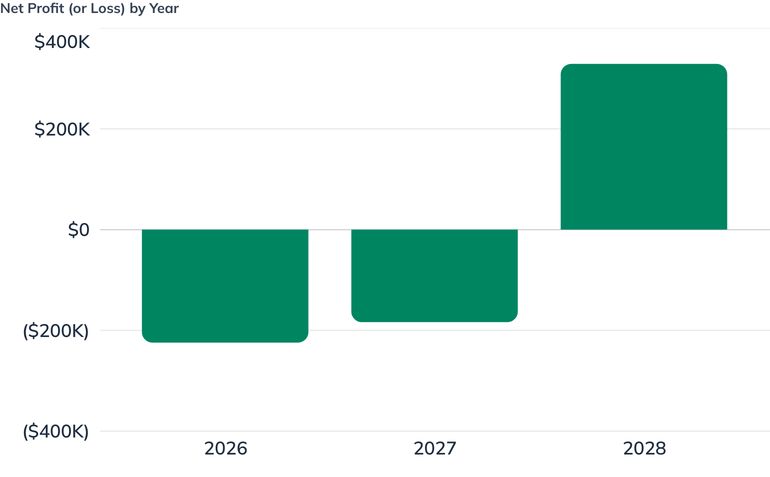
Key West Senior Care's plan explicitly targets operating profitability within its first 18 to 24 months, as its caregiver census and hurricane-season and snowbird retainer programs scale. Its three-year forecast shows a net loss overall of about $79,038, consistent with a business still climbing toward profitability by the end of its plan period.
National franchises like Visiting Angels, Home Instead, and Comfort Keepers run a standardized playbook with caregiver wage scales calibrated for a generic Florida market, which consistently loses caregivers to Key West's tourism and hospitality employers offering better hourly pay. Key West Senior Care sets wages for the actual Keys labor market, and pairs that with a formal Hurricane Continuity Program giving every client a pre-season care and evacuation plan and a Snowbird Concierge tier for the roughly one-third of Keys seniors who winter there — neither of which the plan found any competitor in the Key West market formally offering.
Key West Senior Care serves seniors across Key West, Stock Island, and the Lower Florida Keys corridor up to Marathon, where nearly one in four Key West residents is 65 or older — 21.4% versus 16.8% nationally. Its customer base spans year-round island residents and the roughly one-third seasonal 'snowbird' population wintering from November through April, many of whose adult children live off-island and need real-time visibility into their parent's care.
The Hurricane Continuity Program gives every client a formal, pre-season care and evacuation plan, addressing the reality that hurricane season is an annual operational event in the Keys that can force sudden evacuation or shelter-in-place decisions for homebound elders, especially when their adult children live off-island or out of state and can't get there quickly once a storm is approaching. Key West Senior Care also budgets its own generator and satellite backup equipment and service to stay operational and reachable during storms.

Business Plan Outline
Start your plan