




Pharmacy Business Plan


Business Plan Summary
This pharmacy business plan example features The Discount Pharmacy, a self-pay, mail-order-first pharmacy in Boise, Idaho founded by owner John. It covers The Discount Pharmacy's focus on the lowest cash prices for uninsured, underinsured, and Medicare coverage-gap patients, its positioning against GoodRx and direct-to-consumer competitors like Amazon Pharmacy, and a $183,100 all-equity launch. Use it as inspiration for your own plan. Download a free business plan template to get started, or browse more business plan examples.
The Discount Pharmacy
Executive Summary
Problem
Prescription drug prices remain out of reach for a large group of patients — the uninsured, the underinsured, and Medicare beneficiaries who hit coverage gaps on maintenance medications. These self-pay customers routinely pay far more than a drug actually costs to source and dispense, simply because most pharmacies are built around insurance reimbursement rather than a fair cash price. They deserve the same quality of care as fully-insured patients, without the markup.
Solution
The Discount Pharmacy provides prescription medications at the lowest cash prices on the market for customers paying out of pocket. We do this by focusing exclusively on self-pay customers and keeping operations lean — real pharmacist oversight, transparent pricing, and a mail-order-first model without the overhead of a full-service retail pharmacy.
Market
The Discount Pharmacy's target market consists of two groups: mail-order customers (our primary channel, skewing older with recurring maintenance prescriptions) and local walk-in customers near our Boise storefront.
Competition
Competition comes from several directions: national chain pharmacies (CVS, Walgreens), local independent pharmacies, digital discount platforms like GoodRx, and direct-to-consumer mail-order competitors like Amazon Pharmacy and Cost Plus Drugs. Our edge is combining genuinely low cash prices with real pharmacist oversight — lower overhead than a full-service pharmacy, more accountability than a pure price-comparison app.
Why Us?
The Discount Pharmacy offers superior pricing by maintaining our position as the low-cost provider — a lean staffing model (one pharmacist, technicians for the rest) and a mail-order-first structure that keeps operating costs well below a traditional full-service pharmacy, even while paying every team member a fair, market-rate wage.
Expectations
Forecast
Our team is paid at full Boise, Idaho market wage rates — including a market-rate salary for our licensed pharmacist — which requires a healthy prescription volume to sustain. Profitability is projected in Year 2, with margins strengthening through Year 3.
Financial Highlights by Year
Year | Revenue | Net Profit |
|---|---|---|
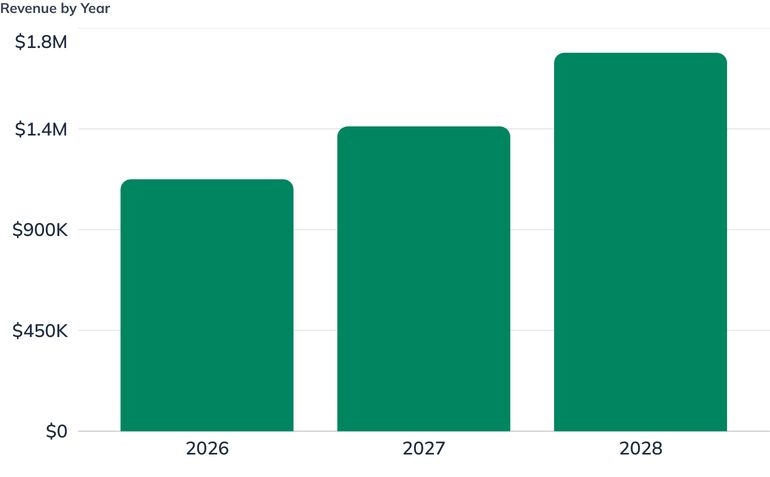
2026 (Year 1) | $1,125,000 | ($19,533) |
2027 (Year 2) | $1,360,704 | $90,127 |
2028 (Year 3) | $1,689,696 | $198,067 |
Financing Needed
Total equity investment of $183,100 from seed funding, owner contribution, and friends and family, covering one-time start-up costs (storefront build-out, equipment, and initial setup) and funding the Year 1 operating loss.
Opportunity
Problem Worth Solving
Prescription drug prices in the U.S. remain out of reach for a large group of patients: the uninsured, the underinsured on high-deductible plans, and Medicare beneficiaries who hit coverage gaps on maintenance medications. Even with the rise of discount-card apps, list prices at a typical retail pharmacy counter are still built around insurance reimbursement, not a fair cash price — so self-pay customers routinely pay far more than the drug actually costs to source and dispense.
These customers are disproportionately older adults managing chronic conditions (blood pressure, cholesterol, diabetes) with predictable, recurring prescriptions — exactly the kind of demand that rewards a lean, low-overhead operation willing to compete on price rather than on-site frills. They deserve the same quality of care as fully-insured patients, without paying a premium for services they don't need.
The Discount Pharmacy exists to serve this segment directly: real pharmacist oversight, transparent cash pricing, and a mail-order-first model that strips out the overhead a traditional full-service pharmacy carries.
Our Solution
The Discount Pharmacy's goal is to provide prescription medications at the lowest cash prices on the market, for customers paying out of pocket rather than through insurance. We achieve this by carefully maintaining efficiencies in our operations and by focusing exclusively on self-pay customers, which gives us real structural advantages: we avoid the cash-flow disruption and administrative overhead of insurance claims processing, and we can eliminate services aimed at first-time or confused patients in favor of serving knowledgeable, repeat customers on maintenance-type medication.
The Discount Pharmacy operates from one small storefront in Boise, Idaho that serves both mail-order customers (our primary channel) and local walk-ins. We compete directly with the current generation of cash-price pharmacy options — discount cards and price-comparison apps like GoodRx, direct-to-consumer pharmacies like Amazon Pharmacy and Cost Plus Drugs, and traditional chain and independent pharmacies — by combining genuinely low prices with real pharmacist oversight and responsive, knowledgeable service, rather than a pure self-service app experience.
We expect to win and keep customers through friendly, knowledgeable staff and consistently low prices, which drive the repeat business our model depends on. As out-of-pocket prescription costs continue to rise for underinsured and high-deductible patients, The Discount Pharmacy's value proposition only gets more relevant.
Market Overview
The Discount Pharmacy targets two customer groups, with different acquisition strategies for each.
We expect mail-order customers to be by far our largest group. This segment skews older (55+), manages one or more chronic conditions with recurring prescriptions, and is actively price-sensitive about out-of-pocket drug costs. We'll reach them through a mix of channels built for how this audience actually finds a pharmacy today: search and social ads targeting price-comparison searches ("cheap [drug name] without insurance"), a presence on discount-pharmacy comparison sites, targeted direct mail and print placements (including AARP's publications), and partnerships with senior centers and community health organizations. Digital channels let us measure and optimize acquisition cost per customer in a way print alone never could.
Walk-in customers are the smaller of the two groups, drawn from the immediate storefront neighborhood. We'll reach them through local search (Google Business Profile, "pharmacy near me" visibility), local paper advertising, and signage, raising awareness of The Discount Pharmacy and our pricing.
Competitors
Competition takes several forms in today's pharmacy market:
- Chain pharmacies. National chains such as CVS and Walgreens offer better prices through economies of scale, broad insurance network participation, and personalized service backed by a full medication history on file. They're built primarily around insurance reimbursement, not cash pricing.
- Local independent pharmacies. High in personalized service and convenience — you know the pharmacist and they know your medical history — but typically high in cash price, since they aren't optimized for self-pay volume.
- Digital discount and price-comparison platforms. GoodRx and similar apps let customers compare cash prices across pharmacies and apply discount coupons at checkout. They've made price transparency the norm and are the biggest shift in this market over the last decade — any discount pharmacy today is implicitly competing with a GoodRx price, not just with other physical pharmacies.
- Direct-to-consumer online pharmacies. Amazon Pharmacy and Mark Cuban's Cost Plus Drugs both offer transparent, low cash pricing with home delivery, backed by significant brand trust and logistics scale. These are our most direct structural competitors — mail-order, self-pay-focused, price-led.
- International mail-order pharmacies. A smaller and more tightly regulated channel than it once was, but still used by some cost-conscious customers for maintenance medications.
Our Advantages
The Discount Pharmacy's competitive edge is genuinely low prices, backed by real pharmacist care — a combination that's harder to find than it sounds. We maintain our position as a low-cost provider by keeping operations lean: one licensed pharmacist on-site during operating hours, with pharmacy technicians handling everything else technicians are legally permitted to do. A small storefront and mail-order-first fulfillment keep our fixed costs far below a full-service retail pharmacy's.
Unlike a pure price-comparison app, we're a real pharmacy with a pharmacist who can answer questions — but unlike a traditional full-service pharmacy, we're not built to hand-hold every transaction. We expect the large majority of our customers to already understand their medication, dosage, and any interactions; we back that up with a clear printed summary of the relevant information with every order, keeping per-transaction time and cost low without cutting corners on safety.
Execution
Market Plan Overview
Our marketing strategy centers on digital channels that let us reach and measure results with our target self-pay, 55+ audience: search ads and SEO around cash-price prescription searches, targeted social advertising (Meta platforms remain heavily used by this demographic), presence on pharmacy price-comparison sites, and a steady content stream sharing useful, non-salesy information about managing prescription costs. We supplement this with select print placements (including AARP publications) and local paper ads for walk-in awareness, and partnerships with senior centers and community organizations. The marketing goal throughout is building awareness of The Discount Pharmacy and quietly appealing to the customer's sense of value.
The Medicare Gap-Phase Senior
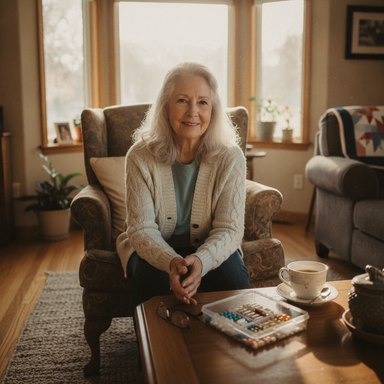
Martha Simmons
Martha is a retired schoolteacher living on a fixed income in Boise's North End. She manages hypertension and Type 2 diabetes, requiring three daily maintenance medications that frequently push her into the Medicare Part D coverage gap by late summer.
Age
72
Location
North End, Boise, ID
Family Status
Widowed, 2 adult children
Education
Master of Education
Profession
Retired Educator (Boise Independent District)
Opportunities
- Offer Martha 90-day mail-order supplies that bypass the Medicare 'donut hole' pricing, providing a predictable flat rate she can budget for annually.
- Utilize targeted print placements in senior-focused publications to build trust and highlight the 15-40% savings on maintenance drugs.
Pain Points
- Sudden 100% price responsibility when hitting the Medicare coverage gap
- Rising monthly premiums for Part D plans with high deductibles
- Difficulty navigating complex digital discount apps at the pharmacy counter
Needs
- Consistent, transparent pricing that doesn't change month-to-month
- Reliable mail-order delivery to avoid driving in Boise winter weather
- Access to a real pharmacist for occasional medication interaction questions
“I've worked hard my whole life, but every August I'm forced to choose between my groceries and my heart medication because of that coverage gap.”
The Uninsured Gig Worker
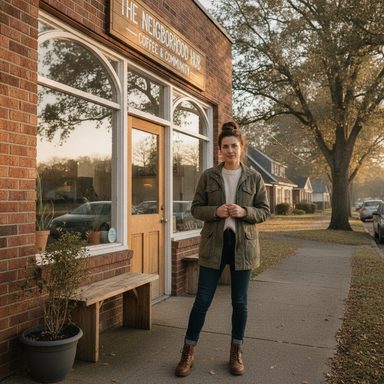
Elena Garcia
Elena works multiple part-time jobs in the Boise service industry and currently lacks health insurance. She relies on the local storefront for her asthma inhalers and occasional antibiotics, making her extremely sensitive to even small price fluctuations.
Age
29
Location
The Bench, Boise, ID
Family Status
Single
Education
Some College
Profession
Freelance Graphic Designer and Server
Opportunities
- Use local SEO and storefront signage to attract neighborhood residents who need immediate, low-cost generic options without insurance.
- Market a 'Top 50 Generics' list with fixed, transparent pricing (e.g., $10 for 90 days) to build loyalty among the uninsured.
Pain Points
- Total lack of health coverage making retail drug prices unaffordable
- Inconsistent pricing on discount card apps like GoodRx
- Fear of being judged or treated differently at high-end pharmacies for being a cash-pay customer
Needs
- The absolute lowest possible cash price for essential medications
- A physical storefront where she can pick up urgent prescriptions immediately
- Dignified, professional service regardless of insurance status
“When you're paying out of pocket, every dollar counts. I just want to know what it costs before I get to the window.”

The High-Deductible Strategist
David Miller
David is a mid-level manager at a local tech firm who is enrolled in a High-Deductible Health Plan (HDHP). Because his family rarely hits their $6,000 deductible, he pays the 'negotiated' insurance rate for his cholesterol medication, which is often higher than the actual cost of the drug.
Age
44
Location
South Hills, Eugene, OR
Family Status
Married, 2 children (ages 8 & 11)
Education
Bachelor of Business Administration
Profession
Operations Manager at a Boise Logistics Firm
Opportunities
- Position the pharmacy as the 'HSA-hacker's choice' where customers can save their tax-advantaged funds by paying lower cash prices.
- Provide a simple digital interface that allows David to quickly compare the Discount Pharmacy price against his insurance co-pay.
Pain Points
- Paying $80 for a generic drug that should cost $15 because of insurance middle-men
- Frustration with the lack of price transparency at national chains like CVS
- Long wait times at retail pharmacy counters during his lunch break
Needs
- A way to bypass insurance markups for generic maintenance medications
- Efficient mail-order service that fits his busy professional schedule
- Clear receipts for HSA reimbursement documentation
“My insurance 'discount' is a joke. I'm essentially paying a premium for the privilege of using my own HSA money at a big-box pharmacy.”
Sales Plan
The sales strategy will be based on generating long-term relationships with customers. To facilitate that, we will provide medications at superior prices, have medicines in stock for both quick shipment and store front pick up, and provide superior customer service. All sales agents will be trained to provide friendly, knowledgeable customer service. By keeping to these simple, yet effective, business practices, we expect that our customers will make The Discount Pharmacy their exclusive source for medications. For some, medications are an integral part of their lives, so establishing long-term relationships will ensure a large, loyal customer base.
Locations and Facilities
The Discount Pharmacy will operate from one small storefront in Boise, Idaho, serving both mail-order customers and walk-in visitors. Most of our business will be conducted through mail order, so the storefront is sized for efficient dispensing and shipping operations rather than heavy foot traffic — a compact retail counter, a small waiting area, and the majority of the floor plan dedicated to the pharmacy, inventory, and fulfillment workspace.
The site was chosen for affordable lease terms and reasonable proximity to our target customer base, keeping fixed occupancy costs low in line with our low-overhead, low-price model. At roughly $2,000/month, our rent reflects typical small-format retail lease rates in the Boise market outside the premium downtown core.
Technology
The Discount Pharmacy will rely on technology to maximize operational efficiency and support both mail-order and in-store operations:
- Three computer terminals connected to a main computer server with laser printer and back-up system
- Microsoft Office and QuickBooks Pro for business management and accounting
- Drug interaction software and Physician Desk Reference software detailing side effects and other information pertinent to the customer
- Telecom system for handling phone orders and customer inquiries
- Website for online ordering and customer account management
Equipment and Tools
The Discount Pharmacy will incur the following start-up equipment costs:
- Office equipment including chairs, file cabinets, and desks
- Front counter, storage bins, cash register
- Three computer terminals
- Main computer server with a laser printer, and back-up system
- Software: Microsoft Office, QuickBooks Pro, drug interaction software, Physician Desk Reference software detailing side effects and other information pertinent to the customer
- Assorted bottles, boxes, envelopes, etc. for dispensing and shipment
- Scales for shipping
- Telecom system
- Storefront build-out
- Start-up inventory
Please note that these items will be used for more than one year and will therefore be labeled long-term assets, depreciated using G.A.A.P. approved straight-line depreciation.
Milestones
Office Setup Complete office setup including storefront build-out, equipment installation, and initial inventory stocking. | John Reeleaf Completed |
First Key Relationship Establish first key supplier relationship for prescription drug inventory at competitive wholesale pricing. | John Reeleaf Completed |
Pharmacy Licensing & DEA Registration Complete Obtain Oregon Board of Pharmacy license and DEA controlled-substance registration; hire licensed pharmacist of record. | John Reeleaf Completed |
Grand Opening Store opens for business; fill first mail-order and walk-in prescriptions. | John Reeleaf Completed |
Reach Monthly Profitability Cross into sustained monthly profitability as prescription volume and revenue scale in Year 3. | John Reeleaf Jan 31, 2028 |
Key Metrics for Success
Metric | Year 1 | Year 2 | Year 3 |
|---|---|---|---|
Net Profit Margin | -1.7% | 6.6% | 11.7% |
Revenue Growth | — | 21.0% | 24.2% |
Gross Margin | ~41% | ~41% | ~41% |
The keys to success are:
- Satisfy our customers so they return again and again
- Maintain low overhead and operating costs
- Provide better cash prices than chain pharmacies, local independents, and digital discount competitors alike
Company
Ownership and Structure
The Discount Pharmacy is organized as an Idaho limited liability company (LLC), based and operating in Boise, Idaho — a structure chosen for its pass-through taxation and liability protection while keeping formation and compliance costs low for a single-location startup. John Reeleaf is the majority owner and manager, holding operational and financial control of the business.
Ownership beyond John's stake is held by the friends-and-family investors who provided startup capital (see Sources of Funds); there is no outside institutional equity or venture investment at this stage. As a business operating in a heavily regulated space, The Discount Pharmacy maintains all required Idaho Board of Pharmacy licensure, DEA registration for controlled substances, and standard pharmacy liability insurance from day one.
Management Team
John Reeleaf, Owner & Manager. John brings direct industry experience from his time as a pharmaceutical sales representative with Eli Lilly, where he saw firsthand both the profitability of the prescription drug business and the operational inefficiencies that plague most pharmacies — the insight this business is built around. John holds an MBA from the University of Idaho's entrepreneurship program, where he was awarded a $50,000 no-interest loan through a business plan competition (now part of the startup funding, see Sources of Funds), and an undergraduate degree in chemistry from the University of Idaho.
John's background is in the business and science of pharmaceuticals rather than licensed pharmacy operations, so The Discount Pharmacy's clinical and regulatory backbone runs through its licensed Pharmacist hire (see Personnel Plan) — the pharmacist of record who directly oversees dispensing, drug interaction checks, and regulatory compliance, with John focused on the business side: sourcing, marketing, finance, and growth.
Advisors
The Discount Pharmacy does not yet have a formal advisory board, but relies on two sources of expertise as it launches:
John Reeleaf's industry background — his experience as an Eli Lilly pharmaceutical sales representative and his MBA in entrepreneurship from the University of Idaho inform the business strategy, pricing model, and go-to-market plan.
The pharmacist of record — beyond being a required operating role, our licensed Pharmacist (see Personnel Plan) functions as our de facto clinical and regulatory advisor, since day-to-day compliance with Idaho Board of Pharmacy rules and DEA requirements sits with that license.
As the business grows, John plans to add a formal advisor with independent pharmacy ownership experience and, separately, legal counsel specializing in pharmacy regulatory compliance — both are common gaps for a first-time pharmacy owner to close early.
Start-up Summary
The Discount Pharmacy will incur the following start-up costs:
Start-up expenses ($24,100): Legal $1,000, Rent $2,000, Utilities $400, Telecom System $400, Insurance $300, Storefront Build-out $15,000, Expensed Equipment $4,000, Website development $1,000.
Equipment and assets: Office equipment, front counter, three computer terminals, main server with laser printer and back-up, software (Microsoft Office, QuickBooks Pro, drug interaction software, PDR), dispensing/shipping supplies, scales, telecom system, and start-up inventory ($8,500 long-term asset).
Sources of Funds | Amount |
|---|---|
Seed Funding | $50,000 |
John | $51,000 |
Friends and Family | $82,100 |
Total Planned Investment | $183,100 |
Starting balance sheet (sample): Cash $140,500, Inventory $10,000, Long-term Assets $8,500, Accounts Payable $70,054, Paid-in Capital $183,100.
Personnel Plan
Personnel costs are set at Boise, Idaho market wage levels for each role — a licensed pharmacist commands a market salary in the $120K-$155K range in the Boise area, and pharmacy technician and support roles are paid at prevailing Boise retail/technician wages, comfortably above Idaho's minimum wage (which tracks the $7.25/hr federal minimum).
Role | Year 1 | Year 2 | Year 3 |
|---|---|---|---|
Owner – John | $48,000 | $48,960 | $49,939 |
Pharmacist (0.97 FTE, ~$125K/yr FTE) | $121,250 | $123,675 | $126,149 |
Pharmacist Technician (1.94 FTE, ~$21/hr) | $84,739 | $86,434 | $88,163 |
Sales Technician (1.89 FTE, ~$18/hr) | $70,762 | $72,177 | $73,620 |
Counter/Phone Person (1.89 FTE, ~$16/hr) | $62,899 | $64,157 | $65,440 |
Order Fulfillment (0.94 FTE, ~$16/hr) | $31,283 | $31,909 | $32,547 |
Totals | $418,933 | $427,312 | $435,858 |
Employee-related expenses (payroll taxes and benefits) are modeled separately in the forecast, applying starting in Year 3 as staffing crosses into benefits-eligible thresholds.
Financial Plan
Revenue
Need real milestones? Establish a clear path for your business with real-world examples.Create your own business plan
Expenses & Costs
Need actual charts? We recommend using LivePlan as the easiest way to create graphs for your own business plan.Create your own business plan
Profitability
The Discount Pharmacy is projected to operate at a modest loss in its first year while prescription volume ramps against a fully-staffed, market-wage team, turning profitable in Year 2 and strengthening meaningfully by Year 3.
2026 | 2027 | 2028 | |
|---|---|---|---|
Revenue | $1,125,000 | $1,360,704 | $1,689,696 |
Gross Profit | $461,250 | $557,889 | $692,775 |
Net Profit | -$19,533 | $90,127 | $198,067 |
Net Margin | -1.7% | 6.6% | 11.7% |
Gross margin holds steady near 41% throughout the forecast, reflecting our cost of prescription drugs at roughly 59% of revenue — consistent with a lean, self-pay-focused discount pharmacy model. Personnel is our largest cost by far: every role, from our licensed pharmacist down to order fulfillment, is paid at prevailing Boise, Idaho market wages (see Personnel Plan), rather than the bare-bones scale a smaller operation might use. Year 1's small loss reflects that market-rate cost base running slightly ahead of the revenue ramp, plus roughly $21,400 in one-time start-up costs. As revenue grows roughly 21% in Year 2 and 24% in Year 3 while personnel costs grow only with modest annual raises, the business turns solidly profitable in Year 2 and reaches an 11.7% net margin by Year 3.
Use of Funds
The Discount Pharmacy will incur the following start-up equipment costs:
- Office equipment including chairs, file cabinets, and desks
- Front counter, storage bins, cash register
- Three computer terminals
- Main computer server with a laser printer, and back-up system
- Software: Microsoft Office, QuickBooks Pro, drug interaction software, Physician Desk Reference software
- Assorted bottles, boxes, envelopes, etc. for dispensing and shipment
- Scales for shipping
- Telecom system
- Storefront build-out
- Start-up inventory
- Rent, utilities, insurance
Start-up Expenses
Expense | Amount |
|---|---|
Legal | $1,000 |
Rent | $2,000 |
Utilities | $400 |
Telecom System | $400 |
Insurance | $300 |
Storefront Build-out | $15,000 |
Expensed Equipment | $4,000 |
Website development | $1,000 |
Total Start-up Expenses | $24,100 |
Sources of Funds
Planned Investment
Source | Amount |
|---|---|
Seed Funding | $50,000 |
John | $51,000 |
Friends and Family | $82,100 |
Total Equity Investment | $183,100 |
All funding is equity-based with no loan principal or interest payments. The business is funded entirely through owner investment and friends and family contributions at startup.
Projected Statements
Key Assumptions
Key assumptions:
- Regulatory environment: Our main assumption is legality. Regulations affecting our business can change very fast.
- Customer value proposition: People appreciate the mail-in order option for their convenience and prescription medications at affordable prices.
- Direct costs: Prescription drug inventory costs are modeled at 59% of revenue.
- Tax rate: Corporate income tax rate of 0% in early years (losses offset taxable income).
- Depreciation: Store equipment ($8,500) depreciated straight-line over 10 years ($850/year).
- No debt financing: All startup capital comes from equity investments totaling $183,100.
Frequently Asked Questions
A pharmacy business plan should cover your target customer segment, competitive positioning against chains and discount platforms, licensing and staffing structure, and funding plan. The Discount Pharmacy's plan, for example, focuses exclusively on self-pay customers, positions itself against GoodRx, Amazon Pharmacy, and Cost Plus Drugs, details a lean staffing model built around one licensed pharmacist, and covers a $183,100 all-equity funding plan.
The Discount Pharmacy raised $183,100 entirely through equity: $50,000 in seed funding, $51,000 from owner John, and $82,100 from friends and family, with no outside debt. That covers one-time storefront build-out and equipment, initial setup, and the operating loss projected in year one.
Yes — pharmacies require a state pharmacy license, a licensed pharmacist on staff, DEA registration to dispense controlled substances, and certified pharmacy technicians for supporting roles. The Discount Pharmacy's plan reflects this directly in its staffing structure: one licensed pharmacist on-site during operating hours, with technicians handling only what they're legally permitted to do under Idaho law.
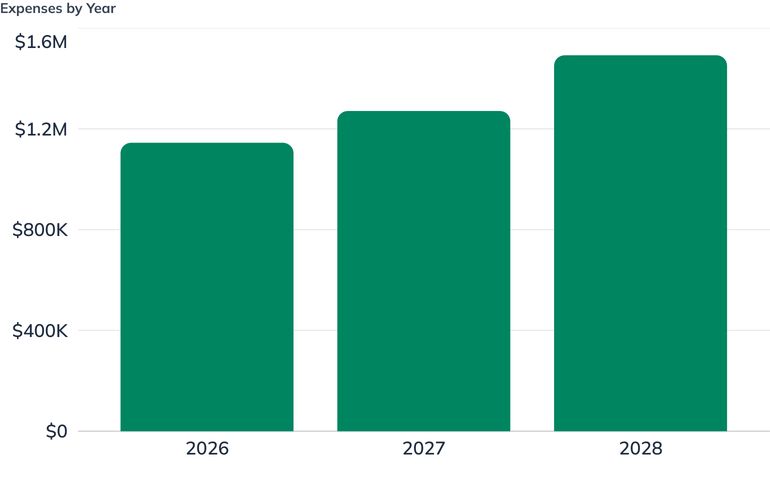
The Discount Pharmacy earns revenue entirely from prescription sales, priced at the lowest cash rates on the market for customers paying out of pocket rather than through insurance. By focusing exclusively on self-pay customers, the business avoids the cash-flow disruption and administrative overhead of insurance claims processing; its five-year forecast projects about $4.18 million in total revenue against roughly $3.91 million in expenses.
The Discount Pharmacy's plan projects a $19,533 net loss in year one, turning profitable in year two with $90,127 in net profit, and strengthening to $198,067 by year three. Margins improve as prescription volume builds against the fixed cost of paying a licensed pharmacist a full Boise market-rate salary.
Digital discount platforms like GoodRx let customers compare cash prices but offer no actual pharmacist relationship, while traditional chain and independent pharmacies carry cash prices built around insurance reimbursement rather than a fair out-of-pocket rate. The Discount Pharmacy combines genuinely low cash prices with real pharmacist oversight — a licensed pharmacist who can answer questions — while keeping overhead below a full-service pharmacy by skipping insurance claims administration and first-time-patient hand-holding in favor of serving knowledgeable, repeat customers on maintenance medications.
The Discount Pharmacy serves self-pay patients: the uninsured, the underinsured on high-deductible plans, and Medicare beneficiaries who hit coverage gaps on maintenance medications. These customers are disproportionately older adults managing chronic conditions like blood pressure, cholesterol, and diabetes with predictable, recurring prescriptions, reached primarily through mail order plus local walk-ins near the Boise storefront.
A mail-order-first model lets The Discount Pharmacy keep its physical storefront small — sized for efficient dispensing and shipping rather than heavy foot traffic, at roughly $2,000 a month in rent — which keeps fixed costs low and supports its position as a low-cost provider. That structure lets the business maintain genuinely low cash prices while still paying its licensed pharmacist and full team a fair, market-rate wage.
Business Plan Outline
Start your plan