





Airbnb Business Plan


Business Plan Summary
This Airbnb business plan example features Tracktown Townhome, a single-property short-term rental five blocks from Hayward Field in Eugene, Oregon, positioned as the only whole-home stay built around the city's track and field culture. It covers market positioning against branded hotels and generic whole-home listings, a $500,000 funding structure combining a mortgage with owner equity, and a three-year financial forecast showing a first-year loss followed by growth into profitability. Use it as inspiration for your own plan. Download a free business plan template to get started, or browse more business plan examples.
Looking for the original Airbnb pitch deck instead of a business plan? You can find it here: Airbnb's original pitch deck.
Tracktown Townhome
Executive Summary
Tracktown Townhome is a professionally operated, single-property short-term rental (STR) business built around one asset: a fully renovated three-bedroom, two-and-a-half-bath townhome five blocks from Hayward Field in Eugene, Oregon — the city known worldwide as TrackTown USA. We buy, furnish, and operate the property as a whole-home rental across Airbnb, Vrbo, and a direct-booking website, positioning it as the only entire-home stay in the neighborhood built specifically around Eugene's track and field culture.
Eugene's lodging market is dominated by branded hotels clustered downtown and along the Willamette River. None of them offer a full kitchen, in-unit laundry, multiple bedrooms, and off-street parking for the family groups, traveling teams, and returning alumni who fill the city every time Hayward Field hosts a major meet, the University of Oregon plays a home football game, or a graduating class brings its extended family to town. We fill that gap with a themed, whole-home experience — gait-analysis treadmill sessions with Eugene Running Company, curated local history displays, and a living room built for watching the meet you can hear from the couch — priced to beat a comparable hotel block for a group of four to six while delivering something a hotel room structurally cannot.
We operate as a single-member Oregon LLC with one owner-operator handling revenue management, guest communications, and vendor oversight, supported by a contracted cleaning and turnover crew, an on-call maintenance and yard-care provider, and a virtual after-hours guest-messaging service for coverage outside business hours. The business is licensed and registered under the City of Eugene's short-term rental ordinance and collects all applicable state and local lodging taxes on every booking.
Funding needed: $180,000 in owner equity, alongside a $320,000 conventional mortgage on the $400,000 property. The equity covers the $80,000 down payment, $65,000 in renovation and full furnishing/décor/technology costs to bring the property to a five-star-ready standard, and a $35,000 working-capital reserve to carry the business through opening.
We expect a loss in Year 1 as the property is renovated, furnished, and opens partway through the year, turning profitable from Year 2 onward as occupancy builds toward a strong, well-managed steady state. Our goal is to prove the model on this property and use it as the template for a second Eugene short-term rental.
Opportunity

Problem Worth Solving
Eugene's short-term lodging supply is mismatched to how people actually travel here. The city's hotel inventory is concentrated in a handful of branded properties downtown and along the Willamette River, and nearly all of it is priced and configured for a single business traveler or a couple — one queen bed, one bathroom, no kitchen, and a nightly rate that doubles or triples the moment Hayward Field, the University of Oregon, or the Eugene Marathon puts a few thousand extra visitors in town for a weekend.
That pricing surge would be tolerable if the product scaled with it, but it doesn't. A family flying in for a recruiting visit, a traveling club track team, or four generations of one family in town for a graduation still gets the same 300-square-foot room, has nowhere to cook a meal between events, and pays hotel-block rates for the privilege. Multi-bedroom, whole-home alternatives exist on the short-term rental platforms, but almost none of them are within walking distance of Hayward Field, and none we've found lean into the thing that actually brings most of these guests to Eugene in the first place: its identity as TrackTown USA. Guests land in a city built around track and field history and get a generic rental with no connection to it.
The result is a market that overcharges for undersized space during peak weekends, underdelivers on experience the rest of the year, and leaves a meaningful segment of visiting families, teams, and alumni without a lodging option that matches both their group size and the reason they came.
Our Solution
Tracktown Townhome is a fully furnished, three-bedroom, two-and-a-half-bath whole-home rental that sleeps up to eight, five blocks from Hayward Field and a short walk from the University of Oregon campus. It gives visiting families and teams the space a hotel can't — a full kitchen, in-unit washer and dryer, off-street parking for two vehicles, and separate sleeping arrangements for kids, parents, and grandparents — at a nightly rate that undercuts an equivalent hotel room block even during peak meet weekends.
What sets us apart from every other entire-home listing in Eugene is that we're built around the city's identity, not just its location. Guests get a living room wired to stream UO track meets with the same crowd-noise energy you'd feel from the Bowerman Building, a gait-analysis treadmill session arranged with our partner Eugene Running Company, and rotating displays on Eugene's track and field history — from Bill Bowerman's waffle-iron shoe experiments to the modern Diamond League era at Hayward Field. It's a stay designed for people who came to Eugene because of the sport, whether they're competing, recruiting, coaching, or just raised a runner.
Operationally, we run the property the way a hospitality business runs a property, not the way a casual host runs a spare room: dynamic, event-aware pricing that captures the premium around the Eugene Marathon, Pre Classic, NCAA and USATF meets at Hayward Field, and UO graduation and football weekends; self-check-in via smart lock so arrivals aren't gated by our availability; a contracted same-day turnover team between every stay; and a direct-booking site that lets repeat guests — recruiting families who return year after year, alumni, traveling coaches — rebook without paying platform markups.
Target Market
Track and field travelers (primary). Families and traveling teams visiting for a UO recruiting trip, a youth or club meet, a Nike-sponsored training camp, or one of the major meets Hayward Field hosts each year (Prefontaine Classic, Pac-12 and NCAA championships, USATF national events, the Eugene Marathon weekend). These groups typically need three-plus bedrooms, a kitchen to manage meals around competition schedules, and a location they can walk to the venue from — exactly what a hotel room can't offer and what we're built around.
University of Oregon families (primary). Parents and extended family visiting for move-in weekend, graduation, Duck football Saturdays, and Parents Weekend. This segment books in multi-day blocks tied to a fixed campus calendar, values proximity to campus over anything else, and skews toward repeat bookings across a student's four years.
Active leisure travelers (secondary). Couples and families building a longer Pacific Northwest trip around Eugene as a base — Pre's Trail and the Ridgeline hiking system, the Willamette River bike path, day trips to the McKenzie River and Oregon wine country. They book longer stays, are less price-sensitive around specific event dates, and are more likely to discover us through search and social content than direct referral.
Remote-work "workcations" (secondary, growth segment). Small groups or couples combining remote work with an extended Eugene stay, drawn by fast in-unit WiFi, a dedicated work nook, and a lower cost per person than splitting multiple hotel rooms.
Across every segment, the common thread is that our guests are traveling in groups of four or more, need functional living space rather than just a bed, and are willing to pay a premium for a stay that's genuinely connected to why they came to Eugene.
Competition
Branded hotels (Graduate Eugene, Inn at the 5th, Hyatt Place Eugene/Springfield, Valley River Inn) are our closest competitors on brand trust and booking convenience, and they capture most business travelers and couples. They lose on space and price for groups: a family or team of five to eight needs two or more rooms at hotel rates, with no shared kitchen or living space, and rates spike hardest during the exact meet and graduation weekends our guests are traveling for.
Independent B&Bs and boutique inns compete on local character and a personal touch, but almost none can sleep a group of six-plus under one roof, and most cap stays at one or two rooms — fine for a couple, a poor fit for the traveling teams and multigenerational families who make up most of our demand.
Other entire-home listings on Airbnb and Vrbo are our most direct competitive set. Eugene has a growing supply of whole-home short-term rentals, but the large majority are generic — a nice enough house with no connection to why most visitors are actually in town, and none within easy walking distance of Hayward Field that we've identified in our market scan.
Why we win: we're the only whole-home rental in the Hayward Field walking radius built specifically around Eugene's track and field identity, backed by real local partnerships — Eugene Running Company (gait analysis and shoe fitting for guests), Tracktown Pizza (a standing guest discount), the University of Oregon Track & Field ticket office (guest ticket access to home meets), and Nike Run Club (guest training content). That combination of location, space, and theme is not something a hotel, a B&B, or a generic rental listing can replicate without rebuilding around the same premise we already own.
Execution
Marketing Plan
Booking channels. Airbnb and Vrbo carry the majority of bookings and all new-guest discovery, managed through a channel manager that keeps pricing and availability in sync across both. A direct-booking website, built on a hosted STR site builder rather than custom development, lets repeat guests — recruiting families, alumni, coaches who return year after year — rebook without paying platform fees, and gives us a channel we fully control for retargeting and email.
Content and discovery. Instagram and TikTok carry short-form video built around the property's actual differentiators: the Hayward Field walk, the gait-analysis session, the track-history displays, and event-weekend transformations (Eugene Marathon, Pre Classic, graduation). We publish a standing blog series on Eugene's track and field history and practical guides ("Where to Stay for the Eugene Marathon," "A Family Guide to a UO Recruiting Visit") targeted at the searches our guests are already running, with the listing embedded as the natural next step.
Paid and partnership marketing. We run targeted paid social in the six to eight weeks ahead of each major meet or graduation weekend, when search intent for Eugene lodging spikes hardest. Our local partners — Eugene Running Company, Tracktown Pizza, the UO Track & Field ticket office, and Nike Run Club — cross-promote the property to their own audiences, and we reciprocate in guest communications and on our website.
Retention and reviews. Every stay triggers an automated post-checkout review request and a follow-up email offering a returning-guest rate for the next visit. Because a large share of our target segments (recruiting families, UO parents, team coaches) return to Eugene on a predictable annual or multi-year cycle, repeat and referral bookings are a deliberate part of the marketing plan, not an afterthought.

The Performance-Focused Parent
Sarah Jenkins
Sarah is the mother of a high-school track athlete competing in national qualifiers at Hayward Field. She prioritizes her child's performance and needs a controlled environment where she can prepare specific athletic meals and ensure a quiet night's sleep away from noisy hotel hallways.
Age
46
Location
Sacramento, CA
Family Status
Married, 2 teenage children
Education
Bachelor of Science in Nursing
Profession
Registered Nurse at a private surgical center
Opportunities
- Market the fully equipped kitchen as a high-performance meal prep station, providing local grocery delivery links and high-end blenders for pre-race smoothies.
- Provide foam rollers, Epsom salts, and cooling packs in the unit to appeal to traveling athletes needing post-event recovery.
- Emphasize the in-unit laundry for daily kit washing, a major pain point for families staying in hotels for multi-day meets.
Pain Points
- Expensive hotel blocks that lack kitchens for dietary-specific meal prep
- The stress of cramped 300-sq-ft rooms when traveling with athletic gear
- High nightly surges at hotels that don't offer additional value or space
Needs
- Walking distance to Hayward Field to avoid event-day parking chaos
- Multiple bedrooms so the athlete can sleep separately from siblings
- A quiet, residential atmosphere to maintain a pre-competition routine
“When my daughter is competing at Hayward, I need more than just a bed; I need a home base where I can control her meals and her rest.”
The Tech-Forward Marathoner
Marcus Chen
Marcus is a competitive amateur runner and tech professional who travels for major marathons. He views his trips as 'athletic retreats' and is willing to pay for specialized amenities like gait analysis and high-tech recovery tools.
Age
33
Location
Seattle, WA
Family Status
Single, traveling with a running club group
Education
Master of Computer Science
Profession
Senior Software Engineer
Opportunities
- Leverage the partnership with Eugene Running Company to offer exclusive in-home or priority gait-analysis sessions as a premium add-on.
- Market the technology costs (high-speed WiFi, smart recovery tech) to attract younger, tech-savvy travelers who work remotely between runs.
- Create 'Marathon Weekend' packages that include foam rollers, local running maps, and late check-out after the race.
Pain Points
- Standard rentals that don't understand the specific needs of a runner (ice baths, stretching space)
- Inconsistent WiFi in older Eugene rentals that makes 'work-cations' difficult
- A lack of local connection or 'vibe' in corporate-owned STRs
Needs
- High-end technology and smart home features
- A dedicated space for stretching and light indoor exercise
- Authentic connection to the Eugene running community and its history
“I'm coming to Eugene to soak up the running culture. I want a place that reflects that passion and supports my training goals.”
The Legacy Alumni Coordinator
Robert 'Bob' Miller
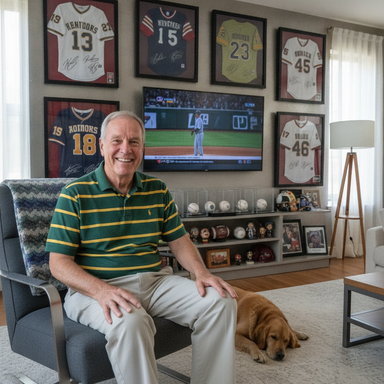
A proud University of Oregon alum, Bob returns to Eugene annually for major football games and milestone graduations. He acts as the 'travel agent' for his extended family, seeking a space where three generations can congregate comfortably under one roof.
Age
64
Location
Bend, OR
Family Status
Married, 3 adult children, 2 grandchildren
Education
MBA, University of Oregon
Profession
Retired Commercial Real Estate Developer
Opportunities
- Position the living room and common areas as the ultimate 'alumni lounge' for post-game celebrations and family graduation dinners.
- Use the local history displays and TrackTown theme to trigger nostalgia and provide a premium 'insider' feel that generic hotels lack.
- Target repeat annual visitors like Bob with a direct-booking loyalty discount for the following year's commencement or rivalry game.
Pain Points
- Difficulty finding lodging that accommodates 6+ people without splitting into three separate hotel rooms
- The lack of personality in branded hotels downtown
- Paying $400+ per night for a hotel room that feels disconnected from the campus spirit
Needs
- Off-street parking for multiple family vehicles
- A premium, 'five-star-ready' aesthetic that justifies the higher price point
- Proximity to campus landmarks to minimize walking for older family members
“I want my grandkids to feel the spirit of TrackTown the moment they walk through the door, not just when we're in the stadium.”
Sales Plan
Booking flows primarily through Airbnb and Vrbo, with a direct-booking site capturing repeat guests at a lower effective cost per booking. We use dynamic pricing software to set nightly rates automatically against demand, comparable-listing data, and a calendar of known Eugene demand spikes — the Eugene Marathon, the Prefontaine Classic and other Hayward Field meets, UO graduation and football weekends — with rate multipliers and minimum-night requirements applied around those dates to both capture the premium and reduce costly single-night turnovers during peak demand.
Outside event weekends, we price competitively against the comparable-sized entire-home listings and hotel room blocks in our market to keep occupancy steady through Eugene's slower late-fall and winter months. We offer a modest discount for stays of five nights or longer to attract the workcation and extended-family segments who are less anchored to a specific event date.
Every booking includes self-check-in via smart lock, a digital guidebook with local recommendations and track history content, and standard turnover between guests handled by our contracted cleaning crew, typically same-day to keep the calendar flexible for last-minute bookings around meet weekends. Guests can add the Eugene Running Company gait-analysis session and a welcome basket of local goods as paid upsells at booking or check-in. Our cancellation policy is moderate — full refund outside two weeks of arrival, prorated inside that window — balancing guest flexibility against the revenue risk of a late cancellation during a high-demand weekend.
Locations & Facilities
Tracktown Townhome is a three-bedroom, two-and-a-half-bath townhome in a small HOA community five blocks from Hayward Field and a short walk from the University of Oregon campus, in a residential pocket of central Eugene that mixes long-term residents with student and visitor traffic during event weekends.
Location advantages
- Walking distance to Hayward Field — close enough that guests can hear meet-day crowd noise from the property on Prefontaine Classic and championship weekends
- Short walk or bike ride to the UO campus, Autzen Stadium (via the Willamette River bike path), and Pre's Trail
- Central access to downtown Eugene's restaurants and the 5th Street Public Market, plus the Willamette River path for running and cycling
- On a residential street with off-street parking, quieter than the short-term rental clusters closer to downtown nightlife
The property
- Three bedrooms (primary king, second queen, third with twin bunks) and two and a half baths, sleeping up to eight
- Full kitchen and in-unit washer/dryer, both essential for the multi-day team and family stays that make up most of our bookings
- Living room built around the guest experience: streaming setup for watching UO track meets, curated track and field history displays, and comfortable seating for a full group
- Off-street parking for two vehicles
- Fenced side yard and a planned patio renovation to extend usable outdoor space for guests
Compliance
The property is registered under the City of Eugene's short-term rental ordinance, which requires an annual STR permit, a business license, and collection of the state lodging tax and local transient room tax on every booking. Our HOA permits short-term rental use subject to a guest conduct and quiet-hours policy, which we reinforce in our house rules and through discreet noise monitoring at the property (sound-level only, no audio or video recording of interior spaces) to protect our standing with neighbors and the HOA.
Technology
Our technology stack is built to run the property like a small hospitality business with a single owner-operator, not a manually managed spare room:
- Channel manager / property management system (Hospitable) syncing calendar, pricing, and guest messaging across Airbnb, Vrbo, and our direct-booking site, and automating pre-arrival, check-in, and post-checkout guest communication
- Dynamic pricing tool (PriceLabs) adjusting nightly rates daily against demand, comparable listings, and a custom calendar of Eugene event dates — Hayward Field meets, the Eugene Marathon, UO graduation and football weekends
- Smart lock (Schlage Encode) for guest self-check-in with a unique code per reservation, eliminating key handoffs and enabling flexible arrival times
- Exterior video doorbell and sound-level monitor (Ring and Minut) at the entry and shared spaces only — never inside bedrooms or living areas — to deter unauthorized parties and support HOA quiet-hours compliance without recording guest conversations
- Smart thermostat (Nest) for energy efficiency between stays and remote temperature control ahead of guest arrival
- Mesh WiFi sized for the whole townhome, supporting streaming and remote-work guests
- Digital guidebook (Touch Stay) covering house instructions, local recommendations, and the property's track and field history content
- Gait-analysis treadmill with video gait-analysis software, run in partnership with Eugene Running Company for guest sessions
- Accounting and tax software (QuickBooks) tracking revenue by channel and automating transient lodging tax calculation and filing
This stack lets one owner-operator manage pricing, guest communication, and compliance across multiple booking channels without a full-time on-site presence, while keeping turnover, maintenance, and guest-safety monitoring consistent between every stay.
Equipment & Tools
Getting Tracktown Townhome to a five-star-ready, fully bookable state means outfitting an empty renovated townhome from the studs out. Our pre-launch equipment and furnishing list covers:
Furniture and layout
- Bedroom sets for all three bedrooms (king, queen, and twin bunk configurations), including mattresses, frames, and nightstands
- Living and dining furniture sized for groups of six to eight: sectional sofa, dining table with seating for eight, entry bench and storage
- Full linens package (two to three sets per bed for turnover), towels, and bath linens
Kitchen and laundry
- Full kitchen outfitting: cookware, bakeware, small appliances, dishware and glassware for eight, and pantry basics restocked each turnover
- In-unit washer and dryer, plus a stocked laundry closet (detergent, iron)
Guest experience and décor
- Track-themed décor package: framed history displays, curated memorabilia, and thematic accents throughout common areas
- Smart TV and streaming subscriptions for the living room and primary bedroom
- Gait-analysis treadmill and related fitness equipment (resistance bands, foam rollers) for the partnered Eugene Running Company sessions
- Welcome-basket inventory (local snacks, water, Tracktown Pizza discount cards) restocked each turnover
Operations and safety
- Cleaning supply kit and turnover checklist materials for the contracted cleaning crew
- Basic maintenance toolkit and a stocked repair-parts shelf for common fixes between scheduled maintenance visits
- Smoke and CO detectors, fire extinguisher, and first-aid kit in compliance with short-term rental safety requirements
Outdoor and curb appeal
- Patio furniture and yard-care equipment (mower, trimmer) for the fenced side yard, maintained on a regular schedule to keep the property presentable between guest stays
Furniture, kitchen outfitting, décor, and the full setup punch list are funded through the startup furnishing and decorating budget covered in the Financial Plan, alongside a small reserve held back for early repairs and replacement items identified during the first few turnovers.
Milestones
Finish Renovations Complete minor renovations on the townhouse before furnishing. | Owner/Primary Host Feb 20, 2026 |
Add Furnishings and Amenities Purchase and install furniture, kitchen outfitting, track-themed amenities, and initial supplies. | Owner/Primary Host Mar 10, 2026 |
Take Professional Photos Hire photographer for listing photos on Airbnb and alternative rental sites. | Owner/Primary Host Mar 18, 2026 |
Create Website and Social Media Launch website and create Instagram, Facebook, and TikTok accounts for marketing. | Owner/Primary Host Mar 20, 2026 |
Obtain Permits and Licenses | Mar 27, 2026 |
Open for Business | Apr 1, 2026 |
Review Forecast Review forecast performance against actual bookings and adjust pricing/occupancy assumptions. | Owner/Primary Host July 15, 2026 |
Eugene Marathon Event Package Launch special Eugene Marathon weekend package with local partner discounts. | Owner/Primary Host Apr 15, 2027 |
Hit 65% Occupancy Rate | May 31, 2027 |
Renovate Outdoor Patio Renovate outdoor patio space to expand guest outdoor experience. | Owner/Primary Host Oct 10, 2027 |
Key Metrics
We track Tracktown Townhome against operational metrics that drive the numbers in our financial plan, rather than restating the forecast itself here:
- Occupancy rate — booked nights as a share of available nights, tracked monthly and against the same month in the prior year to isolate seasonal patterns around Hayward Field's event calendar
- Average daily rate (ADR) — blended nightly rate across all channels, watched separately for event weekends versus baseline nights to confirm our dynamic pricing is actually capturing the premium
- RevPAR (revenue per available night) — the single number that best captures whether pricing and occupancy are moving together in the right direction
- Direct-booking share — percentage of nights booked through our own site rather than Airbnb or Vrbo, since every direct booking avoids a platform commission
- Guest rating — maintained at 4.8 stars or higher across Airbnb and Vrbo, tracked as a leading indicator of both repeat bookings and search ranking on the platforms
- Turnover time — same-day cleaning turnaround between checkout and next check-in, critical to keeping the calendar flexible during high-demand weekends
- Repeat and referral booking rate — share of bookings from returning guests or direct referrals, expected to grow as recruiting families, UO parents, and coaches return on their own annual cycle
- Damage and maintenance incident rate — flagged issues per turnover, used to catch furnishing or property problems before they show up in guest reviews
We review these metrics monthly against plan and use them to adjust pricing rules, marketing spend, and turnover staffing throughout the year.
Company
Ownership & Structure
Tracktown Townhome is organized as a single-member Oregon LLC, with the owner holding 100% equity and personally guaranteeing the property's mortgage. The LLC structure separates the rental property and its liabilities from the owner's personal assets, which matters for a business that hosts paying guests overnight in a residential property.
The owner-operator is responsible for all strategic decisions — pricing strategy, marketing, capital improvements, and vendor relationships — and delegates day-to-day turnover, maintenance, and after-hours guest messaging to contracted vendors described in Management Team.
The business carries a short-term rental-specific insurance policy (in addition to standard homeowner's coverage, which typically excludes commercial short-term rental use) covering property damage, guest liability, and lost booking income from an insurable event, and maintains the City of Eugene short-term rental permit and business license required to legally operate. We collect and remit Oregon's state lodging tax and the local transient room tax on every booking as part of standard operations.
If the property performs to plan, our next milestone as an ownership structure is acquiring a second Eugene property under the same LLC, applying the systems, vendor relationships, and brand built here to a second unit rather than starting from scratch.
Management Team
Owner / Primary Host. Owns the property and the business end-to-end: pricing strategy and dynamic pricing rules, listing content and photography refreshes, guest communication escalations, vendor management, capital improvement decisions, and regulatory compliance (STR permit renewal, tax filings, insurance). This is the only equity role in the business.
Cleaning and turnover crew (contracted). A local turnover cleaning company handles same-day cleaning between every stay, restocking linens and consumables, running a standardized turnover checklist, and flagging any damage or maintenance issues directly to the owner through our property management system.
Maintenance and yard-care contractor (contracted). An on-call handyman service handles routine repairs and appliance issues between stays, with a separate landscaping contractor maintaining the yard, patio area, and curb appeal on a regular schedule year-round.
Virtual guest-messaging service (contracted, part-time). An after-hours co-hosting service answers guest messages outside the owner's normal availability, escalating anything urgent (lockouts, maintenance emergencies) and handling routine questions directly, so guest response time stays fast regardless of time of day.
Bookkeeper (contracted, part-time). Handles monthly reconciliation across booking channels, transient lodging tax calculation and filing, and financial reporting, freeing the owner to focus on revenue management rather than compliance paperwork.
This lean structure — one owner plus four contracted vendor relationships — lets the business run at hospitality-industry service levels without carrying full-time payroll, which keeps the cost structure appropriate for a single-property operation.
Advisors
Our advisory relationships are local business partnerships that extend the guest experience and give us built-in marketing reach beyond what a generic listing could achieve on its own:
- Eugene Running Company — provides guest gait-analysis and shoe-fitting sessions on our in-property treadmill, and cross-promotes our listing to their retail customers and running-club network
- Tracktown Pizza — offers a standing guest discount redeemed during checkout communications, giving guests a local dining touchpoint tied to the property's theme
- University of Oregon Track & Field (ticket office) — provides discounted or priority guest access to home meet tickets, directly supporting our core traveling-fan and recruiting-family segments
- Nike Run Club — shares running route guidance and training content with guests, reinforcing the property's connection to Eugene's running culture
Beyond these partnerships, we consult on an as-needed basis with a local STR-focused insurance broker on coverage and liability questions, and with a short-term rental property manager in the market on pricing benchmarks and operational best practices as we evaluate a second property. These relationships cost us nothing beyond the value we extend to guests and give us credibility and reach a single-owner operation couldn't otherwise afford.
Financial Plan
Revenue
Need impressive charts? Discover the simplest way to create detailed graphs for your business plan.Create your own business plan
Expenses & Costs
Need real financials? Explore a spreadsheet-free path to generating financial data for your business.Create your own business plan
Profitability
Need real milestones? We recommend using LivePlan as the easiest way to create milestones for your own business plan.Create your own business plan
Use of Funds
Total funding needed: $500,000, combining a $320,000 conventional mortgage with $180,000 in owner equity.
The $320,000 mortgage, together with an $80,000 owner down payment, purchases the $400,000 property outright in month one.
The remaining $100,000 in equity covers everything needed to bring the property from an empty renovated shell to a five-star-ready rental, plus a cash cushion through opening:
- Property renovation (light interior work completed before furnishing) — $20,000
- Furnishings, décor, and technology package (furniture for all three bedrooms and common areas, full kitchen outfitting, linens, smart TVs, the track-themed décor package, the gait-analysis treadmill and fitness equipment, smart lock, video doorbell, noise monitor, thermostat, mesh WiFi, safety equipment, and patio furniture) — $45,000
- Working capital reserve, carrying the business through opening and its first months of ramp-up — $35,000
We sized the working capital reserve to keep cash comfortably positive through the pre-launch capital spend and opening months, without holding an outsized cash balance beyond what the business actually needs.
Sources of Funds
Owner equity: $180,000, covering the $80,000 down payment, $65,000 in renovation and furnishing costs, and a $35,000 working-capital reserve.
Mortgage financing: $320,000 conventional mortgage on the $400,000 purchase price (80% loan-to-value), amortized over 30 years, with principal and interest modeled in the forecast from month one.
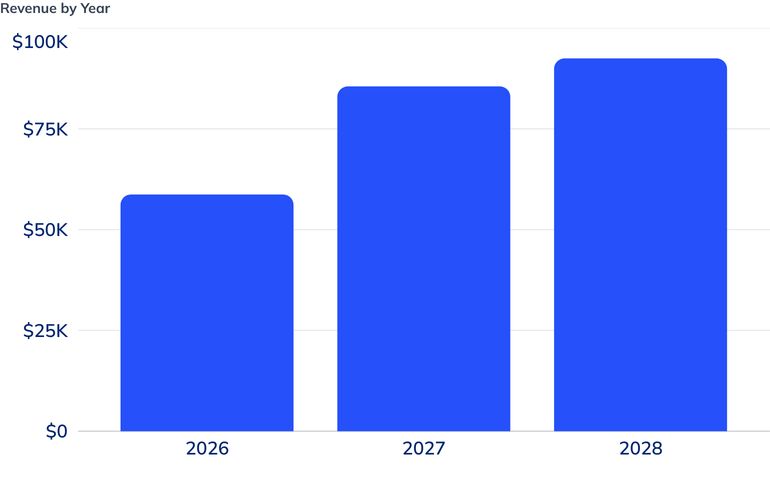
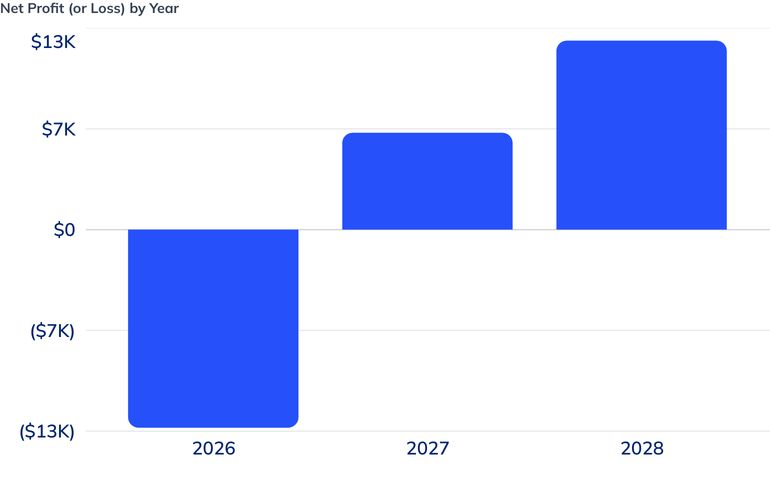
Together these two sources fully fund the property purchase, the complete pre-launch renovation and furnishing buildout, and enough working capital to carry the business comfortably through opening. We expect a loss in Year 1 (a partial operating year, opening April 1 after renovation and furnishing), turning profitable in Year 2 as the property operates a full year at its target occupancy, with profitability continuing to grow in Year 3 as pricing matures and direct bookings reduce platform fees.
Projected Statements
Key Assumptions
Revenue assumptions
- Property opens for bookings April 1, 2026, after a three-month renovation and furnishing period — Year 1 is a partial operating year (nine months), not a full twelve
- Revenue is modeled directly off nights rented per month (days available minus vacancy) multiplied by average nightly rate, rather than a blended occupancy percentage
- We assume roughly 75% average occupancy (a 25% vacancy rate) with seasonal variation — high-60s% in slower months, low-to-mid-80s% around peak Hayward Field meets, UO graduation, and football weekends
- Average nightly rate starts in the introductory $280s (building initial reviews), grows to the low $310s in Year 2, and reaches the mid-$330s at stabilization as dynamic, event-aware pricing captures more of the premium around major meets and UO weekends
- Booking channels: primarily Airbnb and Vrbo, with a growing share from our direct-booking site as repeat and referral guests rebook without platform fees
Cost assumptions
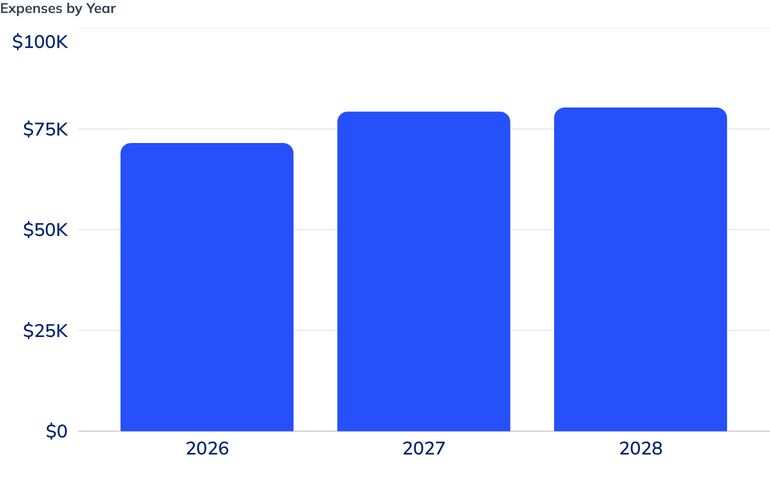
- Direct costs (platform and booking fees, cleaning and turnover, guest supplies, direct-site card processing) scale with revenue and run around 18% of revenue combined, consistent with typical whole-home short-term rental unit economics
- Fixed operating costs — maintenance, yard care, utilities, insurance, HOA dues, property tax, permit/license fees, software, marketing, and contracted bookkeeping and after-hours guest messaging — run at a steady rate regardless of occupancy
- The property mortgage (30-year, fixed rate) is the single largest fixed cost, and the main driver of the Year 1 loss before it's comfortably covered by operating cash flow from Year 2 onward
Tax treatment
Tracktown Townhome is a single-member, pass-through Oregon LLC. The business does not pay corporate income tax; profit flows to the owner's personal return. No sales tax applies to rental income; state and local lodging taxes are collected from guests and remitted separately as a pass-through, not modeled as company revenue or expense.
Path to profitability
At roughly 75% average occupancy, we expect a loss in Year 1 (a partial operating year carrying full-year fixed costs and mortgage payments against nine months of revenue), turning profitable in Year 2 as the property operates a full year at its target occupancy, with profitability continuing to grow in Year 3 and beyond as pricing matures and direct bookings reduce platform fees.
Frequently Asked Questions
An Airbnb business plan should cover your executive summary, target guest segments, competitive positioning, property and compliance details, marketing and booking channels, management structure, and a multi-year financial forecast with funding sources. Tracktown Townhome's plan covers all of these for a single-property whole-home rental in Eugene, Oregon, positioned around the city's track and field culture.
Tracktown Townhome needed $500,000 total to launch: a $320,000 conventional mortgage plus $180,000 in owner equity, covering the $400,000 property purchase, roughly $65,000 in renovation and furnishing, and a $35,000 working capital reserve. Costs vary widely by market and whether you already own the property, but this mortgage-plus-equity structure is a reasonable framework for a single-property whole-home rental.
Yes. Tracktown Townhome operates under the City of Eugene's short-term rental ordinance, which requires an annual STR permit and business license, HOA approval for short-term rental use, and collection of Oregon's state lodging tax plus the local transient room tax on every booking. Requirements vary significantly by city and HOA, so confirm local STR ordinances, zoning rules, and any HOA restrictions before purchasing or listing a property.
Tracktown Townhome earns nightly rental revenue across Airbnb, Vrbo, and a direct-booking website, using dynamic pricing that raises rates around high-demand events like the Prefontaine Classic, NCAA and Pac-12 championships, and UO graduation and football weekends. The plan targets roughly 75% average occupancy with rates growing from the introductory $280s toward the mid-$330s at stabilization, and shifts more bookings to the direct site over time to avoid platform commissions.
In this plan, Tracktown Townhome opens April 1, 2026, partway through a partial first operating year, and posts a loss in Year 1 while it ramps up occupancy and guest reviews. It turns profitable in Year 2 once the property operates a full year at target occupancy, with margins continuing to improve in Year 3 as pricing matures and direct bookings reduce platform fees.
Most whole-home rentals in Eugene are generic houses with no connection to why most visitors are actually in town. Tracktown Townhome is the only whole-home rental within walking distance of Hayward Field built specifically around the city's track and field culture, pairing three bedrooms and a full kitchen with track-themed decor and a partnership with Eugene Running Company for guest gait-analysis sessions on an in-property treadmill.
The plan targets three segments: track and field travelers (families and teams visiting for UO recruiting trips, youth meets, or Hayward Field events like the Prefontaine Classic), University of Oregon families booking around move-in, graduation, and football weekends, and secondary leisure travelers using Eugene as a base for Pre's Trail, the Willamette River bike path, and day trips into Oregon wine country.
The plan uses dynamic, event-aware pricing tied to Eugene's demand calendar: occupancy dips into the high-60s% in slower months and climbs into the low-to-mid 80s% around major Hayward Field meets, UO graduation, and football weekends, with nightly rates adjusted accordingly rather than held flat year-round.

Business Plan Outline
Start your plan