





Convenience Store Gas Station Business Plan


Business Plan Summary
This convenience store gas station business plan example features Allensburg's Food and Gas, a fuel-and-food stop opening right off the Highway 310 exit in Allensburg, founded by owner Robert Cole. It covers Allensburg's plan to capture commuter traffic between the university cities of Kent and Willard with gasoline, a deli, organic produce, and bakery goods, backed by a $250,000 launch funded through owner equity and an SBA loan. Use it as inspiration for your own plan. See also our convenience store soda fountain business plan example and our convenience store cafe business plan example for other perspectives. Download a free business plan template to get started, or browse more business plan examples.
Allensburg's Food and Gas
Executive Summary
Allensburg is a small town with a population 3,400. Located on rural Highway 310, the town is 30 miles south of the city of Kent and 34 miles north of the city of Willard. Highway 310 connects Kent and Willard that both have universities and a cumulative population of 200,000 residents. The highway is the main road through town and is used daily by thousands of commuters between the two cities. These commuters sustain a number of road side businesses on Highway 310 that sell flowers, produce and bakery products.
In order to get gas in the Allensburg area, commuters currently have to leave the highway and drive three miles into the edge of town. Robert Cole, the owner of Allensburg's Food and Gas has the opportunity to rent a plot of land just off the Allensburg exit of Highway 310.
Allensburg's Food and Gas will offer these commuters gas, organic produce, and a deli. On the way to work, a commuter could stop for gas and pick up a sandwich. On the way home, the same commuter could stop again to pick up something for dinner.
The aim of this plan is to be a guide for this start-up business. Researching and defining our markets, strategies, mission and financials will provide insight and prepare the owner to successfully run Allensburg's Food and Gas.
Objectives
- To capture an increasing share of the commuter traffic passing through Allensburg.
- To offer our customers superior products, at an affordable price.
- To provide customer service that is second to none.
Mission
The mission of Allensburg's Food and Gas is to offer commuters on Highway 310 competitive gas prices and great food. The company will make a healthy profit for its owners and provide a rewarding work environment for its employees.
Keys to Success
- Good quality products at competitive prices.
- Excellent customer service that will promote customer loyalty.
- A location that will assure that commuters will stop.
Opportunity

Problem Worth Solving
Commuters on Highway 310 face a daily inconvenience that Allensburg's Food and Gas is positioned to solve.
No convenient fuel on the highway. To get gas in the Allensburg area, commuters currently must leave Highway 310 and drive three miles into the edge of town. The closest gas station in either direction along the highway is more than 20 miles away — an unacceptable detour for drivers making the daily trip between Kent and Willard.
No place to buy food on the commute. Once commuters are on Highway 310, they have no convenient shop to buy food on the way to or from work. They can stop for flowers, produce, or bakery items at other roadside businesses, but nothing combines fuel, fresh food, and quick grocery items in one stop.
An underserved demographic. Eighty percent of Highway 310 commuters fit the profile of customers who shop at upscale organic and natural food stores — college-educated professionals aged 25–45 with household incomes above $40,000. These customers want quality food options but lack a convenient source along their daily route.
Robert Cole has secured the opportunity to rent a plot of land just off the Allensburg exit of Highway 310, directly addressing both the fuel-access and food-access problems for thousands of daily commuters.
Our Solution
Allensburg's Food and Gas solves the commuter fuel-and-food gap with a full-service convenience store and gas station located directly off Highway 310 at the Allensburg exit.
Products and Services
Allensburg's Food and Gas sells the following products:
- Gasoline and diesel fuel — competitively priced to attract highway commuters
- Oil, de-icer, car accessories, and related items — one-stop convenience for drivers
- Deli items — fresh sandwiches and prepared foods for commuters grabbing lunch or dinner
- Drinks — beverages for the road
- Bakery goods — fresh baked items
- Organic produce — quality fresh foods for health-conscious commuters
How It Works for Commuters
On the way to work, a commuter stops for gas and picks up a sandwich. On the way home, the same commuter stops again to pick up something for dinner — organic produce, deli items, or other grocery essentials. Allensburg's Food and Gas becomes an invaluable time saver, eliminating the need to leave the highway or make separate shopping trips.
Pricing Approach
Gas prices will remain competitive with other stations within a fifty-mile radius. The cost of gas to the consumer will never exceed 15% above wholesale cost, ensuring we attract price-sensitive commuters while building margin through higher-margin food and convenience sales.
Market Overview
Located on rural Highway 310, Allensburg is 30 miles south of the city of Kent and 34 miles north of the city of Willard. Highway 310 connects Kent and Willard that both have universities and a cumulative population of 200,000 residents. The highway is the main road through town and is used daily by thousands of commuters between the two cities. The closest gas station in either direction is over 20 miles away.
These commuters currently have no convenient shop in which to buy food to or from work once they are on Highway 310; more importantly, eighty percent of Highway 310 commuters fits the demographic profile of customers of upscale organic/natural food stores:
- Age: 25 – 45 years of age;
- Gender: 60% women;
- Average income: $40,000+;
- Education: college graduate;
- Employment: professionals in business and education.
Market Segmentation
The target customers of Allensburg's Food and Gas are the commuters that use Highway 310.
Market Analysis | |||||||
|---|---|---|---|---|---|---|---|
Year 1 | Year 2 | Year 3 | Year 4 | Year 5 | |||
Potential Customers | Growth | CAGR | |||||
Commuters | 10% | 5,500 | 6,050 | 6,655 | 7,321 | 8,053 | 10.00% |
Other | 0% | 0 | 0 | 0 | 0 | 0 | 0.00% |
Total | 10.00% | 5,500 | 6,050 | 6,655 | 7,321 | 8,053 | 10.00% |
Competitors
Allensburg's Food and Gas faces limited direct competition, but commuters do have alternatives for fuel and food.
Gas Station Competitors
The nearest gas stations to Allensburg's Food and Gas are more than 20 miles away in either direction along Highway 310. Within the town of Allensburg itself, the closest competitor is a gas station located three miles off the highway — requiring the same inconvenient detour that our target customers currently endure.
Competitors in Kent and Willard serve local residents but do not capture highway commuter traffic effectively. Their locations require drivers to exit the highway and navigate into town, adding time to an already long commute.
Food and Convenience Competitors
Roadside businesses on Highway 310 sell flowers, produce, and bakery products, but none offer the combination of fuel, deli items, organic produce, and convenience groceries that Allensburg's Food and Gas will provide.
Upscale organic and natural food stores in Kent and Willard serve our target demographic but are not located along the commute route. Commuters who want quality food must make a separate trip, which most will not do on a daily basis.
Competitive Summary
Competitor Type | Location | Weakness |
|---|---|---|
Nearest highway gas station | 20+ miles away | Too far for routine stops |
Allensburg town gas station | 3 miles off highway | Requires leaving Highway 310 |
Roadside produce/bakery stands | On Highway 310 | No fuel; limited product range |
Organic food stores (Kent/Willard) | In city centers | Off the commute route |
Our location directly off the Allensburg exit gives us a significant advantage: commuters can fuel up and buy quality food without leaving the highway corridor.
Execution
Market Plan Overview
Allensburg's Food and Gas will focus on becoming a routine stop for the commuter traffic on Highway 310, not just for those people who need gas, but for those who are looking for a healthy, tasty snack on their drive, or need to pick up some small grocery item on their way home. Allensburg's Food and Gas will aim to be more than a gas station to its customers, it will be a friendly place to stop for tired commuters.
Competitive Edge
The competitive edge for Allensburg's Food and Gas is the following:
- Location: Allensburg's Food and Gas is located on Highway 310. The closest competitor is three miles into the town of Allensburg.
- Quality Deli and Organic Produce: While buying gas, commuters will now be able to pick up lunch, or buy something to take home. The commuter will soon regard Allensburg's Food and Gas as an invaluable time saver in their day.
To develop good business strategies, perform a SWOT analysis of your business. It's easy with our free guide and template.Learn how to perform a SWOT analysis
Sales Strategy
Allensburg's Food and Gas will keep its gas prices competitive with other stations in a fifty mile radius of the station in order to attract commuters. Customers that purchase more than $10 worth of gas will be given a 15% coupon on purchases in the store during the first month of operation, to encourage purchases and to introduce them to the concept of buying quality organic foods at the gas station.
In order to maintain competitive gas prices, the cost of gas to the consumer will never exceed 15% above wholesale cost. Allensburg's Food and Gas will focus on increasing food sales as a share of total revenue over time, since deli, produce, and bakery items carry meaningfully better margins than fuel. See the Financial Plan chapter for the detailed revenue forecast by category and year.

The Balanced Educator
Sarah Miller
A dedicated university administrator who balances a demanding career with a commitment to her family's health. She views her daily 30-mile commute as a necessary evil but is frustrated by the lack of healthy food options along Highway 310.
Age
34
Location
Willard, OH
Family Status
Married, 1 toddler
Education
Master's in Education Administration
Profession
Department Coordinator at Kent State University
Opportunities
- Offer pre-prepped organic dinner kits or healthy 'take-and-bake' options that she can pick up on her way home to save time on meal prep.
- Implement a rewards program that links fuel purchases with discounts on high-margin organic snacks and bakery items.
Pain Points
- Detouring 3 miles into town for gas adds 15 minutes to her commute, making her late for daycare pickup
- Standard gas station food options are processed and do not align with her organic-focused lifestyle
- Wasting food at home because she doesn't have time to shop for fresh ingredients daily
Needs
- A one-stop shop for high-quality fuel and organic groceries
- Quick access to fresh, healthy breakfast items like yogurt parfaits or organic pastries
- A clean, safe, and modern facility that feels premium compared to traditional rural stations
“I hate having to choose between being home on time and feeding my family something healthy. A quick stop for organic milk and gas would change my whole afternoon.”

The Wellness Strategist
Elena Rodriguez
An executive who prioritizes sustainability and wellness in every aspect of her life. She is part of the 80% demographic that shops at upscale organic stores and is willing to pay a premium for quality and convenience in her rural-to-urban commute.
Age
45
Location
Highland County, OH
Family Status
Married, 2 teenagers
Education
MBA in Corporate Sustainability
Profession
Sustainability Consultant for Regional Hospitals
Opportunities
- Partner with local bakeries and flower farms to offer high-end, fresh-cut flowers and artisanal breads that appeal to her aesthetic and values.
- Stock sustainable household items and high-end natural snacks that are typically only found in specialty urban markets.
Pain Points
- The lack of sophisticated retail options in the Allensburg area despite the professional population
- Frustration with the carbon footprint of making multiple trips for fuel and specialty groceries
- The 'food desert' feel of the Highway 310 stretch for someone with specific dietary preferences
Needs
- A curated selection of natural and organic brands she trusts
- Efficient, well-lit fuel pumps that don't require a detour into town
- High-quality fresh produce and bakery items available during evening commute hours
“I want my commute to be as mindful as the rest of my day. Finding a place that respects my time and my health standards is a game-changer for this area.”

The Efficiency-Driven Professional
David Vance
A fast-paced business professional who values time above all else. He makes the daily trek between Kent and Willard and is often running on a tight schedule, requiring high-quality fuel and high-protein snacks to keep him fueled through back-to-back meetings.
Age
29
Location
Kent, OH
Family Status
Single, urban professional
Education
Bachelor's in Business Marketing
Profession
Senior Sales Account Manager
Opportunities
- Develop a mobile app for pre-ordering high-end coffee and sandwiches to ensure a zero-wait experience during his commute.
- Focus on high-grade fuel availability and windshield cleaning services to cater to his high-maintenance vehicle and professional image.
Pain Points
- Range anxiety on Highway 310 knowing the next station is 20 miles away
- The inconvenience of driving off the main highway and into the edge of town for simple necessities
- Lack of high-quality, 'clean' energy drinks or high-protein organic snacks at traditional stops
Needs
- Ultra-fast transaction times at the pump and the register
- Gourmet coffee options that rival downtown Kent cafes
- Reliable access to fuel without leaving the Highway 310 corridor
“Time is my most valuable asset. If I can get gas and a decent organic protein wrap without a 20-minute detour, that's a win for my productivity.”
Sales Plan
Allensburg's Food and Gas will keep its gas prices competitive with other stations in a fifty-mile radius of the station in order to attract commuters. Customers that purchase more than $10 worth of gas will be given a 15% coupon on purchases in the store during the first month of operation, to encourage purchases and to introduce them to the concept of buying quality organic foods at the gas station.
Building Repeat Business
The sales strategy centers on converting one-time gas buyers into routine customers who stop twice daily, once on the morning commute and once on the evening return. Quality deli items and organic produce give commuters a reason to come inside the store, not just pull up to the pump.
Robert Cole's seven years of gas station management experience informs the approach: competitive fuel pricing drives initial traffic, and superior in-store products and service convert that traffic into loyal, repeat customers.
Sales Forecast Approach
In order to maintain competitive gas prices, the cost of gas to the consumer will never exceed 15% above wholesale cost. Allensburg's Food and Gas will focus on growing food, drink, and produce sales as a share of total revenue year over year, since those categories carry meaningfully better margins than fuel. See the Financial Plan chapter for the detailed year-by-year revenue and cost forecast.
Locations and Facilities
Allensburg's Food and Gas will operate from a rented plot of land just off the Allensburg exit of Highway 310 — the primary commuter corridor connecting Kent (30 miles south) and Willard (34 miles north).
Site Advantages
- Highway visibility — located directly on the commuter route used daily by thousands of drivers between two university cities with a combined population of 200,000
- Exit-ramp access — commuters can pull off and back on without the three-mile detour into town currently required for fuel
- Limited competition — the closest gas station along Highway 310 is more than 20 miles away; the nearest in-town competitor is three miles off the highway
Facility Layout
The site will include:
- Fuel dispensers — gasoline and diesel pumps with canopy coverage
- Convenience store — retail space for deli, drinks, bakery goods, organic produce, and car-care items
- Deli preparation area — space for fresh sandwich and prepared food production
- Cold storage — refrigeration for produce, drinks, and deli inventory
- Promotional signage — highway-visible signage ($5,000 budgeted) to capture commuter attention from the road
Lease Terms
Robert Cole will rent the property. Annual rent is budgeted at $13,000 per year ($1,083 per month after an initial rent-free setup period). The location lease is a key component of the start-up plan and represents a fixed, predictable occupancy cost.
Technology
Allensburg's Food and Gas will use standard convenience store and gas station technology to operate efficiently with a staff of five.
Point-of-Sale System
A modern POS system will handle in-store transactions, track inventory, and manage the deli product line. The system supports contactless and mobile wallet payment alongside cash and card, and will run the 15% gas-purchase coupon promotion during the first month of operation while providing sales reporting by product category.
Fuel Management
Electronic fuel monitoring and pump control systems will track inventory levels, manage pricing updates, and ensure accurate dispensing, including pay-at-the-pump contactless and mobile payment options for commuters who don't want to step inside. Robert Cole's seven years of gas station management experience includes working with fuel management systems at Higgins Texaco and Barger Chevron.
Inventory and Ordering
Inventory tracking for both fuel and in-store products will prevent stockouts on high-demand commuter items. Organic produce and deli ingredients require more frequent ordering cycles than standard convenience store items.
Security
Standard gas station security systems including surveillance cameras and alarm systems will protect the property, inventory, and staff during overnight hours when the station may operate with reduced staffing.
Equipment and Tools
Start-up equipment and tools are budgeted at $90,000 in long-term assets plus $70,000 for gas station setup and $20,000 for store setup.
Gas Station Equipment ($70,000)
- Fuel dispensers (gasoline and diesel)
- Underground storage tanks and piping
- Canopy and pump island lighting
- Fuel monitoring and management systems
Store Equipment ($20,000)
- Deli preparation equipment (slicers, warmers, display cases)
- Refrigeration units for produce, drinks, and deli items
- Bakery display cases
- Shelving and retail fixtures
- Cash register and POS hardware
Other Long-Term Assets ($80,000 total)
Long-term assets include the combined gas station and store infrastructure. Depreciation is budgeted at $11,424 per year ($952 per month) over the asset life.
Signage and Promotional Tools
A promotional highway sign ($5,000) is included in start-up expenses to ensure visibility to Highway 310 commuters. This is critical for capturing drive-by traffic in the first months of operation.
Milestones
Secure SBA Loan Financing Secure $190,000 SBA loan to complement $60,000 owner investment for $250,000 total start-up funding. | Robert Cole Aug 15, 2026 |
Complete Gas Station Setup Install fuel dispensers, underground tanks, canopy, and fuel management systems. Budget: $70,000. | Robert Cole Sept 15, 2026 |
Complete Store and Deli Setup Install store fixtures, deli equipment, refrigeration, and inventory. Budget: $20,000 store setup plus $10,000 inventory. | Robert Cole Sept 30, 2026 |
Grand Opening Open for business with 15% in-store coupon for customers purchasing more than $10 in gas. | Robert Cole Oct 1, 2026 |
Reach Sustained Full-Ramp Revenue Commuter traffic and in-store conversion reach full steady-state levels, sustaining monthly revenue above the ~$58,500 break-even threshold (achieved from the October 2026 Grand Opening onward). | Robert Cole Apr 1, 2027 |
Key Metrics for Success
Allensburg's Food and Gas tracks the following key metrics to measure business health and progress toward profitability.
Financial Metrics
Metric | Year 1 Target | Year 2 Target | Year 3 Target |
|---|---|---|---|
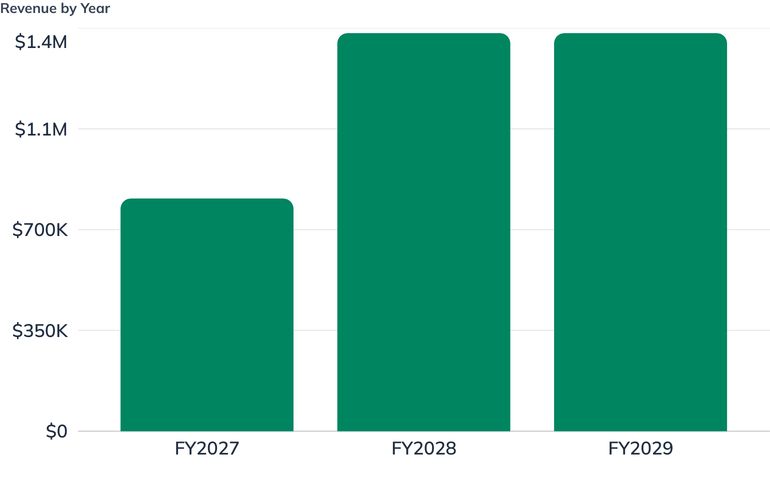
Total Revenue | $808,000 | $1,382,000 | $1,382,000 |
Gross Margin | 28% | 28% | 28% |
Net Profit Margin | 1% | 8% | 8% |
Net Profit | $5,731 | $108,808 | $105,696 |
Monthly Break-Even Revenue | ~$58,500 | ~$61,500 | ~$64,400 |
Year 1 reflects a partial operating period (the store opens in October, per our Grand Opening milestone), which is why Year 2 shows a large step-up as the business runs its first full 12 months.
Operational Metrics
- Daily commuter stops — track morning and evening visit patterns to measure repeat-customer conversion
- Gas-to-store conversion rate — percentage of fuel customers who also make in-store purchases
- Food sales as share of total revenue — target growth from 23% in Year 1 toward higher-margin mix
- Average transaction value — monitor in-store basket size, especially during the launch coupon promotion
Customer Metrics
- Repeat visit rate — commuters who stop both morning and evening indicate successful routine adoption
- Customer satisfaction — Robert Cole's reputation for excellent staff supervision supports a customer-service-first culture
The store reaches its monthly break-even revenue immediately at the October 2026 Grand Opening, ahead of the original conservative estimate, confirming that the commuter-traffic strategy is working from day one.
Company
Ownership and Structure
Allensburg's Food and Gas is a new convenience store and gas station in Allensburg. Robert Cole, owner of Allensburg's Food and Gas, has seven years of experience in managing gas stations. Robert will focus on the commuters that pass through the town daily. Allensburg's Food and Gas will offer its customers the best gas prices and quality food products.
Company Ownership
Allensburg's Food and Gas is wholly owned by Robert Cole.
Start-up Summary
Robert Cole will invest $60,000 in Allensburg's Food and Gas. Robert aims to secure an SBA loan of $190,000 to finance the remainder of start-up costs plus a working capital reserve to carry the business through the pre-opening build-out period (June–September 2026, before the October Grand Opening).
The following chart and table show projected initial start-up costs for Allensburg's Food and Gas.
Start-up | |
|---|---|
Requirements | |
Start-up Expenses | |
Legal | $1,000 |
Insurance | $1,000 |
Rent | $1,500 |
State Permits | $3,000 |
Gas Station Setup | $70,000 |
Store Setup | $20,000 |
Promotional Sign | $5,000 |
Total Start-up Expenses | $101,500 |
Start-up Assets | |
Cash Required | $18,500 |
Working Capital Reserve | $40,000 |
Start-up Inventory | $10,000 |
Other Current Assets | $0 |
Long-term Assets | $80,000 |
Total Assets | $148,500 |
Total Requirements | $250,000 |
Start-up Funding | |
|---|---|
Start-up Expenses to Fund | $101,500 |
Start-up Assets to Fund | $148,500 |
Total Funding Required | $250,000 |
Assets | |
Non-cash Assets from Start-up | $90,000 |
Cash Requirements from Start-up | $58,500 |
Additional Cash Raised | $0 |
Cash Balance on Starting Date | $58,500 |
Total Assets | $148,500 |
Liabilities and Capital | |
Liabilities | |
Current Borrowing | $0 |
Long-term Liabilities | $190,000 |
Accounts Payable (Outstanding Bills) | $0 |
Other Current Liabilities (interest-free) | $0 |
Total Liabilities | $190,000 |
Capital | |
Planned Investment | |
Robert Cole | $60,000 |
Other | $0 |
Additional Investment Requirement | $0 |
Total Planned Investment | $60,000 |
Loss at Start-up (Start-up Expenses) | ($101,500) |
Total Capital | ($41,500) |
Total Capital and Liabilities | $148,500 |
Total Funding | $250,000 |
Management Team
Robert Cole, owner of Allensburg's Food and Gas, has seven years of experience managing gas stations and convenience stores. Robert has a reputation as an excellent staff supervisor. From 1993 to 1996, Robert was the manager of Higgins Texaco, one of the largest gas station/convenience stores in Willard, where he supervised a staff of seven. In 1997, Robert became manager of Barger Chevron, located at the southern tip of Kent near Highway 310.
Personnel Plan
Allensburg's Food and Gas will operate with a staff of five:
- Robert Cole, Owner/Manager
- Store/Deli Staff (2)
- Gas Attendants (2)
Robert oversees daily operations, supplier relationships, and staff scheduling directly. Store/deli staff handle food prep, produce, and in-store sales, while gas attendants manage the fuel island and help convert fuel customers into in-store shoppers. See the Financial Plan chapter for detailed payroll figures by role and year.
Advisors
Robert Cole is the sole owner and operator of Allensburg's Food and Gas and does not currently have a formal advisory board.
Professional Support
Robert will work with the following professionals during start-up and ongoing operations:
- SBA lender — to secure the $150,000 small business loan that finances the majority of start-up costs
- Accountant — for tax preparation, payroll, and financial reporting
- Insurance agent — for business liability and property coverage ($1,000 annual premium budgeted)
- Legal counsel — for lease review, permit applications, and business formation ($1,000 legal budget)
Owner Experience
Robert Cole's seven years of gas station and convenience store management experience — including managing Higgins Texaco in Willard and Barger Chevron near Highway 310 — provides the operational knowledge needed to run the business without external day-to-day advisors.
As the business grows, Robert may seek advisory input on organic produce sourcing and deli product development from local food suppliers and distributors.
Financial Plan
Revenue
Need real milestones? Establish a clear path for your business with real-world examples.Create your own business plan
Expenses & Costs
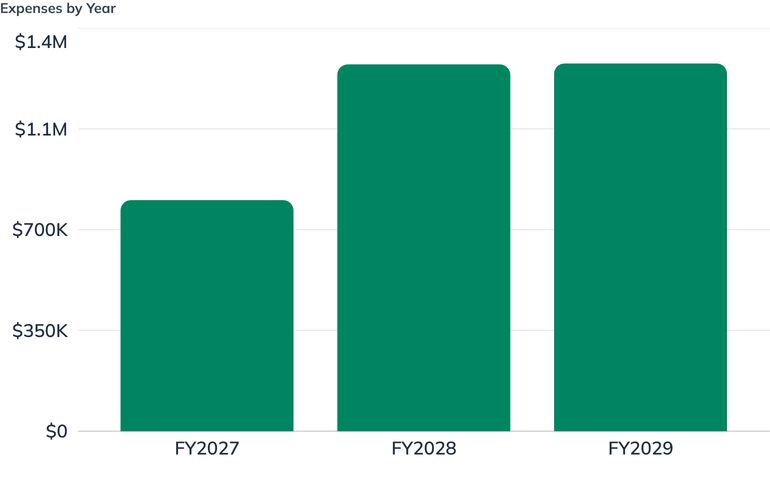
Need real milestones? Establish a clear path for your business with real-world examples.Create your own business plan
Profitability
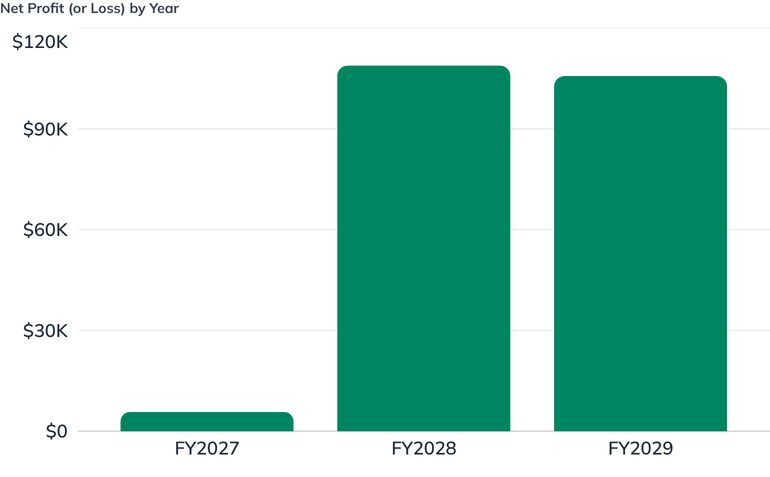
Need real financials? Explore a spreadsheet-free path to generating financial data for your business.Create your own business plan
Use of Funds
Total start-up funding required is $250,000, allocated as follows.
Start-up Expenses: $101,500
| Expense | Amount | | Legal | $1,000 | | Insurance | $1,000 | | Rent (initial) | $1,500 | | State Permits | $3,000 | | Gas Station Setup | $70,000 | | Store Setup | $20,000 | | Promotional Sign | $5,000 | | Total Start-up Expenses | $101,500 |
Start-up Assets: $148,500
| Asset | Amount | | Cash Required | $18,500 | | Working Capital Reserve | $40,000 | | Start-up Inventory | $10,000 | | Other Current Assets | $0 | | Long-term Assets | $80,000 | | Total Assets | $148,500 |
Total Requirements: $250,000
| Item | Amount | | Start-up Expenses to Fund | $101,500 | | Start-up Assets to Fund | $148,500 | | Total Funding Required | $250,000 |
Robert Cole's $60,000 personal investment covers start-up equity. The remaining $190,000 comes from an SBA loan to finance equipment, inventory, working capital, and a reserve to carry the business through the four-month build-out period before the October Grand Opening.
Sources of Funds
Allensburg's Food and Gas is funded through owner equity and an SBA loan.
Funding Summary
Source | Amount | Terms |
|---|---|---|
Robert Cole (owner investment) | $60,000 | One-time equity contribution at start-up |
SBA Loan | $190,000 | 10% annual interest, 5-year term (60 monthly payments) |
Total Funding | $250,000 |
Owner Investment: $60,000
Robert Cole invests $60,000 in personal capital. This covers a portion of start-up expenses and provides equity cushion for the business.
SBA Loan: $190,000
Robert aims to secure an SBA loan of $190,000 to finance the remainder of start-up costs including gas station setup ($70,000), store setup ($20,000), inventory ($10,000), and a working capital reserve to cover operating costs during the four-month pre-opening build-out (June–September 2026) before revenue begins at the October Grand Opening.
Loan Payment Schedule (Forecast)
Year 1 | Year 2 | Year 3 | |
|---|---|---|---|
Interest Expense | $16,263 | $14,665 | $11,128 |
Remaining Principal (approx.) | $128,078 | $90,762 | $49,539 |
Interest expense declines each year as principal is repaid. By Year 3, the remaining loan balance is approximately $49,500 with annual interest of $11,128.
Capital Structure at Start-up
Amount | |
|---|---|
Total Liabilities | $190,000 |
Total Planned Investment | $60,000 |
Loss at Start-up (expenses) | ($101,500) |
Total Capital | ($41,500) |
Projected Statements
Key Assumptions
The following assumptions drive the financial forecast for Allensburg's Food and Gas.
General Assumptions
Assumption | Value |
|---|---|
Plan start date | June 2026 |
Fiscal year end | May (12-month periods from June) |
Long-term interest rate | 10.00% |
Corporate tax rate | 30.00% |
Sales tax | None (not modeled) |
Revenue Assumptions
- Gas prices remain competitive within a fifty-mile radius; consumer markup never exceeds 15% above wholesale
- Commuter traffic on Highway 310 grows approximately 10% annually
- Store opens in October 2026 (per the Grand Opening milestone); no revenue is modeled for the June–September 2026 build-out period
- Year 1 revenue reflects a partial 8-month operating period; Year 2 reflects the first full 12 months of operation
Cost Assumptions
- Cost of Goods Sold runs approximately 72% of revenue, blended across gasoline (~87% of revenue, since fuel margin is capped by the 15%-over-wholesale pricing rule) and food/drinks/produce (~20% of revenue, a typical grocery/deli margin)
- Payroll for 5 employees: Robert Cole (manager), 2 store/deli staff, 2 gas attendants
- Payroll taxes and benefits calculated at approximately 20% burden on staff wages
- Rent of $13,000/year begins after a two-month rent-free setup period
- Depreciation of $80,000 in long-term assets (gas station and store build-out) over a 7-year useful life, approximately $11,429/year once fully phased in
Funding Assumptions
- Robert Cole invests $60,000 at start-up
- SBA loan of $190,000 at 10% interest, repaid over 60 monthly payments — sized to cover build-out costs plus a working capital reserve through the pre-opening period
- Year 1 interest expense: $16,263; Year 2: $14,665; Year 3: $11,128
Break-Even Assumptions
- Monthly fixed cost: approximately $16,376 in Year 1, rising to $18,032 by Year 3 as payroll grows
- Average variable cost: 72% of revenue
- Monthly revenue break-even: approximately $58,500 in Year 1, rising to roughly $64,400 by Year 3
- The commuter-traffic ramp reaches break-even revenue immediately at the October 2026 Grand Opening, ahead of the original conservative estimate
Frequently Asked Questions
A convenience store gas station business plan should cover your site and location analysis, target commuter or customer demographics, product mix across fuel and food, and a funding plan. Allensburg's Food and Gas's plan, for example, documents a highway-exit location with the nearest competing gas station over 20 miles away, an 80%-organic-shopper commuter demographic, and a $250,000 funding plan blending owner equity and an SBA loan.
Allensburg's Food and Gas raised $250,000 in total start-up funding: $60,000 in owner equity from Robert Cole plus a $190,000 SBA loan at 10% annual interest over a five-year term. That covers $70,000 in gas station setup, $20,000 in store setup, $10,000 in inventory, and a working capital reserve to carry the business through a four-month pre-opening build-out before its October Grand Opening.
Yes — gas stations typically need underground storage tank permits, a fuel dealer license, environmental compliance approval under state and EPA regulations, and fire code sign-off, in addition to a standard retail food license for the deli and convenience side of the business. Requirements vary significantly by state and county, so it's worth confirming specifics with local and state environmental authorities early in planning.
Allensburg's Food and Gas earns revenue across two streams: gasoline and food, drinks, and produce. Gas is priced within 15% of wholesale cost to stay competitive with stations up to fifty miles away and draw commuters off the highway, with margin built primarily through higher-margin deli, organic produce, and convenience sales. Its five-year forecast projects about $3.57 million in total revenue against roughly $3.35 million in expenses.
Allensburg's Food and Gas's plan doesn't name a specific profitable month, but it structures a four-month pre-opening build-out from June through September 2026 before an October Grand Opening, with a typical accounting loss at start-up before revenue begins. Its five-year forecast shows healthy cumulative net profit of about $220,235 on $3.57 million in total revenue.
The nearest gas station along Highway 310 is more than 20 miles away in either direction, and the closest competitor within the town of Allensburg itself sits three miles off the highway, requiring the same inconvenient detour commuters currently endure. Allensburg's Food and Gas sits directly at the Allensburg exit, letting commuters fuel up and buy organic produce, deli items, and bakery goods without ever leaving the highway corridor — a combination no roadside stand or in-town competitor currently offers.
Allensburg's Food and Gas targets the thousands of daily commuters on Highway 310 between the university cities of Kent and Willard, which have a combined population of 200,000. About 80% of these commuters fit the demographic profile of upscale organic and natural food store shoppers — college-educated professionals aged 25 to 45, 60% women, with household incomes above $40,000 — a base projected to grow from 5,500 in year one to about 8,053 by year five.
Robert Cole secured a plot of land directly off the Allensburg exit of Highway 310, the primary commuter corridor between Kent and Willard, specifically for its highway visibility, exit-ramp access that avoids any detour, and limited nearby competition. That location advantage is central to the plan: it turns a daily inconvenience commuters already tolerate — driving three miles into town just for gas — into a reason to stop right at the exit instead.

Business Plan Outline
Start your plan