





Thrift Theory


Business Plan Summary
This thrift store business plan example features Thrift Theory, a curated secondhand apparel, accessories, and home goods shop opening on the Rainier Avenue S corridor in Seattle's Columbia City neighborhood — the first dedicated resale storefront in Rainier Valley. It covers the store's curation-first intake process, a local consignment program that pays neighborhood sellers a 40/60 split, a dual sales model that lists every item both on the floor and across Poshmark, eBay, and thrifttheory.com, and a $180,000 funding plan split between owner equity and an SBA 7(a) loan — with three-year projections showing a first-year loss giving way to profitability in year two. Use it as inspiration for your own plan. Download a free business plan template to get started, or browse more business plan examples.
Thrift Theory
Executive Summary
Thrift Theory is a curated secondhand apparel, accessories, and home goods store opening in the Columbia City neighborhood of Seattle, Washington. We give budget-conscious and sustainability-minded shoppers the treasure-hunt thrill of a classic thrift store with the reliability of a resale boutique: every item we put on the floor is hand-selected, cleaned, and inspected before it's priced, so customers don't have to dig through overflowing bins to find something worth buying.
The U.S. secondhand market reached an estimated $61 billion in 2026, up 8.2% year over year, and 58% of American shoppers bought secondhand apparel in the past year — a trend led by Gen Z and 25-44 year olds, our core customer. Seattle's resale scene is real but fragmented: national donation-based chains like Goodwill and the former Value Village locations compete on volume and rock-bottom prices with little curation, while Capitol Hill and Ballard boutiques like Crossroads Trading, Kitchen Table Consignment, and Museum of Vintage curate tightly but price like specialty retail. Columbia City — one of Seattle's most diverse neighborhoods, with steady foot traffic along the Rainier Avenue S corridor — has no dedicated resale storefront of its own, leaving nearby residents to travel north for a curated secondhand experience.
We source inventory through three channels: a local consignment program that pays neighborhood sellers a share of the sale price, direct buy-outright purchases from individuals and estate liquidators, and community donation drives run with local nonprofit partners. Every item is cleaned, inspected, and photographed for our online storefront (Poshmark, eBay, and thrifttheory.com) before it's priced, so a single intake process feeds both our physical shop and our e-commerce channel — extending our reach well beyond foot traffic in South Seattle.
Thrift Theory is founded by Mara Jansen, who spent eight years as a buyer and visual merchandiser for Pacific Northwest specialty retailers before deciding Columbia City needed a resale shop of its own. She's joined by Devon Ruiz, who built and ran the online resale operations for a Seattle vintage boutique and will lead Thrift Theory's e-commerce and consignment systems. Together they're building a business that treats secondhand retail as a real discipline — sourcing, curation, and community — not just a bin to dig through.
Opportunity

Problem Worth Solving
Seattle shoppers who want affordable, secondhand goods are stuck choosing between two imperfect options, and neither one serves Columbia City well.
Volume thrift is cheap but exhausting. Goodwill's South Seattle locations and the last of the region's big donation-based chains move enormous volumes of unsorted inventory at low prices, but the tradeoff is time: shoppers have to sort through racks and bins where maybe one item in twenty is actually wearable, sized correctly, or in good condition. For a working parent or a student with an hour to spare, that search cost is often not worth the savings.
Curated resale is reliable but expensive and far away. Capitol Hill and Ballard have built a real vintage and consignment scene — Crossroads Trading, Kitchen Table Consignment, Museum of Vintage, Fantastique Vintage — where every piece is chosen and priced like specialty retail. That curation is exactly what time-strapped shoppers want, but the prices reflect boutique overhead, and all of it sits a 20-30 minute drive or multiple bus transfers from Columbia City and the broader Rainier Valley.
Rising costs are pushing more people toward secondhand, but Columbia City has nowhere local to go. With Seattle's minimum wage climbing to $21.30/hour in 2026 and household budgets stretched by the region's cost of living, more residents are actively looking to stretch their clothing and home-goods budget — apparel resale nationally grew to $61 billion in 2026, and 58% of shoppers bought secondhand in the past year. Columbia City is one of the city's most economically and racially diverse neighborhoods, with strong foot traffic on Rainier Avenue S, yet it has no resale storefront of its own. Residents either make the trip north or default to buying new.
Sellers face the same gap. Someone looking to sell outgrown kids' clothes, gently used designer pieces, or household goods they no longer need has to choose between the effort of listing everything themselves on Poshmark or eBay, or accepting whatever a donation bin offers (which is nothing). There's no local option that pays out a fair consignment share without requiring the seller to do all the listing work themselves.
Our Solution
Thrift Theory closes the gap between volume thrift and boutique resale by putting a curated, quality-checked secondhand store in a neighborhood that doesn't have one — and by making it easy for local sellers to consign instead of donating for nothing.
Curation as the core discipline, not a marketing claim. Every item we accept — whether through consignment, buy-outright, or donation drives — goes through the same intake process: inspection for damage or wear, a wash or steam as needed, and a merchandising decision about whether it's good enough for our floor. Items that don't meet our bar are routed to textile recycling or local donation partners rather than sold. This is the same discipline Capitol Hill's best consignment shops use, applied at prices that fit a neighborhood budget rather than a specialty-retail one.
A consignment program that actually pays sellers. Neighbors who bring in gently used apparel, kids' clothing, or home goods choose between a cash offer for outright purchase or a consignment split (typically 40% to the seller, 60% to us) once an item sells. Consignment portal access lets sellers track what's sold and when they're due a payout, removing the single biggest friction point in secondhand selling: not knowing what happened to your stuff.
One intake, two storefronts. Every accepted item is photographed and logged at intake, which means it can go on our physical sales floor and, simultaneously, on our online storefront across Poshmark, eBay, and thrifttheory.com. This double-duty workflow lets a single small team run both channels without re-doing the work, and it means an item has a buyer pool well beyond who walks past our Rainier Avenue S storefront on a given day.
Community as sourcing strategy, not an afterthought. We run seasonal donation and consignment drives with Rainier Valley community organizations and schools, turning inventory sourcing into neighborhood events rather than a cold supply chain. That keeps our inventory fresh, keeps sourcing costs low relative to buy-outright-only competitors, and builds the kind of local reputation that a chain thrift store or a Capitol Hill boutique can't easily replicate in South Seattle.
Target Market
Our primary market is value-conscious, secondhand-friendly shoppers living in or near Rainier Valley — Columbia City, Hillman City, Seward Park, Beacon Hill, and Rainier Beach — supplemented by shoppers across Seattle who come specifically for curated resale once we build a following online.
Core segment: budget-and-sustainability shoppers, ages 25-44. National data shows shoppers age 25-34 are the largest secondhand-buying segment (26.7% of the market), followed closely by 35-44 year olds (23.9%). These are renters and young homeowners, often with kids, managing Seattle's cost of living against wages that haven't kept pace — exactly the demographic profile of Columbia City and the broader Rainier Valley, one of the most racially and economically diverse parts of the city. They're comfortable buying secondhand, they shop with intention rather than browsing for hours, and they're active on Instagram and TikTok, where secondhand and thrift-flip content performs consistently well.
Growth segment: Gen Z shoppers. 83% of Gen Z either already thrifts or is interested in doing so, and this generation treats secondhand shopping as a default, not a compromise — driven as much by style and individuality as by price. Many are current or recent students at nearby institutions and South Seattle College, and they're the audience most likely to discover us through short-form video before they ever walk through our door.
Adjacent segment: families with young kids. Rainier Valley has a large share of young families, and children's clothing and gear turn over fast enough that consignment makes obvious financial sense for parents on both sides of the transaction — sellers recouping some cost from outgrown items, buyers avoiding full retail price for things kids will outgrow in months. Fremont's Once Upon a Child shows there's real demand for a dedicated kids' resale channel; ours will be a strong category within a general store rather than a kids-only concept, giving us a customer segment none of the Capitol Hill or Ballard vintage shops compete for directly.
Local sellers as a market segment in their own right. Anyone in Rainier Valley who has usable clothing, accessories, or home goods to part with is a potential consignor or donor, not just a customer. Building trust with this group — fast, fair payouts and transparent tracking — is as important to our growth as building trust with buyers, since our inventory pipeline depends entirely on it.
Competition
Seattle has an active secondhand retail scene, but it clusters in a handful of neighborhoods and splits cleanly into two competitive tiers — neither of which currently reaches Columbia City.
Volume/donation-based thrift.
- Goodwill operates several Seattle-area locations, including a large South Seattle store, and competes almost entirely on price and inventory volume rather than curation. Its strength is scale and brand recognition; its weakness is an inconsistent, unsorted shopping experience that takes real time to work through.
- Value Village closed its last Seattle store, a signal that the pure donation-bin, big-box thrift model is losing ground in this market to more curated and online-savvy alternatives — an opening we're built to take advantage of.
- Savings-focused chains elsewhere in the region (Savers-affiliated stores) compete on the same volume model outside city limits.
Curated resale and vintage boutiques.
- Crossroads Trading (Capitol Hill) is the largest consignment-style thrift operation in the city, known for brand-name outdoor gear and vintage band merchandise, with a second Annex location for accessories, books, and home goods.
- Kitchen Table Consignment (Ballard) and Fantastique Vintage (Capitol Hill) both curate tightly around contemporary designer and Y2K/80s-90s pieces, pricing closer to specialty boutique than thrift.
- Museum of Vintage and Ballard Haberdashery Vintage (Ballard) specialize by decade and by category (denim, men's workwear), serving a collector-minded shopper.
- Nirvana Vintage (Fremont) and Savvy Vintage (U-District) round out the city's vintage-specialist cluster.
What none of them offer: a curated, fairly priced resale store in Rainier Valley. Every one of these competitors sits in Capitol Hill, Ballard, Fremont, or the U-District — a 20-to-30-minute drive or multiple bus transfers from Columbia City. None run a local consignment program built around a South Seattle customer base, and none combine general apparel, accessories, and home goods with a strong kids' category the way we plan to.
Indirect competition comes from resale apps like Poshmark, Depop, and ThredUp, which let sellers cut out any physical storefront entirely. We compete with these not by avoiding them but by using them — listing our curated inventory on the same platforms — so a shopper searching Poshmark for Seattle-area finds discovers Thrift Theory rather than a competitor with no local presence at all.
Execution
Marketing Plan
Our marketing centers on two audiences that need different approaches: buyers, who we reach primarily through content and local visibility, and sellers/consignors, who we reach through neighborhood trust-building.
Short-form video and social content. Instagram Reels and TikTok are where secondhand and thrift-flip content performs best, and Gen Z shoppers in particular discover stores this way before ever walking in. We post regular "new arrivals" hauls, styling videos built around specific finds, and behind-the-scenes intake/curation content that reinforces our quality-checked positioning versus a donation-bin thrift store. Devon leads this content calendar, drawing on his experience building the online following for a Seattle vintage boutique.
Local SEO and neighborhood visibility. We optimize our Google Business Profile and thrifttheory.com for "thrift store Columbia City," "resale Rainier Valley," and related searches, where we currently have zero direct local competition to rank against. Storefront signage and window displays on Rainier Avenue S are designed to stop foot traffic, since this corridor sees consistent pedestrian and transit activity.
Community partnerships as both marketing and sourcing. Seasonal donation and consignment drives, run jointly with Rainier Valley schools and community organizations, generate local press and social sharing while also filling our inventory pipeline — a marketing channel that pays for itself twice over. We sponsor and set up informational tables at neighborhood events like the Columbia City Farmers Market and Rainier Valley community festivals.
Email and loyalty program. Every purchase and consignment signup captures an email address through our POS system, feeding a monthly newsletter that highlights new arrivals, consignor payout reminders, and store events. A simple digital punch-card loyalty program rewards repeat buyers with a discount after a set number of visits.
Cross-platform presence. Because every item we sell is listed on Poshmark and eBay as well as in-store, our online listings function as ongoing marketing for the physical shop — each listing includes our neighborhood and store name, so online shoppers who prefer buying local know exactly where to find us.
The Sustainable Stylist
Maya Rodriguez
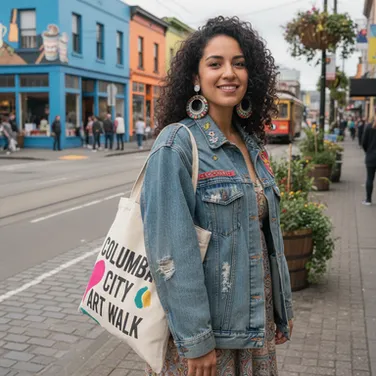
A Columbia City renter who values sustainability and unique fashion but finds local boutiques overpriced. She represents the 54.9% of residents with a degree who prioritize eco-friendly consumption and 'curated' aesthetics over big-box thrift stores.
Age
29
Location
Columbia City, Seattle, WA
Family Status
Single, lives with a roommate
Education
Bachelor's in Environmental Science
Profession
Program Coordinator at a Seattle Non-Profit
Opportunities
- Host monthly themed inventory drops (e.g., '90s Northwest' or 'Summer Solstice') announced via Instagram to cater to her desire for curated, trendy finds.
- Offer discounts for customers who bring their own reusable bags or donate high-quality items, tapping into her zero-waste lifestyle.
Pain Points
- Traditional thrift stores like Goodwill are unorganized and time-consuming to search
- High-end consignment shops in Seattle charge 'boutique' prices that don't fit her budget
- Limited operating hours at existing shops like Hosekibako make it hard to shop after her 9-5 job
Needs
- A curated selection of modern and vintage clothing priced between $15 and $40
- Late-night shopping events or consistent evening hours (until 7:00 PM or 8:00 PM)
- A shop that feels like a community hub rather than a warehouse
“I want my wardrobe to tell a story and help the planet, but I'm tired of digging through bins for hours just to find one decent sweater that isn't overpriced.”

The Neighborhood Collector
Hana Kim
Hana is a retired professional who has lived in Seward Park for decades. She values the cultural diversity of the Rainier Valley and looks for unique, high-quality items that reflect the neighborhood's heritage, such as Japanese ceramics or local art.
Age
66
Location
Seward Park, Seattle, WA
Family Status
Retired, grandmother
Education
Master’s in Fine Arts
Profession
Retired Art Teacher
Opportunities
- Offer a premium consignment tier for high-value furniture and art, providing a local alternative to Mercer Island shops.
- Use wall space to feature local artists or cultural artifacts, making the shop feel like a neighborhood gallery.
Pain Points
- Feeling like the neighborhood is losing its soul to generic, high-priced retail
- Difficulty finding unique, culturally relevant gifts for her grandchildren
- Limited local options for consigning her high-quality furniture and art pieces without driving across the city
Needs
- A respectful and transparent consignment process for her high-quality items
- A selection of unique, 'one-of-a-kind' treasures rather than mass-produced fast fashion
- A shopping environment that encourages social interaction and neighborhood connection
“I’ve spent a lifetime collecting beautiful things. I’d rather see them go to a young neighbor starting their first home than to a giant warehouse or a landfill.”
The Practical Household Manager
Marcus Washington
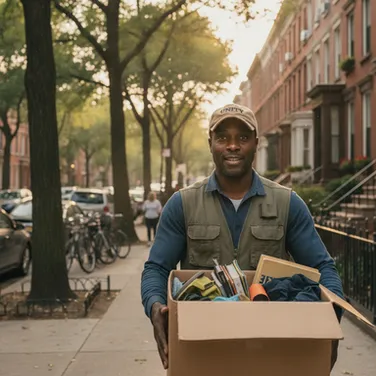
Marcus is a long-time Rainier Valley resident focused on outfitting his growing family. He represents the core 'value-conscious' shopper who needs durable goods for his children and home while navigating Seattle's high cost of living.
Age
42
Location
Rainier Beach, Seattle, WA
Family Status
Married, 3 children (ages 5, 9, and 14)
Education
Associate Degree in Logistics
Profession
Delivery Fleet Supervisor
Opportunities
- Implement a 'grow-with-us' credit system where parents can trade in outgrown children's clothing for store credit toward the next size up.
- Dedicate floor space to quality secondhand kitchenware and small appliances, targeting the $326 annual average household expenditure on supplies.
Pain Points
- Value Village and big-box thrift prices are rising too fast for a family of five
- Finding high-quality, durable men's workwear and children's shoes in the neighborhood is difficult
- Lack of convenient parking or easy access for quick shopping trips with kids
Needs
- Reliable inventory of name-brand children's clothing (Nike, Gap) at 60-70% off retail
- A clean, organized 'Home' section for kitchen essentials and decor
- Clear sizing and organization to make shopping efficient for a busy parent
“Outfitting three kids in Seattle is a full-time job. I need a place where I can find quality gear that won't break the bank before they outgrow it next month.”
Sales Plan
Thrift Theory sells through two channels that share one inventory pipeline: our Columbia City storefront and our online resale presence.
In-store retail. The great majority of our transactions happen on the sales floor, where shoppers browse curated racks organized by category and size rather than digging through unsorted bins. Our point-of-sale system handles checkout, applies loyalty punch-card credit, and captures email signups at the register. Fitting rooms and a friendly, unhurried staff approach are meant to make the shopping experience feel more like a boutique than a bargain bin, even at thrift-friendly prices.
Online resale. Every item photographed at intake is simultaneously listed on Poshmark, eBay, and our own Shopify-powered site, thrifttheory.com. This extends our buyer pool to shoppers well outside Rainier Valley and gives us a second revenue stream that doesn't depend on foot traffic. Online orders are packed and shipped from our storefront during slower midday hours, and online-only items are pulled from the floor the moment they sell to avoid double-selling.
Consignment and buy-outright intake. On the sourcing side, our "sell to us" counter offers walk-in sellers a choice: an immediate cash offer for outright purchase, or a consignment agreement (a 40/60 split in the seller's favor once an item sells) with a 60-day selling window before unsold items are returned or donated. This intake process is itself a sales interaction — staff are trained to make fair, transparent offers on the spot, since a good consignor experience is what keeps local sellers coming back with more inventory.
Seasonal and promotional selling. We run themed sales tied to Seattle's shopping calendar — back-to-school kids' clothing pushes in late summer, holiday gift sections in November and December, and a spring cleaning consignment drive each March that doubles as a marketing event. Clearance markdowns on items that haven't sold within 60 days keep inventory fresh and shelf space turning over, which matters more for a curated store with limited square footage than it does for a high-volume donation chain.
Locations & Facilities
Thrift Theory occupies a storefront on the Rainier Avenue S retail corridor in Columbia City, Seattle — a walkable, transit-connected neighborhood with consistent foot traffic and, currently, no dedicated resale or vintage storefront of its own.
The space. We're targeting roughly 1,800 to 2,500 square feet, sized to support a genuine browsing experience (wide aisles, category-organized racks, two fitting rooms) alongside a back-of-house intake and sorting area where donated and consigned items are inspected, cleaned, and photographed before hitting the floor. Seattle retail asking rents average roughly $29.80 per square foot annually citywide, with neighborhood corridors outside the downtown core — comparable to where we're located — typically running $25 to $33 per square foot, well below Central Business District or South Lake Union rates of $45+.
Layout. The front two-thirds of the space is sales floor: apparel organized by category and size, an accessories and jewelry case near the register, a dedicated kids' section, and a small home-goods area for housewares and decor. A photo station near the intake area lets us shoot clean, consistent product photos for our online listings without disrupting the sales floor. The back third houses receiving, steaming/cleaning equipment, consignment inventory storage, and a small office for Mara and Devon.
Why Columbia City. The neighborhood's population density, transit access (Link light rail station), and status as one of Seattle's most diverse commercial districts give us a built-in customer base without the lease premium of Capitol Hill or the saturation of Ballard's vintage cluster. Being the first curated resale storefront in Rainier Valley also means we're not fighting for foot traffic share with an established competitor on day one.
Accessibility and hours. The storefront is ADA-accessible, street-level, with nearby street parking and light rail access. We plan to open seven days a week, with extended evening hours on weekends to capture after-work and weekend browsing traffic.
Technology
Our technology stack is built to keep one small team running both a physical store and an online resale operation without duplicating work.
Point of sale and inventory. We run a cloud-based retail POS (Lightspeed Retail) that handles checkout, tracks item-level inventory from intake through sale, and manages our loyalty punch-card program. Because secondhand inventory is one-of-a-kind — no restocking the same SKU — item-level tracking rather than simple category counts is essential to knowing what's actually on the floor.
Consignment management. A dedicated consignment tracking module logs each consignor's items, sale status, and payout balance, with self-serve online access so sellers can check what's sold without calling or visiting the store. This directly addresses the biggest complaint about informal consignment arrangements: not knowing what happened to your stuff.
E-commerce and marketplace listings. thrifttheory.com runs on Shopify, giving us a branded storefront alongside our Poshmark and eBay listings. Cross-listing tools let us publish a single intake photo set and description across all three platforms at once rather than re-listing manually, and we sync sold status back to our POS to prevent double-selling between the store and online channels.
AI-assisted merchandising. We use AI tools to speed up two of the most time-consuming parts of resale: writing consistent, SEO-friendly product descriptions from intake notes, and background-cleaning product photos for online listings. This is standard practice for small resale operations in 2026, not a special initiative — it lets a two-person founding team list inventory at a pace that would otherwise require additional staff.
Payments and back office. We use Square or a comparable integrated payment processor for card transactions, QuickBooks Online for bookkeeping, and Gusto for payroll and compliance with Seattle and Washington State wage requirements. Security cameras and an electronic article surveillance (EAS) tagging system protect inventory on the sales floor.
Equipment & Tools
Our equipment needs split between sales-floor fixtures, intake/processing gear, and the technology that supports both channels.
Sales floor fixtures. Rolling and wall-mounted garment racks organized by category and size, slatwall and shelving for accessories and home goods, two fitting rooms with mirrors, a checkout counter with a locking display case for higher-value jewelry and accessories, and category signage throughout the store.
Intake and processing. A commercial-grade garment steamer and a small washer/dryer setup for cleaning textiles before they hit the floor, a tagging gun and price-tag printer, sorting bins and garment racks for the back-of-house intake area, and a dedicated photo station with a portable lighting kit and backdrop for consistent online listing photos.
Point of sale and security. POS terminals with card readers at the checkout counter, a barcode scanner for consignment and inventory tracking, an EAS (electronic article surveillance) tagging and detection system at the entrance, and a security camera system covering the sales floor and back-of-house intake area.
Shipping and fulfillment. A dedicated packing station with a shipping scale, label printer, and packing supplies to fulfill Poshmark, eBay, and Shopify orders without disrupting the checkout counter.
Office and administrative. A small back-office setup with a computer for inventory management, bookkeeping, and consignor account administration, plus basic office furniture for Mara and Devon.
Milestones
Secure Columbia City storefront lease Finalize lease on a 1,800-2,500 sq ft Rainier Avenue S storefront in Columbia City. | Mara Jansen Sept 30, 2026 |
Complete buildout and secure licensing Finish fixtures/buildout, install POS and security systems, and obtain WA state business license, Seattle business license, and reseller's permit. | Devon Ruiz Nov 30, 2026 |
Launch consignment intake and online storefront Open consignment/buy-outright intake, list first inventory on Poshmark, eBay, and thrifttheory.com. | Devon Ruiz Dec 15, 2026 |
Grand opening Store opens to the public with a launch event tied to a community donation drive. | Mara Jansen Jan 15, 2027 |
Reach monthly break-even Achieve first month where combined in-store and online revenue covers all operating expenses. | Mara Jansen Nov 30, 2027 |
Evaluate second-location expansion Assess financial performance and neighborhood fit for a second Rainier Valley or South Seattle location. | Mara Jansen June 30, 2028 |
Key Metrics
We track a small set of metrics that tell us whether the core model — curated intake feeding two sales channels — is actually working.
Inventory turnover and sell-through rate. The percentage of newly intaken items that sell within 60 days is our clearest signal of curation quality: too low, and we're accepting items customers don't want; too high, and we may be pricing below what the market would bear. We track this separately for in-store versus online sales.
Online-to-in-store revenue split. Because every item is listed both in-store and across Poshmark, eBay, and thrifttheory.com, tracking what share of revenue comes from each channel tells us where to invest marketing and staffing effort, and shows how much of our business is not dependent on Columbia City foot traffic alone.
Consignor payout ratio and consignor retention. We monitor total consignment payouts as a share of consignment sales revenue (targeting the 40/60 split we advertise) and track what percentage of consignors bring in additional items within 90 days of their first payout — a direct measure of whether sellers trust the process enough to come back.
Average transaction value and units per transaction. Standard retail metrics that help us understand whether promotions, seasonal pushes, and merchandising changes are moving the needle on basket size, not just foot traffic.
Customer acquisition by channel. We tag loyalty signups and first-time purchases by source (walk-in, Instagram/TikTok referral, Google/local search, marketplace cross-listing) to understand which marketing channels are actually converting new customers, not just generating impressions.
Foot traffic conversion rate. Using simple door-counter data against daily transaction counts, this tells us whether our storefront and window displays are doing their job of converting passersby on Rainier Avenue S into shoppers.
Company
Ownership & Structure
Thrift Theory LLC is a single-member limited liability company organized under Washington State law, with a pass-through tax election so business income flows through to the owner's personal tax return rather than being taxed at the corporate level.
Ownership. Mara Jansen owns 100% of Thrift Theory LLC. She holds final decision-making authority over merchandising, pricing, and overall business strategy, while day-to-day operational leadership is shared with Devon Ruiz, who holds a management role but no equity at this stage. As the business grows, Mara intends to offer Devon a minority equity stake tied to performance milestones, formalized through a buy-sell agreement once the company reaches profitability.
Why an LLC. The LLC structure limits Mara's personal liability for business debts and obligations — important for a retail business carrying inventory, a commercial lease, and foot-traffic liability exposure — while keeping the tax and administrative simplicity that fits a small, founder-run operation. We'll revisit entity structure (including a possible S-corp election, which is compatible with our current pass-through treatment) as revenue grows and the tax tradeoffs shift.
Governance. As a single-member LLC, formal governance is lightweight: Mara maintains the company's operating agreement, banking, and licensing (Washington State business license, Seattle business license, and a reseller's permit for sales tax collection), and consults with Devon and our advisors on major decisions, but no board or additional member approval is required for day-to-day operations.
Management Team
Mara Jansen, Founder & CEO. Mara spent eight years as a buyer and visual merchandiser for Pacific Northwest specialty apparel retailers, where she developed the curation instincts and vendor-negotiation experience that shape Thrift Theory's sourcing and merchandising standards. She holds a degree in retail management and has run pop-up vintage sales at Seattle-area markets for several years, building the neighborhood relationships that anchor our Columbia City launch. Mara oversees merchandising, pricing, vendor and consignor relationships, and overall business strategy.
Devon Ruiz, Operations & E-Commerce Manager. Devon built and ran online resale operations — Poshmark, eBay, and Shopify listings — for a Seattle vintage boutique, growing its online revenue significantly over three years through consistent content and cross-platform listing discipline. He leads Thrift Theory's technology stack, online storefront, social media content, and day-to-day store operations, including staff scheduling and inventory workflow between intake and both sales channels.
Hiring plan. At launch, Mara and Devon are supported by two part-time sales associates who handle checkout, floor merchandising, and customer service, paid at Seattle's 2026 minimum wage of $21.30 per hour or above depending on experience — consistent with the $20.76-$36.19/hour range reported for Seattle retail sales associates. As revenue grows, we plan to add a dedicated intake/processing associate to keep pace with consignment and donation volume, followed by a part-time bookkeeper or outsourced bookkeeping service once transaction volume justifies it.
Advisory support. Mara and Devon meet monthly with our advisors (see Advisors) for guidance on retail operations, sourcing partnerships, and financial planning as the business scales beyond its founding team.
Advisors
We've built a small, practical advisory circle rather than a formal board — people who bring specific expertise Mara and Devon don't have in-house.
Retail operations advisor. A former multi-location retail store manager with experience in the Seattle market advises on staffing structure, loss prevention, and scaling operations from a single location to multiple neighborhoods, drawing on firsthand knowledge of how volume thrift chains like Goodwill run their back-of-house operations at scale.
Small business accountant. A Seattle-based CPA familiar with Washington State's B&O tax structure and Seattle-specific business licensing advises on bookkeeping setup, quarterly tax planning, and the LLC's pass-through tax treatment, helping Mara avoid the compliance pitfalls that trip up many first-time retail owners.
Sourcing and sustainability advisor. A leader from a Rainier Valley community nonprofit with experience running donation drives and textile recycling partnerships advises on structuring our community sourcing events and identifying reputable textile-recycling partners for items that don't meet our sales-floor bar — keeping our sourcing model both community-rooted and environmentally responsible.
We meet with our advisors monthly during the first year of operations, shifting to quarterly check-ins once systems and staffing are stable, and expect to formalize a paid advisory or small board structure if we pursue outside investment for a second location.
Financial Plan
Revenue
Need impressive charts? Discover the simplest way to create detailed graphs for your business plan.Create your own business plan
Expenses & Costs
Need real milestones? Establish a clear path for your business with real-world examples.Create your own business plan
Profitability
Need impressive charts? Discover the simplest way to create detailed graphs for your business plan.Create your own business plan
Use of Funds
We're raising $180,000 to open and stabilize our Columbia City storefront. Funds break down as follows:
- Store buildout & leasehold improvements: $28,000. Interior renovation, paint, flooring, and signage for our Rainier Avenue S space.
- Fixtures, racking & fitting rooms: $18,000. Clothing racks, shelving, checkout counter, and two fitting rooms.
- POS, security & photo equipment: $9,000. Point-of-sale terminals, EAS security tagging system, cameras, and our online-listing photo station.
- Lease security deposit: $8,000.
- Initial inventory seed: $12,000. Buy-outright launch inventory to fill the floor before our consignment and donation pipeline ramps up.
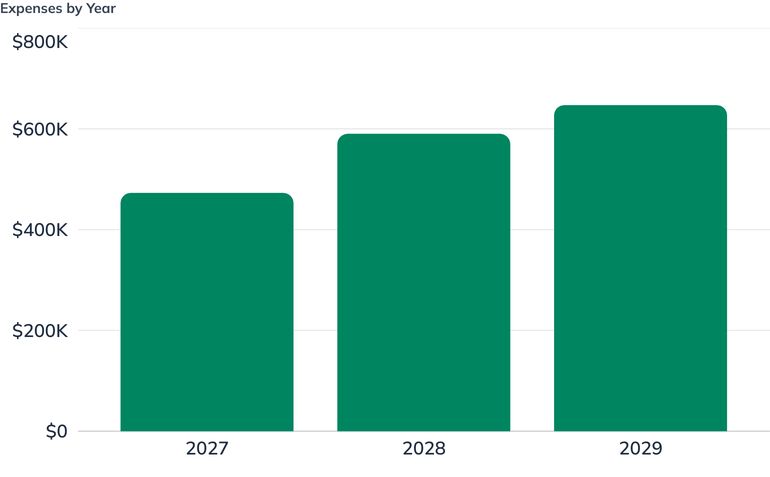
- Working capital: ~$105,000. Covers rent, payroll, marketing, and operating costs through our ramp-up period, during which we project a first-year net loss of roughly $77,000 as revenue builds from a Month 1 opening toward a sustainable run rate.
This funding level reflects Seattle-market startup costs for a secondhand retail store of this size and is sized generously enough that our cash position never approaches zero, even at its lowest point in month ten of operations.
Sources of Funds
We're funding Thrift Theory's launch through a blend of owner equity and an SBA-backed loan, avoiding early dependence on outside equity investors while giving us enough runway to reach profitability on our own terms.
- Owner equity investment: $60,000. Mara Jansen's personal contribution, reflecting meaningful founder skin in the game.
- SBA 7(a) loan: $120,000. A 10-year term loan at an estimated 11% interest rate, structured as a standard startup/equipment loan common for small retail businesses financing buildout, fixtures, and working capital.
Together, this $180,000 in funding covers our full use of funds — buildout, fixtures, initial inventory, and a working capital buffer through our first year of ramp-up — without requiring us to raise outside equity or give up ownership stake before we've proven the model. As the business reaches sustained profitability in year two, we plan to use free cash flow to pay down the SBA loan ahead of schedule and reinvest in a second Rainier Valley location rather than seeking additional outside capital.
Projected Statements
Frequently Asked Questions
A thrift store business plan should cover your sourcing model, curation and pricing standards, target market and competitive positioning, store location and layout, marketing approach, and financial projections including startup costs, funding sources, and a realistic path to profitability. Thrift Theory's plan, for example, pairs its curated-resale concept with a three-channel sourcing strategy, a Columbia City location analysis, a $180,000 funding plan, and three-year projections. Because secondhand inventory is one-of-a-kind rather than restocked, it also documents item-level inventory tracking and sell-through targets that a conventional retail plan wouldn't need.
Thrift Theory is raising $180,000 to open and stabilize its Columbia City storefront. That breaks down into $28,000 for buildout and leasehold improvements, $18,000 for fixtures, racking, and fitting rooms, $9,000 for POS, security, and photo equipment, an $8,000 lease security deposit, $12,000 in seed inventory bought outright to fill the floor before the consignment pipeline ramps up, and roughly $105,000 in working capital to cover rent, payroll, and marketing through the ramp-up period. Costs vary widely by market — this figure reflects Seattle retail rents of roughly $25 to $33 per square foot for a neighborhood corridor space of 1,800 to 2,500 square feet.
Yes. Thrift Theory operates as a Washington State LLC and holds a Washington State business license, a City of Seattle business license, and a reseller's permit for collecting and remitting sales tax. Secondhand retail can carry additional local requirements — some cities require a secondhand dealer license or record-keeping on purchased goods — so check with your city and state before opening. Because the store buys inventory outright from walk-in sellers as well as taking it on consignment, its written consignment agreement and intake records also serve as the paper trail for those transactions.
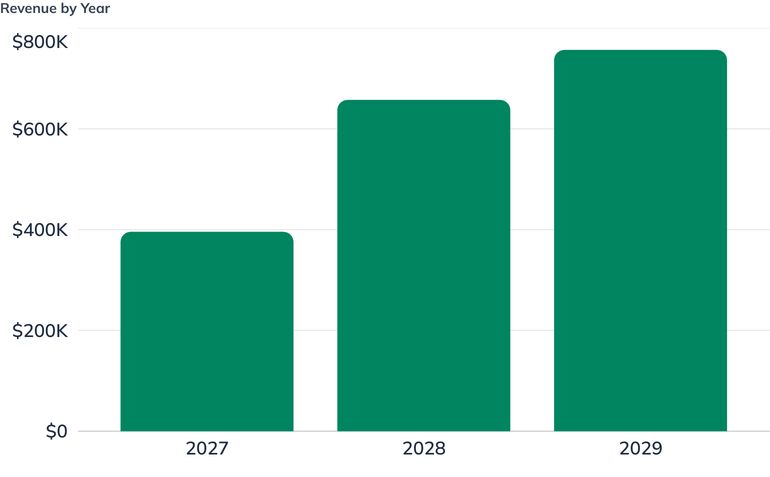
Thrift Theory earns revenue from two channels fed by one inventory pipeline: its Columbia City sales floor and its online listings on Poshmark, eBay, and thrifttheory.com. Margin comes from the gap between acquisition cost and resale price — items arrive through consignment (a 40/60 split paid to the seller once the item sells), outright cash purchases from individuals and estate liquidators, and community donation drives, the last of which carry no acquisition cost at all. That sourcing mix produces a projected gross margin of about 63%, on revenue growing from $395,850 in the first year to $657,450 in year two.
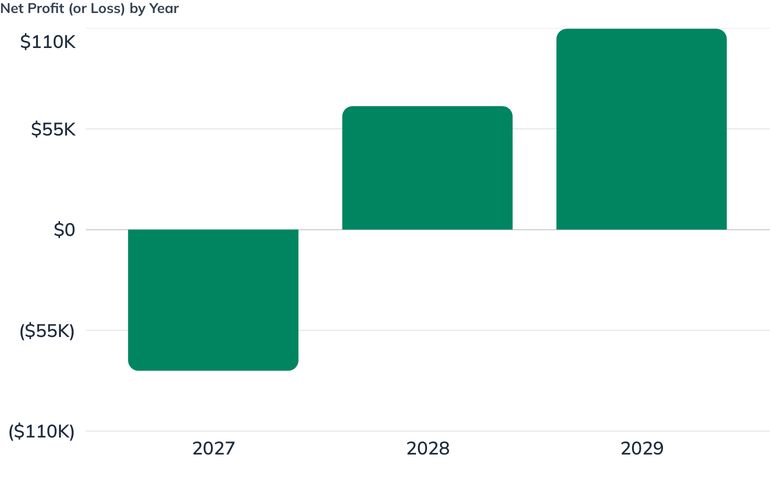
Thrift Theory projects a first-year net loss of about $77,028 as revenue builds from a January 2027 opening, with the first month where combined in-store and online revenue covers all operating expenses targeted for November 2027 — roughly ten months after the doors open. Full-year profitability follows in year two, with a projected net profit of $67,385 in 2028 and $109,597 in 2029. The plan sizes its funding generously enough that cash never approaches zero, even at its lowest point in month ten.
The difference is what happens before an item reaches the floor. At a donation-based chain like Goodwill, unsorted volume goes out at rock-bottom prices and the shopper absorbs the search cost — digging through bins where perhaps one item in twenty is worth buying. Thrift Theory inspects, cleans, and makes a merchandising decision on every item it accepts, routing anything below its bar to textile recycling or donation partners instead of the sales floor. That's the same discipline Capitol Hill consignment shops use, but priced for a neighborhood budget rather than specialty retail, which is the specific gap the plan identifies in Rainier Valley.
Thrift Theory's core customers are value-conscious, sustainability-minded shoppers aged 25 to 44 living in Columbia City, Hillman City, Seward Park, Beacon Hill, and Rainier Beach — renters and young homeowners, often with kids, stretching their budget against Seattle's cost of living. Gen Z is the growth segment, with 83% either already thrifting or interested in it, and they typically discover the store through short-form video before ever walking in. Families with young children are a third segment, since kids' clothing turns over fast enough that consignment makes financial sense on both sides. Local sellers are treated as a market segment in their own right, since the inventory pipeline depends entirely on their trust.
Thrift Theory uses three sourcing channels rather than one. Walk-in sellers at the “sell to us” counter choose between an immediate cash offer for outright purchase or a consignment agreement — a 40/60 split in the seller's favor, with a 60-day selling window before unsold items are returned or donated — and a self-serve consignment portal lets them track what's sold and what they're owed, which removes the biggest friction point in secondhand selling. Seasonal donation drives run jointly with Rainier Valley schools and community organizations supply the third channel while doubling as local marketing. Every accepted item is photographed once at intake and listed simultaneously in-store and online, so a single intake process feeds both revenue channels.

Business Plan Outline
Start your plan