





Hometown Roadside Assistance


Business Plan Summary
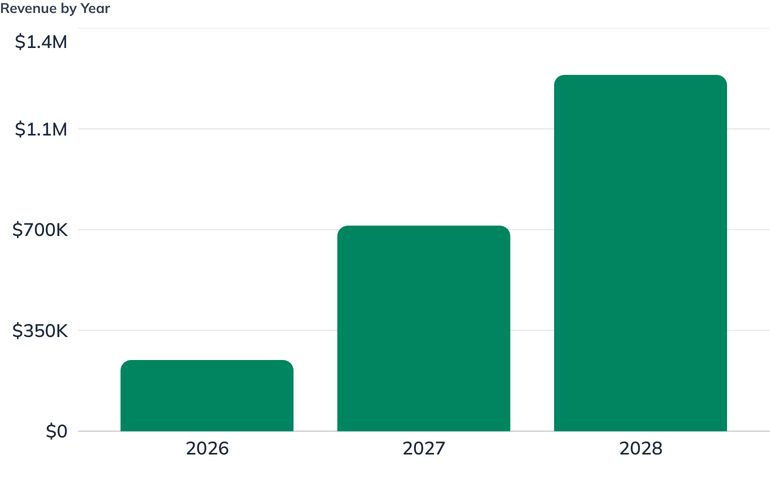
This roadside assistance business plan example features Hometown Roadside Assistance, a locally owned, app-dispatched service covering Fayetteville, Springdale, Rogers, and Bentonville in Northwest Arkansas, built around a 30-minute average response commitment inside a deliberately compact service radius. It covers the company's three-part revenue model — pay-per-call service, monthly memberships including a University of Arkansas student and staff program, and B2B fleet contracts with guaranteed response windows — alongside its GPS dispatch and customer-app technology, its phased fleet buildout, and a $445,000 funding plan combining an SBA-style term loan with owner equity, with three-year projections taking revenue from $247,103 to $1.24 million. Use it as inspiration for your own plan. Download a free business plan template to get started, or browse more business plan examples.
Hometown Roadside Assistance
Executive Summary
Hometown Roadside Assistance is a locally owned, app-dispatched roadside assistance company based in Fayetteville, Arkansas, serving drivers and business fleets across Northwest Arkansas (NWA) — Fayetteville, Springdale, Rogers, and Bentonville. We provide jump starts, flat tire changes, lockout service, fuel delivery, winching, and light towing through a small fleet of branded service trucks and a mobile app that lets customers request help and track their technician in real time, 24 hours a day, seven days a week.
The problem. Northwest Arkansas has grown faster than almost any metro area in the country, but roadside help has not kept pace. National auto club members routinely wait 60–90 minutes for a truck during peak commute hours, gig-economy and delivery drivers often carry no roadside coverage at all, and the region's large population of University of Arkansas students and staff frequently find themselves stranded with no local option they trust. Local businesses that run delivery or service fleets — landscaping crews, home service companies, food delivery — lose revenue every time a vehicle is down and a national provider cannot commit to a fast, predictable response time.
Our solution. We built Hometown Roadside Assistance to close that gap with a simple promise: a real local technician, dispatched by GPS-optimized routing, arriving in 30 minutes or less inside our core NWA service area. Customers can request help through our app or by phone, choose from an on-demand per-call rate or a low-cost monthly membership, and track arrival live. For local businesses, we offer fleet service contracts with guaranteed response windows and simplified monthly billing, so a single flat vehicle never turns into a full day of lost work.
Target market. Our customers fall into three groups: NWA commuters and everyday drivers who want faster, more personal service than a national auto club; University of Arkansas students, faculty, and staff who need an affordable, trustworthy local option; and small and mid-size local business fleets — delivery, trade, and service companies — that need predictable uptime. Northwest Arkansas's rapid population growth, driven by the presence of the University of Arkansas and major regional employers, continues to expand all three of these segments every year.
Competition and our edge. We compete with AAA, national digital dispatch platforms such as Urgent.ly and Honk, insurance-backed programs powered by providers like Agero, and a handful of independent local tow operators. None of them combine true local ownership, a modern real-time tracking app, and a dedicated NWA-only service radius the way we do. Being local lets us guarantee faster response times than national networks that dispatch from wherever a contracted truck happens to be, while our technology gives customers the same modern, transparent experience they expect from national brands.
Financial highlights. We are seeking startup funding to acquire our initial service truck fleet, equipment, and dispatch technology. Our model combines recurring membership and fleet-contract revenue with per-call on-demand service, giving us a predictable, if conservatively priced, revenue base that grows alongside Northwest Arkansas's continued population and business growth, reaching sustained profitability within our third year.
Need real milestones? We recommend using LivePlan as the easiest way to create milestones for your own business plan.Create your own business plan

Opportunity
Problem Worth Solving
The problem
Being stranded on the side of the road is stressful anywhere, but in Northwest Arkansas the current options make it worse than it needs to be.
National auto club response times are slow and unpredictable. AAA and similar national networks dispatch through third-party contractors spread across a wide multi-county territory. During peak commute windows on I-49, Highway 71B, and the busy corridors connecting Fayetteville, Springdale, Rogers, and Bentonville, members routinely report waits of 60 to 90 minutes or more, with little visibility into when help will actually arrive.
A large share of NWA drivers have no roadside coverage at all. Gig-economy drivers, delivery contractors, and many commuters skip roadside coverage entirely because traditional memberships feel expensive relative to how often they expect to use them. When something goes wrong, their only options are an out-of-pocket tow that can run several hundred dollars or a long wait for a stranger found through an online search.
University of Arkansas students and staff are an underserved population. With tens of thousands of students living on and around campus, many driving older vehicles far from home for the first time, a dead battery or flat tire can turn into a genuine safety concern — especially late at night or during the winter months when ice and freezing temperatures raise the frequency of breakdowns. Most students have no relationship with a national provider and no idea who to call.
Local business fleets need speed, not just coverage. Landscaping crews, home service companies, delivery operators, and other local businesses that depend on vehicles being on the road lose real revenue every hour a truck or van sits disabled. National providers are not built to guarantee a fast response for a single commercial vehicle, and generic towing companies rarely offer the on-call reliability or predictable monthly billing a small business needs to budget for.
Across every one of these groups, the underlying problem is the same: the roadside help available in Northwest Arkansas today is either too slow, too expensive, too impersonal, or simply doesn't exist for the way people and businesses here actually drive.
Our Solution
Our solution
Hometown Roadside Assistance is a locally owned, technology-enabled roadside assistance service built specifically for Northwest Arkansas. We combine a real local fleet with modern dispatch technology to deliver the fast, transparent experience customers expect, without the wait times of a national network.
Core services. Our technicians handle the full range of everyday roadside needs:
- Battery jump starts
- Flat tire changes (using the customer's spare)
- Lockout / re-entry service
- Emergency fuel delivery
- Winching and vehicle extraction from ditches or soft ground
- Light towing to a nearby shop, home, or campus lot
Response time commitment. Our core service area — Fayetteville, Springdale, Rogers, and Bentonville — is intentionally compact. That focus lets us commit to a 30-minute average response time for standard calls, with priority dispatch available for members and fleet-contract customers.
Technology-first dispatch. Customers request service through our mobile app or a single phone number. Requests are routed to the nearest available technician using GPS-based, AI-assisted dispatch routing, and customers see a live map with their technician's estimated arrival time — the same transparent experience they'd expect from a modern rideshare or delivery app, built for roadside help.
Flexible ways to pay. We offer three ways to access our service:
- On-demand, pay-per-call for occasional drivers who want help without a subscription.
- A low-cost monthly membership for individuals and University of Arkansas students and staff who want unlimited peace of mind at a predictable monthly price.
- Fleet service contracts for local businesses, with guaranteed response windows, priority dispatch, and simple monthly invoicing across an entire vehicle fleet.
By pairing a genuinely local team that knows NWA's roads, neighborhoods, and campus with the dispatch technology customers already expect from national brands, we deliver faster help, a better experience, and a service that keeps its promises.
Target Market
Target market
Northwest Arkansas is one of the fastest-growing metro areas in the United States, anchored by the University of Arkansas in Fayetteville and the corporate presence of Walmart, Tyson Foods, and J.B. Hunt Transport in the surrounding Springdale, Rogers, and Bentonville area. That combination of steady population growth, a large student population, and a dense concentration of logistics, retail, and service businesses creates a broad and growing base of demand for reliable roadside assistance. We are targeting three core segments.
Everyday commuters and drivers (direct-to-consumer). NWA's population growth has translated into steadily increasing traffic across the region's connecting corridors, and with growth comes more daily commuters exposed to routine breakdowns — dead batteries, flat tires, lockouts. This is our largest addressable segment and the base for our on-demand and membership pricing.
University of Arkansas students, faculty, and staff. With a large student body living both on campus and throughout Fayetteville, this segment is price-sensitive, mobile-first, and underserved by traditional auto clubs. Many drive older, higher-mileage vehicles and are especially receptive to an affordable monthly membership marketed directly through campus channels.
Local business fleets. Northwest Arkansas's density of logistics, delivery, home service, and trade businesses — supported by the regional presence of major employers like J.B. Hunt and Walmart's broader supplier network — means a meaningful number of small and mid-size companies operate their own vehicle fleets. These businesses are highly motivated to minimize vehicle downtime and are a natural fit for our fleet service contracts, which offer predictable monthly costs and guaranteed response windows in place of unpredictable one-off towing bills.
Together, these three segments give us a diversified revenue base: recurring, predictable income from memberships and fleet contracts, supplemented by on-demand revenue from occasional users. As Northwest Arkansas continues to add residents, students, and businesses, all three segments are expected to keep expanding — a structural tailwind for our growth over the life of this plan.
Competition
Competition
The roadside assistance landscape serving Northwest Arkansas today is a mix of national auto clubs, technology-driven dispatch platforms, insurance-backed programs, and independent local tow operators.
AAA. The longstanding national auto club remains the default choice for many drivers thanks to brand recognition and bundled travel benefits. Its roadside service, however, is delivered through a network of independent contracted tow companies spread across a wide multi-state territory, which means response times in any single market — including Northwest Arkansas — vary widely and are often slow during peak hours.
National digital dispatch platforms (Urgent.ly, Honk). These technology companies operate modern apps and GPS-based dispatch but generally act as a software and network layer connecting drivers to whichever contracted local tow provider is available, rather than owning the trucks or technicians themselves. That model can produce inconsistent service quality from one call to the next, since the actual technician showing up is a third party, not a company employee.
Insurance-backed programs (Agero-powered). Many auto insurers offer roadside assistance as a policy add-on, fulfilled behind the scenes by national providers like Agero. These programs are convenient for policyholders but are optimized for national scale and cost, not for the fastest possible local response in any one metro area.
Independent local tow operators. A handful of local towing companies serve NWA directly, typically without a dedicated app, subscription options, or fleet-contract billing — customers call and hope for the best, with no ability to track a technician or commit to a response-time guarantee.
Our differentiation. Hometown Roadside Assistance is the only provider combining true local ownership and a Northwest Arkansas–only service radius with the modern, transparent technology customers now expect. Because we don't spread our fleet across a multi-state contractor network, we can commit to and consistently deliver a 30-minute average response time. Because we own our technology, customers get live tracking and simple digital payment rather than a phone call and a guess. And because we're local, our marketing, partnerships, and reputation are built entirely around being the roadside company Northwest Arkansas trusts — something no national brand can replicate at the community level.
Execution
Marketing Plan
Marketing plan
Our marketing strategy is built around one goal: being the roadside assistance brand every driver, student, and local business in Northwest Arkansas thinks of first.
Local digital marketing and SEO. We invest in local search engine optimization so that "roadside assistance Fayetteville," "tow truck Rogers AR," and similar searches across our NWA service area consistently surface Hometown Roadside Assistance. We pair this with targeted local social media advertising (Facebook, Instagram, and Nextdoor) aimed at commuters and NWA neighborhood groups, and with Google Local Services ads to capture high-intent searches at the moment someone actually needs help.
University of Arkansas partnerships. We work directly with University of Arkansas parking and transit services, residence life, and student organizations to offer a discounted student/staff membership, distributed through campus orientation events, the student newspaper, and campus app partnerships. Being visibly present at back-to-school events and campus safety fairs builds the kind of trust that turns a first-time downloaded app into a renewed membership.
Dealership and repair shop referral partnerships. We build referral relationships with local car dealerships, independent repair shops, and tire shops across Fayetteville, Springdale, Rogers, and Bentonville — positioning Hometown Roadside Assistance as the preferred referral for customers who need immediate roadside help before or after a repair visit.
Insurance agent relationships. We partner with independent local insurance agents who can offer their clients a Hometown Roadside membership as a value-added service, giving us a low-cost acquisition channel and giving agents a differentiator against national carrier bundles.
Local business and fleet outreach. We build our fleet-contract pipeline through direct outreach to logistics, delivery, landscaping, and trade businesses across the region, supported by chamber of commerce memberships and sponsorships in Springdale, Rogers, Bentonville, and Fayetteville.
Community presence. We maintain visible sponsorship and presence at regional events — Bikes, Blues & BBQ, Fayetteville farmers markets, University of Arkansas athletics tailgates, and local 5K/charity events — reinforcing that we are a homegrown NWA company, not a national call center.
The Campus Commuter
Chloe Miller
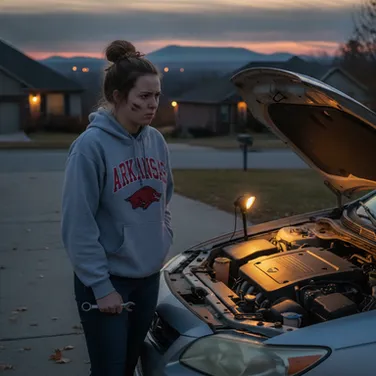
A University of Arkansas undergraduate driving an older, high-mileage vehicle to save on costs. She relies on her car for late-night study sessions and commuting from her off-campus apartment but lacks the mechanical knowledge or emergency savings to handle unexpected breakdowns.
Age
20
Location
Near University of Arkansas, Fayetteville
Family Status
Single, Undergraduate Student
Education
Currently pursuing B.S. in Biology
Profession
Part-time Library Assistant and Student
Opportunities
- Implement a transparent $50 flat-rate local tow for UA students to compete with budget-focused providers like Stuck Solutions.
- Market heavily toward parents of students as a 'safe-ride' roadside partner, emphasizing vetted, background-checked drivers.
- Offer an Uber-like interface where students can track the tow truck in real-time, reducing anxiety during late-night breakdowns.
Pain Points
- Limited budget makes standard $120+ tow fees a major financial crisis
- Fear of being stranded alone on campus roads like Garland Avenue after dark
- Lack of trust in 'shady' traditional towing companies that might overcharge
Needs
- Predictable, transparent pricing with no hidden 'hook-up' fees
- Fast response times to ensure personal safety on the roadside
- Digital-first communication (texting/app) rather than phone calls
“I'm always worried my car won't start after a night at the library. I just need someone I can trust not to rip me off when I'm stuck.”

The Time-Poor Professional
Sarah Jenkins
A high-earning professional working for a major retail vendor in the Walmart/Tyson ecosystem. She commutes daily between Fayetteville and Bentonville and views her time as her most valuable asset; a car problem is an obstacle to her career and family commitments.
Age
38
Location
South Hills, Fayetteville, AR
Family Status
Married, 2 children (ages 6 & 9)
Education
MBA from University of Arkansas
Profession
Senior Account Manager for a Global Consumer Goods Brand
Opportunities
- Create an annual membership that includes 'concierge' towing to her preferred dealership and a complimentary Uber credit to get her to her meeting.
- Market a high-end service tier featuring clean, modern trucks and professional, uniformed operators who provide a 'white-glove' experience.
- Offer on-the-spot battery testing and replacement so she can avoid a tow altogether and get to her destination.
Pain Points
- The extreme inconvenience of waiting 2 hours for a tow when she has back-to-back meetings
- The 'unprofessional' and greasy image of traditional towing services
- Stress of managing school pickups while dealing with a dead battery or flat tire
Needs
- Ultra-fast, reliable ETAs that allow her to plan her schedule
- Professional, courteous service that matches her corporate environment
- A one-stop solution that handles the tow, the repair referral, and her transportation
“I don't have time for a breakdown. I need a service that treats my time with the same respect I do, getting me back to my life immediately.”

The Logistics Lifeline
Marcus Thompson
Marcus manages a small fleet of delivery vans for a local Northwest Arkansas logistics firm. With the region's rapid growth and heavy traffic on I-49, he needs a reliable partner to keep his drivers on schedule and minimize vehicle downtime.
Age
45
Location
Bethel Heights / Springdale Area
Family Status
Married, 3 children
Education
Associate Degree in Logistics Management
Profession
Fleet Operations Manager for a local 3PL provider
Opportunities
- Develop B2B service level agreements (SLAs) that guarantee a tow truck on-site within 30 minutes for fleet vehicles.
- Offer monthly invoicing and digital reporting for all fleet incidents to simplify his 7-stage B2B buying and accounting process.
- Provide 'fleet health' visits where technicians check tire pressure and battery health for the entire fleet on-site.
Pain Points
- Lost revenue every minute a delivery van is sitting idle on the shoulder
- Difficulty coordinating multiple tow receipts from different drivers
- Inconsistent service quality from on-demand providers who don't prioritize commercial accounts
Needs
- A dedicated account manager and priority dispatch line
- Heavy-duty equipment capable of handling loaded commercial vans
- Detailed documentation of every service for insurance and maintenance logs
“My drivers are the lifeblood of this business. If a van is down on the I-49, I'm not just losing money, I'm losing customer trust.”
Sales Plan
Sales plan
We sell through two distinct paths that reflect our two customer types: self-service direct-to-consumer sign-up, and a relationship-driven B2B process for fleet accounts.
Direct-to-consumer: on-demand and membership. Individual customers can request an on-demand call and pay per service with no commitment, or sign up for a monthly membership directly through our app or website in under two minutes. The sales "close" happens at the moment of need: a customer stranded on the roadside downloads the app, requests help, and is offered the option to convert to a membership either in-app or through a follow-up message after their first successful service call — when trust in our brand is highest. Membership pricing is simple and transparent, with a modest discount for annual prepayment to encourage retention.
University of Arkansas channel. Student and staff memberships are sold through the same self-service app flow but are driven by campus partnership marketing (orientation events, student organization sponsorships, campus app integrations) rather than paid advertising, keeping acquisition costs low for this segment.
B2B: fleet service contracts. Local business fleet sales follow a consultative process: an initial outreach or inbound inquiry, a needs assessment covering fleet size, vehicle types, and typical usage patterns, and a proposal outlining a guaranteed response window and flat monthly rate scaled to fleet size. Contracts are typically 12-month agreements with simple monthly invoicing, renewed automatically unless canceled. Our owner and dispatch manager handle fleet sales directly in the early years, allowing us to build direct relationships with the region's landscaping, delivery, home services, and logistics-adjacent businesses.
Retention focus. Because recurring membership and fleet-contract revenue are central to our model, our sales process is designed around retention as much as acquisition — every service call is an opportunity to reinforce reliability and prompt an upgrade or renewal, and we track renewal rates closely as a leading indicator of business health.
Locations & Facilities
Locations & facilities
Hometown Roadside Assistance operates from a single dispatch and operations base in Fayetteville, Arkansas, centrally located to give our fleet fast access to Fayetteville, Springdale, Rogers, and Bentonville — our full Northwest Arkansas service area.
Operations base. Our Fayetteville facility houses our dispatch office, a small administrative area, and a secured yard for vehicle staging, fuel storage for our fuel-delivery service, and basic equipment maintenance. This is where our dispatcher coordinates technicians in real time and where trucks stage and restock supplies between calls.
Service radius, not branch network. Rather than operating multiple branch locations, we rely on a distributed fleet of service trucks staged strategically across our coverage area during peak hours — positioning vehicles nearer Springdale, Rogers, and Bentonville during the morning and evening commute windows to keep response times low throughout the entire metro, not just close to our home base.
Growth path. As call volume and fleet-contract accounts grow, we plan to evaluate a second staging location in the Rogers/Bentonville area to further reduce response times on the northern end of our service territory, funded by reinvested cash flow rather than a second lease commitment in year one.
Technology
Technology
Technology is core to how we deliver a faster, more transparent experience than legacy roadside providers, without the overhead of building everything from scratch.
Customer-facing app. Customers request service, track their technician's live location and ETA, and manage their membership or fleet account through our mobile app (iOS and Android) and companion web portal, built on a standard mobile app development and hosting platform.
Dispatch and routing software. We use a fleet dispatch and routing platform with AI-assisted routing to automatically match incoming service requests to the nearest available technician, factoring in real-time traffic and technician skill/equipment — the same category of tool now standard across modern field-service and last-mile delivery operations, keeping our average response time low without requiring a large dispatch staff.
GPS fleet tracking. Every service truck is equipped with GPS fleet tracking hardware, giving our dispatcher real-time visibility into vehicle location, and feeding the live ETA customers see in the app.
Payment processing. We use an integrated payment processing platform to handle on-demand call charges, recurring membership billing, and monthly fleet-contract invoicing securely through the app and web portal, with automatic receipts and simple account management.
Business operations software. Scheduling, technician time tracking, basic accounting, and customer relationship management run on established small-business SaaS tools, keeping our back-office overhead lean as we grow.
Together, this stack lets a small, local team deliver the modern, on-demand experience customers now expect — without the cost of building custom software in-house.
Equipment & Tools
Our initial equipment and tools investment is focused on outfitting a small, capable service fleet and supporting dispatch technology:
- Service trucks (6 by end of Year 2) — mid-size pickup or service-body trucks upfitted with jump-start packs/battery boosters, tire-changing equipment, lockout tool kits, portable fuel containers, and a light-duty winch/tow package.
- GPS fleet tracking hardware — installed in every service truck, feeding real-time location into our dispatch platform and the customer-facing app.
- Mobile dispatch tablets and in-cab communication equipment — used by technicians to receive job details, navigate, and update job status in real time.
- Dispatch office equipment — computers, a dispatch console/monitor setup, and office furniture for our Fayetteville operations base.
- Safety and roadside gear — reflective vests, road cones, flashlights, and first-aid kits standard in every truck.
We phase in additional trucks and equipment as call volume and fleet-contract accounts grow, funded through a combination of startup capital and reinvested cash flow.
Milestones
Finalize funding and incorporate business Secure startup funding, complete business registration and licensing, and set up Fayetteville operations base. | Sarah Whitfield Sept 30, 2026 |
Acquire initial service truck fleet and equip technicians Purchase and outfit initial service trucks with jump-start, tire, lockout, fuel, and winching equipment plus GPS tracking hardware. | Marcus Delgado Oct 31, 2026 |
Launch customer app and dispatch platform Go live with customer-facing app, GPS dispatch/routing software, and payment processing integration. | Sarah Whitfield Nov 15, 2026 |
Begin service across Fayetteville, Springdale, Rogers, and Bentonville Open full NWA service area for on-demand and membership customers. | Marcus Delgado Dec 1, 2026 |
Launch University of Arkansas student/staff membership program Roll out discounted membership through campus partnerships in time for fall semester move-in. | Sarah Whitfield Jan 15, 2027 |
Sign first 10 local business fleet contracts Close initial round of B2B fleet service contracts across NWA delivery, trade, and logistics-adjacent businesses. | Sarah Whitfield Mar 15, 2027 |
Key Metrics
Key metrics
We track a focused set of operational and financial metrics to manage service quality and business health:
- Average response time — minutes from request to technician arrival, tracked against our 30-minute commitment, both region-wide and by city (Fayetteville, Springdale, Rogers, Bentonville).
- Calls completed per month — total service calls fulfilled, split between on-demand, membership, and fleet-contract calls, to track demand growth and channel mix.
- Cost per dispatch — fully loaded cost (labor, fuel, vehicle) per completed service call, tracked to ensure pricing and technician utilization stay aligned as call volume grows.
- Membership renewal rate — the percentage of individual and student/staff memberships that renew at each billing cycle, our core indicator of direct-to-consumer retention.
- Fleet contract retention rate — the percentage of business fleet accounts that renew their annual contract, a key indicator of B2B relationship health and predictable recurring revenue.
- Technician utilization — the share of a technician's working hours spent on active or en-route calls versus idle time, used to plan fleet and staffing growth.
- Customer satisfaction score — post-call rating collected through the app after every service, monitored for quality control and used in marketing and partnership conversations.
- Revenue mix — the split between on-demand, membership, and fleet-contract revenue, tracked to ensure we maintain a healthy balance of recurring and transactional income.
Reviewing these metrics monthly allows us to catch service-quality issues early, right-size our fleet and technician staffing to actual demand, and validate that our membership and fleet-contract retention are strong enough to support the recurring-revenue model this plan is built on.
Company
Ownership & Structure
Hometown Roadside Assistance is organized as a single-member Arkansas limited liability company (LLC) headquartered in Fayetteville, Arkansas. Sarah Whitfield is the founder and 100% owner of the company. The LLC structure provides liability protection for Sarah's personal assets while keeping the business's tax treatment simple as a pass-through entity in its early years. As the company grows and adds outside investment or key-employee equity incentives, we will revisit the ownership structure with our accountant and attorney.
Management Team
Management team
Sarah Whitfield — Founder & Owner-Operator. Sarah grew up in Fayetteville and spent eleven years in operations and dispatch leadership for a regional logistics company headquartered in Northwest Arkansas, where she managed fleet scheduling and driver operations across a multi-state territory. After one too many long waits for roadside help herself — and after watching how quickly a broken-down delivery van could disrupt a small business's whole week — she founded Hometown Roadside Assistance to bring a faster, more personal alternative to the region she grew up in. Sarah holds a business administration degree from the University of Arkansas and leads overall strategy, fleet operations, and B2B fleet-contract sales.
Marcus Delgado — Operations & Dispatch Manager. Marcus brings over a decade of experience as a lead technician and dispatch supervisor for towing and roadside operators across Northwest Arkansas, with deep knowledge of the region's roads, neighborhoods, and seasonal trouble spots — from icy winter mornings on the Springdale–Rogers corridor to move-in week traffic around campus. Marcus oversees day-to-day dispatch, technician scheduling, and service quality, and plays a lead role in hiring and training new technicians as the fleet grows.
Advisory support. Sarah and Marcus are supported by a small group of local advisors with backgrounds in small business finance and the regional logistics industry, providing guidance on growth planning, fleet financing, and strategic partnerships as Hometown Roadside Assistance scales across Northwest Arkansas.
Advisors
Janet Cole, CPA — Financial Advisor. Janet is a Fayetteville-based certified public accountant who works with a number of Northwest Arkansas small businesses on tax planning, bookkeeping systems, and cash flow management. She advises Hometown Roadside Assistance on financial reporting, loan compliance, and tax strategy.
Derek Simmons — Logistics & Fleet Advisor. Derek spent over fifteen years in regional fleet operations and logistics management for Northwest Arkansas transportation and distribution companies. He advises on fleet sizing, vehicle maintenance planning, and scaling dispatch operations as call volume grows.
Northwest Arkansas SCORE Chapter. Hometown Roadside Assistance participates in mentorship sessions through the local SCORE chapter, gaining periodic guidance from retired and active small business executives on growth strategy and operations.
Financial Plan
Revenue
Need impressive charts? Discover the simplest way to create detailed graphs for your business plan.Create your own business plan
Expenses & Costs
Need real financials? Explore a spreadsheet-free path to generating financial data for your business.Create your own business plan
Profitability
Need real milestones? Establish a clear path for your business with real-world examples.Create your own business plan
Use of Funds
Startup funding is used primarily to build out our initial service fleet and dispatch capability, with the remainder held as working capital to cover payroll and operating expenses while call volume, memberships, and fleet contracts ramp up:
- Service trucks and vehicle upfitting — our initial two-truck fleet plus a mid-Year 1 expansion, fully equipped for jump starts, tire changes, lockouts, fuel delivery, and light towing.
- GPS fleet tracking and dispatch technology setup — hardware and initial software setup for our dispatch and customer app platform.
- Dispatch office equipment — computers, dispatch console, and office furniture for our Fayetteville operations base.
- Working capital — payroll, insurance, marketing, and software subscription costs during our first 12–18 months, before recurring membership and fleet-contract revenue reaches a self-sustaining level.
This approach lets us launch with a credible, fully-equipped local fleet from day one rather than scaling equipment reactively, while preserving enough cash cushion to weather the ramp-up period before the business turns cash-flow positive.
Sources of Funds
We are funding Hometown Roadside Assistance's launch and early growth through a combination of debt and owner equity:
- SBA-style small business loan — $365,000. A 7-year amortizing term loan at approximately 9% annual interest, used primarily to finance our vehicle fleet, equipment, and early working capital needs.
- Owner equity investment — $80,000. Founder Sarah Whitfield's personal capital contribution, funding a portion of startup costs and providing an additional cash cushion during the ramp-up period.
Together, this $445,000 in combined funding is sized to cover our initial fleet and technology build-out plus roughly a year of working capital, with extra cushion to absorb a more conservative revenue ramp, so the business can reach a stable, self-sustaining cash position without requiring a second funding round.
Projected Statements
Frequently Asked Questions
A roadside assistance business plan should define your service area and response-time commitment, the services you'll cover, your dispatch and fleet model, your pricing structure, and financial projections including startup costs, funding sources, and a realistic path to profitability. Hometown Roadside Assistance's plan, for example, pairs a four-city Northwest Arkansas service radius and a 30-minute average response commitment with a three-stream revenue model, a phased fleet plan growing from two trucks at launch to six by the end of year two, and a $445,000 funding plan. Because response time is the core promise, the plan also documents how vehicles are staged across the metro during peak commute windows rather than dispatched from a single base.
Hometown Roadside Assistance is raising $445,000 to launch and reach a self-sustaining cash position. The largest share funds service trucks and vehicle upfitting — an initial two-truck fleet plus a mid-year-one expansion, equipped for jump starts, tire changes, lockouts, fuel delivery, and light towing — followed by GPS fleet tracking and dispatch technology setup, dispatch office equipment for the Fayetteville operations base, and working capital covering payroll, insurance, marketing, and software through the first 12 to 18 months. Costs scale directly with fleet size, so a smaller single-truck operation would require substantially less capital but could not support the same response-time guarantee across a four-city area.
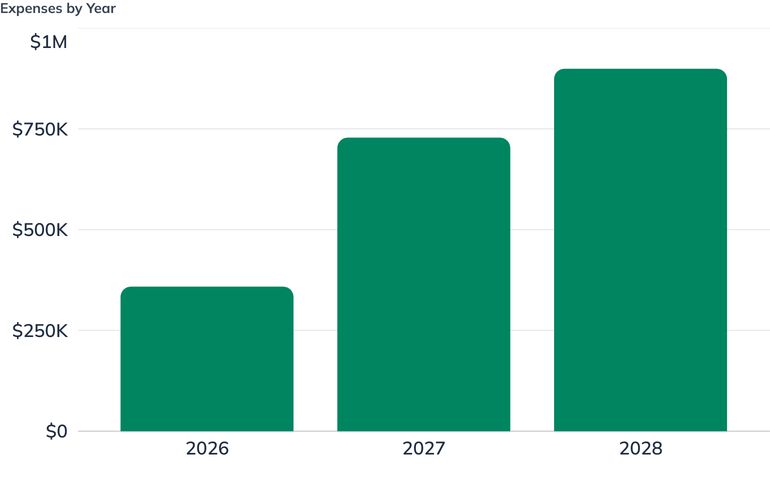
Yes. Hometown Roadside Assistance is organized as a single-member Arkansas LLC and treats business registration and licensing as a launch milestone to be completed before service begins, budgeting $3,600 a year for licensing, permits, and professional fees. Commercial auto and general liability insurance is a separate and larger line, running $10,800 in the first year and rising to $21,600 by year three as the fleet grows. Requirements vary by state and city, and because this plan includes light towing rather than mechanical service only, it's worth confirming with your state whether a tow or wrecker operator permit applies on top of standard business registration.
Hometown Roadside Assistance earns revenue three ways: on-demand pay-per-call service for drivers who want help without a subscription, low-cost monthly memberships sold through the app — including a discounted University of Arkansas student and staff tier — and 12-month B2B fleet service contracts billed at a flat monthly rate scaled to fleet size. Because the work is labor and dispatch rather than parts and inventory, direct costs stay low and the plan projects a 75% gross margin across all three years. The mix matters as much as the total: memberships and fleet contracts provide recurring, predictable income, while on-demand calls supplement it and act as the conversion point where first-time customers are offered a membership.
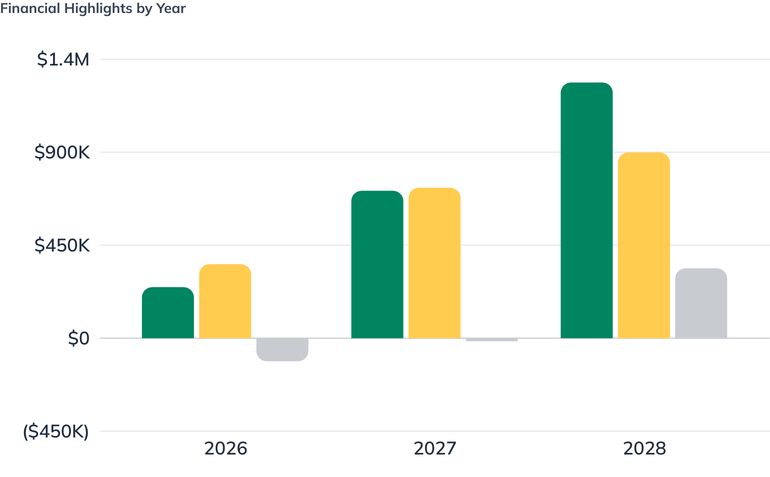
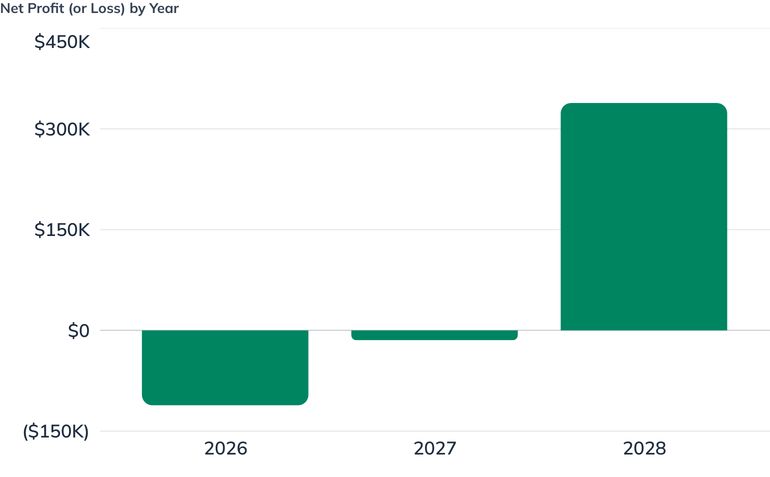
Hometown Roadside Assistance projects a net loss of $111,463 in its first year as the fleet, technology, and payroll go in ahead of call volume. By year two the business turns an operating profit of $37,779, though interest on the term loan keeps the bottom line just below break-even at a $14,482 net loss. Year three is the inflection point, with revenue reaching $1,237,296 and net profit of $338,382. The funding is deliberately sized with extra cushion to absorb a slower revenue ramp, so the company can reach a stable cash position without a second funding round.
The difference is who actually shows up. AAA dispatches through independent contracted tow companies spread across a wide multi-state territory, and platforms like Urgent.ly and Honk operate as a software and dispatch layer connecting drivers to whichever contracted local provider is free — so service quality varies call to call, and no one owns the response time. Hometown Roadside Assistance owns its trucks and employs its technicians inside a Northwest Arkansas–only radius, which is what makes a 30-minute average response something it can commit to rather than estimate. Customers still get the live tracking and digital payment they'd expect from a national app, because the company owns that technology too.
Hometown Roadside Assistance targets three segments. Everyday Northwest Arkansas commuters are the largest addressable group and the base for on-demand and membership pricing, exposed to routine breakdowns across the corridors connecting Fayetteville, Springdale, Rogers, and Bentonville. University of Arkansas students, faculty, and staff form a price-sensitive, mobile-first segment that traditional auto clubs underserve, many driving older vehicles far from home. Local business fleets — landscaping crews, delivery operators, home service and trade companies — make up the third, and are the most motivated buyers, since every hour a van sits disabled is lost revenue.
Fleet contracts are sold consultatively rather than through the app. An inbound inquiry or outreach leads to a needs assessment covering fleet size, vehicle types, and typical usage patterns, followed by a proposal setting a guaranteed response window and a flat monthly rate scaled to the fleet. Agreements run 12 months with simple monthly invoicing and renew automatically unless canceled, and fleet customers get priority dispatch, a dedicated account contact, and documentation of every service call for their insurance and maintenance records. Sarah Whitfield and Marcus Delgado handle these sales directly in the early years to build the relationships firsthand, with a milestone of signing the first 10 local fleet contracts by March 2027.

Business Plan Outline
Start your plan