





General Motor Freight Trucking Business Plan


Business Plan Summary
This general motor freight trucking business plan example features Timely Trucking, a Portland, Oregon medium- and long-haul dry van carrier that pairs a company-owned fleet of employee drivers with a client-facing digital tracking and scheduling platform to compete on reliability rather than price. It covers a phased fleet buildout from three to eight trucks, a diversified truckload, LTL, and fuel-surcharge revenue model, FMCSA regulatory compliance, and a five-year financial forecast funded by founder equity, equipment loans, and a working-capital facility. Use it as inspiration for your own plan, and read our guide on how to write a trucking business plan for step-by-step advice. Download a free business plan template to get started, or browse more business plan examples.
Timely Trucking
Executive Summary
Timely Trucking is a new medium- and long-haul dry van trucking company based in Portland, Oregon and founded by veteran entrepreneur Jim Kerrigan. Timely Trucking serves manufacturers and distributors across the Pacific Northwest—initially Washington and Oregon, expanding to Idaho, Montana, and Wyoming—with reliable freight hauling and logistics management. The company differentiates itself on two fronts: an uncompromising on-time record, and a client-facing digital platform that gives shippers real-time visibility into every load and lets them integrate their own order systems directly with Timely Trucking's scheduling. A company-owned fleet staffed by employee drivers—rather than contracted owner-operators—keeps service quality under the company's direct control.
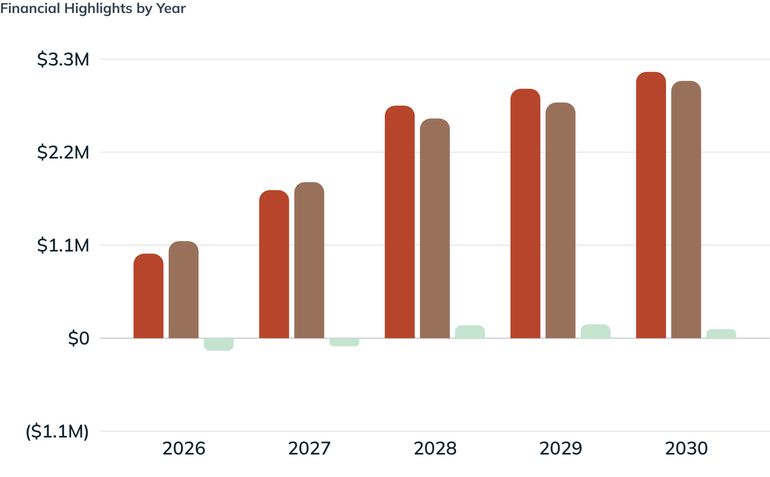
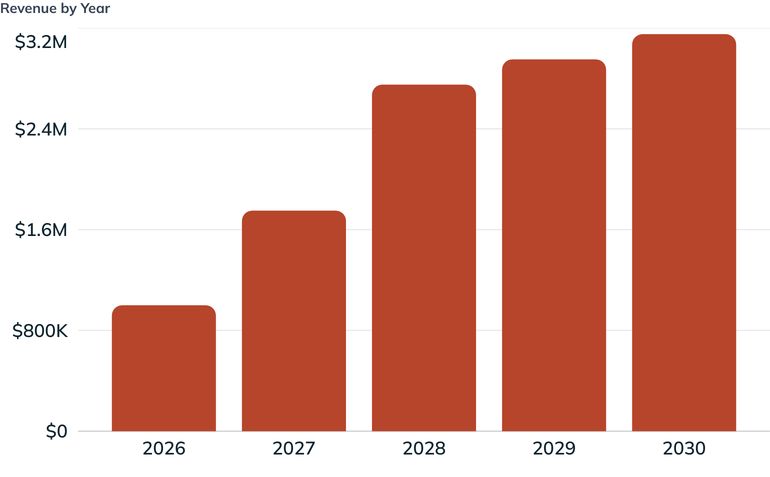
Timely Trucking launches on approximately $870,000 of founding equity, contributed largely by founder Jim Kerrigan with participation from outside investors, supplemented by equipment loans for the fleet and a working-capital facility to bridge the ramp. The company launches with three 18-wheelers and scales to eight trucks and a team of ten drivers by the end of Year 2, financing the added trucks with equipment loans as revenue grows. Revenue is earned across truckload, less-than-truckload, fuel-surcharge, and accessorial streams, growing from about $1.0 million in Year 1 to $3.15 million by Year 5.
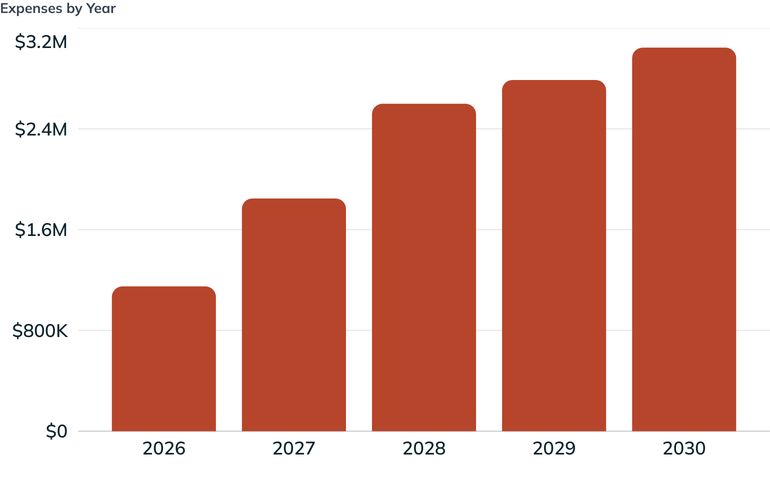
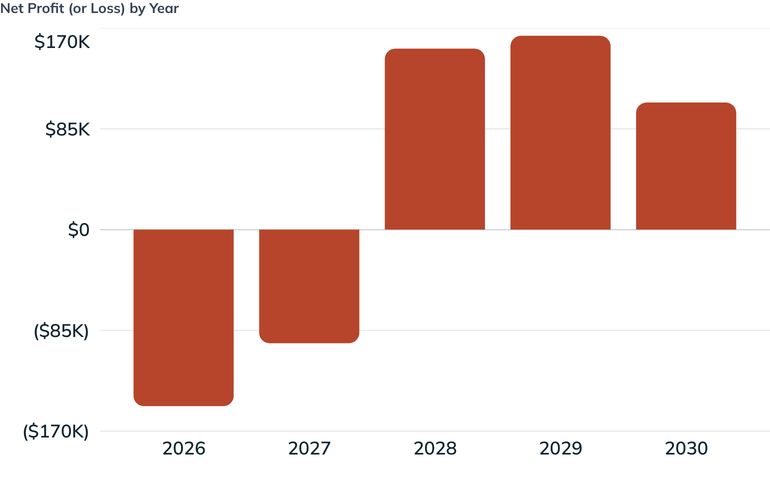
As a capital-intensive, fleet-owning carrier, the business runs at a loss in Years 1 and 2 while it assembles the fleet and builds utilization; it turns profitable in Year 3 and generates the mid-single-digit net margins characteristic of a well-run asset-based trucking company. Beyond the plan horizon, the company will expand to additional operating bases across the Northwest and add refrigerated and temperature-controlled capacity, and is ultimately positioned for acquisition by a national carrier seeking to establish or deepen operations in the Pacific Northwest.
Mission
Timely Trucking simplifies distribution for Northwestern businesses, becoming the partner they rely on to move goods efficiently and predictably. We combine logistics management, on-time deliveries throughout the Northwest, and close partnerships with distribution and warehousing operators to keep our clients' supply chains moving.
Objectives
Timely Trucking serves businesses across the Northwest United States (Washington, Oregon, Idaho, Montana, and Wyoming) with truck-based distribution services. Over its first three years, the company will:
- Establish operating bases in Portland, Seattle, Spokane, Boise, Billings, and Cheyenne
- Grow the fleet to eight 18-wheelers with dry van trailers
- Build a workforce of ten full-time truck drivers
- Reach an on-time delivery rate above 98%
- Turn profitable by Year 3 after a deliberate two-year fleet-buildout phase
Keys to Success
The keys to success in the trucking business are:
- Reliable communication and real-time load visibility connecting drivers, dispatch, and clients
- Setting delivery schedules that can be met—managing expectations as carefully as trucks
- Recruiting, training, and retaining safe, dependable drivers in a tight labor market
- Understanding what each client is trying to achieve and designing the right distribution solution to build long-term, recurring relationships
- Disciplined compliance and safety management to protect margins, insurance costs, and the company's operating authority
- Sufficient working capital to fund the fleet-buildout years and the gap between invoicing and collection
Need real financials? We recommend using LivePlan as the easiest way to create financials for your own business plan.Create your own business plan

Opportunity
Problem Worth Solving
Northwestern manufacturers and distributors depend on reliable medium- and long-haul freight to keep supply chains moving. Late or missed deliveries can stall production lines, empty retail shelves, and force businesses to carry excess inventory as a buffer against uncertainty.
Many growing manufacturers cannot justify purchasing and maintaining their own fleet of 18-wheelers. They need a carrier that combines on-time performance, transparent tracking, and logistics expertise—without the overhead of building trucking operations in-house. Timely Trucking addresses this gap for businesses across Washington, Oregon, Idaho, Montana, and Wyoming.
Our Solution
Timely Trucking will offer the following services for businesses in the Northwest:
- Pick-up and delivery of goods with a minimum per-delivery weight of 20,000 lbs from and to locations in its geographic range by 18-wheeler trucks hauling dry van trailers
- Both less-than-truckload (LTL) and full truckload (TL) services
- Online tracking information detailing the location of all GPS-tagged trucks and the status of deliveries, including expected arrival times for pick-up or delivery
- Phone support for all customer questions, delivery changes, and scheduling
- Preferred client services including online accounts, regular shipping schedules, or linking of client order information directly to Timely Trucking's scheduling software for seamless logistics
To maintain competitiveness in its core services, Timely Trucking will not initially offer storage/warehousing, packaging and crating, or flatbed hauling. In the future, the company will add temperature-controlled shipping to expand its customer base.
Trucks are operated by qualified, safety-trained drivers with spotless records. A dedicated suite of software and communication systems supports the logistical management described above.
Market Overview
The American commercial trucking industry is the backbone of domestic freight, moving roughly three-quarters of the nation's freight by weight and generating close to $900 billion in annual gross freight revenue, according to the American Trucking Associations. Trucks link raw-material suppliers, manufacturers, wholesalers, distributors, and retailers across virtually every sector of the economy.
Industry structure and economics
The industry spans dry van, flatbed, refrigerated, and bulk/tank equipment, operating over short-haul (up to about 100 miles), medium-haul (100–250 miles), and long-haul (250+ miles) distances. Timely Trucking competes in medium- and long-haul dry van service in the Pacific Northwest—the most common trailer configuration and the workhorse of general freight, serving everyone from packaged-goods and grocery shippers to apparel, building products, and high-tech equipment manufacturers, plus commercial relocations.
The for-hire trucking market is highly fragmented. More than 500,000 for-hire carriers are registered with the Federal Motor Carrier Safety Administration, and the vast majority—around 95%—operate ten or fewer trucks. The largest national carriers together control only a minority of the market. Freight moves either as truckload (TL), in which a trailer is dedicated to a single shipper's cargo, or less-than-truckload (LTL), in which one truck consolidates freight from several shippers with multiple stops. This structure means a disciplined regional operator can compete effectively against national carriers by offering faster turnaround, closer relationships, and service tailored to a defined local market—advantages large carriers struggle to match on smaller regional accounts.
Industry profitability hinges on operational efficiency: revenue per mile, truck and driver utilization, deadhead (empty-mile) percentage, fuel economy, and maintenance discipline. Large carriers hold advantages in fuel purchasing, fleet scale, and driver access; smaller carriers win on responsiveness and niche service. Note that this market excludes parcel couriers such as UPS and FedEx, as well as private fleets that carry only their owner's goods.
Market conditions and trends
Several forces shape the market Timely Trucking is entering:
- Capacity cycles. Freight demand is cyclical, tracking consumer spending and manufacturing output. After the freight-rate softness of 2023–2024, capacity has tightened as underpriced carriers exited, creating room for well-run new entrants with disciplined cost structures.
- The driver shortage. The industry faces a persistent shortage of qualified drivers and high turnover, making recruiting, pay, and retention a strategic priority rather than an afterthought.
- Digitization. Electronic logging devices (ELDs) are now universally mandated, telematics and GPS visibility are standard expectations, and digital freight-matching platforms and load boards (DAT, Truckstop) have reshaped how shippers and carriers find each other. Shippers increasingly expect real-time tracking and self-service portals as table stakes.
- Regulation and safety. FMCSA Hours-of-Service rules, CSA safety scoring, and rising insurance costs reward carriers with clean safety records and penalize those without.
- Sustainability. On the West Coast in particular, California's Advanced Clean Fleets framework and broader emissions rules are pushing fleets toward renewable diesel, improved fuel efficiency, and, over time, zero-emission vehicles—a trend Northwestern carriers must plan around.
Customers that require frequent dry van shipping generally operate standard loading docks sized for the common 53-foot dry van (roughly 8'6" wide and 9' high interior), which keeps Timely Trucking's equipment broadly compatible with its target customers' facilities.
Target Market Segment Strategy
Timely Trucking will win its market by starting narrow and expanding deliberately, rather than trying to serve every shipper in five states from day one.
Beachhead: Washington and Oregon manufacturers
The company's initial focus is small and mid-sized manufacturers in Washington and Oregon—the segment with the sharpest need for what Timely Trucking offers. These businesses ship regularly enough to need dependable freight, but not so much that they can justify buying, staffing, and maintaining their own fleet of 18-wheelers. They are underserved by national carriers (too small to be a priority account) and poorly served by spot-market brokers and owner-operators (too inconsistent for production-critical freight). For them, an affordable, reliable, tech-enabled regional carrier is a genuine upgrade.
By anchoring in the dense manufacturing corridors of the Willamette Valley and the Puget Sound region first, Timely Trucking can build route density, keep deadhead miles low, and earn a reputation for reliability in a concentrated geography before extending its lanes.
Deliberate expansion
After establishing itself in Washington and Oregon during Year 1, the company extends into Idaho, Montana, and Wyoming as fleet size and base infrastructure grow. Serving manufacturers in the middle of the supply chain naturally introduces Timely Trucking to the suppliers who ship to them and the wholesalers and distributors who buy from them—creating warm expansion into adjacent segments without the cost of separate marketing campaigns.
Some adjacent demand falls outside the initial service model: raw-material suppliers often need flatbed or bulk/tank equipment Timely Trucking will not operate at launch, and larger wholesalers frequently run their own private fleets. These segments will still yield opportunistic business—particularly wholesalers needing overflow capacity at peak—but manufacturers remain the primary target and the foundation of the company's recurring revenue.
Market Segmentation
Timely Trucking's addressable market across the five-state Northwest region breaks into three broad customer segments, each with distinct shipping needs and buying behavior. Together they represent thousands of potential shippers—more than enough demand to support a fleet scaling from three to eight trucks and beyond—so the company's constraint is capacity and reliability, not market size.
Manufacturers — primary target
Manufacturers are the core of Timely Trucking's strategy. They frequently outsource distribution of finished goods and often ship on regular, predictable lanes—for example, moving packaged product from a plant to a single wholesaler or distribution center on a recurring schedule. That regularity is exactly what makes them ideal preferred-account customers: dependable, repeatable freight that rewards a carrier who shows up on time every time. The Northwest's manufacturing base spans food and beverage, wood and paper products, apparel, and technology hardware, giving the company a diverse rather than concentrated demand base.
Raw-material suppliers
Suppliers ship large quantities of materials—including packaging supplies—into manufacturers. These loads generally do not require refrigeration or temperature control, fitting Timely Trucking's dry van equipment. Manufacturers typically keep some on-site inventory and have scheduling flexibility on inbound deliveries, except when demand forecasts miss and supplies run low, at which point reliable expedited capacity becomes valuable. Some of this freight requires flatbed or bulk equipment the company will not operate initially, so this segment is a secondary rather than primary focus at launch.
Wholesalers and distributors
Wholesalers and distributors serving large retailers assemble truckloads from the many manufacturers they represent. Many operate their own fleets, but smaller firms—and those that deliberately limit capital tied up in trucks—outsource some or all of their hauling. Others need supplemental capacity when they are running at or above their own fleet's limits but are not ready to invest in expansion. Both situations create opportunities for Timely Trucking to provide contract or overflow capacity.
Across all three segments, the market grows steadily with regional population, manufacturing output, and e-commerce-driven distribution demand—a stable, expanding base rather than a boom-or-bust niche.
Competitors
Timely Trucking competes in a fragmented market against several tiers of carriers, along with alternative freight modes.
Competitive landscape
- National truckload carriers such as Knight-Swift, J.B. Hunt, Schneider, and Werner have enormous scale, broad networks, and fuel-purchasing power, but they prioritize large national accounts and long lanes over smaller regional shippers.
- Regional Northwest carriers such as May Trucking (Salem, OR), Central Oregon Truck Company (Redmond, OR), System Transport (Boise, ID), and Oak Harbor Freight Lines (Auburn, WA) compete directly for regional freight and understand the local lanes. These are Timely Trucking's most direct competitors.
- Independent owner-operators number in the hundreds of thousands nationally and compete aggressively on price, though they typically lack the systems, capacity, and reliability guarantees that recurring shippers value.
- Digital freight brokers and load boards—C.H. Robinson, Uber Freight, and marketplaces like DAT and Truckstop—match shippers with capacity but insert an intermediary between the shipper and the truck, offering less accountability and relationship continuity than a dedicated carrier.
Timely Trucking also competes indirectly with rail (BNSF, Union Pacific) and air cargo. For the medium- and long-haul distances it serves across the Northwest, trucking holds a decisive advantage given limited rail density in the region and the door-to-door speed and flexibility rail cannot match.
How shippers choose a carrier
Shippers evaluate carriers on a consistent set of factors, and Timely Trucking is built to win on the ones that matter most to its target customers:
- On-time and accurate delivery track record — the single most important factor for manufacturers whose production lines and customer commitments depend on freight arriving as promised
- Price per mile, including fuel surcharges and accessorial charges
- Capacity reliability — the assurance that a truck will actually be available when needed, which spot-market brokers and owner-operators cannot always guarantee
- Logistics partnership and value-added services — the willingness to understand a client's operation and manage scheduling, visibility, and preferred-account relationships on their behalf
- Safety and compliance record — a strong FMCSA CSA score and clean insurance history, which large shippers increasingly require of their carriers
- Digital visibility — real-time tracking and self-service account access, now an expectation rather than a differentiator
Timely Trucking's strategy is to lead on reliability, partnership, and visibility—the factors smaller shippers care about most—rather than competing as the lowest-cost option.
Execution
Market Plan Overview
Timely Trucking's go-to-market strategy rests on three pillars that reinforce one another:
- Build a technology-enabled service that drives recurring, preferred-account business. The client platform—real-time load visibility, a self-service account portal, and direct integration with customers' order systems—is the hook that converts one-off shippers into contracted, recurring relationships and raises switching costs.
- Earn a reputation for reliability that commands a premium. By consistently delivering on time, Timely Trucking positions itself to earn revenue per mile modestly above the regional average—competing on dependability and partnership rather than on price.
- Win the beachhead first. Concentrated marketing and sales aimed at Washington and Oregon manufacturers in the first wave builds route density and reference customers before the company extends its lanes into Idaho, Montana, and Wyoming.
Every marketing, sales, technology, and operational decision described in the sections that follow is oriented around these three pillars.

The Efficiency-Driven Executive
VP of Operations
A strategic leader focused on bottom-line profitability and regional expansion across the Pacific Northwest. They view logistics as a competitive advantage and are willing to pay a premium for reliability that prevents costly production line stoppages.
Priorities
- Reducing total cost of ownership in the supply chain
- Ensuring 98% or higher on-time delivery for key distributors
- Mitigating risks associated with fragmented carrier networks
Evaluation Criteria
- Historical on-time performance data
- Financial stability and fleet ownership model
- Scalability to support expansion into Idaho and Montana
Pain Points
- Production delays caused by late raw material arrivals
- High inventory carrying costs used as a buffer against carrier unreliability
- Lack of accountability from brokers using inconsistent owner-operators
Common Objections
- Contract rates are significantly higher than current spot market averages
- Concerned about the small initial fleet size of only three trucks
“I do not just buy miles; I buy the certainty that our production schedule will not be derailed by a late truck.”

The Dock Optimizer
Warehouse & Shipping Manager
The boots-on-the-ground leader who manages daily loading and unloading. They advocate for carriers who respect appointment windows and employ professional drivers, as this directly impacts their team's productivity and safety.
Priorities
- Maximizing dock door utilization and throughput
- Maintaining a safe and compliant loading environment
- Reducing driver detention time and associated fees
Evaluation Criteria
- Driver professionalism and employment status (W2 vs. Contractor)
- Equipment maintenance standards and trailer cleanliness
- Responsiveness of dispatch to last-minute scheduling changes
Pain Points
- Unprofessional drivers from 'no-name' carriers causing dock safety issues
- No-show drivers leaving the warehouse team standing idle
- Dirty or damaged trailers that are rejected upon arrival
Common Objections
- New carriers often provide great service for a month then fall off
- Concerned about training the warehouse staff on another new scheduling portal
“I need drivers who know our facility and show up when they say they will, so my team is not standing around waiting.”

The Digital Integrator
Logistics & Transportation Manager
A data-driven professional tasked with modernizing the company's shipping workflows. They are responsible for 87% of the company's supply chain digitization efforts and prioritize vendors who offer seamless technical integration.
Priorities
- Eliminating manual track-and-trace phone calls
- Integrating carrier data directly into the corporate ERP system
- Improving supply chain visibility for the sales and customer service teams
Evaluation Criteria
- API and EDI integration capabilities
- Real-time visibility portal user experience
- Quality of automated reporting and performance analytics
Pain Points
- Spending 4+ hours daily on manual status updates with dispatchers
- Inaccurate ETA data from carriers that do not use real-time GPS tracking
- Difficulty reconciling invoices with actual delivery performance
Common Objections
- Worried about the internal IT resources required for system integration
- Skeptical if the digital platform is as 'real-time' as marketed
“If I have to call a dispatcher to find out where my freight is, the system is fundamentally broken.”
Competitive Edge
Timely Trucking's competitive edge comes from the combination of four reinforcing strengths—no single one of which is unique, but which together are difficult for competitors to replicate for the company's target customers.
On-time reliability as the organizing principle
The company is built end to end around on-time, accurate delivery. Scheduling discipline, communication systems, driver incentives, maintenance practices, and marketing all point at this one promise. For a manufacturer, a load that arrives hours late can idle a production line or blow a customer commitment—so a carrier they can genuinely count on is worth more than the cheapest quote. Timely Trucking makes that dependability its brand.
A client-facing technology platform
Timely Trucking's digital platform lets preferred clients align their operations with the company's scheduling automatically—submitting orders, seeing real-time truck location and ETAs, and pulling delivery and billing history without a phone call. Integrating a shipper's own order or ERP system directly into Timely Trucking's scheduling creates a seamless logistics workflow that basic freight haulers and spot-market brokers simply do not offer, and it meaningfully raises the cost of switching to a competitor.
Company-owned fleet and employee drivers
Rather than contracting owner-operators, Timely Trucking owns its trucks and employs its drivers. This keeps equipment condition, driver training, safety standards, and service consistency under the company's direct control—so the business can actually deliver on the reliability it promises, rather than depending on third parties it cannot fully manage.
Regional focus and safety discipline
As a Northwest specialist, the company knows its lanes, keeps deadhead miles low, and gives smaller shippers the attention national carriers reserve for their largest accounts. A deliberate investment in safety and compliance—maintaining a strong FMCSA CSA score—protects insurance costs and operating authority while reassuring quality-conscious shippers, turning a regulatory obligation into a competitive asset.
Marketing Strategy
Timely Trucking's marketing goal is to rapidly build awareness among manufacturers in Washington and Oregon in Year 1, then extend that awareness into Idaho, Montana, and Wyoming as the company grows. Its positioning is deliberate: not the cheapest carrier, but the most reliable one, backed by technology that helps clients manage their own logistics better. Smaller shippers in particular respond to the message that they will be a priority account with Timely Trucking rather than a rounding error at a national carrier.
Marketing is digital-first and B2B in character, matched to how shipping and logistics decision-makers actually research carriers today:
- Website and search. A professional website optimized for search engines is the hub of demand generation, capturing manufacturers searching for regional freight carriers. The site doubles as a lead-generation and conversion tool—clear calls to action invite prospects to request a quote or a call, and every inquiry is tracked and routed to sales. Ongoing SEO and a well-maintained Google Business Profile keep the company visible for local and lane-specific queries.
- Paid search. A Google Ads campaign targets high-intent queries such as "Portland dry van carrier" and "Pacific Northwest freight," scaled up at launch and dialed back as organic rankings mature.
- Load boards and carrier directories. Verified profiles on DAT, Truckstop, and industry directories put Timely Trucking in front of shippers and brokers actively sourcing capacity, and help fill backhauls to reduce deadhead miles.
- LinkedIn and content. Targeted LinkedIn outreach and content aimed at operations, supply-chain, and logistics managers builds credibility and feeds the sales pipeline; case studies and on-time performance data make the reliability claim concrete.
- Email nurture. Prospects who inquire but aren't ready to switch carriers are kept warm with a light-touch email sequence until their current contract lapses or a service failure creates an opening.
- Industry associations and events. Rather than broad print advertising, the company invests selectively in Northwest manufacturing and logistics organizations—groups such as OMEP (Oregon Manufacturing Extension Partnership), Impact Washington, and regional shipper councils—and attends targeted trade events where its buyers gather. These are chosen as intentional B2B channels, not default spending.
- Referrals and public relations. A referral program rewards satisfied preferred-account clients, and press outreach around the launch and the company's technology-enabled account management amplifies reach at low cost.
Sales Plan
Timely Trucking sells through direct, consultative relationships rather than transactional spot bidding—the approach best suited to winning recurring, preferred-account freight from manufacturers.
Who sells, and when
Jim Kerrigan, CEO, personally manages sales for the first three months, drawing on the relationships and industry knowledge he built running his previous warehousing business. He hires a sales/marketing associate in month four to expand prospecting and support once the initial pipeline is established. Kerrigan continues to lead the largest accounts and partnership discussions as the company grows.
The sales process
- Prospect. Work a targeted list of manufacturers across Washington and Oregon, starting with small and new businesses that may not yet have an established carrier relationship and are most open to switching.
- Qualify and discover. Meet decision-makers—in person where it matters—to understand each shipper's lanes, volumes, dock constraints, and pain points, rather than leading with a rate quote.
- Propose a solution. Match the shipper to the right mix of TL/LTL service, scheduling, and preferred-account features, positioning Timely Trucking's reliability and visibility platform against their current carrier's weaknesses.
- Onboard and integrate. Set up the client's portal account and, for preferred clients, integrate their order system with Timely Trucking's scheduling so recurring freight flows automatically.
- Retain and grow. Use a CRM (such as HubSpot) to manage the pipeline and account activity, review on-time performance with clients regularly, and expand share of their freight over time. Recurring preferred accounts are the retention engine of the business.
Revenue model
Revenue is earned across four distinct streams, reflecting how a dry van carrier actually bills:
- Truckload (TL) freight — the core of the business (roughly 70% of revenue): full trailers dedicated to one shipper, priced per mile by lane.
- Less-than-truckload (LTL) freight (~12%) — consolidated freight from multiple shippers, priced by weight, class, and distance.
- Fuel surcharge (~15%) — a DOE-indexed pass-through billed on top of linehaul, which recovers most (not all) of the company's fuel cost.
- Accessorial & detention fees (~3%) — detention, layover, extra stops, and special handling.
Growth model
Growth is driven by capacity and utilization, and it comes in two phases:
- Years 1–2 — fleet expansion. The primary growth lever is adding trucks and drivers: the fleet grows from three trucks at launch to eight by the end of Year 2, and the driver team builds toward ten. Each added truck, once staffed and utilized, adds roughly $250,000–350,000 of annual revenue. This is what carries revenue from about $1.0M in Year 1 to $1.75M in Year 2 and $2.75M in Year 3.
- Years 3–5 — utilization and rate. With the fleet at its planned eight trucks, further growth comes from pushing utilization higher (more revenue-productive hours and loaded miles per truck, and lower deadhead through drop-and-hook and backhaul matching) and from modest annual rate increases as the company's on-time reputation lets it command a premium. This lifts revenue to roughly $2.95M (Year 4) and $3.15M (Year 5) without adding trucks. Beyond the plan horizon, further fleet expansion and refrigerated capacity are the next growth levers.
Detailed revenue, cost, and margin projections are presented in the Financial Plan and the Sales Forecast.
Locations and Facilities
Timely Trucking is headquartered in Portland, Oregon, chosen for its central position on the I-5 corridor and its proximity to the dense manufacturing base of the Willamette Valley and Puget Sound. The headquarters combines a modest office with a large adjacent secured yard for truck parking and staging, at approximately $4,000 per month in rent at launch (with two months' rent plus one month's security deposit required at start-up), rising as regional staging yards are added.
Initial service area: Washington and Oregon
Expansion targets: As the fleet grows, the company establishes operating and staging bases in Seattle, Spokane, Boise, Billings, and Cheyenne in addition to Portland, phased in over the first few years as service extends into Idaho, Montana, and Wyoming. These regional bases let drivers stage, rest, and reload closer to freight rather than deadheading all the way back to Portland after every job—improving truck utilization, controlling driver hours, and keeping deadhead miles low as the service area widens.
The Portland yard accommodates the launch fleet of three 18-wheelers and their trailers, with room to support the growth to eight trucks by the end of Year 2 before additional yard capacity is added at the regional bases.
Technology
Technology is central to Timely Trucking's service promise. Rather than building custom software from scratch—the slow, expensive path of a decade ago—the company assembles a modern stack from proven, hosted platforms and integrates them, keeping upfront cost modest and time-to-launch short while delivering capabilities that rival much larger carriers.
Core operating systems
- Transportation Management System (TMS). A cloud TMS (such as Rose Rocket, McLeod, or Truckstop's TMS) is the operational hub—handling order entry, dispatch, load planning, driver assignment, rating, and invoicing in one system.
- Telematics and ELD. Every truck runs a telematics/electronic-logging platform (such as Samsara or Motive) that satisfies the federal ELD mandate and Hours-of-Service rules while streaming real-time GPS location, engine and fuel data, and driver-safety events back to dispatch.
- AI-assisted routing and dispatch. Route optimization and load-matching tools reduce deadhead miles, improve on-time performance, and help fill backhauls—directly protecting margin.
- Dashcams and safety systems. AI dashcams and driver-coaching tools support the company's safety record, which in turn protects insurance costs and its FMCSA CSA score.
- Accounting integration. Completed-job billing flows automatically from the TMS into accounting software (such as QuickBooks), eliminating double entry.
Customer-facing website and portal
The website serves two audiences. For prospects, it explains the company's services and background in more depth than any brochure or ad, with clear calls to action to request a quote or speak with sales. For clients, it is a self-service account portal.
- Public site (hosted, e.g. Webflow or WordPress): homepage, an About page covering the team and mission, a Services page detailing TL/LTL options with a service-area map, and a Contact page with an inquiry form and phone support.
- Load tracking: even one-time clients can enter a delivery code to see their shipment's current location on a map, its ETA, minutes ahead of or behind schedule, and pickup/drop-off status.
- Preferred-account portal: recurring clients get richer functionality—online order submission, full shipment and billing history, recurring-schedule management, and the option to integrate their own order or ERP system directly with Timely Trucking's scheduling via API or EDI for a seamless, largely automated logistics workflow.
Because the platform is assembled from configurable, integrated SaaS tools rather than bespoke code, the one-time build is a fraction of a legacy custom development project, and the systems scale with the fleet without a major re-platforming.
Equipment and Tools
Timely Trucking's core equipment centers on its fleet, the technology mounted in each truck, and the shop and office that keep the operation running.
Vehicles and trailers
- Trucks: three new 18-wheelers at launch—approximately $150,000 each (roughly $120,000 for the tractor and $30,000 for a 53' dry van trailer)—scaling to eight trucks by the end of Year 2. The company buys new rather than used to maximize uptime, protect its on-time promise, and avoid the escalating maintenance and breakdown risk of aging equipment.
- Additional trailers: beyond the trailer that comes with each tractor, the company buys extra dry van trailers so it can run a drop-and-hook operation—leaving a loaded or empty trailer at a customer's dock rather than waiting for it to be loaded or unloaded. This keeps tractors and drivers productive and is standard practice for reliable regional freight; it means the trailer count runs ahead of the tractor count.
- Fuel efficiency and emissions: trucks are spec'd for fuel economy (aerodynamic packages, current-generation clean-diesel engines) and run on renewable diesel where available across the West Coast—reducing both fuel cost and emissions exposure ahead of tightening Advanced Clean Fleets requirements. The company will evaluate battery-electric tractors for short-haul regional lanes as the technology and charging infrastructure mature.
- Forklifts: three forklifts at roughly $25,000 each at launch (one per truck) for dock and yard handling.
In-cab technology
- Telematics/ELD hardware in every truck for compliance, real-time GPS tracking, and delivery status
- AI dashcams and driver-safety hardware
- Ruggedized mobile devices connecting drivers to dispatch, navigation, and electronic proof-of-delivery
Shop and office
- In-house repair equipment and tools (roughly a $25,000 budget) for routine maintenance the company keeps in-house to control cost and turnaround, supplemented by contracted service for major work
- Office computer equipment, communication systems, and the TMS, accounting, scheduling, and resource-management software described in the Technology section
- Office furniture and light equipment
Trucks, trailers, and major equipment are capitalized and depreciated over their useful lives; the detailed schedule appears in the Financial Plan.
Milestones
Create Brand & Sales Materials Budget: $5,000. Department: Marketing. Develop brand identity, sales collateral, and case-study templates for digital and in-person use. | JK Completed |
Secure Operating Authority & Insurance Department: Operations/Compliance. Obtain USDOT and MC authority, UCR, IRP/IFTA registration, Form 2290, and commercial auto, cargo, and liability insurance. | COO Completed |
Build Prospect & Target Account List Budget: $1,000. Department: Sales. Compile a targeted list of Washington and Oregon manufacturers for outreach. | JK Completed |
Launch Website & Customer Portal Budget: $10,000. Department: Technology/Marketing. Configure hosted website, TMS, telematics/ELD, and the self-service tracking and account portal. | JK Completed |
Take Delivery of Launch Fleet Department: Operations. Purchase and outfit three new 18-wheelers with dry van trailers, telematics/ELD, and dashcams. | COO Completed |
Begin Revenue Operations Department: Operations. Onboard initial drivers and run the first billable loads with the launch fleet. | COO Completed |
Launch Digital Marketing Presence Budget: $5,000. Department: Marketing. Establish SEO, Google Business Profile, load-board profiles (DAT/Truckstop), and LinkedIn outreach. | JK Completed |
Launch Paid Search & Social Ads Budget: $10,000. Department: Marketing. Run Google Ads and paid social targeting high-intent regional freight queries. | JK Completed |
Launch Press Release Budget: $2,000. Department: Marketing. Announce the company launch and its technology-enabled preferred-account management. | JK Completed |
Exhibit at First Industry Event Budget: $10,000. Department: Marketing. Exhibit at a Northwest manufacturing or logistics trade event to build pipeline. | JK Completed |
Hire Sales/Marketing Associate Department: Sales. Hire the sales/marketing associate in month four to expand prospecting after the CEO's initial direct sales period. | JK Completed |
Sign 25th Preferred Account Department: Sales. Reach 25 recurring preferred-account clients on the tracking-and-scheduling platform. | JK Sept 30, 2026 |
Expand Fleet & Open Seattle Base Department: Operations. Add trucks via equipment loans and establish a Seattle staging base to serve Puget Sound freight as the fleet grows toward eight trucks. | COO Dec 15, 2026 |
Extend Lanes into Idaho & Montana Department: Operations. Begin regular service into Idaho and Montana, supported by the Spokane and Boise bases. | COO June 30, 2027 |
Grow Fleet to Eight Trucks Department: Operations. Reach the eight-truck fleet by the end of Year 2, with the driver team scaling toward ten full-time drivers. | COO Dec 31, 2027 |
Key Metrics for Success
Timely Trucking manages the business against a focused set of operational and financial metrics. Because the company competes on reliability and efficiency, its key metrics track both service quality and the drivers of margin.
Service and operational metrics
- On-time delivery rate — the company's defining metric; target above 95% in Year 1, improving to above 98% by Year 3
- Fleet size — growing from three trucks at launch to eight by the end of Year 2
- Full-time drivers — scaling toward ten by Year 3 and eleven by Year 5, deliberately kept ahead of truck count so equipment can run 60+ productive hours per week without excessive driver overtime
- Truck utilization — target 60+ revenue-productive hours per truck per week; the key lever for Years 3–5 growth
- Deadhead (empty-mile) percentage — minimized through backhaul matching, drop-and-hook trailers, and regional basing
- Preferred-account clients — growing from dozens of recurring accounts in Year 1 to several hundred by Year 3
- Customer retention on preferred accounts — target roughly 90%
- Safety — maintaining a strong FMCSA CSA score and a clean accident/claims record
Financial metrics
- Net profit margin — a capital-intensive build curve: net losses in Years 1 and 2 while the fleet is assembled and utilization ramps, turning profitable in Year 3 and settling into the mid-single-digit net margins characteristic of a well-run asset-based carrier
- Operating ratio — operating costs as a share of revenue, the core trucking efficiency measure; driven down over time as revenue grows against the fleet's largely fixed cost base
- Revenue per mile and per truck — managed modestly above the regional average, reflecting the reliability premium
- Fuel cost per mile and maintenance cost per mile — the largest controllable variable costs
- Driver cost and turnover — watched closely, since driver labor is the single largest cost of service
Detailed revenue, cost, and margin figures are presented in the Financial Plan.
Regulatory Requirements
Interstate for-hire trucking is heavily regulated, and compliance is both a legal requirement and a competitive asset—shippers increasingly vet carriers on their safety and compliance standing. Timely Trucking treats regulatory management as a core operating discipline, not paperwork.
Operating authority and registration
- USDOT number and FMCSA Motor Carrier (MC) authority for interstate for-hire operation, plus designation of BOC-3 process agents in each state served
- Unified Carrier Registration (UCR) annual filing
- International Registration Plan (IRP) apportioned plates and International Fuel Tax Agreement (IFTA) decals and quarterly fuel-tax reporting for multi-state operation
- Oregon Weight-Mile Tax reporting (Oregon assesses a distinct weight-mile tax in place of diesel tax at the pump), plus applicable state permits across Washington, Idaho, Montana, and Wyoming
- Heavy Vehicle Use Tax (IRS Form 2290) filed annually per truck
Driver and safety compliance
- Commercial Driver's Licenses (CDL Class A), DOT medical certification, and Entry-Level Driver Training (ELDT) compliance for new drivers
- FMCSA Drug & Alcohol Clearinghouse enrollment and a compliant pre-employment and random testing program
- Hours-of-Service (HOS) compliance enforced through the federally mandated Electronic Logging Devices (ELDs) installed in every truck
- Systematic vehicle inspection, maintenance, and record-keeping to pass DOT and CVSA roadside inspections and audits
- Active management of the company's FMCSA CSA / Safety Measurement System (SMS) scores, which affect insurance costs, shipper eligibility, and audit exposure
Insurance
Timely Trucking carries commercial auto liability well above the FMCSA minimum for general freight (the federal floor is $750,000; the company will carry at least $1 million as shippers typically require), along with motor-truck cargo coverage, general liability, and workers' compensation.
Environmental regulation
As a West Coast carrier, the company plans around tightening emissions rules—including Oregon's adoption of California Clean Trucks standards and the broader Advanced Clean Fleets trajectory. Buying new, efficient equipment, using renewable diesel where available, and evaluating zero-emission tractors for short regional lanes keep the fleet ahead of these requirements. A designated compliance lead (initially the COO, supported by outside safety/compliance and transportation-law advisors) owns this function as the fleet grows.
Risks & Mitigation
Timely Trucking operates in a capital-intensive, cyclical, safety-sensitive industry. The company has identified its principal risks and the concrete steps it takes to manage each.
- Driver shortage and turnover. Qualified drivers are scarce and turnover is chronically high industry-wide. Mitigation: competitive pay, new and well-maintained equipment, predictable schedules and home time, a safety-first culture, and a fleet sized with more drivers than trucks so no single departure strands a truck.
- Fuel-price volatility. Fuel is one of the largest and most variable costs. Mitigation: fuel surcharges indexed to the DOE diesel price passed through to customers, fuel-efficient equipment, renewable diesel where cost-effective, and routing optimization to cut empty miles.
- Insurance-cost inflation and liability exposure. Commercial auto insurance costs have risen sharply, driven partly by large "nuclear" verdicts. Mitigation: a rigorous safety program, AI dashcams and telematics-based driver coaching, disciplined maintenance, and a clean CSA score that qualifies the company for better rates.
- Freight-rate cyclicality and recession. Freight demand and spot rates swing with the broader economy. Mitigation: emphasizing contracted, recurring preferred-account freight over volatile spot loads, keeping a lean fixed-cost structure, and financing fleet growth incrementally so capacity tracks demand.
- Customer concentration. Over-reliance on any single shipper is a vulnerability. Mitigation: deliberately diversifying the book of business across manufacturers, suppliers, and distributors so no one account dominates revenue.
- Accidents and safety incidents. A serious incident can threaten cargo, reputation, insurance standing, and operating authority. Mitigation: thorough driver screening and training, in-cab safety technology, preventive maintenance, and continuous monitoring.
- Equipment breakdowns and maintenance. Downtime directly undermines the on-time promise. Mitigation: buying new equipment under warranty, a preventive-maintenance program, in-house capability for routine repairs, and contracted service for major work.
- Regulatory change. Emissions mandates, HOS rules, and tax requirements evolve. Mitigation: dedicated compliance ownership, outside legal and safety advisors, and a fleet strategy that anticipates cleaner-vehicle requirements rather than reacting to them.
- Technology and data security. The TMS and customer portal hold sensitive operational and client data. Mitigation: reputable hosted platforms with strong security practices, access controls, and regular backups.
Pricing
Timely Trucking prices to reflect its positioning: a reliable, technology-enabled carrier worth a modest premium over the cheapest available capacity, not a discounter chasing the spot market to the bottom.
Pricing structure
- Truckload (TL): priced per mile by lane, reflecting distance, direction (loaded vs. likely deadhead return), equipment demand, and season. Base rates are benchmarked continuously against current market indices (such as DAT lane rates) and set modestly above the regional average to reflect the company's reliability and service premium.
- Less-than-truckload (LTL): priced by weight, freight class, and distance, consistent with standard LTL rating.
- Fuel surcharge: a separate surcharge indexed to the U.S. Department of Energy weekly diesel price is applied on top of base rates, insulating both the company and customers from fuel swings.
- Accessorial charges: standard add-ons for detention (waiting time at the dock), layover, additional stops, liftgate service, and similar special handling.
Preferred-account and contract pricing
Recurring preferred-account clients receive negotiated, committed-volume rates—typically modestly better than one-off spot pricing—in exchange for consistent, predictable freight. This trades a small per-load discount for the stability and higher utilization that recurring lanes provide, which is the more valuable outcome for a carrier competing on reliability.
Positioning
Timely Trucking targets revenue per mile modestly above the regional average. The premium is justified—and defended in every sales conversation—by the company's on-time record, real-time visibility platform, capacity reliability, and safety standing. The company competes on total value and dependability rather than on being the lowest bid, and walks away from freight priced below the level at which it can deliver reliably. Rates are reviewed continuously against market indices and adjusted for fuel, capacity, and seasonality.
Company
Ownership and Structure
Timely Trucking was founded by Jim Kerrigan, who previously built and, after fifteen years, successfully sold a warehousing business—giving him direct, relevant experience in logistics, operations, and the customers Timely Trucking now serves. The company was established as a sole proprietorship during its pre-launch phase and is reclassified as a limited liability company (LLC) to bring on partners and outside investors and to provide liability protection appropriate to an asset-heavy trucking operation.
Ownership structure
- Jim Kerrigan retains majority ownership as founder, contributing approximately $650,000 of equity—the large majority of the company's founding capital
- Outside investors contribute $218,000 for a minority equity stake, providing additional launch capital
- The COO partner may earn up to 10% of shares by meeting performance milestones, with additional equity available if the COO contributes capital
Together, founder and investor equity of about $868,000 funds the launch fleet, forklifts, trailers, startup costs, and a working-capital reserve; the fleet expansion in Years 1 and 2 is financed through equipment loans against the trucks, supplemented by a working-capital loan, as detailed in the Financial Plan.
Management and location
Timely Trucking is headquartered in Portland, Oregon, and led by Jim Kerrigan as CEO with a Chief Operating Officer partner. Initial operations cover Washington and Oregon, expanding to Idaho, Montana, and Wyoming as the fleet grows. The management team and personnel plan are detailed in the following sections.
Start-up Summary
Launching Timely Trucking requires roughly $868,000 in founding equity, the large majority of which goes into the trucks and trailers themselves. The remaining requirements fall into start-up expenses, other assets, and a working-cash reserve to carry the business through its launch-and-ramp period.
Start-up expenses
- Legal — entity formation, client and partner contract templates, and risk-limiting counsel
- Licenses, permits, and operating authority — USDOT and MC authority, UCR, IRP/IFTA registration, Form 2290, and state permits (fuel-tax reporting, IRP tags, MC number, IFTA decals, Oregon weight-mile registration)
- Insurance — first-period premiums for commercial auto liability, cargo, general liability, and workers' compensation
- Rent — two months' rent plus one month's security on the Portland office and truck yard
- Website and systems setup — configuring and integrating the hosted TMS, telematics/ELD, customer portal, and public website. Because the platform is built from hosted SaaS tools rather than custom-developed from scratch, this is a modest one-time cost—well below the cost of a legacy custom build.
- Branding and launch marketing — website content, brand materials, and initial campaigns
- Office computer and communication equipment
Start-up assets
- Long-term assets — three new 18-wheelers (approximately $150,000 each), additional dry van trailers for drop-and-hook operation, three forklifts (approximately $25,000 each), plus in-house repair equipment and tools, in-cab telematics hardware, and office furniture. The company buys new to protect uptime and its on-time promise and to avoid the maintenance risk of aging equipment.
- Other current assets — office supplies, software, and light equipment
- Working-cash reserve — cash to fund operations through the launch-and-ramp period and to provide a lean buffer if early targets slip
The company owns its trucks and trailers rather than relying on owner-operators, trading higher upfront capital for the direct control over service quality that its reliability positioning demands. A detailed breakdown of these requirements and how they are funded appears in the Financial Plan's Use of Funds and Sources of Funds sections.
Management Team
Timely Trucking is led by an experienced operating team, deliberately kept lean at launch and expanded as the fleet grows.
Leadership
Jim Kerrigan — Founder & CEO. Kerrigan sets the company's strategic direction and personally leads sales and marketing in the early stage. He built and ran a warehousing business for fifteen years before selling it, giving him firsthand knowledge of logistics operations, customer relationships, and the discipline required to run an asset-heavy business profitably.
Chief Operating Officer (partner). The COO runs day-to-day operations, finance, human resources, procurement, and compliance. This partner earns up to 10% of the company's equity by meeting performance milestones, with additional equity available if they contribute capital. The COO owns the safety and regulatory-compliance function that is critical to a carrier's insurance costs and operating authority.
Core team
- Administrator / dispatch operator — manages dispatch, load scheduling, driver communication, and customer service from the Portland base, reporting to the COO
- Sales/marketing associate — hired in month four to expand prospecting and manage marketing execution, reporting to the CEO
- Truck drivers — the front line of the company's on-time promise, beginning with a small team at launch and growing to roughly ten full-time drivers by Year 3
Planned hires as the company scales
As the fleet expands beyond its launch size, Timely Trucking anticipates adding a dedicated safety & compliance manager, additional dispatch capacity, and eventually regional base coordinators to support operations across the five-state footprint. Driver recruiting and retention is treated as an ongoing, strategic responsibility shared by the COO and dispatch, given the industry's persistent labor shortage.
Personnel Plan
Timely Trucking's personnel plan scales headcount with fleet size, keeping the office team lean while building the driver workforce that is the heart of the operation.
Office and management team
- CEO (Jim Kerrigan) — strategy, sales, and marketing at launch; compensation grows as the business matures
- COO — operations, finance, HR, procurement, and compliance
- Administrator / dispatch operator — dispatch, scheduling, and customer service
- Sales/marketing associate — hired in the fourth month, after the CEO has personally run sales and marketing for the first three months
Driver workforce
Drivers are the company's largest and fastest-growing labor group, and they scale directly with the fleet:
- The team builds toward ten full-time drivers by Year 3 and eleven by Year 5, hired in step with truck deliveries (three trucks at launch growing to eight by the end of Year 2).
- The company deliberately maintains more drivers than trucks so each truck can run 60+ revenue-productive hours per week while keeping individual driver hours within safe, compliant Hours-of-Service limits.
- Driver pay is modeled as direct cost-of-service labor (it is billed against freight and belongs economically in cost of goods sold), carrying full employer payroll burden. Total driver wages scale from roughly $230,000 in Year 1 to about $715,000 by Year 5 (base, before burden), reflecting both headcount growth and rising per-driver pay in a competitive labor market.
- Recruiting and retention are treated as an ongoing strategic priority, with a dedicated recruiting-and-training budget, given the industry's persistent driver shortage.
Planned hires as the company scales
As the fleet matures, the company anticipates adding a dedicated safety & compliance manager and additional dispatch capacity, and eventually regional base coordinators to support operations across the five-state footprint.
Advisors
Timely Trucking supplements its lean internal team with a small group of outside advisors whose expertise is essential in a heavily regulated, capital-intensive industry:
- Transportation attorney — advises on FMCSA operating authority, interstate compliance, client and partner contracts, and liability protection
- CPA / fractional CFO — handles tax strategy (including IFTA, weight-mile tax, and Form 2290 filings), financial reporting, and the loan and equity structuring behind the fleet expansion
- Safety & compliance consultant — helps establish the driver-safety, drug-and-alcohol, and Hours-of-Service programs and prepares the company for DOT audits and a strong CSA score
- Commercial trucking insurance broker — structures the auto-liability, cargo, and workers' compensation coverage and advises on the safety practices that lower premiums over time
- Industry mentor / informal advisory board — an experienced carrier operator who can provide guidance on scaling operations, driver recruiting, and eventually positioning the company for acquisition
These relationships give Timely Trucking access to specialized knowledge without the overhead of full-time hires, and they strengthen the company's credibility with lenders, insurers, and larger shipper accounts.
Financial Plan
Revenue
Need real milestones? Establish a clear path for your business with real-world examples.Create your own business plan
Expenses & Costs
Need real milestones? We recommend using LivePlan as the easiest way to create milestones for your own business plan.Create your own business plan
Profitability
Need actual charts? We recommend using LivePlan as the easiest way to create graphs for your own business plan.Create your own business plan
Use of Funds
Founding equity of approximately $868,000 is put to work at launch across three uses:
- Start-up expenses (~$55,000–65,000): legal and LLC formation, operating authority and permits (USDOT/MC, UCR, IRP/IFTA, Form 2290), first-period insurance premiums, initial rent and security deposit, brand and website/systems setup, and office and communication equipment.
- Launch long-term assets (~$670,000): three new 18-wheelers at approximately $150,000 each ($450,000), a set of additional dry van trailers for drop-and-hook operation (~$120,000), three forklifts at approximately $25,000 each ($75,000), and $25,000 for shop tools, in-cab telematics hardware, and office furniture.
- Working-capital reserve: the balance seeds operations through the launch period.
Fleet expansion—one additional truck in Year 1 and four more in Year 2, reaching eight trucks—is financed with equipment loans covering about 90% of each $150,000 truck, with the balance paid from cash and operating cash flow. This keeps the business debt-free on its initial three trucks and adds debt only as the fleet grows.
Working capital
Because Timely Trucking invoices customers on credit terms while paying drivers, fuel, and truck loans currently, and because a fleet-owning carrier runs at a loss during its two-year buildout, the equity above is supplemented by a $325,000 working-capital loan drawn in early Year 2. This funds the cash gap between invoicing and collection and carries the business to profitability in Year 3, after which it is repaid from operating cash flow. Total committed funding across the plan is approximately $1.87 million; the detailed sources appear in the Sources of Funds section.
Sources of Funds
Timely Trucking is funded with a combination of founder and investor equity, truck financing, and a working-capital facility.
Equity
Founding equity totals approximately $868,000:
- Jim Kerrigan (founder investment): approximately $650,000
- Outside investor equity: $218,000
This equity covers the launch fleet, forklifts, trailers, start-up costs, and initial reserves, so the business begins operations debt-free on its initial three trucks.
Truck financing (loans)
Fleet expansion is financed with three-year equipment loans at approximately 6% interest, each covering about 90% of a truck's $150,000 price (roughly $135,000 per truck), drawn only as trucks are added:
- Year 1: $135,000 — one additional truck
- Year 2: $270,000 — two additional trucks
- Late Year 2: $270,000 — two additional trucks (reaching eight)
Working-capital facility
Because freight is a credit business—customers pay on net terms while drivers, fuel, and truck payments must be paid currently—the company draws a $325,000 working-capital loan (approximately 7% over five years) in early Year 2. This bridges the cash gap created by two years of fleet-buildout losses and by the lag between invoicing customers and collecting from them, keeping cash positive throughout the ramp. It is repaid from operating cash flow as the business turns profitable in Year 3.
Total committed funding across the plan is approximately $1.87 million, appropriate for a capital-intensive business that owns its fleet rather than relying on owner-operators.
Projected Statements
Key Assumptions
General assumptions
- Plan horizon: five years, beginning January 2026, modeled month by month
- Income tax: effective corporate rate of about 27%; as an LLC, income passes through to the owners. Early-year losses create loss carryforwards that offset tax in the first profitable years.
- Sales and purchases on credit: customers are invoiced on net terms (freight is a credit business), and major purchases are made on trade credit, so cash lags revenue and expense—reflected in the working-capital modeling.
- Depreciation: trucks on a 10-year straight-line schedule (~$1,250/month per truck); trailers over ~15 years; forklifts and shop equipment over ~7 years
- Preferred-client retention: approximately 90% annually
Revenue drivers
- Fleet: three trucks at launch, growing to eight by the end of Year 2 (one added in Year 1, two in Year 2, two in late Year 2); held at eight through Year 5
- Driver workforce: scaling with the fleet toward ten full-time drivers by Year 3 and eleven by Year 5
- Utilization: revenue-productive miles per truck rise as drivers are hired and route density improves; deadhead falls through drop-and-hook and backhaul matching
- Rate: modest annual increases supported by the company's on-time reliability premium
- Revenue mix: Truckload ~70%, LTL ~12%, fuel surcharge ~15%, accessorial/detention ~3%
- Seasonality: revenue follows the freight cycle—softer in January and February, building through spring, peaking in the late-summer to early-fall shipping season (roughly August–October), and dipping in late December. Rather than flat monthly averages, the forecast is built month by month, so revenue grows gradually within each year and the seasonal pattern flows through to cost of service, driver overtime, maintenance, and the bad-debt allowance, which all move with volume.
Cost assumptions
Direct costs (cost of service) are modeled as specific line items rather than a single blended percentage:
- Fuel — ~26% of revenue (partly recovered by the fuel-surcharge revenue stream)
- Tolls, scales & permits — ~2.5% of revenue
- Cargo claims & insurance deductibles — ~0.8% of revenue
- Driver wages — modeled as direct (cost-of-service) labor carrying full employer payroll burden, scaling from about $230,000 in Year 1 to $715,000 in Year 5 (base wages)
Operating expenses include rent, insurance, truck maintenance (rising as the fleet ages), marketing, utilities, licenses/permits, software/telematics, professional fees, driver recruiting and training, office and communications, bank/merchant fees, and a bad-debt allowance appropriate to a credit-terms business. Fleet-driven and volume-driven costs grow smoothly month over month with the fleet and the season; genuinely fixed costs are held level.
Exit Strategy
Timely Trucking is built from the outset to become an attractive acquisition target. The company's primary planned exit is a sale to a national or super-regional carrier seeking to establish or deepen operations in the Pacific Northwest—a common and well-understood transaction in a fragmented industry where large carriers routinely acquire well-run regional operators to gain lanes, customers, drivers, and established terminals faster than they could build them.
Building toward the exit
Every element of the strategy compounds into acquisition value:
- Recurring, contracted revenue from preferred accounts, which a buyer values far more than volatile spot freight
- A clean safety and compliance record (strong CSA scores, sound insurance history), which reduces a buyer's diligence risk
- A company-owned fleet of newer equipment and established operating bases across five states
- A technology platform and integrated customer relationships that would take an acquirer time and money to replicate
- A defined regional footprint that plugs directly into a national network
Timeline and alternatives
The company targets a three-to-five-year horizon to reach the scale, revenue mix, and operating history that make it a compelling acquisition. Should market conditions favor a different path, alternatives include a sale to a private-equity buyer pursuing a trucking roll-up, or continuing to operate independently and returning profits to owners and investors through distributions while expanding into refrigerated and temperature-controlled service.
In each scenario, outside investors are repaid and rewarded through the eventual sale of the business or through profit distributions, with the acquisition path offering the clearest route to a meaningful return on their initial equity.
Frequently Asked Questions
A trucking business plan should cover the market opportunity and competitive landscape, a clear fleet and equipment plan, and the regulatory framework a for-hire carrier must operate under. Timely Trucking's plan lays out a phased buildout from three to eight dry van trucks, FMCSA operating authority and driver compliance requirements, a truckload/LTL/fuel-surcharge revenue model, and a five-year financial forecast showing exactly when the fleet turns profitable.
In Timely Trucking's plan, launching requires roughly $868,000 in founding equity, the bulk of which goes toward three new 18-wheelers at about $150,000 each, additional drop-and-hook trailers, forklifts, and a working-capital reserve. Growing the fleet to eight trucks by the end of Year 2 is financed separately through equipment loans, and a working-capital loan bridges the cash gap created by customer credit terms during the buildout.
Yes. Timely Trucking's plan details the full stack of interstate motor carrier requirements: a USDOT number and FMCSA Motor Carrier authority, Unified Carrier Registration, IRP and IFTA registration for multi-state operation, Oregon's weight-mile tax reporting, and Heavy Vehicle Use Tax filings, plus Class A CDLs, DOT medical certification, and FMCSA Drug & Alcohol Clearinghouse enrollment for every driver.
Timely Trucking earns revenue across four streams: truckload freight priced per mile by lane (about 70% of revenue), less-than-truckload freight priced by weight and distance (about 12%), a fuel surcharge indexed to the weekly DOE diesel price (about 15%), and accessorial charges like detention and extra stops (about 3%). Rates are set modestly above the regional average, reflecting the carrier's on-time reliability premium rather than competing on price.
In this plan, Timely Trucking runs at a net loss through Years 1 and 2 while it finances and staffs the buildout from three to eight trucks, then turns profitable in Year 3 as the larger fleet spreads fixed costs across more revenue-producing capacity. By Year 5, revenue reaches roughly $3.15 million with mid-single-digit net margins, typical for a well-run, asset-based regional carrier.
Timely Trucking differentiates on two fronts rather than price: an uncompromising on-time delivery record, and a client-facing digital platform that gives shippers real-time load visibility and lets them integrate their own order systems directly with the company's scheduling. It also owns its trucks and employs its drivers rather than contracting owner-operators, which keeps equipment condition, training, and service quality under direct company control.
Timely Trucking targets manufacturers and distributors across the Pacific Northwest, starting in Washington and Oregon and expanding into Idaho, Montana, and Wyoming as the fleet grows. These are shippers with regular medium- and long-haul dry van freight needs who are too small to be priority accounts for national carriers, but who need more consistency and visibility than owner-operators or spot-market brokers typically provide.
The plan deliberately staffs ahead of the fleet, growing from a launch team toward ten full-time drivers by Year 3 and eleven by Year 5 so each truck can run 60-plus revenue-productive hours a week without pushing drivers past safe Hours-of-Service limits. Driver wages are modeled as a direct cost of service tied to freight volume, and the company runs its own recruiting and training budget given the industry's persistent driver shortage.

Business Plan Outline
Start your plan