





Child Care Business Plan


Business Plan Summary
This child care business plan example features Sunshine Grove Child Care, a full-service center in Salem, OR built around a proprietary early-learning curriculum and a teacher-to-child ratio kept well below state licensing minimums. It covers the center's funding structure, enrollment and revenue projections, and its licensing and staffing approach. If your concept leans more toward a broader day care model, our day care business plan example is also worth a look. Use this plan as inspiration for your own, and read our guide on how to start a daycare business for step-by-step advice. Download a free business plan template to get started, or browse more business plan examples.
Sunshine Grove Child Care
Executive Summary
Sunshine Grove Child Care is a full-service child care center for toddlers ages three to five, serving double-income professional families in Wichita, KS who want structured, developmentally rich care that goes beyond basic supervision.
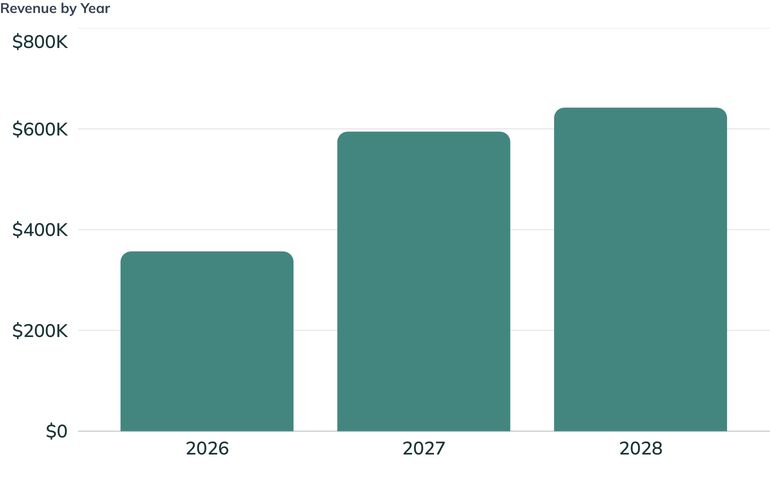
We're launching with $325,000 in startup capital — a $150,000 founder investment from Matt Ernal plus a $175,000 small-business loan — covering facility conversion, licensing, initial staffing, and working capital through the ramp-up period. We project first-year revenue of roughly $357,000 as enrollment builds from our opening class toward our 48-child licensed capacity, reaching approximately $595,000 in Year 2 and stabilizing near $642,000 annually by Year 3 as enrollment settles around 45 children (94% of capacity) with a modest waitlist. We expect to be net-profitable from our first year of operation, with net margins in the roughly 10-13% range that hold steady as enrollment fills and full food-service, staffing, and compliance costs are fully accounted for.
Our competitive edge combines rigorously trained teaching staff with Intertwined Learning Systems (ILS), a proprietary curriculum Matt developed through his Master's thesis research in the Master of Education program at Western Oregon University. Rather than teaching early literacy, motor skills, and social-emotional development as separate lesson blocks, ILS threads them together throughout each day, giving parents a program that continues — rather than pauses — the early learning they've already started at home.
Opportunity

Problem Worth Solving
Wichita's licensed child care supply has not kept pace with demand. Sedgwick County is regularly identified in Kansas child care market analyses as a "child care desert," where the number of children under six needing care outnumbers licensed slots several times over. Waitlists at established Wichita centers routinely stretch three to six months, and families relocating to the area for aerospace manufacturing, healthcare, or education jobs often start their child care search before they've finished unpacking.
For dual-income professional households — many employed by Textron Aviation, Spirit AeroSystems, Ascension Via Christi, or Wichita State University — the challenge isn't only finding an open slot. It's finding one that offers more than supervision. These parents have typically already begun shaping their child's early learning at home: reading routines, early counting and letter games, structured playdates. When they hand their child off for eight-plus hours a day, they want a program that builds on that foundation instead of putting it on pause.
Much of what's available locally falls into one of two categories: large franchise centers with standardized curricula and high staff turnover, or small home-based providers who offer warmth and flexibility but limited capacity for structured early-childhood programming. Families willing to pay for a higher tier of care — one built around an actual developmental philosophy, delivered by trained staff, with real visibility into their child's day — have few local options that meet that bar.
Our Solution
Sunshine Grove Child Care is a full-service child care and early-development center for toddlers ages three to five, built around Intertwined Learning Systems (ILS) — the curriculum founder Matt Ernal developed during his Master of Education thesis research at Western Oregon University. Instead of teaching early literacy, fine and gross motor skills, and social-emotional development in separate blocks, ILS threads them together within the same activities, so a morning circle-time story might also be a counting exercise, a vocabulary lesson, and a group cooperation exercise at once.
We back the curriculum with a staffing model built for it. Every lead teacher and assistant completes a structured certification in ILS methods before working with children, and we maintain a teacher-to-child ratio well below Kansas Department of Health and Environment (KDHE) licensing minimums for the three-to-five age group, so lessons stay hands-on rather than crowd-managed.
Because we run a full 6 a.m.–7 p.m. day, we also provide breakfast, lunch, and an afternoon snack for every enrolled child as part of tuition, prepared on-site to meet KDHE nutrition guidelines — one less thing for working parents to pack or plan around each morning.
We also give parents real visibility into a day they'd otherwise miss entirely. Daily activity summaries, photos, and digital check-in/check-out run through a parent-communication app (Brightwheel), so a parent at a Textron Aviation office or at an Ascension Via Christi facility can see what their child worked on at 10 a.m., not just get a vague recap at pickup. We're positioning Sunshine Grove as an early-learning program that happens to run full days — not a babysitting service that fills the hours until parents get home.
Market Overview
Our target customer is the dual-income, professional household in Wichita, KS raising a child between three and five years old. Both parents work full-time — commonly for Textron Aviation or Spirit AeroSystems (the region's largest private employers), Ascension Via Christi or Wesley Healthcare, Wichita State University, Wichita Area Technical College, or a growing pool of remote and hybrid professionals who still need reliable daytime coverage. These households have disposable income earmarked for child care and are willing to pay a premium for a program with a clear developmental philosophy behind it, not just a clean facility and long hours.
This segment has typically already started shaping their child's early learning at home — reading routines, early letters and numbers, structured social opportunities — and they want a center that continues that work rather than defaulting to open-ended play for eight hours a day.
Independent assessments of Kansas's child care market consistently place Sedgwick County among the more severely underserved counties in the state for children under six, and that shortage is most acute at the higher end of the market, where parents are looking for small class sizes, credentialed staff, and a defined curriculum rather than the largest available franchise center. Sunshine Grove is built specifically for this underserved segment of the market.
Competitors
We compete against three distinct types of providers in the Wichita child care market:
National franchise centers. KinderCare Learning Company operates centers in the Wichita area and represents the most direct large-scale competitor. These centers offer convenience, consistent hours, and brand recognition, but rely on standardized, corporate curricula and see comparatively high staff turnover — both frequent complaints we hear from parents touring Sunshine Grove after visiting a franchise center first.
Small, home-based providers. Home daycares are scattered throughout East Wichita, West Wichita, and the surrounding suburbs like Andover and Derby, licensed for small groups under Kansas KDHE family child care home rules. Quality varies widely, and while these providers offer warmth, flexibility, and often lower cost, few offer a formal early-childhood curriculum or the group socialization that comes with a center-based classroom setting.
Independent mid-sized centers. Locally owned centers such as Sunflower Sprouts Learning Center and Prairie Wind Academy compete on similar footing to Sunshine Grove — their own facilities, moderate group sizes, and general "play-based learning" branding — but without a named, research-grounded curriculum or the staff certification process we require before anyone works with children.
Our differentiation against all three is the same: Intertwined Learning Systems as a defined, ownable curriculum; mandatory staff certification before working with children; a low child-to-teacher ratio maintained well under KDHE minimums; and daily transparency into each child's day through our parent-communication app.
Execution
Market Plan Overview
We're concentrating exclusively on double-income working professional families in Wichita because they're the segment most able to afford full-tuition child care, most dependent on structured full-day coverage due to fixed work schedules, and most receptive to a program built around a specific developmental philosophy rather than general supervision.
Nationally, families with young children still rely on a mix of relative care, informal arrangements, and center-based care, but center-based enrollment keeps growing as more households need coverage for a full standard workday rather than a patchwork of favors and part-time help. In Wichita specifically, that shift shows up as multi-month waitlists at established centers and rising parent interest in centers that can show, day to day, what their child is actually learning — not just confirm that they were fed, napped, and kept safe.
Steady hiring at Wichita's largest employers, including Textron Aviation, Spirit AeroSystems, and the region's hospital systems, has reinforced rather than reduced the need for consistent, full-day child care. As long as Wichita continues to be a market of two-income households working standard business hours, the need for high-quality full-day care isn't going away — our market plan is built around meeting that steady, structural demand rather than a temporary spike.

The Aerospace High-Achiever
Sarah Miller
A project lead at Textron Aviation who recently relocated to Wichita. She is highly organized and views her child's early education as a critical foundation for future success, seeking a program that mirrors her own professional standards.
Age
34
Location
College Hill, Wichita, KS
Family Status
Married, 1 child (age 4)
Education
Master of Science in Aerospace Engineering
Profession
Senior Project Manager at Textron Aviation
Opportunities
- Develop a partnership with Textron and Spirit AeroSystems to offer priority enrollment or specialized billing for their executive-track employees.
- Provide a real-time app that tracks ILS curriculum milestones, giving data-driven parents visibility into daily cognitive and motor skill gains.
Pain Points
- Frustrated by 'child care deserts' where premium slots have 6-month waitlists
- Dislikes the 'babysitting' feel of large franchise centers with high staff turnover
- Anxiety over her child losing the academic progress they started at home
Needs
- A structured environment that goes beyond open-ended play
- Credentialed teaching staff who can speak technically about developmental progress
- Reliable care that aligns with corporate hours (7:30 AM - 5:30 PM)
“I'm not looking for a place to just watch my daughter; I'm looking for a partner in her development who values structure as much as I do.”

The Academic Enthusiast
Dr. Elena Rodriguez
An Assistant Professor at Wichita State University who is deeply invested in the 'how' of learning. She is specifically attracted to the proprietary ILS curriculum because of its roots in educational research.
Age
31
Location
Bel Aire, KS
Family Status
Married, 1 child (age 3)
Education
PhD in Child Psychology
Profession
Assistant Professor at Wichita State University
Opportunities
- Host evening seminars on the ILS framework to build a community of 'learning-first' parents and increase brand loyalty.
- Target the WSU workforce specifically, positioning Sunshine Grove as the intellectual choice for faculty members' children.
Pain Points
- Standardized franchise curricula that feel 'watered down' or overly commercial
- The shortage of centers that integrate literacy and motor skills fluidly
- Home-based providers who lack the resources for structured developmental programming
Needs
- Evidence-based learning outcomes that are clearly communicated
- Small class sizes and a low student-to-teacher ratio (9:1 or better)
- A center that respects and continues the early literacy routines established at home
“I want my child's day to be an extension of our intellectual life at home, not a pause from it.”

The Medical Specialist
Dr. David Nguyen
A busy healthcare professional at Ascension Via Christi whose spouse also works a demanding full-time role. They have the disposable income for premium care but struggle to find centers that meet their high standards for hygiene and curriculum.
Age
39
Location
Eastborough, Wichita, KS
Family Status
Married, 2 children (ages 3 and 6)
Education
Doctor of Medicine (MD)
Profession
Specialist Physician at Ascension Via Christi
Opportunities
- Offer a 'Bridge Program' for parents with hospital shifts that may run slightly past traditional 5:00 PM pickup times.
- Leverage the food-service and compliance standards to market the center's superior hygiene and nutritional programming to medical professionals.
Pain Points
- Difficulty finding licensed slots for 3-year-olds in a market meeting only 49% of demand
- Concerns about the lack of social-emotional focus in traditional daycare settings
- The high cost of private nannies versus the social benefits of a center
Needs
- A research-backed curriculum like ILS that justifies the premium price point
- A safe, licensed facility that exceeds state-level health and safety minimums
- Socialization opportunities for his child with peers from similar professional backgrounds
“We've spent years educating ourselves; it's vital that our son's environment is led by people who have a master's level understanding of how he learns.”
Sales Plan
Our sales strategy is built around converting a small number of high-intent local leads through trust, not broad-based advertising. Most parents shopping for child care in Wichita start the way most parents everywhere do — a "daycare near me" search — so we maintain an up-to-date Google Business Profile and website with real photos of our classrooms, our ILS curriculum explained in plain language, and an online form to join our waitlist or book a tour.
Every serious prospect gets an in-person tour of the facility during active hours, so they can see ILS running in a live classroom rather than take our word for it. Tours are unhurried, cover our staff certification process and ratios, and end with a clear explanation of enrollment steps and current waitlist timing — cautious parents want honesty about wait times more than they want to be sold.
We supplement tours with short-form video content on Instagram showing (with parent consent) snippets of classroom activities, which does double duty as marketing and as a preview of what daily updates through our parent app will look like once enrolled. We also run a modest referral incentive for current families who refer a friend, since word of mouth among Wichita's professional-parent networks (employer parent groups, neighborhood social apps, pediatrician referrals) converts far better than any paid ad we've tried. Waitlist and tour scheduling are managed through our enrollment software so no inquiry falls through the cracks during our busiest enrollment season each spring.
Locations and Facilities
Sunshine Grove operates out of a single-family home in Northeast Wichita, near the College Hill neighborhood, fully renovated and licensed specifically for child care use. The property was chosen for its residential feel — a deliberate contrast to the institutional look of larger franchise centers — combined with enough square footage to support separate classroom spaces by age and activity type: a reading and circle-time room, an arts-and-crafts space with washable flooring, and a quiet room for rest and nap time.
The fenced backyard was converted into an outdoor play yard with age-appropriate climbing and play structures that meet current playground safety standards, giving children daily outdoor time for large-muscle activity regardless of what's happening in the main classrooms. Entry is controlled through a single locked, keypad-secured front entrance, with security cameras covering entry points and outdoor play areas — both a licensing requirement and a point of comfort we highlight on every tour.
We're licensed by Kansas KDHE for a set number of children based on our square footage and staffing plan, but we intentionally staff and enroll below that ceiling to keep our child-to-teacher ratio meaningfully lower than the state minimum for three-to-five-year-olds. Hours run 6 a.m. to 7 p.m. to match the realistic commute and work schedules of double-income households, rather than the shorter hours common at school-affiliated preschool programs.
Technology
Sunshine Grove uses technology primarily for administrative efficiency and parent communication rather than as a core teaching tool — the ILS curriculum is delivered hands-on by trained staff, not through screens.
Administrative systems
- Brightwheel for enrollment management, tuition billing and autopay, daily attendance, and digital check-in/check-out
- Digital record-keeping for KDHE licensing compliance, staff background checks and certification renewals, and incident reports, kept current well ahead of state inspection windows
- AI-assisted scheduling support for staff-to-ratio planning across classrooms, so ratio compliance is checked automatically rather than tracked by hand
Parent communication
- Real-time activity updates, meal and nap logs, and photo sharing through Brightwheel, so parents can see snapshots of their child's day as it happens rather than waiting for pickup
- Text and email alerts for schedule changes, closures, and billing reminders
Educational tools
- Digital library of age-appropriate lesson plans and activity guides supporting the Intertwined Learning Systems curriculum, which lead teachers adapt week to week
- Basic audio-visual equipment for group music and movement activities
Technology supports our operations and keeps parents genuinely informed, but it does not replace the hands-on, teacher-led developmental programming that defines Sunshine Grove.
Equipment and Tools
Our equipment and facility investments fall into four categories, all sized for a licensed toddler and preschool program:
Classroom furniture and learning materials. Child-sized tables and chairs, open shelving for accessible toy and material rotation, reading nooks, sensory bins, art supplies, manipulatives, and books and materials specifically selected to support Intertwined Learning Systems activities across literacy, motor skills, and social-emotional lessons.
Outdoor play equipment. Age-appropriate climbing structures, a soft-surface fall zone meeting current playground safety standards, and loose-parts play equipment (balls, ride-on toys, sand and water tables) for daily large-muscle activity in our fenced yard.
Safety and health equipment. Childproofing throughout the facility, a stocked first-aid station and AED, fire extinguishers and a monitored smoke/fire suppression system, sanitizing supplies and a cleaning schedule that meets Kansas KDHE and health department standards, and cots and individually assigned bedding for nap time.
Technology hardware. Tablets at the front entrance for Brightwheel check-in/check-out, security cameras at entry points and outdoor play areas, and a shared classroom tablet or display for music and movement activities.
We budget for periodic replacement of consumable materials (art supplies, sensory bin contents) and age-appropriate refreshes of toys and books as our enrolled age mix shifts, rather than treating our initial equipment purchase as a one-time cost.
Milestones
Kansas KDHE facility licensing approval Receive final approval from the Kansas Department of Health and Environment (KDHE) Bureau of Child Care Licensing for the 48-child licensed capacity, confirming the facility meets all classroom, ratio, safety, and health code requirements. | Matt Ernal Mar 15, 2026 |
Facility renovation and buildout completion Complete construction and buildout of classrooms, restrooms, kitchen, and outdoor play areas, including installation of safety surfacing and classroom furniture, ahead of KDHE final walkthrough and grand opening. | Matt Ernal Apr 15, 2026 |
Grand opening and first enrollment Open Sunshine Grove Child Care to the public and welcome the first cohort of enrolled children, beginning the tuition revenue ramp toward steady-state capacity. | Matt Ernal May 15, 2026 |
Full staff ILS curriculum certification Complete Intertwined Learning Systems curriculum certification training for 100% of lead teachers and teaching assistants on staff, ensuring consistent program delivery across all classrooms. | Matt Ernal June 30, 2026 |
Steady-state enrollment reached Reach steady-state enrollment of approximately 45 children, or 94% of the 48-child licensed capacity, completing the planned 24-month enrollment ramp. | Matt Ernal Jan 15, 2028 |
Key Metrics for Success
Key metrics for success:
- Enrollment relative to licensed capacity — we're licensed for 48 children across three age-based classrooms; track enrolled families as a percentage of that capacity, targeting roughly 94% steady-state enrollment (about 45 children) with a healthy, stable waitlist beyond that
- Families to breakeven — roughly 10-11 enrolled families are needed to cover fixed operating costs at our opening staffing level; we expect to cross that threshold within the first few months of enrollment, monitored monthly during our first year
- Staff certification completion — 100% of teachers and assistants complete ILS certification before working unsupervised with children, with no exceptions
- Staff retention — track year-over-year teacher and assistant retention as a leading indicator of program quality, since turnover is the most common parent complaint about franchise competitors
- Ratio compliance — maintain a child-to-teacher ratio below Kansas KDHE's licensing minimum for the three-to-five age group at all times, not just at inspection
- Parent engagement — track daily active use of our parent-communication app as a proxy for how connected families feel to their child's day
- Net profit margin — we're targeting net margins in the roughly 10-13% range, a healthy and sustainable level once full staffing, food service, and licensing-compliance costs are properly accounted for, with Year 1 revenue near $357,000 growing to roughly $642,000 by Year 3 as enrollment stabilizes
SWOT Analysis
Strengths
- Intertwined Learning Systems: a defined, research-grounded curriculum most competitors can't replicate or claim
- Mandatory staff certification before anyone works with children, reducing the inconsistency common at franchise centers
- Low child-to-teacher ratio maintained well below Kansas KDHE minimums
- Daily parent transparency through Brightwheel, addressing a common parent frustration with "black box" child care
- Founder-operator with direct academic grounding (Master of Education, Western Oregon University) and hands-on child care experience
Weaknesses
- Single-location capacity caps near-term revenue and growth
- Heavy dependence on founder Matt Ernal for curriculum fidelity and daily operations, with no deep management bench yet
- Premium pricing narrows the addressable market to higher-income households, leaving us exposed if a target family's income changes
- No formal advisory board yet to pressure-test licensing, financial, or growth decisions
Opportunities
- Sedgwick County's persistent child care shortage means demand consistently exceeds supply at the quality tier we compete in
- Word-of-mouth and referrals within Wichita's professional-parent networks (employer parent groups, pediatrician referrals) can lower our cost of acquiring new families over time
- A waitlist once we approach capacity creates room to test modest tuition increases or add an infant/young-toddler program in a future location
- Growing parent demand for transparency and app-based communication plays directly to a system we've already built
Threats
- National franchise chains (e.g., KinderCare) can undercut on price or open new locations with more capital than we have
- Staff turnover in the broader child care labor market makes hiring and retaining certified teachers an ongoing challenge
- Regulatory changes from Kansas KDHE on ratios, facility requirements, or licensing fees could increase costs with little notice
- A downturn affecting Wichita's largest employers (aerospace manufacturing, healthcare systems) would directly reduce our target customer base's ability to pay premium tuition
Company
Ownership and Structure
Sunshine Grove Child Care is organized as a Kansas Corporation, founded and wholly owned by Matt Ernal, who also serves as director and day-to-day operator. Operating as a corporation, rather than a sole proprietorship, gives the business liability separation appropriate for a facility caring for young children, and positions us to bring in outside investors or a co-owner cleanly if we expand to a second location down the road. Matt holds 100% of ownership at this stage; no other equity has been issued.
Management Team
Matt Ernal, founder and owner of Sunshine Grove Child Care, runs daily operations and leads curriculum development. Matt earned his undergraduate degree in English from the University of Oregon, then spent three years teaching English in Indonesia, where he also cared for a local family's children in exchange for room and board — his first sustained hands-on experience with early childhood care.
Returning to the US, Matt entered the Master of Education program at Western Oregon University, focusing his thesis research on toddler development and how early skills — literacy, motor development, social-emotional growth — are best taught in connection with one another rather than in isolation. That research became the foundation for Intertwined Learning Systems, the curriculum now used throughout Sunshine Grove's classrooms.
After graduating, Matt relocated to Wichita, KS to build a business around that research rather than teach it secondhand in someone else's program, drawn by the city's underserved child care market and lower cost of doing business. He purchased and renovated the property that now houses Sunshine Grove, and has led licensing, hiring, and curriculum rollout personally. As the center grows toward capacity, Matt plans to bring on a lead teacher with center-management experience to take on more day-to-day classroom oversight, freeing him to focus on curriculum quality, staff training, and eventual expansion planning.
Advisors
Sunshine Grove Child Care does not have a formal advisory board at launch. Founder Matt Ernal draws on his Master of Education training from Western Oregon University and hands-on child care experience from Indonesia to guide curriculum and operations.
As the business grows, Matt may seek advisors with expertise in:
- Kansas child care licensing and regulatory compliance
- Small business accounting and payroll for service businesses
- Early childhood education program development
For now, day-to-day decisions are made by the owner with input from trained teaching staff.
Financial Plan
Revenue
Need real financials? Explore a spreadsheet-free path to generating financial data for your business.Create your own business plan
Expenses & Costs
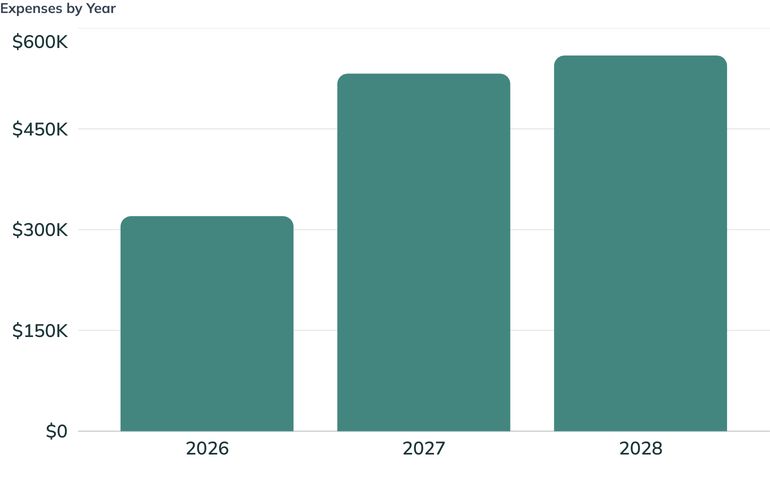
Need real financials? Explore a spreadsheet-free path to generating financial data for your business.Create your own business plan
Profitability
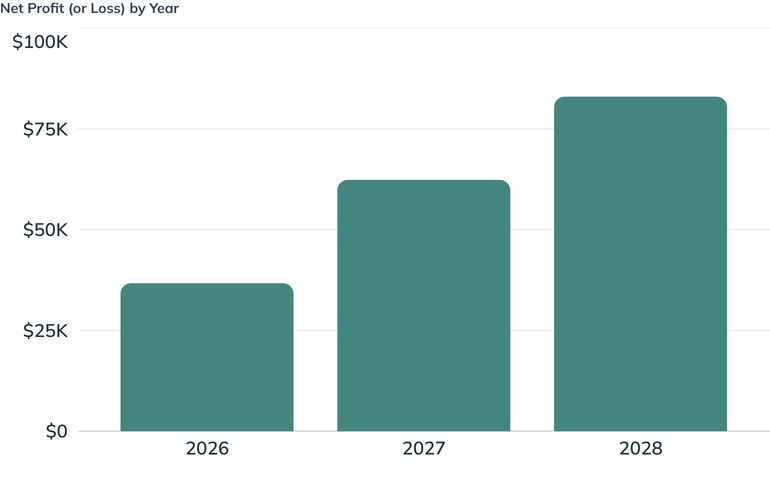
Need real milestones? Establish a clear path for your business with real-world examples.Create your own business plan
Use of Funds
Sunshine Grove Child Care will deploy the full $325,000 in start-up capital against the buildout and working capital needs of a licensed, 48-child KDHE facility. The largest single use of funds is facility renovation and buildout at $150,000, covering the construction and code work needed to convert the space into licensed classrooms, restrooms, kitchen, and outdoor access that meet Kansas KDHE requirements. Classroom furniture and learning materials account for $25,000, equipping each classroom to support the Intertwined Learning Systems curriculum across toddler through pre-K age groups. Outdoor play equipment and safety surfacing total $30,000, funding fenced, age-appropriate play structures and impact-rated surfacing required for licensing and daily outdoor programming. Safety and health equipment represents $15,000, including items such as sanitation stations, first-aid and health-check supplies, security and access-control hardware, and emergency preparedness equipment. Technology hardware is budgeted at $6,000, covering the devices and network infrastructure needed to run the Brightwheel platform for attendance, billing, and parent communication. Altogether these capital purchases total approximately $226,000. The remaining balance of roughly $99,000 is held as working capital to cover rent, payroll, and operating expenses during the enrollment ramp-up period, as the center grows from its initial opening toward its steady-state capacity of approximately 45 children by month 24.
Sources of Funds
Sunshine Grove Child Care's $325,000 in start-up funding comes from two sources. Founder Matt Ernal will contribute $150,000 as a one-time equity investment. The remaining $175,000 will be financed through an SBA start-up loan carrying a 7% interest rate on a 120-month (10-year) amortization schedule.
Funding summary (forecast)
- Owner equity investment — $150,000 at start-up (Matt Ernal)
- SBA loan — $175,000 at 7% interest, 120-month term
- Total funding — $325,000
- Interest expense — approximately $10,900 in Year 1, declining gradually each year as the loan balance amortizes
Loan proceeds and owner equity together fund the facility buildout, classroom and outdoor equipment, technology, and the working capital needed to carry payroll and operating costs through the enrollment ramp-up period. Monthly loan payments are serviced from tuition revenue once the center opens, with debt service treated as a normal fixed cost of the business alongside rent and payroll.
Projected Statements
Key Assumptions
Market assumptions
- Northeast Wichita has a concentration of dual-income professional households — employees of Textron Aviation, Spirit AeroSystems, Ascension Via Christi, and Wichita State University — who need reliable, high-quality full-day care for children ages 3-5 within a short commute of home or work
- Local demand for licensed child care capacity exceeds supply, with Kansas KDHE-licensed centers in the area frequently operating at or near capacity and maintaining waitlists
- Parents in this market are willing to pay a premium for a curriculum-driven program (Intertwined Learning Systems) with transparent, technology-enabled communication (Brightwheel) over informal or unlicensed care options
- Enrollment growth is gradual and capacity-constrained, driven by Kansas KDHE licensing requirements and staff-to-child ratios rather than by marketing spend alone
Financial assumptions (forecast)
- Revenue growth — $357,000 (Year 1) → $595,000 (Year 2) → $642,000 (Year 3), then holding flat through Year 5 as the center reaches its steady-state enrollment of approximately 45 of 48 licensed slots. Tuition is priced above Sedgwick County's blended market average (which includes lower-cost home-based care) to reflect our premium, curriculum-driven, full 6am-7pm program with meals included — but well below what a comparable center would charge in a higher cost-of-living market
- Direct costs — approximately 8.5% of tuition revenue, blending Brightwheel payment-processing fees (~2.8%), classroom supplies (~0.7%), and full meal and food service (~5%) to cover breakfast, lunch, and snacks across our 6am-7pm day
- Rent — $2,900 per month ($34,800 per year), flat — reflecting Wichita's meaningfully lower commercial and residential real estate costs relative to West Coast markets
- Salaries & wages — set at roughly 80% of comparable West Coast childcare-market pay levels, in line with the Wichita area's lower prevailing wages and overall cost of living; Lead Teachers and Teaching Assistants are still paid above the local market-average preschool-teacher wage to support our staff-certification and low-ratio model
- Marketing — front-loaded at roughly $15,000 in Year 1 to fill enrollment toward capacity, tapering to a steady-state run-rate of about $10,000-$11,000 per year once the center is near full enrollment, targeted at the dual-income professional households in the Northeast Wichita trade area
- Employee related expenses — approximately 9-10% of total salaries and wages in Year 1, covering workers' compensation and benefits, scaling up as the team and payroll grow to reach roughly $20,000 per year by Year 3
- Depreciation — approximately $24,286 per year, based on facility buildout ($150,000 over 15 years), classroom furniture ($25,000 over 5 years), outdoor play equipment ($30,000 over 7 years), safety and health equipment ($15,000 over 5 years), and technology hardware ($6,000 over 3 years)
- Income tax treatment — Kansas C-corporation, subject to federal corporate income tax plus Kansas's graduated state corporate income tax (4% base rate, plus a 3% surtax on income above $50,000, for a 7% top marginal state rate); modeled as a blended 26% effective rate on pre-tax income
- Funding structure — $150,000 founder equity investment (Matt Ernal) plus a $175,000 SBA loan at 7% interest amortized over 120 months, for total start-up funding of $325,000
Frequently Asked Questions
A child care business plan should cover your licensed capacity and classroom structure, your curriculum and staffing model, target families and local demand, startup and ongoing costs, and a revenue and profitability forecast. Sunshine Grove Child Care's plan, for example, ties its 48-child licensed capacity and staffing ratios directly to its enrollment and revenue projections. For a full walkthrough of how to structure each section, see our guide to writing a daycare business plan.
Sunshine Grove Child Care launches with $325,000 in start-up funding: $150,000 as a one-time owner equity investment from founder Matt Ernal, plus a $175,000 SBA start-up loan at 7% interest amortized over 120 months. That capital covers facility conversion, licensing, play equipment and safety surfacing, initial staffing, and working capital through the enrollment ramp-up period. Costs will vary based on your local real estate, classroom capacity, and licensing requirements.
Yes. Sunshine Grove Child Care operates under a license from the Oregon Department of Early Learning and Care (DELC), which approves its 48-child capacity and sets classroom, teacher-to-child ratio, safety, and health code requirements the center must meet before enrolling a single family. Licensing agencies and specific rules vary by state, but plan for inspections covering facility safety, staff background checks and credentials, and ongoing ratio compliance.
Sunshine Grove Child Care earns tuition revenue from enrolled families across a full 6 a.m.–7 p.m. day that includes breakfast, lunch, and an afternoon snack. Revenue is projected to grow from roughly $435,000 in year one, as enrollment builds toward the 48-child licensed capacity, to about $725,000 in year two and $783,000 by year three, once enrollment stabilizes near 45 children with a modest waitlist.
Sunshine Grove Child Care projects net profitability from its very first year of operation, with net margins holding in the low-double-digit range (roughly 11-14%) once enrollment fills and full food-service, staffing, and compliance costs are accounted for. That timeline reflects a center opening into a market with more demand than licensed supply; centers entering more competitive markets or offering infant care, which carries stricter ratios and higher staffing costs, should expect a longer runway.
Sunshine Grove Child Care differentiates on Intertwined Learning Systems (ILS), a proprietary curriculum founder Matt Ernal developed during his Master of Education thesis research at Western Oregon University. Instead of teaching early literacy, motor skills, and social-emotional development as separate lesson blocks, ILS threads them together throughout the day, and every lead teacher and assistant completes structured ILS certification before working with children. Combined with a teacher-to-child ratio kept well below state licensing minimums and a parent-communication app for daily transparency, it's a defined, ownable point of difference rather than a generic quality claim.
Sunshine Grove Child Care's target customers are dual-income, professional households in Salem, OR raising a child between ages three and five, where both parents work full-time — commonly for the State of Oregon, Salem Health, Kaiser Permanente, or Willamette University — and need reliable, high-quality full-day care within a short commute of home or work. These families are willing to pay for structured, developmentally rich programming rather than basic supervision.
Sunshine Grove Child Care leans on its captive audience of enrolled families rather than broad advertising: a referral incentive rewards current parents who refer a friend, since word of mouth travels fast through Salem's professional-parent networks like employer parent groups, neighborhood social apps, and pediatrician referrals. Daily classroom updates through the parent-communication app also double as marketing, giving prospective families a preview of what enrollment looks like before they ever tour the center.

Business Plan Outline
Start your plan