




Day Care Business Plan


Business Plan Summary
This day care business plan example features Safe Kids Day Care, a licensed day care center in Lynn, Massachusetts that wins working families away from big chains like KinderCare and Bright Horizons with lower staff-to-child ratios and pricing 5-10% below the competition. It covers target market and competitive positioning, a marketing plan built around referrals and local search presence, and a $115,000 funding plan for a 12-child facility. For a related example, see our child care business plan, and read our guides on how to start a daycare and how to write a daycare business plan for step-by-step advice. Download a free business plan template to get started, or browse more business plan examples.
Safe Kids Day Care
Executive Summary
Problem
Dual-income households are now the norm rather than the exception, and finding a day care provider that combines genuine safety, low staff-to-child ratios, and an affordable price point remains difficult for working families in the Lynn, Massachusetts area. Many parents are forced to choose between large corporate chains with impersonal, high-ratio classrooms and informal, unlicensed arrangements that lack consistency and oversight.
Solution
Safe Kids Day Care gives working parents a licensed, professionally run day care center that feels like an extension of home. We keep our staff-to-child ratios well below the state maximum, run thorough background checks and ongoing training for every caregiver, and price our full-time and part-time enrollment 5-10% below the large national chains serving our market.
Market
Safe Kids Day Care serves families within roughly a 10-mile radius of Lynn, on Boston's North Shore, enrolling children from six weeks through pre-kindergarten. We offer both full-time and part-time/drop-in enrollment so we can serve full-time working couples as well as parents with variable schedules.
Competition
The Greater Boston day care market includes a mix of large national chains — KinderCare and Bright Horizons among them — and smaller, independently owned centers. The national chains compete on brand recognition and scale, but Safe Kids Day Care competes on a lower staff-to-child ratio, licensed and background-checked staff, and pricing that consistently undercuts the big chains by 5-10%.
Why Us?
Parents choose Safe Kids Day Care because they can see and feel the difference: fewer children per caregiver, daily communication through our parent app, and a facility designed and licensed specifically for early childhood care — at a price that beats the corporate alternatives.
Expectations
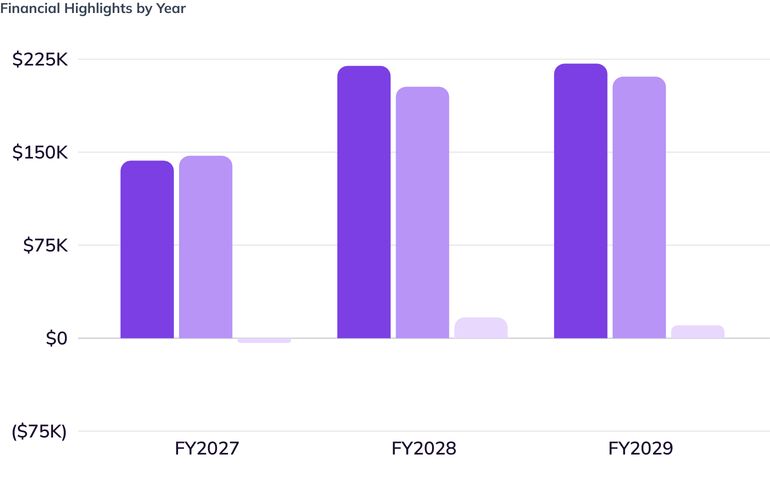
We expect a modest operating loss during our Year 1 ramp-up as enrollment builds toward capacity, reaching sustained profitability in Year 2 and growing margins from there as enrollment stabilizes near full capacity.
Forecast
Safe Kids Day Care is a licensed day care center serving working families in Lynn, Massachusetts. We expect enrollment and revenue to ramp steadily through Year 1, reach sustained profitability in Year 2, and grow toward a healthy operating margin by Year 3 as we approach full enrollment capacity.
Need impressive charts? Discover the simplest way to create detailed graphs for your business plan.Create your own business plan
Financing Needed
We are seeking $230,000 in startup financing: $80,000 in direct owner investment from our two founders and a $150,000 small-business loan. These funds cover facility build-out and safety renovations, classroom furniture and equipment, licensing and permits, our security deposit, and working capital through our Year 1 ramp-up period.
Opportunity
Problem Worth Solving
The day care market in the greater Boston area is competitive and fragmented. Families choosing a provider generally weigh two very different options: large regional and national chains that offer brand recognition and standardized programs, and smaller, independently owned and operated centers that offer more personal attention but less name recognition. Nationally, a handful of the largest day care operators account for a substantial and growing share of enrollment, but the majority of centers — including most of those serving the Lynn area — remain small, locally owned operations with capacity in the range of 20-40 children, well below what the large chains can host at a single location.
For working parents, the core problem isn't a lack of options — it's finding a provider that is simultaneously affordable, close to home, licensed and safety-compliant, and staffed with caregivers who genuinely know their child. Large chains often win on convenience and marketing but lose on staff-to-child ratio and price; informal or under-licensed providers may be affordable but lack the consistency and oversight parents need to feel confident leaving their child there every day.
Our Solution
Safe Kids Day Care succeeds by offering the children in our care a safe, secure environment and close personal attention, at a price that beats the large corporate chains. Our goals are dual-sided: help parents feel confident about their child's care, and make every day safe, educational, and fun for the child.
Target Market
Safe Kids Day Care focuses on meeting the day care needs of families within roughly a 10-mile radius of Lynn, Massachusetts. We enroll children flexibly on either a full-time or part-time basis, from infants through pre-kindergarten age.
Full-Time Working Couples
Our primary focus is building a large, stable base of full-time enrolled families to establish a healthy, consistent revenue base and long-term business stability. Customer relationships are central to our model — keeping parents confident and satisfied is what keeps their children enrolled and turns families into referral sources.
Part-Time Families and Drop-Ins
Part-time families and drop-in care make up a meaningful secondary share of enrollment. While this isn't our primary focus, maintaining enough flexibility to serve this segment adds valuable supplemental revenue without compromising our core full-time program.
Market Overview
Market Analysis
The prevalence of dual-income households continues to drive steady, structural demand for day care services. Families need a place for their children that is not just supervision, but genuine, safe, developmentally-focused care — and that demand shows no sign of slowing in the Lynn and greater Boston market.
Competitive Landscape
The local day care market includes both large national chains, such as KinderCare and Bright Horizons, and a larger number of smaller, independently owned centers. The national chains compete well on brand recognition and marketing reach. Safe Kids Day Care competes differently: we maintain a lower staff-to-child ratio than the large chains, which resonates strongly with parents, and we price our full-time and part-time care 5-10% below the average of the large commercial chains serving our area.
Competitive Advantages
Our competitive edge starts with full compliance: every required state license and certification, maintained proactively rather than reactively. We also run thorough pre-hire background checks on every staff member before they are ever alone with a child.
Keys to Success
Keys to success for the company include:
- Maintaining a reputable and untarnished reputation in the community.
- Consistently high-quality, attentive care.
- Competitive, transparent pricing.
- Flexible full-time and part-time hours that fit real working schedules.
Competitors
Current Alternatives
Families in the Lynn area choose between large national day care chains, such as KinderCare and Bright Horizons, and a larger number of smaller, independently owned local centers. The national chains win on brand recognition and marketing reach, but Safe Kids Day Care competes on a lower staff-to-child ratio and pricing that runs 5-10% below the average of the large commercial chains.
Our Advantages
Our competitive edge starts with full compliance on licensing and certifications, paired with thorough pre-hire background screening on every employee. We invest more than our competitors in attracting and training great caregivers, because it's our staff who interact daily with both children and parents — and who ultimately turn a satisfied family into a loyal, referring customer.
Execution
Market Plan Overview
Marketing Strategy
Our differentiator is benchmarked customer service — a customer-centric philosophy infused throughout the organization. We invest in attracting and training the best caregivers, because they are the ones who interact daily with both children and parents and have the greatest opportunity to turn a family into a loyal, referring customer.
Digital Presence and Community Outreach
We maintain an active presence on Instagram and Facebook, sharing daily classroom moments (with parent permission), developmental tips, and enrollment updates. Our Google Business Profile and Nextdoor presence are core to how nearby families discover us, and we actively manage online reviews to build trust before a parent ever tours the facility. We also host periodic Q&A sessions where our staff answer parenting and day care questions directly, building credibility and giving prospective families a low-pressure way to get to know us before enrolling. Word-of-mouth referrals from enrolled families remain our single most effective acquisition channel, and we support it with a formal referral incentive for existing families.

The Value-Driven Healthcare Professional
Elena Rodriguez
Elena is a registered nurse working at a North Shore medical facility. As part of a dual-income household in Lynn, she is squeezed by the high cost of living and finds that national daycare chains would consume nearly 40% of her take-home pay.
Age
34
Location
Diamond District, Lynn, MA
Family Status
Married, 2 children (6 months and 3 years)
Education
Bachelor of Science in Nursing
Profession
Registered Nurse at North Shore Medical Center
Opportunities
- Implement a tiered discount for families enrolling multiple children to alleviate the massive financial burden on dual-income middle-class households.
- Offer early drop-off windows starting at 6:30 AM to accommodate healthcare shift changes common in the Lynn/Boston area.
Pain Points
- Annual childcare costs in MA exceeding $20,000 per child
- Impersonal, high-ratio environments in large corporate centers
- Waitlists for infants extending beyond 12 months at local providers
Needs
- A licensed facility that costs 5-10% less than regional averages
- Low infant-to-teacher ratios (ideally maintaining the 1:3 state minimum strictly)
- Assurance of safety through rigorous background checks
“We both work full-time to afford our home, but it feels like my entire paycheck is just being handed over to a daycare 'factory'.”

The Flexible Schedule Juggler
Jasmine Taylor
Jasmine works in the retail and service sector with a schedule that changes weekly. She struggles to find licensed care that doesn't force her into a rigid, expensive 5-day-a-week contract she doesn't always need.
Age
27
Location
Central Lynn, MA
Family Status
Single Mother, 1 child (4 years old)
Education
Associate Degree in Graphic Design
Profession
Retail Shift Lead and Freelance Designer
Opportunities
- Offer flexible 2-day or 3-day enrollment packages to capture the market of parents with non-traditional or variable work schedules.
- Provide a 'reserve-a-spot' system for occasional care needs, serving as a safer, licensed alternative to neighborhood sitters.
Pain Points
- Inability to commit to full-time tuition due to fluctuating income
- Lack of trust in unlicensed 'informal' neighborhood daycare arrangements
- Difficulty finding high-quality preschool prep that fits a part-time budget
Needs
- Flexible enrollment options that align with variable work shifts
- Affordable hourly or daily rates that beat the $24/hour average for local sitters
- A professional curriculum to prepare her child for kindergarten
“My hours change every week, and I shouldn't have to choose between a 'sketchy' home-daycare or paying for days I'm not even working.”

The Quality-Obsessed Commuter
Mark Sullivan
Mark commutes into Boston daily and is highly skeptical of 'big box' daycare centers where staff turnover is high. He prioritizes a 'home-away-from-home' feel but demands the accountability and safety of a fully licensed professional center.
Age
38
Location
Lynn/Swampscott Border, MA
Family Status
Married, 1 child (2 years old)
Education
Master of Business Administration
Profession
Operations Manager in Financial Services
Opportunities
- Utilize a dedicated parent app to provide photos and activity logs throughout the day, satisfying the need for connection during long commutes.
- Market the proactive licensing and background check protocols as a premium safety feature that outperforms informal home-care alternatives.
Pain Points
- High staff turnover at national chains leading to inconsistent care
- Anxiety regarding child safety and lack of transparency in daily activities
- Feeling like just a 'number' in a facility with 50+ children
Needs
- Small class sizes that allow for personalized developmental attention
- Direct and frequent communication with caregivers via mobile technology
- A facility designed specifically for early childhood safety and licensing
“I don't want my son just 'supervised'; I want him in a place where the teachers actually know his personality and keep me in the loop.”
Sales Plan
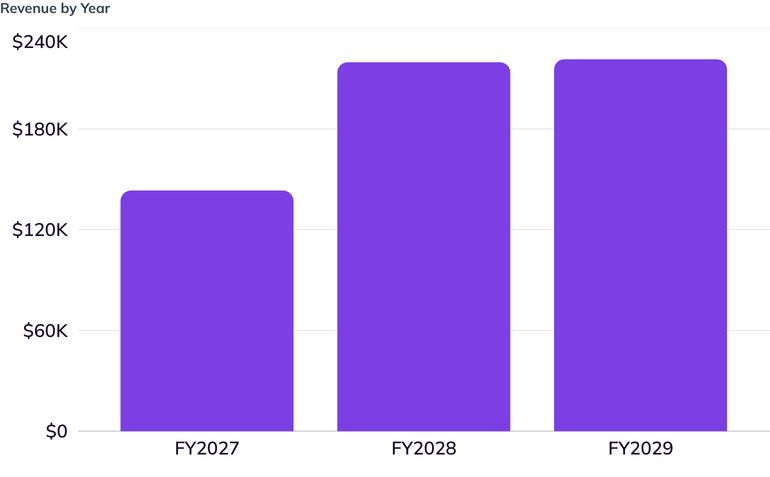
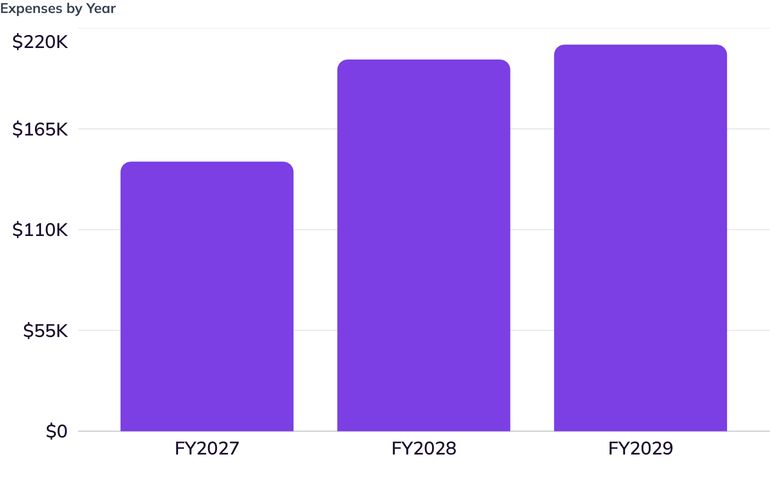
Safe Kids Day Care builds a profitable business through excellent, consistent care that keeps families enrolled and generates strong word-of-mouth referrals. As a single, 12-child licensed home facility, our revenue has a firm ceiling — growth comes from filling that capacity, not from scaling headcount indefinitely. We expect a modest operating loss in Year 1 while enrollment ramps from our first families to a waitlist-driven full roster, turning profitable by Year 2 as we approach full enrollment.
Revenue Drivers
Our revenue is driven by:
- Full-time enrollees — Up to 9 full-time slots providing consistent, predictable tuition revenue at roughly $1,750/month per child
- Part-time enrollees and drop-ins — Up to 3 part-time/drop-in slots, priced around $900/month-equivalent, providing supplemental revenue from families with flexible-hour needs
- Premium services — Optional extended hours, enrichment programs, and educational activities, offered within the same 12-child capacity
Locations and Facilities
The facility consists of a 1,300 sq. ft. house in a quiet, residential neighborhood, operated under a Massachusetts Large Family Child Care license. That license caps enrollment at 12 children on-site at any one time, which sets a hard ceiling on our revenue and staffing model — this is a single-location, in-home operation, not a multi-room commercial center. The yard is fully fenced in, to ensure no one can either come in or wander away, and is furnished with safe, entertaining toys as well as a sandbox.
Safety and Compliance
All facilities meet or exceed state licensing requirements and safety standards. The location is in a safe, family-friendly residential area that is easily accessible to working parents and provides a nurturing environment for children.
Capacity
Our 12-child capacity is split between roughly 9 full-time slots and 3 part-time/drop-in slots. Massachusetts staff-to-child ratios (approximately 1:3 for infants, 1:4 for toddlers, and 1:10 for preschool-age children) require the owner-operators plus up to two additional caregivers on-site to serve a mixed-age roster at full enrollment — staffing scales with these ratios, not simply with revenue.
Technology
Safe Kids Day Care utilizes modern, cloud-based day care management software to streamline operations, including:
- Enrollment and billing systems for efficient account management and payment processing
- Parent communication platforms for daily updates, photos, and progress reports, accessible from a parent's phone
- Staff scheduling tools to ensure proper staff-to-child ratios and coverage at all times
- Learning management systems to track developmental milestones and individual child progress
These technology solutions support our commitment to transparency, communication, and operational excellence, and let parents stay connected to their child's day in real time.
Equipment and Tools
Safe Kids will be equipped with age-appropriate furniture, educational toys, and safety equipment:
- Classroom furniture — tables, chairs, and storage designed for young children
- Educational and developmental toys — building blocks, puzzles, books, and learning materials
- Play equipment — sandbox, outdoor toys, and safe climbing structures
- Safety equipment — first aid kits, fire extinguishers, and safety gates
- Food service equipment — food preparation, serving, and storage supplies
- Cleaning and sanitation supplies — to maintain a safe, hygienic environment
All equipment is safety-tested and approved for use with children, and the facility maintains rigorous sanitation and maintenance protocols.
Milestones
Facility Opening and Licensing Secure facility location, complete build-out and safety renovations, and obtain the Massachusetts Large Family Child Care license (12-child capacity) and all required certifications before opening. Must complete before enrolled families begin in June 2026. | May 31, 2026 |
Staff Hiring and Training Andrea and Danielle complete required CDA/CPR/First Aid credentialing and state-mandated training so they can serve as the facility's qualified, hands-on caregivers from day one. Additional part-time assistant caregivers are recruited later as enrollment grows toward full capacity. | May 31, 2026 |
Enrollment Ramp-Up Build enrollment through marketing and word-of-mouth referrals to approximately 10 of our 12 licensed slots (7 full-time, 3 part-time/drop-in), approaching full capacity ahead of schedule. | Mar 31, 2027 |
Full Capacity and Year 2 Profitability Reach our full 12-child licensed capacity (9 full-time, 3 part-time/drop-in), and move from the Year 1 ramp-up loss to sustained profitability — ending Year 2 with approximately $16,800 in net profit (roughly an 8% margin), establishing Safe Kids Day Care as a stable, thriving day care business. | Dec 31, 2027 |
Sustained Growth and Scale Maintain enrollment at full 12-child capacity while growing owner and staff compensation, ending Year 3 with net profit of approximately $10,500 (roughly a 5% margin) as owner draws increase — realistic for a small, owner-operated in-home day care. With this single facility now at its licensed ceiling, evaluate whether a second, separately-licensed location is warranted to support further growth. | Dec 31, 2028 |
Key Metrics for Success
Our Key Metrics for Success:
- Enrollment — Building from a handful of founding families in Year 1 toward our full licensed capacity of 12 children (9 full-time, 3 part-time/drop-in), reached by Year 2
- Net Profit Margin — An operating loss during the Year 1 ramp-up as we build enrollment and cover launch costs, turning profitable in Year 2 at roughly an 8% margin as revenue growth outpaces costs, then moderating to roughly 5% by Year 3 as owner and staff compensation grow to reflect the business's full, stable operation — realistic for a small, owner-operated in-home day care where labor and compliance costs are a large share of revenue
- Customer Retention Rate — 85%+ in Year 1, growing to 92%+ by Year 3
- Staff Retention Rate — 85%+ in Year 1, growing to 92%+ by Year 3
- Health & Safety Record — Zero incidents, every year
These metrics ensure we maintain quality care, financial stability, and operational excellence while building a sustainable, profitable day care business within our facility's 12-child licensed capacity. Detailed revenue projections by year are available in the Financial Plan chapter.
Company
Ownership and Structure
This business will start out as a simple proprietorship, owned by its founders. As the operation grows, the owners will consider re-registering as a limited liability company or as a corporation, whichever will better suit the future business needs.
Business Structure
Safe Kids Day Care is structured to allow flexibility and growth while maintaining quality control and operational efficiency. The current proprietorship structure provides streamlined decision-making during the critical startup phase. When the business reaches scale, reorganization as an LLC or S-Corp will provide liability protection and may offer tax advantages.
Management Philosophy
Our management approach emphasizes:
- Quality-first decision making — Children's safety and development always take priority
- Employee investment — We attract and retain the best staff through competitive compensation and professional development
- Community engagement — We build lasting relationships with families and the local community
- Continuous improvement — Regular evaluation and enhancement of our programs and operations
Management Team
Safe Kids Day Care is co-owned and personally operated day-to-day by Andrea Child and Danielle Freelander. As a licensed Large Family Child Care home, Massachusetts requires the owner-operators themselves to be qualified, hands-on caregivers — not just business owners — and both Andrea and Danielle meet and exceed those requirements.
Andrea Child, Co-Owner — Curriculum & Direct Care
Andrea holds a Child Development Associate (CDA) credential and has more than eight years of hands-on experience working in licensed child care settings, including time as a lead teacher in an infant/toddler classroom at a licensed Lynn-area center. She is certified in pediatric CPR and First Aid and completes the continuing education hours Massachusetts requires of Large Family Child Care licensees each year.
Andrea leads curriculum and direct care: she designs the daily developmental activities appropriate to each age group in our mixed-age roster, oversees daily routines (meals, naps, outdoor play), tracks each child's developmental milestones, and communicates daily with parents about their child's day. She is the primary caregiver on-site during operating hours and is the lead point of contact for state licensing inspections and compliance documentation.
Danielle Freelander, Co-Owner — Operations & Enrollment
Danielle brings six years of experience in small business operations and office administration, along with her own background in early childhood settings as a part-time assistant caregiver before co-founding Safe Kids. She holds current CPR/First Aid certification and completes the same state-mandated continuing education as Andrea.
Danielle manages the business side of the operation: enrollment and tour scheduling, billing and tuition collection, marketing and the company's online presence, vendor and supply ordering, and bookkeeping. She also works directly in the classroom during peak hours and to help maintain required staff-to-child ratios, so both owners are trained, present caregivers as well as managers.
Staffing Growth With Enrollment
In the earliest months, with only a handful of children enrolled, Andrea and Danielle are able to meet Massachusetts staff-to-child ratio requirements (approximately 1:3 for infants, 1:4 for toddlers, and 1:10 for preschool-age children) largely on their own, with occasional part-time help. As enrollment grows toward our full 12-child licensed capacity, we bring on additional part-time and eventually full-time assistant caregivers — growing to roughly two additional staff by the time we reach full enrollment — so that ratios are always met or exceeded for every age group in our care, and so Andrea and Danielle can continue to focus on quality of care and business growth rather than being stretched across every function themselves. All caregivers, including any assistants we hire, complete background checks, reference checks, and required state training before ever being alone with a child.
Advisors
Safe Kids Day Care benefits from advisory support in key areas:
Financial Advisory
Our financial advisors provide guidance on tax strategy, business structure optimization, and funding strategies to support sustainable growth and maximize profitability.
Day Care Industry Expertise
Our advisors bring deep experience from leading day care organizations, providing best-practices guidance on operations, staff management, quality standards, and growth strategies.
Legal and Compliance
We maintain relationships with legal and compliance professionals who ensure we meet all regulatory requirements for day care licensing, employment law, and business operations.
Financial Plan
Revenue
Need real financials? We recommend using LivePlan as the easiest way to create financials for your own business plan.Create your own business plan
Expenses & Costs
Need real financials? We recommend using LivePlan as the easiest way to create financials for your own business plan.Create your own business plan
Profitability
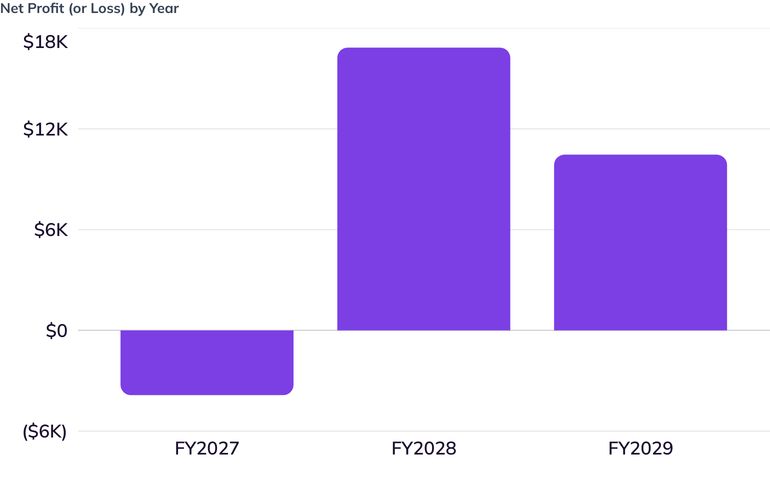
Need impressive charts? Discover the simplest way to create detailed graphs for your business plan.Create your own business plan
Use of Funds
Safe Kids will deploy initial capital strategically to establish a licensed, safe home facility for up to 12 children:
Category | Amount | Notes |
|---|---|---|
Facility Build-Out & Safety Renovations | $20,000 | Fencing, egress, safety gates, and licensing-required home modifications |
Classroom Furniture, Toys & Equipment | $9,600 | Furniture, toys, and learning materials sized for a 12-child roster |
Licensing & Permits | $4,000 | State licensing fees, required trainings/certifications, business registration |
Facility Security Deposit | $5,600 | Two months' facility rent |
Legal | $1,000 | Business formation, contracts, licensing prep |
Brochures | $350 | Marketing materials |
Stationery | $100 | Office supplies |
Activity Supplies | $250 | Classroom and educational materials |
Food Preparation Supplies | $300 | Kitchen equipment and supplies |
First Aid Supplies | $200 | Safety and emergency equipment |
Cleaning Supplies | $150 | Sanitation and maintenance supplies |
Nap Time Bedding | $250 | Furniture and bedding for children |
Other | $400 | Contingency and miscellaneous |
Total Startup Costs | $42,200 |
Capital Allocation
Our $115,000 in total funding covers:
- Startup costs ($42,200) — facility build-out, furnishings, licensing, and initial deposit/supplies
- Working capital and operating reserves (the remainder) to cover the Year 1 operating loss while enrollment ramps toward our 12-child capacity, and to maintain a healthy cash cushion during the early growth phase
This capital allocation prioritizes safety, licensing compliance, and quality while maintaining sufficient reserves for business continuity through the ramp-up period.
Sources of Funds
Safe Kids is capitalized through a combination of owner investment and a small-business loan:
Source | Amount | Details |
|---|---|---|
Owner 1 Investment | $20,000 | Andrea Child |
Owner 2 Investment | $20,000 | Danielle Freelander |
SBA Startup Loan | $75,000 | 10-year term, funds facility build-out and Year 1 working capital |
Total Capitalization | $115,000 | 35% owner-funded, 65% debt-financed |
Funding Strategy
Our owners have committed equal capital contributions of $20,000 each, demonstrating confidence in the business and alignment of interests. The remaining capital comes from a 10-year SBA startup loan, sized to cover facility build-out costs and the operating cushion needed while enrollment ramps from our first families to our full 12-child licensed capacity. This funding model:
- Preserves owner capital — Keeps owner cash contribution modest while still funding the facility properly
- Maintains control — 100% owner ownership and decision-making authority
- Matches financing to the business — A single-location, capacity-capped home day care doesn't need — or qualify for — outsized funding; the loan is sized to what this specific facility requires
- Builds a repayment track record — Establishes a lending relationship that could support future growth
Future Funding Opportunities
Once Safe Kids reaches full enrollment and demonstrates consistent profitability, the business may explore:
- Reinvested earnings — Using profits to pay down debt faster or build a larger cash reserve
- Line of credit — Establishing a credit line for short-term working capital management
- A second location or license upgrade — If demand consistently exceeds our 12-child capacity and a waitlist persists, the owners may evaluate opening a second licensed home facility or moving to a larger licensed child care center — a decision that would be modeled as a distinct, separate expansion rather than assumed within this facility's forecast
Projected Statements
Frequently Asked Questions
A strong day care business plan, like Safe Kids Day Care's, should cover your target market and licensing requirements, your staffing and staff-to-child ratio model, how you'll compete against corporate chains, a marketing plan for reaching local families, and a financial section detailing funding, startup costs, and your path to profitability. For a step-by-step walkthrough, see our guide on how to write a daycare business plan.
In Safe Kids Day Care's plan, total startup costs come to $42,200, covering facility build-out, furnishings, licensing, and an initial deposit and supplies. The center is capitalized with $115,000 total, 35% owner-funded and 65% financed through a 10-year SBA loan, with the remainder set aside as working capital to cover the Year 1 operating loss while enrollment ramps up. Actual costs vary widely by location and facility size, so treat this as one real-world data point rather than a universal figure.
Yes. Day care centers must be licensed, and requirements typically cover facility safety, staff-to-child ratios, background checks, and staff training. Safe Kids Day Care maintains ongoing relationships with legal and compliance professionals to stay current with Massachusetts day care licensing and employment law. Since requirements vary by state, check with your local department of early education before you open. Our how to start a daycare guide walks through the typical licensing steps.
Safe Kids Day Care earns most of its revenue from full-time enrollment tuition, which anchors a stable, recurring income base, supplemented by part-time and drop-in care for families with variable schedules. The business expects a modest operating loss in Year 1 as enrollment builds toward its 12-child capacity, then moves to sustained profitability in Year 2 as recurring tuition covers fixed staffing and facility costs.
Safe Kids Day Care projects a modest operating loss in Year 1 while enrollment ramps toward its 12-child capacity, reaching sustained profitability in Year 2. By Year 3, as the center nears full enrollment, margins grow toward a healthy, stable operating profit. Timelines like this depend heavily on how quickly a new center fills its available slots.
Rather than competing with national chains like KinderCare and Bright Horizons on brand recognition, Safe Kids Day Care competes on the details parents notice most: staff-to-child ratios kept well below the state maximum, background-checked and continuously trained caregivers, and full-time and part-time pricing that runs 5-10% below the big chains. Compare this positioning against our broader child care business plan to see how positioning can shift between day care concepts.
Safe Kids Day Care's core customers are dual-income, full-time working families within roughly a 10-mile radius of Lynn, Massachusetts, on Boston's North Shore, with children ranging from six weeks old through pre-kindergarten. A secondary group of part-time and drop-in families, those with variable schedules who don't need full-time care, adds supplemental enrollment without pulling focus from the core full-time base.
Word-of-mouth referrals from enrolled families are Safe Kids Day Care's single most effective acquisition channel, backed by a formal referral incentive program. The center also builds trust before a parent ever tours the facility through an active Google Business Profile and Nextdoor presence, careful management of online reviews, and periodic parent Q&A sessions where staff answer parenting and day care questions directly.

Business Plan Outline
Start your plan