




Fetch & Nap Pet Care


Business Plan Summary
This pet care business plan example features Fetch & Nap Pet Care, a technology-enabled dog walking and in-home pet boarding service founded by Maya Reyes in Boston's Back Bay, serving apartment and condo dwellers across Back Bay, the South End, Beacon Hill, Fenway, and Jamaica Plain. It covers Fetch & Nap's two connected services, recurring GPS-tracked midday walks handled by a background-checked employee team and "Nap Stays" that place pets in vetted host homes rather than a kennel, along with its $135,000 launch funded by $30,000 in owner investment and a $105,000 term loan, and its positioning against marketplace apps like Rover and Wag. Use it as inspiration for your own plan, and read our guide on how to start a kennel and pet boarding business for step-by-step advice. See also our dog kennel business plan example for another perspective. Download a free business plan template to get started, or browse more business plan examples.
Fetch & Nap Pet Care
Executive Summary
Fetch & Nap Pet Care is a technology-enabled dog walking, pet sitting, and in-home overnight boarding service based in Boston's Back Bay neighborhood, serving pet owners across the city's densest residential corridors: Back Bay, South End, Beacon Hill, Fenway, and Jamaica Plain, with a satellite service area reaching Cambridge and Somerville.
Boston's housing stock is dominated by walk-up apartments and condos without yards, and more than 60% of the city's workforce commutes to jobs that keep them away from home for nine or more hours a day. That combination leaves tens of thousands of dog owners unable to give their pets a reliable midday break, and leaves both dog and cat owners with a stressful, expensive choice whenever they travel: a noisy, unfamiliar boarding kennel, or a patchwork of favors from neighbors and family.
We solve this with two connected services. Our core offering is recurring, GPS-tracked midday dog walks booked through a mobile app, staffed by background-checked, bonded, and insured walkers (our "Fetch Team") who send a photo and route map after every visit. Our second offering, "Nap Stays," places pets in the home of a vetted Fetch & Nap host for overnight and multi-day care instead of a kennel, giving anxious or elderly pets a calmer, more individualized alternative while their owners travel.
We are founder-led by a Boston-based pet care operator with five years of professional dog-walking and pet-sitting experience and a network of established client relationships in the target neighborhoods. We are building deliberately rather than chasing rapid scale: our first two years focus on establishing a reliable core team and a loyal client base in our initial service area, with growth continuing into year three as we add walkers, expand our Nap Stay host network, and evaluate a second Boston-area territory.
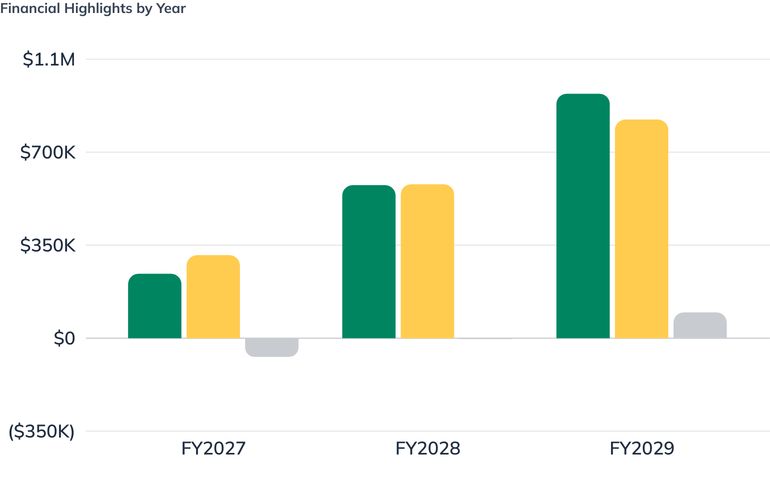
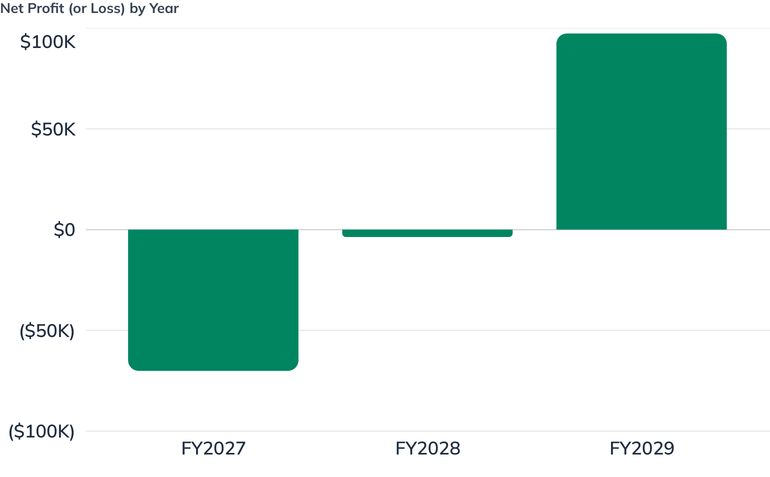
We are seeking $135,000 in startup capital to fund Fetch & Nap Pet Care through its first two years of operation, including app development, walker recruitment and training, insurance, marketing, and working capital to cover payroll while the business builds toward profitability. Our financial model shows monthly profitability arriving in the second half of year two, with full-year net profit of approximately $97,000 by year three, positioning Fetch & Nap to become the trusted, tech-forward alternative to traditional Boston pet care providers.
Need real financials? We recommend using LivePlan as the easiest way to create financials for your own business plan.Create your own business plan

Opportunity
Problem Worth Solving
Boston is one of the most walkable, densest, and least yard-equipped major cities in the country. The vast majority of homes in our target neighborhoods, Back Bay, South End, Beacon Hill, Fenway, and Jamaica Plain, are apartments and condos in three- to six-story buildings with no private outdoor space. A dog living in one of these units depends entirely on its owner to get outside.
At the same time, Boston's workforce skews toward long, inflexible days. Between downtown financial and legal offices, the Longwood Medical Area, and the biotech corridor in Kendall Square and the Seaport, a large share of pet owners are gone from the house nine to eleven hours at a stretch, commute included. A dog left alone that long is at real risk of destructive behavior, anxiety, and health issues from holding its bladder, and a cat left without a check-in for multiple days is a welfare concern many owners aren't comfortable accepting.
When these owners travel, their options narrow further. Boston's boarding kennels and large day-care chains are frequently booked solid around holidays and require reservations weeks in advance. Even when space is available, kennel boarding means an unfamiliar, high-stimulation environment with rotating shifts of staff, which is genuinely stressful for older dogs, anxious rescues, and most cats. The alternative many owners fall back on, asking a neighbor, friend, or family member to check in, is unreliable and puts real pressure on personal relationships, especially for trips longer than a weekend.
Existing pet-sitting options in the city compound the problem. Marketplace apps like Rover and Wag connect owners to independent sitters with wide variation in experience, spotty background verification, and no consistent quality standard from one booking to the next; owners have no way to know in advance whether a walker will actually show up on time or handle their pet the way they would. Independent, one-person dog walking businesses are more consistent but rarely have the capacity to take new clients, and none of the smaller providers in our target neighborhoods offer real-time GPS tracking or verified photo updates as a standard part of the visit.
The result is a segment of pet owners, professionals working long hours in dense, yard-less housing, who are underserved on two fronts at once: they lack dependable, verifiable daily dog walking, and they lack a boarding alternative to kennels they can trust with a pet that doesn't do well in a kennel environment.
Our Solution
Fetch & Nap Pet Care gives Boston pet owners two connected services built around the same promise: every visit is performed by a vetted, trained member of our team, and every visit is verifiable.
Recurring dog walking. Owners book 20- or 30-minute midday walks on a recurring schedule (daily, weekday, or custom) through our app. Each walk is completed by a member of our core Fetch Team, not an anonymous marketplace contractor, and every walker is background-checked, bonded, insured, and trained in basic pet first aid before their first solo visit. Walks are GPS-tracked from a phone in the walker's pocket, and owners receive a route map, visit-length confirmation, a photo of their dog, and a short written note the moment the walk ends. Clients can also message their walker directly in the app for special instructions, such as a dog that pulls on the leash or a building intercom that needs a code.
Nap Stays (in-home overnight boarding). For trips ranging from a single night to two weeks, owners can book their pet into the home of a Fetch & Nap host instead of a traditional kennel. Hosts are current or former members of our walking team, or independently recruited and vetted pet care professionals, who have been through a home safety inspection, background check, and a paid trial stay before being approved to host. Pets stay in a real home with one host family rather than rotating through kennel staff, which is materially less stressful for anxious dogs, senior pets, and most cats. Owners get the same daily photo and update cadence as a walk, plus a pre-stay video call with the host to introduce the pet and confirm routines.
Both services run through a single mobile app and back-office platform that we operate, not a marketplace we merely list on. That means consistent pricing, one point of accountability if anything goes wrong, and a single trusted relationship for owners instead of a different unknown sitter every time they book.
Our differentiation is not "cheaper than a kennel." It's a smaller, better-vetted team, real proof of service on every visit, and a boarding alternative that treats each pet as an individual guest in a home rather than one of dozens of animals in a facility.
Target Market
Our target customer is a working professional dog or cat owner living in an apartment or condo in Back Bay, South End, Beacon Hill, Fenway, or Jamaica Plain, roughly 26 to 45 years old, household income of $85,000 or more, employed in an office, hospital, lab, or downtown professional role that keeps them out of the house eight or more hours a day, without a fenced yard, and without a family member nearby who can reliably check on their pet.
Within that group we serve two overlapping segments:
Recurring walk clients. Owners who need a dependable midday walk two to five days a week, year-round, not as an occasional treat but as a standing part of how they keep a dog in a small apartment. These clients value consistency and proof of service more than the lowest possible price; a missed or unverifiable walk is a real welfare and trust problem for them, not a minor inconvenience.
Nap Stay travelers. Owners who travel for work or leisure several times a year and specifically want to avoid a boarding kennel, either because their pet has anxiety, is a senior animal on a medication schedule, or has simply never done well in a facility setting. This segment books less frequently but pays a premium for the in-home alternative and is highly loyalty-driven once they find a host their pet responds well to.
Boston's target neighborhoods put a large addressable population within a compact service radius. Back Bay, South End, and Beacon Hill alone are home to well over 20,000 owner-occupied and rented households with a pet, according to city housing and American Community Survey estimates, and dog ownership in these neighborhoods has climbed steadily since 2021 as more young professionals moved into the area's growing supply of luxury and mid-rise rental buildings. Cambridge and Somerville, immediately across the river, add a comparably dense, pet-owning professional population we can reach as we expand walker capacity.
We are deliberately not targeting the entire city at launch. Boston's outer neighborhoods and suburbs are better served by car-dependent providers who cover wider territories; our model depends on walkers and hosts being able to reach multiple clients on foot or by bike within a tight radius, which is what lets us guarantee fast response times and keeps our own labor costs predictable as we scale.
Competition
Boston's pet care market has three types of competitors, and Fetch & Nap is positioned deliberately between them.
National marketplace apps (Rover, Wag). These platforms connect owners directly to independent, freelance sitters and walkers with minimal ongoing oversight from the platform itself. Their strength is scale and instant availability; their weakness is consistency. Because sitters are independent contractors who set their own standards, a client's experience varies enormously from one booking to the next, background-check depth varies by sitter, and there's no single team accountable for service quality. Owners we've spoken with in our target neighborhoods consistently cite "never knowing who's actually going to show up" as their top frustration with marketplace apps.
Boarding kennels and daycare chains (e.g., regional operators and franchise daycare facilities near the Seaport and Somerville). These providers offer real facilities and staff, but the core product, a shared kennel or daycare floor with rotating staff, is a poor fit for anxious, senior, or reactive pets, and popular time slots around holidays book out weeks in advance. Kennels compete on capacity and price, not on the individualized attention our Nap Stay model offers.
Independent local walkers and small pet-sitting businesses. Boston has numerous one- and two-person walking businesses that offer a personal touch, and several, such as established neighborhood operators in Back Bay and the South End, have loyal client bases built over years. Their limitation is capacity: a solo walker or two-person team can only take on so many recurring clients, and most have no digital proof-of-service tooling, still relying on a text message or nothing at all to confirm a visit happened.
Fetch & Nap's competitive position is to combine the trust and personal accountability of a small local operator with the technology and team capacity of a larger platform. We are not the cheapest option in the market, and we don't try to be; our GPS-verified walks, background-checked and trained team, and vetted in-home boarding hosts are aimed at owners who have already decided that price is not their primary decision factor, and are instead choosing based on reliability and how their specific pet will be treated. Our main ongoing competitive challenge will be building enough brand recognition to compete with Rover's and Wag's national advertising budgets, which we address through hyperlocal marketing described in our Marketing Plan.
Execution
Marketing Plan
Our marketing strategy is built around three channels that reach pet owners where they already are: their neighborhood, their vet's office, and their phone.
Hyperlocal, in-person presence. We sponsor and staff booths at neighborhood dog-friendly events, Back Bay's Fourth of July block parties, South End farmers markets, and off-leash meetups in the Boston Common and Charles River Esplanade dog areas. Every walker on our team wears branded gear during walks, which functions as constant, low-cost neighborhood advertising; a well-run walk in a densely trafficked area like Newbury Street or the South End is itself a recruiting tool for new clients who see the same trusted walker and dog together every day.
Veterinary and building partnerships. We build referral relationships with veterinary clinics and independent pet supply stores in our target neighborhoods, offering their front-desk staff a simple referral incentive and leaving branded material in waiting rooms. We also pursue direct partnerships with the property management companies of large residential buildings in Back Bay, the Seaport, and Fenway, many of which now market "pet-friendly" amenities and are receptive to recommending a vetted walking service to residents as a value-add.
Digital acquisition. We run geo-targeted paid social and search advertising limited to our service ZIP codes, focused primarily on Instagram and TikTok content that showcases real walks and Nap Stay hosts, since pet content performs unusually well organically and gives us a low-cost way to build trust before a prospective client ever books. Our website and app store listing are optimized for high-intent local search terms like "dog walker Back Bay" and "pet sitter South End," and we maintain an active referral program that gives existing clients a free walk for every new recurring client they bring in, our single highest-converting acquisition channel based on comparable pet care business benchmarks.
We track cost per acquired client by channel from day one and reallocate spend quarterly toward whichever channel produces the lowest cost per client with the best 90-day retention, since a client who books once and churns is far less valuable to us than a client who becomes a standing recurring booking.

The Quality-Obsessed Executive
Julianne Thorne
A high-earning legal professional living in a historic Beacon Hill brownstone. She views her senior rescue Greyhound as family and is willing to pay a premium for guaranteed reliability and professional-grade accountability that marketplace apps fail to provide.
Age
42
Location
Beacon Hill, Boston
Family Status
Single, 1 Senior Greyhound
Education
Juris Doctor (JD)
Profession
Senior Associate at a Financial District Law Firm
Opportunities
- Offer a primary walker model where the same vetted professional handles every visit to build trust with anxious or senior pets.
- Provide a luxury alternative to high-stress kennels by offering overnight stays in the client's home, maintaining the pet's routine.
Pain Points
- Flaky walkers on marketplace apps who cancel last minute
- The high-stimulation environment of traditional boarding kennels which stresses her senior dog
- Lack of professional liability insurance and bonding among independent neighborhood walkers
Needs
- Unwavering reliability to accommodate 10+ hour billable days
- A provider that understands the specific health needs of a senior animal
- Verified background checks and a high standard of professional conduct
“In my line of work, reliability is everything. I can't leave a client meeting because a walker decided not to show up at my brownstone.”
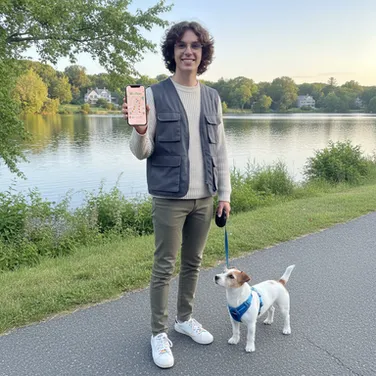
The Tech-Savvy Transplant
Sam Rodriguez
A biotech researcher who recently moved to Jamaica Plain for its green space but commutes to Kendall Square daily. As a newcomer to Boston, they lack a local social network to help with pet care and rely heavily on technology to feel connected to their pet during the day.
Age
28
Location
Jamaica Plain, Boston
Family Status
Single, 1 Cat and 1 Young Terrier
Education
Master of Science in Biotechnology
Profession
Research Scientist at a Seaport Biotech Firm
Opportunities
- Implement standard GPS-tracked walk maps and 'Pee/Poop' notifications to provide peace of mind to data-driven owners.
- Offer specialized 'Cat & Dog' combo visits for apartment dwellers who own both but only need the dog walked.
Pain Points
- No family or friends nearby to check on pets during work travel
- Anxiety about whether a walker actually stayed for the full 30 minutes
- Difficulty finding walkers in JP who are comfortable with high-energy terriers
Needs
- Visual proof of care (photos and GPS maps) delivered via a professional app
- Trustworthy cat-sitting during frequent conferences and industry events
- A local service that feels like a community partner rather than a gig-economy app
“I'm new to the city and don't have a 'neighbor with a key.' I need a service that uses data to prove my pets are actually getting the attention they deserve.”

The Inflexible-Shift Clinician
Dr. Marcus Reed
A dedicated resident working grueling rotations at the Longwood Medical Area. Living in a South End condo without a yard, he experiences intense 'pet guilt' due to 12-hour shifts that leave his energetic Lab mix confined alone.
Age
31
Location
South End, Boston
Family Status
Partnered, 1 Labrador Mix
Education
Medical Degree (MD)
Profession
Surgical Resident at Boston Medical Center
Opportunities
- Create 'Long-Day Packages' that include two walks spaced 5 hours apart to accommodate 12-hour hospital shifts.
- Offer a 'Surgical Overrun' feature where owners can request an emergency evening walk via the app when shifts are extended unexpectedly.
Pain Points
- Intense guilt over leaving a dog in a yard-less condo for 11+ hours
- Inability to use traditional daycare because drop-off/pick-up times don't align with hospital shifts
- Physical exhaustion making it difficult to provide high-energy exercise after work
Needs
- Mid-day high-energy exercise to prevent destructive behavior in a small condo
- Flexible scheduling that can change based on weekly hospital rotations
- A reliable service that doesn't require him to be home for the hand-off
“My shifts are non-negotiable. If a surgery runs long, I need to know my dog isn't suffering just because I'm stuck in the OR.”
Sales Plan
Nearly all of our sales happen through self-service booking in our app, but the path to that first booking is guided and high-touch, because trust is the entire product.
New client intake. A prospective client requests service through our website or app, and every new relationship starts with a required, free 15-minute Meet & Greet at the client's home, conducted by the walker or host who would actually be assigned to their pet, not a generic salesperson. This visit lets us assess the pet's temperament and the home's access logistics (building codes, lockboxes, elevator restrictions), and it lets the owner meet the specific person who will be caring for their pet before any money changes hands. Conversion from Meet & Greet to a first paid booking has consistently run above 80% in comparable Boston-area pet care businesses, because the visit removes the biggest objection owners have to a new provider: not knowing who's coming into their home.
Pricing and packages. Individual walks are priced at $24 for a 30-minute walk and $18 for a 20-minute walk, in line with current Boston market rates. Recurring clients who book five or more walks per week receive a 10% package discount, which both rewards commitment and smooths our own weekly scheduling. Nap Stays are priced from $65 to $85 per night depending on the pet's needs (medication administration, multiple pets, senior care), reflecting current Boston-area in-home boarding rates, with a simple flat nightly rate quoted after the pre-stay video call.
Retention and expansion. Once a client is active, our app handles rebooking, rescheduling, and payment automatically, and our Sales Plan work shifts to expansion: recurring walk clients are the natural first audience for Nap Stays when they travel, and Nap Stay clients who love their host frequently convert into recurring walk clients if they don't already have one. We track this cross-sell rate explicitly as a Key Metric because it's substantially cheaper to sell an existing trusted client a second service than to acquire a new client from scratch.
Corporate and building accounts. As we grow, we pursue direct accounts with property management companies for buildings that want to offer walking or pet-sitting as a resident amenity, negotiated as a modest per-unit referral or discount arrangement rather than a marketplace listing, giving us a recurring pipeline of warm leads at near-zero acquisition cost per building partnership secured.
Locations & Facilities
Fetch & Nap operates as a distributed, neighborhood-based service, not a facility-dependent one, which keeps our fixed real estate costs low and lets us grow capacity by adding walkers and hosts rather than by leasing more square footage.
Home office. Our administrative base is a small leased office/co-working suite in Back Bay, used for team meetings, walker and host onboarding and training sessions, equipment storage (leashes, waste bags, first-aid kits, GPS trackers), and as the address for our business insurance and bonding. It is not client-facing; all pet care happens in clients' own homes or in a host's home.
Service territory. Our initial service area is a roughly 3-mile radius centered on Back Bay, covering Back Bay, South End, Beacon Hill, Fenway, and Jamaica Plain, with limited coverage extending into Cambridge and Somerville for existing clients who relocate within that radius. Walkers are assigned routes by neighborhood so each one can reasonably cover 4 to 6 client visits within a midday window on foot or by bike, without needing a car, which keeps our labor costs predictable and avoids the parking and traffic delays that erode a car-dependent walker's schedule in central Boston.
Nap Stay hosts. Overnight boarding happens in the private homes of vetted hosts rather than a dedicated facility. Each host home passes a safety inspection before approval (secure fencing or leash-only outdoor access, no unsecured hazards, smoke detectors, a designated space for the visiting pet) and is limited to hosting one client pet or one client's pet household at a time, so no pet is ever mixed with unfamiliar animals during a stay.
Future facility plans. As we approach our year-three expansion, we plan to evaluate a small storefront location, likely in the South End or Fenway, that would let us add a limited-capacity daytime drop-in daycare option for clients who want socialized group play in addition to solo walks. That decision will depend on demand signals from our existing client base and is not part of our year-one or year-two operating plan.
Technology
Technology is the operational backbone that lets a small, tightly-vetted team deliver the verifiable, trustworthy service that differentiates us from both marketplace apps and old-fashioned local walkers.
Client and walker app. We use a pet-care-specific scheduling and route-tracking platform (built on a white-label base such as Precise Petcare or Time To Pet rather than custom-built from scratch, to keep our year-one technology spend low) for booking, recurring schedule management, in-app messaging, and payment processing. The same platform generates GPS-tracked walk routes and timestamps, and pushes an automatic photo-and-note update to the owner the moment a walk or visit is logged complete.
Walker tools. Each walker carries a company-issued or BYOD smartphone with the walker-side app, used for route tracking, digital key/lockbox code storage (encrypted, visible only for assigned visits), and incident reporting. We equip every walker with a basic pet first-aid kit and a GPS pet tracker tag as a backup safety layer independent of the phone-based tracking.
Payments and billing. Recurring billing runs automatically through the platform's integrated payment processing, charging clients on a weekly or monthly cycle depending on their plan, which minimizes manual invoicing overhead as we scale past our first few dozen clients.
Internal operations. We use standard small-business tools already common to service businesses at our stage: a shared scheduling and route-optimization view for dispatch, Slack for internal team coordination, and QuickBooks Online for bookkeeping and payroll integration. As our host network grows, we plan to add a lightweight CRM to track host availability, past pet placements, and client-host matching history, since successful long-term Nap Stay relationships depend heavily on rebooking the same pet with a host who's already familiar with it.
We treat AI-assisted route optimization, which the scheduling platform increasingly offers as a standard feature, as a routine efficiency tool rather than a differentiator: it helps our dispatcher batch nearby walks efficiently as we add clients, but our actual competitive advantage remains the people doing the walking, not the software scheduling them.
Equipment & Tools
Our equipment needs are modest and mobile by design, reflecting a service delivered in clients' homes and neighborhoods rather than in a facility.
Per-walker field kit. Each active walker is issued a branded Fetch & Nap harness/leash set for use as a backup lead, a company-branded vest or T-shirt for visibility and brand presence during walks, a pet first-aid kit (styptic powder, gauze, tick removal tool, saline, muzzle), waste bag dispensers, hand sanitizer, and a smartphone mount or armband if using a personal device for the app.
Safety and tracking equipment. We provide a GPS pet tracker tag for each walk as a redundant safety layer alongside phone-based tracking, and a set of slip-lead backup leashes for dogs that may slip a collar. Every walker's kit includes a laminated card with the client's emergency vet contact and any pet-specific medical notes, pulled from the app profile.
Office and onboarding equipment. Our Back Bay office is furnished simply: a small conference table and chairs for training sessions and Meet & Greet scheduling overflow, a locked cabinet for any physical spare keys or lockbox codes retained under signed client authorization, a laptop and printer for administrative work, and shelving for bulk-purchased first-aid and waste bag inventory that we restock to walkers monthly.
Host home equipment. Nap Stay hosts are not required to purchase specialized equipment; they use their own home setup, but we provide each approved host with a starter kit including waste bags, a Fetch & Nap-branded food and water bowl set for visiting pets, and a printed pre-stay checklist covering feeding schedule confirmation, medication administration, and emergency procedures.
We intentionally avoid capital-intensive equipment (no company vehicles, no owned facility build-out) at this stage, since our model depends on walkers and hosts operating in their own neighborhoods on foot or by bike, keeping our fixed asset investment and associated depreciation low relative to facility-based competitors.
Milestones
Form LLC, secure licenses, permits, and insurance Register Massachusetts LLC, obtain City of Boston business license, secure general liability and bonding/care-custody-control insurance for walkers and hosts. | Maya Reyes Oct 15, 2026 |
Launch booking app and hire first 4 Fetch Team walkers Stand up scheduling/GPS-tracking platform, recruit and background-check first cohort of walkers, complete first-aid training. | Maya Reyes Nov 15, 2026 |
Hire full-time Operations Manager Bring on Operations Manager to take over scheduling, dispatch, and onboarding as booking volume outgrows founder-led dispatch. | Maya Reyes Jan 15, 2027 |
Reach 50 active recurring walk clients Hit first major client base milestone through Meet & Greet conversions and referral program. | Maya Reyes Feb 28, 2027 |
Launch Nap Stays with first 10 vetted hosts Complete home inspections, background checks, and paid trial stays for initial host cohort; open overnight boarding bookings. | Maya Reyes Apr 30, 2027 |
Reach 100 active recurring walk clients and 10 hosts End-of-year-one target for core walking client base and Nap Stay host roster, reflecting a deliberately paced growth trajectory. | Maya Reyes Sept 30, 2027 |
Evaluate storefront daycare expansion and second territory Assess demand data to decide on limited-capacity daytime daycare storefront and expansion of host network into a second Boston-area territory. | Maya Reyes Mar 31, 2029 |
Key Metrics
We track a small set of metrics that tell us whether the business is building the kind of trust-based, recurring relationship it depends on, not just whether bookings are happening.
Active recurring walk clients. The number of clients with a standing weekly walk schedule, our core revenue base and the clearest single indicator of whether the business is growing sustainably rather than relying on one-off bookings.
Walk completion and on-time rate. The percentage of scheduled walks completed within their booked time window, verified automatically through GPS timestamps. This is our core trust metric; because our entire value proposition is reliability, we treat any month below 98% on-time completion as an operational problem requiring immediate attention, not a rounding error.
Client retention (90-day and annual). The percentage of new clients still active 90 days and 12 months after their first booking. Because Meet & Greet-driven acquisition is relatively costly per new client compared to a marketplace app, our unit economics depend on clients staying active for many months, not churning after a few walks.
Nap Stay booking rate among existing walk clients. The share of active recurring walk clients who also book at least one Nap Stay per year. This cross-sell metric is a leading indicator of how well we're capturing the higher-margin overnight boarding revenue from a client base we've already acquired for walking.
Walker and host utilization. Average number of weekly visits or nights booked per active walker and per active host, tracked to make sure we're neither overstaffed (idle capacity costing us in guaranteed minimum hours) nor understaffed (risking missed walks and burned-out staff, which directly threatens our on-time completion metric).
Cost per acquired client, by channel. Tracked monthly across referral, digital, veterinary partnership, and building partnership channels, so marketing spend can be reallocated toward whichever channel is producing the lowest-cost, highest-retention clients, as described in our Marketing Plan.
Net Promoter Score. Collected via a short in-app survey after a client's first month and then quarterly, giving us an early read on satisfaction that shows up well before it would appear in retention or referral data.
Company
Ownership & Structure
Fetch & Nap Pet Care is organized as a Massachusetts single-member LLC, wholly owned by founder and CEO Maya Reyes. The LLC structure limits personal liability while keeping formation and ongoing compliance costs low and appropriate for a service business at this stage, and it allows us to elect S-corporation tax treatment once profitability supports the administrative overhead, a step we plan to revisit with our accountant around the end of year two.
The company is registered with the Massachusetts Secretary of the Commonwealth and holds a City of Boston business license along with the animal care and kennel-adjacent permits required for any in-home boarding activity under Massachusetts regulations. We carry commercial general liability insurance and a pet care-specific bonding and insurance policy covering all walkers and hosts while performing company-assigned visits, a baseline every client vetting us expects to see before granting home access, and a required cost of doing business in this industry rather than an optional add-on.
As the sole owner, Maya Reyes retains full decision-making authority over strategy, hiring, and finances in year one. We plan to formalize an advisory relationship with our accountant and insurance broker as standing resources rather than equity stakeholders, and we are not currently structured to take on outside equity investors; our funding needs are being met through a combination of owner investment and a small business loan, detailed in our Sources of Funds.
Management Team
Maya Reyes, Founder & CEO. Maya has spent five years as a professional dog walker and pet sitter in Boston's Back Bay and South End, building a personal client roster of more than 60 recurring households entirely through referrals before founding Fetch & Nap. She holds a Pet CPR and First Aid certification through the Red Cross and has completed Fear Free certification for low-stress animal handling. Maya leads all hiring, client-facing quality standards, and vendor relationships (insurance, banking, technology platform), and personally conducts Meet & Greets for the company's largest and most complex-needs accounts during the team's first year of operation.
Operations Manager (planned hire, Q1 of year one). As booking volume grows past what Maya can dispatch personally, we will hire a full-time Operations Manager responsible for day-to-day scheduling, walker and host dispatch, new-hire onboarding logistics, and first-line client support. We are budgeting this role at $58,000 to $65,000 annually, in line with current Boston-area pet care and small-service-business management compensation, reflecting both the responsibility level and the tight Boston labor market for reliable operations talent.
Fetch Team walkers and sitters (part-time, ongoing hiring). Our field team consists of part-time walkers and pet sitters, each background-checked, bonded, and trained in-house before their first solo visit. We are budgeting walker pay at $19 to $22 per hour, above the Boston-area average of roughly $18 to $19 per hour for dog walking and pet sitting roles, a deliberate choice: our entire value proposition rests on retaining an experienced, reliable team rather than churning through underpaid contractors, and above-market pay is core to keeping our on-time completion and retention metrics high.
Nap Stay hosts (independent contractors, vetted). Hosts are compensated per stay rather than hourly, at a rate benchmarked to current Boston in-home boarding rates, and are recruited primarily from our existing walker team as they build the trust and track record needed for host approval, with external candidates vetted through the same background check and home inspection process.
We plan to add a second Operations Manager and a dedicated Client Success role in year two as the team and client base grow beyond what one operations lead can manage alone, funded by the revenue growth detailed in our Financial Plan.
Advisors
We have built a small, purpose-fit advisory circle rather than a formal board, reflecting our stage as a founder-owned LLC.
Accountant. A Boston-based small business CPA advises on tax structure, quarterly estimated payments, and payroll compliance for our mix of W-2 part-time staff and 1099 contractor hosts, and will guide our evaluation of an S-corp election once profitability supports it.
Insurance broker. A specialist broker with experience placing pet care industry policies helped structure our commercial general liability, bonding, and care-custody-control coverage, the insurance package clients expect to see before trusting a provider with home access and pet welfare, and will review our coverage annually as we add hosts and walkers.
Veterinary advisor. A local Back Bay-area veterinarian, who also serves as a referral partner under our Marketing Plan, provides informal guidance on our pet first-aid protocols, emergency procedures, and health-screening questions we ask during Meet & Greets, without formal compensation beyond the mutual referral relationship.
Local small business mentor. Maya participates in a mentorship relationship through SCORE Boston, a free small business mentoring program, pairing with a mentor experienced in service-based small business operations and growth. We plan to formalize a small paid advisory board, potentially including a second-stage pet care industry operator, once the business reaches its year-two expansion milestones.
Financial Plan
Revenue
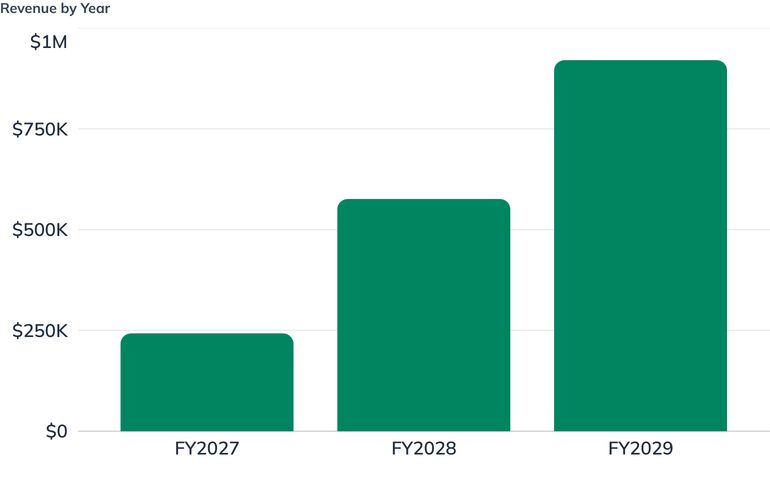
Need real financials? We recommend using LivePlan as the easiest way to create financials for your own business plan.Create your own business plan
Expenses & Costs
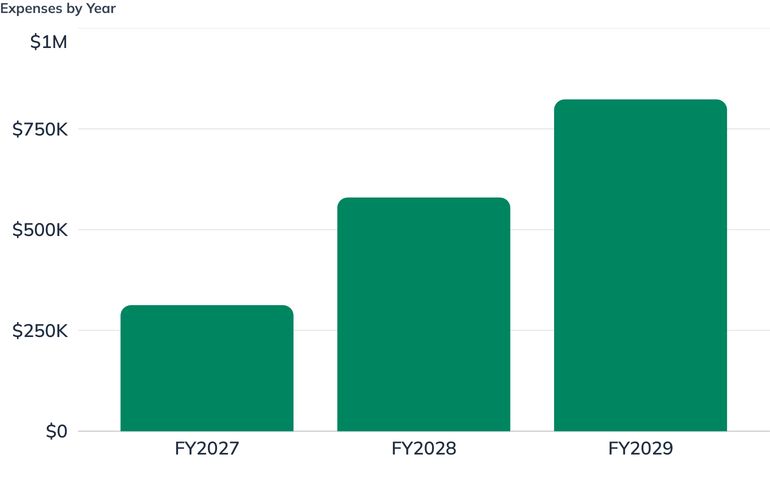
Need actual charts? We recommend using LivePlan as the easiest way to create graphs for your own business plan.Create your own business plan
Profitability
Need real milestones? We recommend using LivePlan as the easiest way to create milestones for your own business plan.Create your own business plan
Use of Funds
We are raising $135,000 in startup capital to fund Fetch & Nap Pet Care through its first two years of operation, the period during which the business builds toward profitability, and to cover the gap between when costs are incurred and when recurring revenue reaches a sustainable level.
Startup assets ($15,500). This covers our booking app and website setup ($6,000, built on a white-label pet care platform rather than custom software), our Back Bay office security deposit ($3,000), initial bulk field starter kits for our Fetch Team including first-aid kits, GPS trackers, and waste bag dispensers ($4,000), and branded gear and launch signage for our first cohort of walkers ($2,500).
Working capital ($119,500). The majority of our funding covers operating costs during our ramp-up period, primarily payroll (Founder salary and our Operations Manager hire in month four), office rent, insurance and bonding, our booking platform subscription, and marketing spend, while our client base and Nap Stay host network build toward the scale needed to cover these costs from revenue. Based on our financial model, monthly cash reaches its low point of approximately $12,000 around month 21 (roughly midway through year two), before climbing steadily as monthly profitability arrives in the second half of year two and carries through into a profitable year three. We intentionally funded above our modeled minimum cash need to maintain a healthy operating buffer rather than running lean against a bare-minimum projection.
We do not plan to use funding for owner distributions; all early profit is reinvested into growing our walker and host network through year three.
Sources of Funds
We are funding Fetch & Nap Pet Care's launch through a combination of owner equity and debt financing, totaling $135,000.
Owner investment ($30,000). Founder Maya Reyes is contributing $30,000 in personal capital as founding equity, reflecting savings built from her five years as a professional dog walker and pet sitter in Boston. This investment covers a meaningful share of our startup costs and demonstrates founder commitment when we approach our lender.
Small business loan ($105,000). We are seeking a small business term loan, structured on typical SBA-style terms of 9.5% annual interest amortized over 60 months, to cover the balance of our startup assets and the working capital needed to reach profitability. Our financial model shows monthly net profit turning positive in the second half of year two, with full-year profitability arriving in year three at roughly $97,000, which supports a conventional loan structure without requiring us to give up ownership at this early stage.
As a single-member LLC, we are not currently structured to accept outside equity investors, and our funding plan does not assume any additional capital raise beyond this initial round; growth beyond year three is funded from retained operating profit.
Projected Statements
Frequently Asked Questions
A pet care business plan should cover your service model, service territory, how field staff are vetted and paid, the technology clients rely on, and how the launch is funded. Fetch & Nap Pet Care's plan, for example, details a two-service model of recurring midday dog walks and in-home "Nap Stay" boarding, a roughly three-mile service radius centered on Back Bay, an employed walker team paid $19 to $22 per hour, and a $135,000 startup funded through owner investment and a term loan.
Because the model is distributed rather than facility-based, startup costs are modest relative to a kennel. Fetch & Nap budgets $15,500 in startup assets, covering its booking app and website setup ($6,000), a Back Bay office security deposit ($3,000), field starter kits with first-aid supplies and GPS trackers ($4,000), and branded walker gear ($2,500), plus $119,500 in working capital to cover payroll, insurance, and marketing while the client base builds, for $135,000 in total capital.
Yes, and the requirements typically stack at the state and city level, especially once overnight boarding is involved. Fetch & Nap is organized as a Massachusetts single-member LLC registered with the Secretary of the Commonwealth, holds a City of Boston business license along with the animal care and kennel-adjacent permits Massachusetts requires for in-home boarding, and carries commercial general liability plus pet care-specific bonding and care-custody-control coverage for every walker and host. Requirements vary by state and municipality, so confirm yours locally before launch.
Revenue comes from recurring visit fees, with overnight boarding layered on as a higher-margin second stream. Fetch & Nap prices 30-minute walks at $24 and 20-minute walks at $18, in line with Boston market rates, and gives clients booking five or more walks per week a 10% package discount. Nap Stays run $65 to $85 per night depending on the pet's needs, and the plan tracks cross-sell from recurring walk clients into Nap Stays as a key metric because selling boarding to an already-trusted client is far cheaper than acquiring a new one.
Fetch & Nap's financial model shows monthly profitability arriving in the second half of year two, with full-year net profit of roughly $97,000 by year three. Cash reaches its low point of approximately $12,000 around month 21 before climbing steadily, which is why the plan raises $135,000 rather than the bare modeled minimum. That deliberate two-year ramp reflects a strategy of building a reliable core team and loyal client base first rather than chasing rapid scale.
Fetch & Nap operates its own platform and employs its own vetted team rather than listing on a marketplace, so clients get consistent pricing and a single point of accountability instead of a different unknown sitter each booking. Every walk is GPS-tracked and closed out with a route map, photo, and written note, giving owners real proof of service that neither marketplace apps nor most independent local walkers provide. On the boarding side, Nap Stay hosts pass a home safety inspection, background check, and paid trial stay, and each hosts only one client's pets at a time, a calmer alternative to a kennel floor for anxious, senior, or reactive animals.
The core customer is a working professional dog or cat owner, roughly 26 to 45 years old with a household income of $85,000 or more, living in a yard-less Boston apartment or condo and out of the house eight or more hours a day. The plan splits them into recurring walk clients who need a dependable midday visit two to five days a week, and Nap Stay travelers who book less often but pay a premium to avoid a kennel. Its buyer personas make this concrete: a Beacon Hill attorney with a senior greyhound, a Jamaica Plain biotech researcher new to the city, and a Longwood surgical resident working 12-hour rotations.
Marketing is deliberately hyperlocal, combining booths at neighborhood dog events, branded gear worn on every walk as constant street-level advertising, referral relationships with veterinary clinics and pet supply stores, partnerships with pet-friendly property managers, and geo-targeted Instagram and TikTok advertising limited to its service ZIP codes. A client referral program that awards a free walk for each new recurring client is the plan's single highest-converting channel. Every new relationship then starts with a required free 15-minute Meet & Greet run by the walker who would actually be assigned, which converts to a paid booking above 80% of the time in comparable Boston-area pet care businesses.

Business Plan Outline
Start your plan