






Interior Design Business Plan


Business Plan Summary
This interior design business plan example features Barton Interiors, a boutique home-based design consultancy in Boulder, Colorado, founded by owner and principal designer Jill Barton. It covers Barton Interiors' combination of personalized design consulting with direct access to curated furniture, fabric, and window treatments through trade relationships, its four distinct client segments, and a lean $30,000 owner-funded launch that's profitable from year one. Use it as inspiration for your own plan. Download a free business plan template to get started, or browse more business plan examples.
Barton Interiors
Executive Summary
Barton Interiors is a boutique interior design studio offering full-service design consulting for homes and offices in the Boulder, Colorado area. Alongside design services, we give clients direct access to curated furniture (new and antique), decorator fabric, window treatments, and home and office accessories — sourced through longstanding trade relationships that most homeowners can't reach on their own.
Boulder's population has grown past 108,000, and the surrounding area carries a high concentration of affluent, design-conscious households who care about how their homes and offices look and function. These households want a personalized design experience they can actually afford, not the two-to-four-times markup charged by many traditional designers, and not the guesswork of furnishing a home through big-box stores or online catalogs alone.
We grow primarily through relationships — with architects, builders, and complementary vendors in the Boulder design community — supported by a referral network and a digital portfolio (via our website and Instagram/Houzz presence) that lets prospective clients see our work before they ever call. Selection, accessibility of product, personalized design services, and value-based pricing are what set Barton Interiors apart from other options in the market.
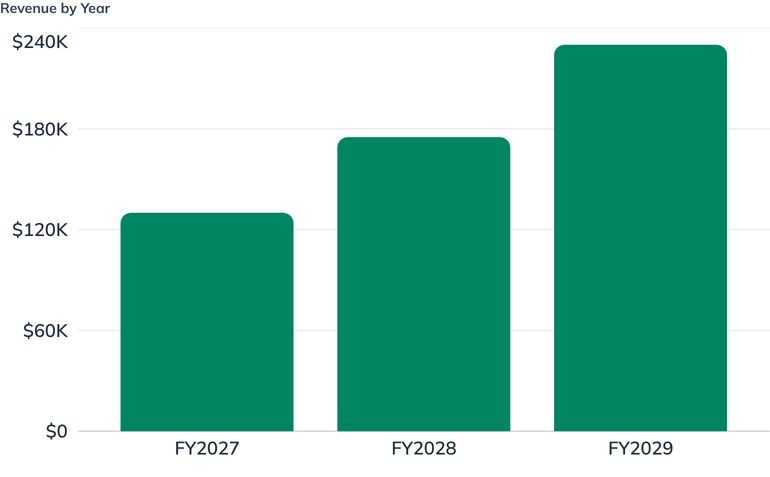
We project total revenue of roughly $130,000 in year one as a full-time practice, growing to about $230,000 by year three as our client base and referral network mature. Barton Interiors is profitable from year one, which lets us pay a genuinely livable, full-time wage to our founder from day one and grow it as the business scales. This plan lays out the concept, target market, and execution details behind the first three years of Barton Interiors.
Mission
Barton Interiors serves discerning, quality-conscious clients seeking guidance on the design choices for their primary residences, vacation homes, and businesses. We offer personal attention throughout the design process, plus access to design resources and products through special-purchase furniture, fabric, and accessories — helping clients transform their space into a considered, personal expression of who they are.
Keys to Success
- Deliver the highest-quality interior design consulting experience possible.
- Offer specially selected products that further meet each client's design needs.
- Stay in touch with our client base through our website, social channels, and personalized communication.
- Retain clients to generate repeat business and referrals.
Objectives
- Realize an average of roughly $10,800 in sales each business month in year one, growing to about $14,600 in year two and $19,200 in year three.
- Generate a minimum of 45% of revenue from product sales versus consulting billing.
- Establish a commercial client base accounting for at least 10% of total revenue.
Opportunity

Problem Worth Solving
Affluent households in the Boulder, Colorado area want personalized interior design guidance and access to curated furniture, fabric, and accessories—but most options fall short. Do-it-yourself retailers and catalog sources offer products without design expertise. Traditional interior designers often mark up materials two to four times and may not offer the product selection Barton Interiors can provide. Many homeowners and office decision-makers lack the time, confidence, or connections to transform a space from concept through implementation.
Recent market research indicates a specific and growing need for interior design consulting services combined with product access. Although Boulder’s population is under 100,000, the market includes a significant quantity of relatively wealthy households conscious of the appearance and feel of their homes and offices. These clients want assistance that is personalized, affordable relative to full-service designers, and available from concept to complete implementation.
Our Solution
Barton Interiors leads with interior design consulting, then layers in specially sourced furniture, art, decorator fabric, and accessories that fit each client's project. The sales process starts with a design consultation; once the concept and budget are set, we bring in the specific products needed to execute it.
Products available through Barton Interiors include:
- Furniture through special-purchase arrangements with Thomasville, Drexel Heritage, and Henredon, as well as local craftspeople for custom pieces.
- Decorator fabrics from established mills and studios including Kravet, Schumacher, Robert Allen, and Ralph Lauren Home.
- Drapery hardware and rods sourced through our trade accounts, selected to match each project's finish and scale.
- Accessory and art pieces sourced through wholesale design shows and a small network of local artists and antique dealers.
- Hunter Douglas window treatments, including a full range of hard window coverings.
- Interior shutters in both wood and engineered composite materials.
- Antiques sourced for specific client needs through a trusted local antique dealer and select estate and auction sources.
Target Market
Barton Interiors serves a clearly defined target client, whether the project is a primary residence, vacation home, or a commercial office space — with priorities that shift somewhat depending on whether she's furnishing a home or overseeing an office buildout.
Geographics
- Our geographic market is the affluent sector of Boulder, Colorado, a city of roughly 108,000 residents.
- We're focused on a roughly 20-mile radius around Boulder and do not intend to pursue the Denver market directly at this time.
- We estimate the total addressable target market at around 24,000 households.
Demographics
The typical Boulder resident in our target market: has lived in the area seven-plus years, is often between 35 and 44, has completed some college, is frequently a manager, professional, or business owner, is usually married, typically has no children living at home, and owns her residence.
Four Target Segments
Country Club Women — The largest segment: women aged 35–50, married, household income above $100,000, owning at least one home, socially active in the community (Boulder Country Club, Junior League, and similar organizations). Real discretionary income, and how the home looks is a genuine priority. Follows design inspiration on Instagram, Pinterest, and Houzz alongside titles like House Beautiful and Elle Decor.
Boomers in Transition — Typically 50–65, going through a planned life transition: downsizing, retiring, or moving closer to what they now prioritize. Discretionary income goes first to travel, decorating a close second. The woman in the household is usually the decision-maker.
Professional Couples — Dual-income couples aged 25–35 establishing their first "adult" household, both earning above $80,000 annually, ready to invest in their home. Larger purchases tend to follow a promotion, bonus, or windfall.
Home Builders — Clients aged 40–55 building or substantially renovating a home. Converts less often — two to five projects a year — but represents the largest transaction size of any segment.
Market Growth & Trends
Household formation and home renovation spending are the two biggest drivers of demand. Married couples aged 45–65 represent a growth segment with above-average disposable income, often directing it toward their home rather than travel. Boulder's housing stock skews older, and many owners are investing in updates rather than relocating, given the cost and scarcity of local housing.
Remote and hybrid work has expanded the market further: many clients now invest in home offices and multi-purpose living spaces. Growing interest in sustainably sourced materials and "buy it once, buy it well" furniture choices supports steady demand for personalized design and sourcing services.
Boulder tends to lag major metro design trends by six to twelve months — a buying advantage that lets us anticipate what's coming. A growing share of clients now discover designers through Instagram, Houzz, and Pinterest before ever asking for a referral, making an active digital portfolio an increasingly important trend to track.
Market Needs
Barton Interiors gives clients the opportunity to shape a home or office environment that expresses who they are, with as much or as little hands-on involvement as they want. We're built to meet these needs:
- Confident, expert guidance from someone who understands both design and budget.
- Access to furniture, fabric, art, and antiques clients couldn't easily source themselves.
- A process that respects their time, taste, and how they actually live or work in the space.
- A single point of contact managing the project from concept through installation.
Market Size & Growth Projections
Market Analysis | |||||||
|---|---|---|---|---|---|---|---|
Year 1 | Year 2 | Year 3 | Year 4 | Year 5 | |||
Potential Customers | Growth | CAGR | |||||
Country Club Women | 12% | 34,400 | 38,528 | 43,151 | 48,329 | 54,128 | 12.00% |
Boomers in Transition | 9% | 12,000 | 13,080 | 14,257 | 15,540 | 16,939 | 9.00% |
Professional Couples | 8% | 8,000 | 8,640 | 9,331 | 10,077 | 10,883 | 8.00% |
Home Builders | 5% | 8,000 | 8,400 | 8,820 | 9,261 | 9,724 | 5.00% |
Other | 0% | 0 | 0 | 0 | 0 | 0 | 0.00% |
Total | 10.09% | 62,400 | 68,648 | 75,559 | 83,207 | 91,674 | 10.09% |
Competition
Our competition comes primarily from other interior designers, plus a broader set of do-it-yourself and direct-to-consumer alternatives, both in stores and online.
Independent Interior Designers
Dozens of designers serve the Boulder market, ranging from home-based generalists with no formal training to established, storefront studios with ASID certification and close relationships with prestigious architecture firms. Because they don't benefit from trade-volume pricing, their cost to clients per yard of fabric is often two to four times higher than Barton Interiors' pricing. In most cases, clients choose a designer based on:
- Referrals and relationships with other professionals, particularly architects (55%).
- Personality and expected working relationship with the designer (25%).
- Past work — increasingly evaluated through an online portfolio, Houzz profile, or Instagram feed (15%).
- ASID certification (5%).
Retail, Catalog & Online Competitors
- Big-box and discount retailers — Target, Walmart, and Home Depot continue to expand fabric, bedding, and ready-made drapery selections.
- National furniture retailers — Pottery Barn, Restoration Hardware, and West Elm compete on curated style at accessible-to-premium price points, backed by strong e-commerce.
- Wayfair and similar marketplaces offer enormous selection and fast delivery, but no design guidance and limited ability to see or touch product before buying.
- Norwalk continues to make buying "blank" furniture and choosing a designer fabric an attractive alternative to full custom upholstery.
- Calico Corners competes on curated in-store fabric selection paired with some design support.
- JOANN offers a broad fabric selection weighted toward apparel and craft, with a smaller in-store decorator fabric section, competing mainly on price.
- Chairish and 1stDibs have made sourcing one-of-a-kind and antique pieces far more accessible than a decade ago.
- HomeGoods and similar off-price retailers are the go-to for budget-conscious shoppers assembling a look without design guidance.
Industry Dynamics
The interior design industry remains competitive with a "commodity" undertone given the wide range of skill and training among people who call themselves designers.
- Power of Suppliers: Moderately high — nearly anyone with a business license can access wholesale furniture, fabric, and accessory purchasing.
- Power of Buyers: Low — buyers largely work within the pricing and availability terms suppliers set.
- Substitute Products: High — hard window-covering solutions (blinds, shutters, manufactured treatments) have become widely available and affordable, reducing demand for custom fabric treatments. Substitutes are less prevalent for antiques and art.
- Rivalry: Moderately low, given the largely territorial structure of the industry and low exit barriers.
After a period of slower growth tied to broader economic uncertainty, the industry shows cautious optimism, with most local firms approaching expansion carefully — an environment that favors a lean, relationship-driven studio like Barton Interiors.
Our Differentiation
None of the alternatives above pair personalized, trade-connected design consulting with hands-on product sourcing the way Barton Interiors does. We differentiate through personalized consulting, curated product access, value-based pricing, and follow-through from concept to implementation.
Execution
Marketing Plan
Overview
Our marketing strategy positions Barton Interiors as the go-to resource for interior design guidance and product access in Boulder. Clients who want to be closely involved get real design guidance and a thought partner; clients who'd rather hand it off entirely get a designer who sees the project through from concept to installation. The strategy: create awareness, deepen ties with our four target segments, and build toward loyalty and referrals — leaning on personalized consulting, project-specific product selection, a consistently high-quality result, and responsive client service.
Positioning & Value Proposition
For the client seeking a personalized, unique impression of her home, Barton Interiors is the source for client-oriented design services. Unlike other designers or stores — JOANN, Warehouse Fabric, or catalog options — we're a pleasant, tasteful resource that lets clients participate in their design choices to whatever extent they choose, while realizing greater value for the dollars they invest.
Barton Interiors offers the most personalized interior design experience available to Boulder homeowners and businesses — pairing hands-on design consulting with direct access to furniture, fabric, antiques, and accessories most clients could never source on their own, at a price point that reflects real trade access rather than layered designer markups.
Distribution & Pricing
Our primary channel is direct, personal engagement — in-home or in-office consultations initiated through referral or through our website and social profiles, with a growing share of consultations starting as a virtual walkthrough before an in-person visit.
Design consulting is billed hourly — $90/hour residential, $100/hour commercial. Product pricing follows a standard trade markup over wholesale cost, still priced well below what most independent designers charge since we don't add a second markup layer on top of the design fee.
Digital Presence
Our website, www.bartoninteriors.com, is the digital front door: a full project portfolio, service and pricing overview, and a consultation request form, supported by active Instagram and Houzz profiles. Every project links to a short case study, and the booking form is the primary call to action across all marketing channels.
Strategic Alliances
Several architecture firms are willing to refer clients, including Jill's former employer, Gibson & Sawyer, LLC. Other alliances include Providence (gallery-type pieces for home and office) and Interior Fabricators (fabrication and referrals). Strategic online/vendor alliances remain an area of active development.
Four Marketing Strategies
1. Increased Awareness and Image — Active Instagram/Houzz portfolio; partnerships with complementary local businesses (framing, upholstery, flooring); realtor open-house promotions; co-sponsorship of local fundraising and community events; participation in Boulder social and civic organizations.
2. Leveraging Our Existing Client Base — Exceptional service throughout every project; structured follow-up after completion; personal shopper support for ongoing needs; seasonal styling refreshes; design workshops for past clients.
3. Cross-Selling — Additional furniture, art, fabric, and accessory sales within a project; pursuing office/commercial assignments alongside residential work; ongoing implementation work beyond the initial design phase; follow-on assignments as clients' needs evolve.
4. New Home Construction & Renovation Promotion — Referral partnerships with realtors and loan officers; design support services offered directly to builders; monitoring new-listing and new-construction activity; Chamber of Commerce engagement.
Promotion Channels
- Social Media — an actively maintained Instagram and Houzz presence showcasing projects and reviews.
- Local Publications & Sponsorships — select advertising and sponsorships with Boulder-area lifestyle publications and community events.
- Email Newsletter — quarterly, highlighting recent projects and seasonal design ideas.
- Referral Network — architects, builders, and complementary vendors.
Competitive Edge
Barton Interiors stands apart through the value we deliver: quality, sought-after products not available through other designers or retail options, and attentive service and follow-through from concept to installation. This combination of trade access and hands-on service is difficult for larger firms or big-box competitors to replicate at a comparable price.
SWOT Analysis
Strengths — Proven ability to build excellent personalized client service; strong, flexible supplier relationships; solid referral ties with architects, vendors, and realtors; client loyalty built on repeat, high-dollar purchases.
Weaknesses — Owner still building retail-operations experience; not yet established in a crowded design market; seasonality of the business.
Opportunities — Strong unmet demand in our target market; strategic alliances extending our reach; new-construction activity; design-trend shifts that prompt updating.
Threats — Price pressure from competition; fast-moving design trends; continued expansion of national retailers into the local market; aggressively priced trend-setting catalog and online competitors.
Implementation Plan for the Coming Year
Referrals: Build a client base from Jill's existing architecture-firm contacts; build a broader referral network through professional contacts; announce the launch through local press and social channels; run seminars promoting the value of working with an interior designer.
Product Sales: Promote available products through seminars and in-home styling demonstrations; cross-sell within home and office consulting engagements; highlight art and antiques sourcing in the online and print portfolio.
Digital Awareness: Continuously develop the website and Instagram/Houzz profiles; integrate newly completed work into the portfolio on an ongoing basis; review inbound inquiries monthly and evaluate digital-channel performance quarterly.

The Community Connector
Sarah Miller
Sarah is a pillar of the Boulder social scene who views her home as the primary venue for hosting charity events and social gatherings. She is design-conscious and follows high-end interior trends but is frustrated by the excessive markups of traditional local firms.
Age
44
Location
Mapleton Hill, Boulder, CO
Family Status
Married, 2 school-aged children
Education
Bachelor of Arts in Communications
Profession
Non-profit Board Member / Former PR Executive
Opportunities
- Provide Sarah with unique, trade-only fabrics and antique furniture that her peers cannot find in retail stores, ensuring her home remains one-of-a-kind.
- Leverage her extensive network at the Boulder Country Club by offering a referral program that rewards her for bringing in new high-net-worth clients.
Pain Points
- Frustrated by the 300% markups common in traditional boutique design firms
- Tired of seeing the same 'big-box' furniture in her friends' homes
- Lacks the time to coordinate with multiple vendors and contractors herself
Needs
- A personalized design experience that reflects her social status
- Value-based pricing that feels fair rather than exploitative
- Full-service management from concept to implementation
“I want my home to be a reflection of our family's story, but I refuse to pay quadruple the price for a sofa just because of a designer's brand name.”

The Value-Driven Professional
Elena Rodriguez
Elena and her partner are high-earning tech professionals who recently purchased their first home in North Boulder. They have the budget for quality but lack the design confidence to execute a cohesive look and are wary of the 'elitist' feel of traditional designers.
Age
33
Location
North Boulder (NoBo), CO
Family Status
Married, no children
Education
MBA
Profession
Senior Product Manager at a Tech Firm
Opportunities
- Capture her interest through a strong Instagram and Houzz presence that showcases 'attainable luxury' and transparent processes.
- Design a high-functioning, ergonomic, and aesthetic home office that accommodates her full-time remote work schedule.
Pain Points
- Paralyzed by 'decision fatigue' from too many online options
- Wants a 'grown-up' home but doesn't know how to start a full-room design
- Wary of hidden fees and the lack of price transparency in the industry
Needs
- A clear, project-based pricing structure
- Direct access to curated selections to save time on research
- Validation from a professional that their investments will hold value
“We’ve worked hard to buy this house, and we want it to look professional, but we need a partner who values efficiency and transparency as much as we do.”

The Quality Purist
Margaret 'Peggy' Henderson
Peggy is a long-time Boulder resident currently downsizing from a large family estate to a luxury condo. She values high-quality craftsmanship and wants to blend her cherished antiques with new, modern pieces that fit her new lifestyle.
Age
62
Location
Chautauqua, Boulder, CO
Family Status
Married, adult children living out of state
Education
Master's in Education
Profession
Retired School Principal
Opportunities
- Offer specialized space-planning services to help her visualize how to fit her existing life into a smaller, more manageable footprint.
- Utilize trade relationships to find specific antique pieces that complement her existing collection, filling gaps in her new home's layout.
Pain Points
- Overwhelmed by the logistics of moving and redecorating simultaneously
- Fear that modern designers will push her to discard her sentimental heirloom furniture
- Difficulty finding furniture scaled correctly for a smaller luxury condo
Needs
- Expertise in blending traditional and contemporary styles
- A designer who listens to the history behind her pieces
- A streamlined, stress-free implementation process
“This move is a new chapter for us. I want a space that feels fresh and modern, but I'm not willing to give up the pieces that make this house a home.”
Location & Facilities
Barton Interiors is operated from a home office located in Boulder, Colorado. A dedicated room supports a work area, a client contact work center, and display samples of design concepts, products, and past work.
The business begins as a home-based operation and is expected to remain in this structure through at least the first three years. This keeps rent at $0 while allowing clients to visit for consultations and product selection. As revenue grows, the home office will continue to serve as the primary base of operations, with client meetings scheduled by appointment.
Equipment & Tools
Barton Interiors operates with a lean, home-based setup appropriate for a design consulting and product sourcing business:
- Computer and design software for space planning, presentations, and client communications.
- Internet connection and website (www.bartoninteriors.com) for portfolio display and client inquiries.
- Sample library of fabric swatches, design concept boards, and product catalogs from Thomasville, Drexel Heritage, Henredon, Waverly, Hunter Douglas, and other suppliers.
- Reference books, design samples, and office equipment ($7,500 initial investment).
- Brochures and sales literature for referral sources and seminar distribution.
Contract labor for upholstery and fabrication is sourced per project and included in the cost of goods for each client engagement rather than as fixed equipment.
Key Metrics
Key financial metrics tracked against the forecast:
Metric | Year 1 | Year 2 | Year 3 |
|---|---|---|---|
Net Profit Margin | 19.7% | 27.6% | 31.8% |
Gross Margin | 75.3% | 75.2% | 75.2% |
Average Monthly Sales | $10,833 | $14,584 | $19,167 |
Owner Compensation | $50,000 | $58,000 | $66,000 |
Targets
- Maintain gross margin above 70% (achieved at ~75%, reflecting a revenue mix weighted toward high-margin design consulting alongside trade-marked-up product sales).
- Generate minimum 45% of revenue from product sales vs. consulting billing.
- Establish commercial revenue at 10% of total revenue.
- Reach net profitability in year one and grow net margin to 30%+ by year three.
- Grow owner compensation from $50,000 in year one toward and beyond the Boulder County living-wage benchmark (~$56,000/year), reaching $66,000 by year three.
Cash flow management focuses on timely billing (50% deposit at project start, balance within 45 days of completion) and minimizing inventory carrying costs. Cash on hand stays positive throughout the forecast, never dropping below roughly $19,400 even during the slower early ramp-up months.
Sales Plan
Sales Strategy
The key to our sales strategy is referrals from pleased clients who are proud of the result Barton Interiors provided and pleased to tell their friends—people much like them. Keeping in contact with past clients to acquire repeat business and to remind them of referral opportunities will be essential. Sales activities will depend on creating awareness about the services Barton Interiors offers and then building on each client relationship as they make the decision to refer others.
Sales Programs
- Residential consulting bills at an average of $90 per hour; commercial consulting at $100 per hour.
- All services and products are distributed directly through personal contact.
- Primary promotion through an active Instagram/Houzz portfolio, select Boulder-area publication advertising, and our architect/vendor referral network.
- Excellent, personalized client service is the attribute competitors cannot duplicate.
Sales Forecast
Revenue is built from three streams: residential consulting, commercial consulting, and product sales, reflecting a full-time practice. Product sales scale alongside consulting so that product revenue holds at roughly 45% of the total, with commercial work anchored at about 10%.
Revenue Stream | Year 1 | Year 2 | Year 3 |
|---|---|---|---|
Residential Consulting | $58,500 | $78,756 | $103,500 |
Commercial Consulting | $13,001 | $17,496 | $23,004 |
Product Sales | $58,500 | $78,756 | $103,500 |
Total Sales | $130,001 | $175,008 | $230,004 |
Technology
Barton Interiors runs on a lean, cloud-based technology stack appropriate for a home-based design consulting business:
- Design and space-planning software (SketchUp and Canva) for floor plans, mood boards, and client presentations.
- Project management and scheduling tools to track sourcing, orders, and installation timelines across active client projects.
- A simple accounting and invoicing platform for billing, deposits, and expense tracking, shared with our CPA at year-end.
- Website and social media management (Instagram and Houzz) for portfolio display, client inquiries, and reviews.
- Cloud storage for client files, mood boards, and vendor documentation, accessible from consultations in the field.
This stack is intentionally simple — the business doesn't need custom software, just reliable tools that keep client communication, sourcing, and billing organized.
Milestones
Year Buying Program Budget: $560. Department: Products. Establish year buying program with suppliers. | Jill July 31, 2026 |
Membership Strategy Budget: $225. Department: Promotions. Develop membership strategy for target organizations. | Jill Aug 15, 2026 |
Seminar Schedule & Prep. Budget: $45. Department: Marketing. Schedule and prepare interior design seminars. | Jill Sept 15, 2026 |
Seminars Budget: $540. Department: Marketing. Conduct seminar series to generate referrals. | Jill Oct 15, 2026 |
Client Review/Analysis Budget: $250. Department: Marketing. Review client base and referral performance. | Jill Nov 5, 2026 |
Furniture Market (High Point, N.C.) Budget: $1,800. Department: Products. Attend High Point furniture market. | Jill Nov 20, 2026 |
Year End Evaluation Budget: $250. Department: Management. Year-end financial evaluation with CPA. | Jill & CPA Dec 31, 2026 |
Company
Ownership & Structure
Barton Interiors is a start-up business offering comprehensive interior design services for home and office. We assist clients who want guidance developing a basic design concept through to those who want someone to take a project from concept to complete implementation, including the ability to purchase new and antique furniture, art, decorator fabric, and home accessories. The website www.bartoninteriors.com communicates our services and showcases a portfolio of completed work.
Barton Interiors, located in Boulder, Colorado, is registered in the State of Colorado as a sole proprietorship, owned and operated by Jill Barton dba Barton Interiors.
Organizational Structure
The structure is intentionally simple. Jill Barton oversees all client relationships and manages a network of more than a dozen trade vendors and account contacts — fabric mills, furniture manufacturers, and specialty tradespeople. Jill determines resource needs, manages vendor relationships, and monitors expenses across every part of the business. As the client base grows, contract help (bookkeeping, install labor) will be brought on per project rather than hired as fixed staff.
The business operates from a home office in Boulder, Colorado (see Location & Facilities), and is expected to remain home-based through at least the first three years.
Management Team
Jill Barton is the founder and owner of Barton Interiors. Jill earned a Bachelor of Arts from the University of Oregon's College of Architecture and Interior Design and is ASID certified. After several years at a respected interior design firm in Portland, Oregon, she relocated to Boulder and joined Gibson & Sawyer, LLC, a well-established architecture firm focused on commercial projects, where she led interior design work on their behalf. Over more than a decade there, she built a deep network of community, professional, and supplier contacts across Boulder and the greater Denver area.
Jill is leaving the firm on good terms to launch Barton Interiors, and will oversee every aspect of the business — design, marketing, buying, bookkeeping, and day-to-day operations — in its first years.
Advisors
Barton Interiors will work with professional advisors as the business grows:
- CPA (Certified Public Accountant) — Year-end evaluation and ongoing bookkeeping support, referenced in the milestone plan for December financial review
- Architect referral partners — Gibson & Sawyer, LLC and other firms willing to refer interior design clients
- Complementary vendors — Providance (gallery-type home and office pieces), Interior Fabricators (window treatment fabrication), and upholstery resources for project-specific contract labor
Jill Barton holds ASID certification and a Bachelor of Arts in Architecture and Interior Design from the University of Oregon, providing the primary design expertise. External advisors supplement accounting, legal, and specialty trade capabilities as needed per project.
Financial Plan
Revenue
Need real financials? Explore a spreadsheet-free path to generating financial data for your business.Create your own business plan
Expenses & Costs
Need real financials? We recommend using LivePlan as the easiest way to create financials for your own business plan.Create your own business plan
Profitability
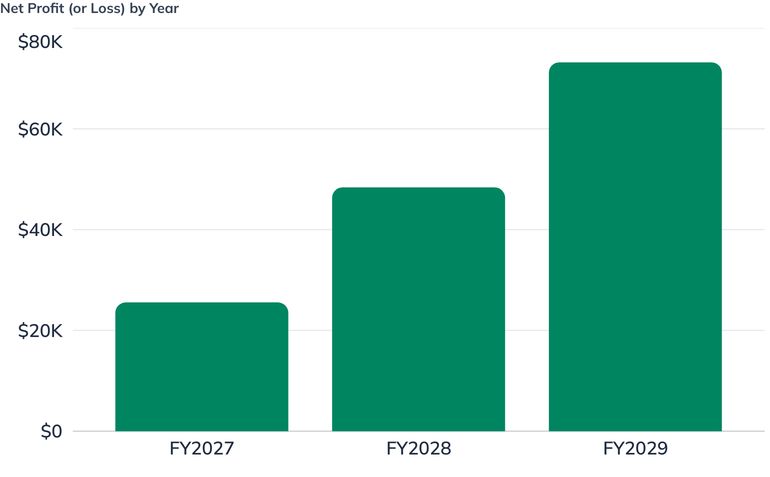
Need real financials? Explore a spreadsheet-free path to generating financial data for your business.Create your own business plan
Use of Funds
The initial funding of $30,000 will be invested by owner Jill Barton. Start-up requirements total $30,000, allocated as follows:
Start-up Expenses ($4,420)
Item | Amount |
|---|---|
Legal | $500 |
Stationery | $850 |
Brochures | $420 |
Consultants | $450 |
Insurance | $150 |
Research and Development | $800 |
Website & Digital Portfolio Setup | $700 |
Other | $550 |
Total Start-up Expenses | $4,420 |
Start-up Assets ($25,580)
Item | Amount |
|---|---|
Design Software, Reference Library & Office Equipment | $7,500 |
Working Capital / Cash Reserve | $18,080 |
Total Assets | $25,580 |
The working capital reserve is sized to keep cash on hand comfortably positive through the slower early ramp-up months, before ongoing growth is funded from business earnings.
Key Assumptions
- A healthy economy supporting moderate growth in the Boulder interior design market.
- Ability to maintain a gross margin above 70% (forecast: ~75%), reflecting a revenue mix weighted toward high-margin design consulting alongside trade-marked-up product sales.
- Owner compensation set at or approaching the Boulder County living wage (~$56,000/year) from the outset, growing as the business scales — $50,000 in year one, $58,000 in year two, $66,000 in year three.
- Receiving an initial payment of 50% of estimated project costs with balance collected within 45 days of completion.
- Direct cost of sales applies only to product revenue, at 55% of product revenue, in each forecast year.
Forecast-Driven Figures | Year 1 | Year 2 | Year 3 |
|---|---|---|---|
Total Revenue | $130,001 | $175,008 | $230,004 |
Direct Cost of Sales | $32,175 | $43,316 | $56,925 |
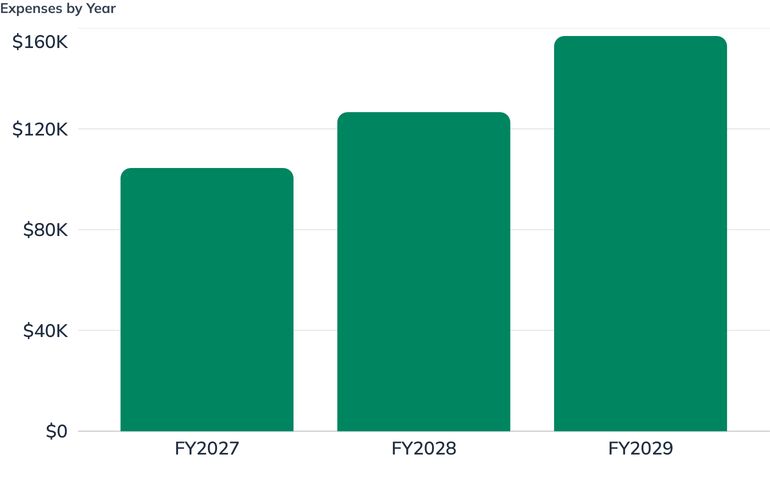
Total Operating Expenses (incl. owner compensation) | $70,778 | $81,818 | $98,400 |
Net Profit | $25,548 | $48,374 | $73,179 |
Interest Expense | $0 | $0 | $0 |
Sources of Funds
Barton Interiors is funded entirely by owner equity with no outside debt:
Source | Amount |
|---|---|
Jill Barton — Owner Investment | $30,000 |
Loans | $0 |
Total Funding | $30,000 |
The $30,000 owner investment covers $4,420 in start-up expenses, $7,500 in design software and equipment, and an $18,080 working-capital reserve to carry the business through its ramp-up period. No loan principal or interest payments apply. Future growth is intended to be self-funded from operating revenue, which turns profitable in year one.
Projected Statements
Frequently Asked Questions
An interior design business plan should cover your target client segmentation, revenue mix between consulting and product sales, competitive positioning, and funding plan. Barton Interiors' plan, for example, defines four distinct Boulder-area client segments, targets at least 45% of revenue from product sales rather than consulting billing alone, and details a lean $30,000 owner-funded launch.
Barton Interiors launched on just $30,000, entirely from owner Jill Barton's own investment with no debt: $4,420 in start-up expenses, $7,500 in design software and equipment, and an $18,080 working-capital reserve. Costs stayed low partly because the business operates from a home office rather than a leased studio, keeping rent at $0 through at least its first three years.
A general business license is typically what's needed to access wholesale trade purchasing accounts for furniture, fabric, and accessories — Barton Interiors' plan notes that nearly anyone with a business license can access this kind of trade pricing. Professional certification through organizations like ASID isn't legally required, but the plan flags it as one factor, albeit a minor one, in how some clients choose a designer.
Barton Interiors earns revenue across three streams — residential consulting, commercial consulting, and product sales of furniture, fabric, and accessories sourced through trade relationships — with an explicit goal of generating at least 45% of revenue from product sales rather than consulting fees alone. Its five-year forecast projects about $535,000 in total revenue against roughly $388,000 in expenses.
Barton Interiors' plan states the business is profitable from year one, projecting about $130,000 in first-year revenue growing to roughly $230,000 by year three as its client base and referral network mature. That profitability from day one lets founder Jill Barton draw a full-time, livable wage immediately rather than waiting several years to break even.
Independent designers in the Boulder market typically mark up fabric and materials two to four times because they lack trade-volume pricing, while Barton Interiors passes along its established trade relationships with suppliers like Kravet, Schumacher, and Hunter Douglas directly to clients. That combination of value-based pricing, curated product access, and a single point of contact from concept through installation is what the plan argues none of Boulder's independent designers or retail alternatives fully replicate.
Barton Interiors targets four segments within an estimated 24,000-household affluent Boulder-area market: Country Club Women, the largest segment (ages 35–50, married, household income above $100,000), Boomers in Transition (50–65, downsizing or retiring), Professional Couples (25–35, both partners earning above $80,000), and Home Builders (40–55, fewer projects per year but the largest transaction size of any segment).
Clients get access to furniture through special-purchase arrangements with Thomasville, Drexel Heritage, and Henredon, plus local craftspeople for custom pieces, along with decorator fabrics from mills like Kravet, Schumacher, Robert Allen, and Ralph Lauren Home. Barton Interiors also sources Hunter Douglas window treatments and interior shutters, plus antiques through a trusted local dealer and select estate and auction sources — access most homeowners can't arrange on their own.

Business Plan Outline
Start your plan