





Microbrewery Business Plan


Business Plan Summary
This microbrewery business plan example features Martin Cove Brewing Company, a Medford, Oregon craft brewer expanding distribution of its Pilsner, Roaring River Red, and a new German Marzen-style lager into the Portland tri-county area and the lower Willamette Valley. It covers Martin Cove's distributor-led sales strategy, alcohol-specific licensing requirements, and a three-year financial plan funded entirely through owner equity. Use it as inspiration for your own plan, and read our guides on how to start a brewery and how to write a brewery business plan for step-by-step advice. See also our brewery business plan example for another perspective. Download a free business plan template to get started, or browse more business plan examples.
Martin Cove Brewing Company
Executive Summary
Martin Cove Brewing Company has been a fixture of the southern Oregon craft beer scene since 1996, growing from a Medford taproom favorite into one of the region's most established microbreweries. Over the past three years the company has increased sales by 15% annually, grossing $520,000 in 2025 on top of an original $150,000 founding investment. The company's product lines are Martin Cove Pilsner and Roaring River Red.
Martin Cove handcrafts its beers in small 20-barrel batches under the close personal attention of our brewers. Modern brewing equipment and brewery management software are combined with traditional methods to ensure consistently excellent taste, whether packaged in bottles or draft kegs.
Martin Cove Brewing Company is now expanding distribution into the Portland tri-county area and the lower Willamette Valley (Corvallis and Eugene), building on the reputation it earned in Medford. The company will also introduce a new product, a traditional German Marzen-style lager. Owner funding and internally generated cash flow will fund the expansion, with the goal of substantially growing statewide revenue by Year 3 as the new markets come online.
Martin Cove's sales strategy is simple: remove the obstacles between the customer and the product. Once someone tastes Martin Cove, the quality and craftsmanship in every bottle speaks for itself.
Martin Cove beer will be available in bars and retail outlets such as local markets and corner stores. Supermarket distribution is a longer-term goal — national supermarket shelf space is more difficult and more expensive to secure, so the company will build a track record with independent accounts first.
The objectives of Martin Cove Brewing Company are the following:
- Establish strong relationships with local beer distributors in the Portland tri-county area and Willamette Valley.
- Maintain tight control of cost and operations during expansion.
- Maintain the high-quality product that the company has become known for.
Opportunity

Problem Worth Solving
Regional microbreweries have gained significant market share in Oregon over the past decade, yet consumers in expanding metro areas and university communities still lack consistent access to high-quality craft beer from trusted local producers. Mass-market national brands dominate supermarket shelf space, while specialty stores and bars seek distinctive regional microbrews that appeal to young professionals and campus communities.
Martin Cove Brewing Company addresses this opportunity by expanding distribution of its handcrafted product line — Martin Cove Pilsner, Roaring River Red, and a new traditional German Marzen style lager — into selected Oregon metro areas. The company removes obstacles between the customer and the product: once a customer tastes Martin Cove beer, the quality and craftsmanship speak for themselves.
Our Solution
Martin Cove Brewing Company has three beer product lines:
- Roaring River Red is an Irish style ale made the traditional way, withroasted specialty malts that give it that deep, ruby-colored hue.
- Martin Cove Pilsner is light, crisp and crystal clear, with a pure white foamy head. It’s a blend of the very finest domestic and imported malts, hops and bottom-fermented lager yeast, delicately balanced.
- Martin Cove Lager is brewed in the traditional German Marzen style and is malty and full-bodied. We combine imported German hops and a special European yeast strain with the finest two row malted barley from the Pacific Northwest to give Martin Cove Lager its unique character and warm, light amber color.
Market Overview
Oregon remains one of the most brewery-dense states in the country, with craft producers competing for tap handles, shelf space, and loyal local followings. After a decade of rapid expansion, the national craft segment has matured: overall beer volumes are roughly flat, and growth is now concentrated in producers with a strong regional identity, consistent quality, and community ties — exactly the profile Martin Cove has built in Medford.
Two shifts are shaping demand in Martin Cove's target markets. First, non-alcoholic and low-ABV craft options, along with ready-to-drink cocktails and seltzers, have captured a meaningful share of occasional drinkers' spending, pushing established microbreweries to compete harder for the traditional beer aisle and tap list. Second, consumers increasingly discover new breweries through social media and beer-specific ordering platforms rather than in-person sampling alone, which rewards breweries with an active digital presence and distributor relationships that make reordering easy.
Portland, Eugene, and Corvallis — Martin Cove's target expansion markets — remain some of the strongest craft beer markets in Oregon, driven by a beer-literate population, more than 60,000 combined college students, and a steady influx of professionals in tech, healthcare, and other knowledge industries. Microbrews continue to significantly outperform national brands in campus communities and in independently owned bars and specialty retailers, which is where Martin Cove will concentrate its initial expansion efforts.
Market Segmentation
Martin Cove Brewing Company plans to focus on the following market segments:
- Customers in university campus communities (Eugene, Corvallis, and Portland).
- Professional men and women aged 25 – 35 living in affluent metro communities.
Marketing and promotional activity will stay grassroots rather than mass-market: sponsorship of local entertainment and cultural events, partnerships with local venues, and an active presence on Instagram and other social platforms where craft beer drinkers discover new breweries. This approach costs less than mass advertising and builds the kind of loyal, word-of-mouth following that built Martin Cove's reputation in Medford.
Market Analysis | |||||||
|---|---|---|---|---|---|---|---|
2026 | 2027 | 2028 | 2029 | 2030 | |||
Potential Customers | Growth | CAGR | |||||
University Communities | 3% | 100,000 | 103,000 | 106,090 | 109,273 | 112,551 | 3.00% |
Affluent Metro Communities | 4% | 400,000 | 416,000 | 432,640 | 449,946 | 467,943 | 4.00% |
Total | 3.80% | 500,000 | 519,000 | 538,730 | 559,219 | 580,494 | 3.80% |
Competitors
Martin Cove Brewing Company competes in a mature but still crowded Oregon craft beer market. Regional microbreweries account for a meaningful and durable share of state beer sales, and Oregon remains one of the most brewery-dense states per capita in the country. Growth has slowed from the rapid-expansion years of the 2010s, which means winning share now comes from taking it from established competitors rather than from overall category growth.
Primary competitors include other regional microbreweries already serving Portland, Eugene, and Corvallis, many of which have multi-year relationships with the same distributors Martin Cove is targeting (Cascade Distribution and McKenzie Distribution) and established tap handles at popular bars and restaurants.
National and multi-state craft brands dominate supermarket shelf space and increasingly compete with ready-to-drink cocktails and hard seltzers for the same refrigerator-case real estate, making new supermarket entry expensive. Martin Cove will focus initial placement on independent specialty retailers and on-premise accounts, where relationships and product quality matter more than shelf-slotting fees.
Competitive advantage: Martin Cove's traditional German Marzen-style lager remains distinctive in taste and process relative to the hop-forward IPAs that dominate most competitors' lineups, giving the company a clear point of differentiation. Combined with three decades of brand reputation in Medford and small-batch, 20-barrel production quality, Martin Cove is well positioned to win shelf and tap placement as it enters new markets.
Execution
Market Plan Overview
The first step in the expansion plan is introducing the Martin Cove product line into the selected areas. New sales representatives will be assigned to the Portland tri-county area and the lower Willamette Valley (Corvallis and Eugene), supported by online ordering through distributor platforms so accounts can reorder quickly once product is on shelf or tap. The retail marketing focus will be on specialty stores and independent bars that carry regional microbrews. Martin Cove will promote sales with a 12% wholesale price reduction for the first three months in each new market to accelerate trial and placement.
Martin Cove products will be distributed in the Portland tri-county area by Cascade Distribution. In the lower Willamette Valley, McKenzie Distribution will carry Martin Cove products.
Martin Cove's new product, a traditional German Marzen-style lager, is distinctive enough in taste and process to be attractive to any account that serves beer to customers, and currently has no direct competitor in these markets — making it a strong door-opener for the sales team as it builds new distributor and retailer relationships.
The Front-Line Advocate
General Bar Manager
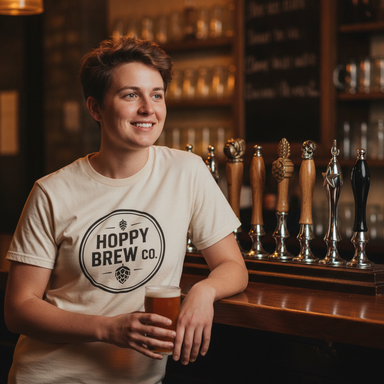
Manages the daily operations of a high-traffic campus-area bar. They are the ones who hear direct feedback from students and young professionals and want a reliable, 'easy-to-sell' beer that keeps customers coming back.
Priorities
- Reducing keg waste and ensuring easy pouring
- Providing a product that appeals to the 21-25 year old demographic
- Streamlining the delivery and restocking process with distributors
Evaluation Criteria
- Drinkability and broad appeal to occasional craft drinkers
- Availability of point-of-sale marketing materials
- Responsiveness of the brewery's regional sales representative
Pain Points
- Staff spending too much time explaining obscure beer styles to customers
- Frequent 'out of stock' issues from current regional suppliers
- Lack of promotional materials or 'swag' to drive campus interest
Common Objections
- The price point might be too high for the average college student budget
- Fear that adding another lager will cannibalize sales of existing house favorites
“If I put Martin Cove on tap, I need to know my staff can sell it in one sentence. 'It's a crisp, local Pilsner from Ashland' usually does the trick.”

The Curation Specialist
Lead Beer Buyer
A beer-literate expert responsible for rotating 30+ tap handles. They are motivated by the 'story' behind the brewery and the technical quality of the liquid, specifically looking for traditional styles like Marzens and Pilsners that appeal to purists.
Priorities
- Maintaining a diverse and trending tap list
- Ensuring technical product quality and consistency across batches
- Building relationships with breweries that have a strong digital presence
Evaluation Criteria
- Flavor profile and 'cleanliness' of the brewing process
- Social media engagement and brand aesthetic
- Ease of integration with digital ordering platforms like Untappd for Business
Pain Points
- Difficulty finding high-quality traditional lagers among a sea of IPAs
- Inconsistent supply from small microbreweries that can't meet demand
- Pressure to cater to a younger, social-media-driven demographic
Common Objections
- The brand might be too 'Medford-centric' for a Portland audience
- Unsure if the production volume can handle a permanent tap handle
“Our customers in Corvallis are educated drinkers. They want a traditional German Marzen that tastes authentic, not just another marketing gimmick.”
The Profitability Optimizer
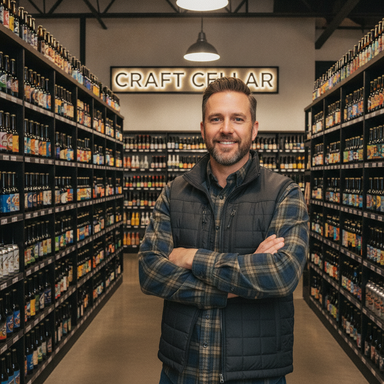
Owner and Beverage Director
A seasoned business owner focused on maximizing shelf-space ROI and maintaining a competitive edge against national brands. They prioritize high-margin regional products that have a proven track record of loyalty in the Oregon market.
Priorities
- Maximizing inventory turnover rates
- Increasing average transaction value through premium local offerings
- Securing exclusive or high-demand regional distribution rights
Evaluation Criteria
- Wholesale pricing tiers and margin potential
- Reliability of the distributor and reordering platform
- Brand reputation and existing 'local' credibility in Southern Oregon
Pain Points
- Stagnating sales from mass-market national beer brands
- Rising competition from RTD cocktails and seltzers
- High overhead costs requiring consistent 30-day inventory cycles
Common Objections
- Concerned about the saturated market in Portland and Eugene
- Worried that a new brand won't have enough marketing spend to drive foot traffic
“I don't just buy beer; I buy products that move. If Martin Cove can prove their Pilsner turns faster than the national brands, they've got a spot on my shelf.”
Sales Strategy
Martin Cove's sales strategy centers on proof over promotion: get the beer in front of the customer and let the product do the selling. Rather than compete on marketing spend with larger regional and national brands, Martin Cove leans on three decades of quality and craftsmanship built in Medford to win trial, then relies on repeat purchases and word-of-mouth to build loyalty in each new market.
The strategy has three parts:
- Lead with sampling and on-premise trial. Bars and restaurants are the fastest way to get Martin Cove in front of new drinkers, since a positive on-premise experience is the strongest predictor of a retail purchase later.
- Prioritize independent and specialty accounts before chains. Specialty retailers and independent bars are more willing to take a chance on a new regional producer and give Martin Cove more attentive placement than a national chain would.
- Use price incentives only to open doors, not to compete long-term. The 12% introductory wholesale discount is designed to accelerate initial placement, not to establish Martin Cove as a discount brand — pricing reverts to standard wholesale rates after the first three months in each market.
This mirrors what built Martin Cove's success in Medford, where it grew from a new entrant into one of the city's most popular microbreweries through consistent quality rather than aggressive marketing spend.
Competitive Edge
Martin Cove Brewing Company's competitive edge is as follows:
- Quality Process and Ingredients: Our beers use only the finest natural ingredients, carefully selected for their distinctive flavor profile, classically fermented and cold lagered for a smooth, bold taste. We use fine North American two-row barley malt in addition to imported Belgian specialty malts, generally regarded as among the finest malts in the world. We use hops from the Pacific Northwest in our ales, and imported German hops to give our Martin Cove Lager its distinctive taste.
- Handcrafted: Our beers are brewed in small 20-barrel batches under the close personal attention of our brewers. Modern brewing equipment and technology are seamlessly combined with traditional brewing methods to ensure consistently excellent taste, whether packaged in bottles or draft kegs.
- Local and Regional Sourcing: We source Pacific Northwest hops and two-row malted barley whenever possible, reducing supply chain risk and giving Martin Cove a genuine regional story that resonates with Oregon's environmentally conscious craft beer drinkers.
Sales Plan
Martin Cove Brewing Company will apply the sales strategy that built its reputation in Medford: remove the obstacles between the customer and the product, and let quality do the rest. New sales representatives will be assigned to the Portland tri-county area and the lower Willamette Valley (Corvallis and Eugene).
- Portland tri-county area: Cascade Distribution
- Lower Willamette Valley: McKenzie Distribution
Launch promotion: Wholesale prices will be reduced 12% for the first three months of sales in each new market to accelerate trial and placement, then return to standard wholesale pricing.
Sales channels: Martin Cove beer will be available in bars, local markets, corner stores, and specialty retailers at launch. Supermarket distribution remains a longer-term goal once the brand has established a track record with independent accounts in each market.
Sequencing: Portland tri-county launches first, given its larger population base and established craft beer culture, followed by the Willamette Valley markets. Detailed year-by-year sales projections are available in the Financial Plan chapter.
Locations and Facilities
Martin Cove Brewing Company is headquartered and operates its production facility in Medford, Oregon, in southern Oregon. The brewery handcrafts beer in small 20-barrel batches under the close personal attention of the company's brewmasters.
The Medford facility houses the full brewing, bottling, and shipping operation. Currently, the company employs eleven staff across production, delivery, and sales.
Expansion markets (distribution only — production remains in Medford):
- Portland tri-county area
- Lower Willamette Valley (Corvallis and Eugene)
The facility combines the latest brewing equipment and technologies with traditional brewing methods to ensure consistently excellent taste, whether packaged in bottles or draft kegs.
Technology
Martin Cove Brewing Company uses modern brewing equipment and brewery management software, seamlessly combined with traditional brewing methods. The production process emphasizes small-batch quality control rather than high-volume automation.
- 20-barrel brewing system with temperature-controlled fermentation
- Cold lagering tanks for pilsner and lager styles
- Bottling and kegging lines for both retail and draft distribution
- Cloud-based brewery management software for batch tracking, inventory, and quality records, giving the brewmasters real-time visibility across every batch
- Quality control testing for consistency across batches
The brewmasters — Bob Taft and Jeffery Calson — personally oversee each batch, ensuring that modern equipment and software support rather than replace the handcrafted care that defines Martin Cove's reputation.
Equipment and Tools
Martin Cove Brewing Company's production equipment supports small-batch craft brewing at commercial scale:
- 20-barrel brewing system — primary production capacity for all three product lines
- Fermentation and lagering tanks — separate vessels for ales and lagers
- Bottling line — packages beer for retail distribution
- Kegging equipment — supplies draft beer to bars and restaurants
- Quality control lab equipment — ensures consistency batch to batch
The existing brewing system carries a net book value of $88,000 at the start of the forecast period (original cost less accumulated depreciation), depreciating at roughly $12,600 per year. To support the added batch volume from expanding into three markets, Martin Cove is investing $18,000 in an additional fermentation tank in early 2027, depreciating at about $1,800 per year. Combined, annual depreciation runs close to $14,400 per year once the new tank is in service.
Milestones
Launch distribution in Portland tri-county area Assign new sales representatives and establish Cascade Distribution partnership for Portland tri-county market. Launch with 12% wholesale price reduction for first three months. | Felix Henderson Sept 30, 2026 |
Launch distribution in Willamette Valley Establish McKenzie Distribution partnership and enter Corvallis and Eugene markets with full Martin Cove product line. | Felix Henderson Dec 31, 2026 |
Introduce Martin Cove Lager product line Complete brewing and packaging of traditional German Marzen style lager for distribution across all Oregon markets. | Bob Taft June 30, 2027 |
Key Metrics for Success
Martin Cove Brewing Company will track the following key metrics to measure expansion success:
- Gross margin — maintain gross margins consistent with the company's historical performance as new markets come online, protecting against rising ingredient and packaging costs.
- Net profit margin — expect margins to be thinner in the first year of expansion as new-market discounts and sales rep costs ramp up, improving steadily as distribution volume grows in Year 2 and Year 3.
- Revenue growth — track sales growth in each new market against the pace set in Medford, using it as the benchmark for whether expansion is on track.
- Monthly break-even — monitor break-even closely during the first year, when new hires and distributor onboarding costs are highest relative to revenue.
Additional operational metrics include the number of distributor relationships established in each new market, shelf and tap placements secured in specialty stores and bars, and the successful launch of Martin Cove Lager in the Portland and Willamette Valley markets. Detailed year-by-year financial targets are available in the Financial Plan chapter.
Regulatory Requirements
As an alcohol producer, Martin Cove operates under federal, state, and local regulatory oversight that shapes both production and expansion plans.
Federal: Martin Cove holds a Brewer's Notice from the Alcohol and Tobacco Tax and Trade Bureau (TTB), which governs production reporting, label approval (COLA) for each new product — including the upcoming German Marzen-style lager — and federal excise tax filings.
State: Oregon Liquor and Cannabis Commission (OLCC) licensing covers manufacturing, wholesale distribution, and any direct sales. Oregon's three-tier distribution system requires Martin Cove to sell through licensed wholesalers such as Cascade Distribution and McKenzie Distribution rather than directly to retailers in its expansion markets, which is reflected in the company's distributor-led go-to-market plan.
Local and packaging: Keg deposit and container redemption requirements apply in each market Martin Cove enters, and the company maintains food safety and production sanitation standards consistent with Oregon Health Authority guidelines for food and beverage manufacturers.
Ongoing compliance: Martin Cove renews its TTB and OLCC licensing annually and tracks regulatory requirements in each new distribution market as part of its expansion planning, budgeting time and legal review into each market-entry timeline.
Pricing
Martin Cove prices its beer to reflect its handcrafted, small-batch positioning while remaining competitive with other regional microbrews on retail shelves and bar menus.
Wholesale pricing: Standard wholesale case pricing is in line with regional microbrew norms, positioned at a modest premium to mass-market craft brands to reflect Martin Cove's small-batch production and three decades of brand reputation in Medford. New markets receive a 12% introductory discount off standard wholesale pricing for the first three months to accelerate trial and placement, reverting to standard pricing afterward.
On-premise (draft) pricing: Kegs are priced to support a competitive per-pint price point at bars and restaurants, keeping Martin Cove accessible to the value-conscious college-age segment in university communities while remaining attractive to bar owners on margin.
Retail pricing: Bottled six-packs are priced comparably to other established regional microbrews carried in specialty stores — positioned above budget domestic brands but below limited-release or barrel-aged specialty beers.
Martin Cove reviews pricing at least annually, adjusting for ingredient cost changes (particularly imported German hops and specialty malts) and competitive positioning as new markets mature.
Company
Ownership and Structure
Martin Cove Brewing Company is a privately held microbrewery owned and operated by four partners who founded the business in Medford in 1996.
- John Wilson — co-founder; manages bottling and shipping operations
- Bob Taft — co-founder and brewmaster; manages brewing process
- Jeffery Calson — co-founder and brewmaster; manages brewing process
- Felix Henderson — co-founder and marketing director; manages marketing and sales
The company is funded through a combination of owner equity ($80,000 paid-in capital) and internally generated cash flow. Expansion into Portland and the Willamette Valley will be financed through owner funding and operating cash flow rather than new outside investment.
Company History
Martin Cove Brewing Company was founded in Medford in 1996. John Wilson had spent ten years bartending at two local Medford establishments before starting Martin Cove Brewing Company. Brewmasters Bob Taft and Jeffery Calson had worked at Portland Brewery Company for six and eight years, respectively, before co-founding Martin Cove. Felix Henderson joined as co-owner and marketing director with twelve years of retail sales and marketing experience.
Martin Cove Brewing Company handcrafts its beer in small 20-barrel batches under the close personal attention of our brewers. Modern brewing equipment and technology are seamlessly combined with traditional brewing methods to ensure consistently excellent taste, whether packaged in bottles or draft kegs.
The beer proved popular enough that Martin Cove could soon be found in almost every market and pub in Medford. Over time, Martin Cove Brewing Company has become one of the city's most popular microbreweries.
Martin Cove's operations have expanded significantly in recent years. The company now has a staff of eleven across production, delivery, and sales, and has increased sales by 15% annually over the past three years.
Past Performance | |||
|---|---|---|---|
FY 2023 | FY 2024 | FY 2025 | |
Sales | $350,000 | $420,000 | $520,000 |
Gross Margin | $245,000 | $294,000 | $364,000 |
Gross Margin % | 70.00% | 70.00% | 70.00% |
Operating Expenses | $200,000 | $260,000 | $320,000 |
Collection Period (days) | 0 | 49 | 57 |
Inventory Turnover | 52.00 | 52.00 | 52.00 |
Balance Sheet | |||
FY 2023 | FY 2024 | FY 2025 | |
Current Assets | |||
Cash | $10,000 | $30,000 | $80,000 |
Accounts Receivable | $49,000 | $58,000 | $80,000 |
Inventory | $10,000 | $10,000 | $20,000 |
Other Current Assets | $5,000 | $5,000 | $5,000 |
Total Current Assets | $74,000 | $103,000 | $185,000 |
Long-term Assets | |||
Long-term Assets | $100,000 | $100,000 | $100,000 |
Accumulated Depreciation | $4,000 | $8,000 | $12,000 |
Total Long-term Assets | $96,000 | $92,000 | $88,000 |
Total Assets | $170,000 | $195,000 | $273,000 |
Current Liabilities | |||
Accounts Payable | $30,000 | $20,000 | $20,000 |
Current Borrowing | $0 | $0 | $0 |
Other Current Liabilities (interest free) | $0 | $0 | $0 |
Total Current Liabilities | $30,000 | $20,000 | $20,000 |
Long-term Liabilities | $60,000 | $40,000 | $40,000 |
Total Liabilities | $90,000 | $60,000 | $60,000 |
Paid-in Capital | $30,000 | $40,000 | $80,000 |
Retained Earnings | $38,000 | $80,000 | $109,000 |
Earnings | $12,000 | $15,000 | $24,000 |
Total Capital | $80,000 | $135,000 | $213,000 |
Total Capital and Liabilities | $170,000 | $195,000 | $273,000 |
Other Inputs | |||
Payment Days | 12 | 12 | 12 |
Sales on Credit | $0 | $400,000 | $440,000 |
Receivables Turnover | 0.00 | 6.90 | 5.50 |
Company Ownership
Martin Cove Brewing Company is organized as an Oregon general partnership, owned equally by its four co-founders:
- John Wilson — 25%
- Bob Taft — 25%
- Jeffery Calson — 25%
- Felix Henderson — 25%
Ownership has remained unchanged since the company's founding in 1996. Growth has been funded through owner equity ($80,000 in paid-in capital to date) and reinvested cash flow rather than outside investors. The four partners are funding the current Portland and Willamette Valley expansion the same way, contributing an additional $260,000 in owner equity to cover new hires, launch marketing, and working capital through the ramp-up period — preserving full ownership and control rather than raising outside capital.
Management Team
Martin Cove's management team combines three decades of hands-on operating experience with the new hires needed to support statewide expansion:
- John Wilson manages bottling and shipping operations, overseeing packaging capacity as production scales to meet new-market demand.
- Bob Taft and Jeffery Calson, Martin Cove's brewmasters, manage the brewing process and maintain the quality standards the brand is known for across all three product lines.
- Felix Henderson manages marketing and sales, and is leading the hiring and onboarding of new sales representatives for the Portland and Willamette Valley expansion.
As the company enters new markets, Felix Henderson will also oversee the regional sales representative hires described in Key Planned Hires.
Advisors
Martin Cove Brewing Company has not retained outside advisors. The four owner-operators — John Wilson, Bob Taft, Jeffery Calson, and Felix Henderson — collectively bring decades of experience in bartending, professional brewing, retail sales, and marketing to guide the company's expansion strategy.
Key Planned Hires
As Martin Cove expands into the Portland tri-county area and the lower Willamette Valley, the company plans to add the following roles:
- Two Regional Sales Representatives (one per expansion market) — responsible for building and maintaining distributor and retail relationships in each new territory, reporting to Felix Henderson. Target hire: ahead of each market's 2026 launch.
- Production Support Brewer — an additional hire to support Bob Taft and Jeffery Calson as batch volume increases to supply three markets instead of one, planned for early 2027 as Willamette Valley distribution ramps up.
- Distribution/Logistics Coordinator — supports John Wilson in coordinating shipping and delivery schedules across three geographically separated markets, planned once Portland and Willamette Valley distribution are both live.
These hires are funded through the same owner equity and internally generated cash flow financing the rest of the expansion, consistent with Martin Cove's history of growing without outside investment.
Financial Plan
Revenue
Need actual charts? We recommend using LivePlan as the easiest way to create graphs for your own business plan.Create your own business plan
Expenses & Costs
Need actual charts? We recommend using LivePlan as the easiest way to create graphs for your own business plan.Create your own business plan
Profitability
Need real financials? Explore a spreadsheet-free path to generating financial data for your business.Create your own business plan
Use of Funds
Martin Cove Brewing Company's expansion will be funded through owner equity and internally generated cash flow — no new outside investment is required.
- Sales and marketing — new sales representatives for Portland and Willamette Valley markets, grassroots promotional events, and a 12% wholesale price reduction during launch periods
- Distribution setup — partnerships with Cascade Distribution (Portland) and McKenzie Distribution (Willamette Valley)
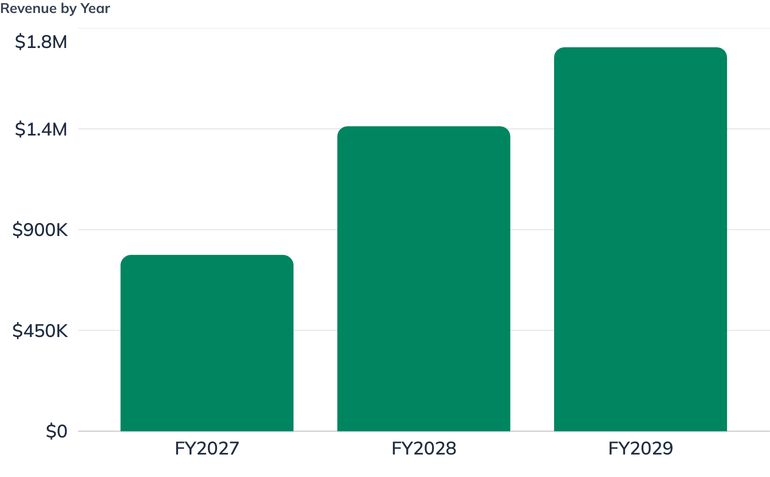
- Working capital — inventory and accounts receivable to support revenue growth from $890,000 to $1.28 million
- Product development — launch of the traditional German Marzen style lager (Martin Cove Lager)
The company begins the forecast period with $80,000 in paid-in capital and $80,000 in cash.
Sources of Funds
Martin Cove Brewing Company is funded through a combination of owner equity and operating cash flow:
Owner equity: $80,000 in paid-in capital from the four founding partners (John Wilson, Bob Taft, Jeffery Calson, and Felix Henderson). The original business was launched with a $150,000 initial investment.
Existing long-term debt: $40,000 outstanding long-term loan at 10.0% annual interest, with monthly principal payments of approximately $335.
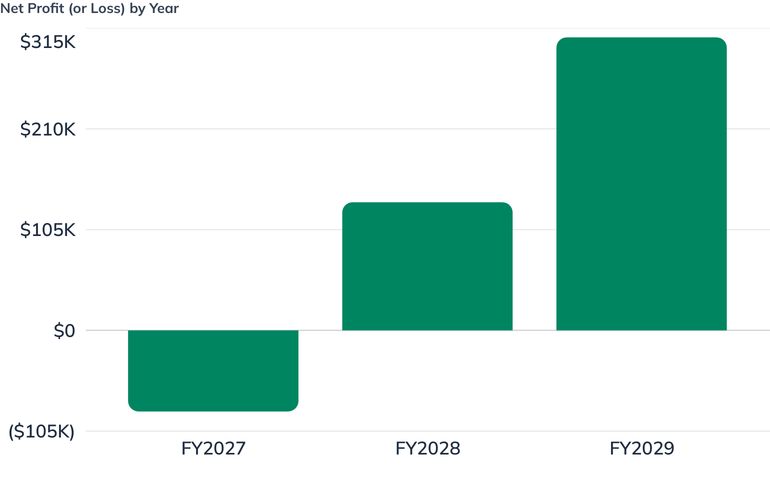
Internal cash flow: Retained earnings of $109,000 and projected net profits of $41,930 (Year 1), $99,194 (Year 2), and $171,730 (Year 3) will fund the expansion without requiring new outside capital.
Year 1 | Year 2 | Year 3 | |
|---|---|---|---|
Paid-in Capital | $80,000 | $80,000 | $80,000 |
Retained Earnings (projected) | $41,930 | $141,124 | $312,854 |
Projected Statements
Frequently Asked Questions
A microbrewery business plan needs the same core sections as any small business plan — market segmentation, competitive positioning, and financial projections — plus a few items unique to alcohol production. Martin Cove Brewing Company's plan, for example, covers its distributor relationships (Cascade Distribution and McKenzie Distribution), federal and state licensing under the TTB and OLCC, and a three-year financial forecast built around its Oregon expansion.
Startup costs vary widely with brewing capacity and whether you're opening a taproom. Martin Cove Brewing Company launched in Medford with an original investment of $150,000, and its current expansion into two new distribution markets is funded by an additional $260,000 in owner equity to cover new sales hires, launch promotions, and working capital. A small-batch brewery of similar scale should expect a comparable range once equipment, licensing, and initial inventory are factored in.
Yes. Breweries operate under federal, state, and local oversight. Martin Cove holds a Brewer's Notice from the Alcohol and Tobacco Tax and Trade Bureau (TTB), which governs production reporting, label approval (COLA) for each new beer, and federal excise tax filings, plus Oregon Liquor and Cannabis Commission (OLCC) licensing for manufacturing and wholesale distribution. Oregon's three-tier system also requires selling through licensed distributors rather than directly to retailers.
Microbreweries typically earn revenue across three channels: wholesale sales to bars and retailers through licensed distributors, on-premise draft sales at bars and restaurants, and retail packaged sales such as bottles or six-packs. Martin Cove Brewing Company sells through distributor partners Cascade Distribution and McKenzie Distribution, maintaining a consistent 70% gross margin across its Pilsner, Red Ale, and Lager product lines.
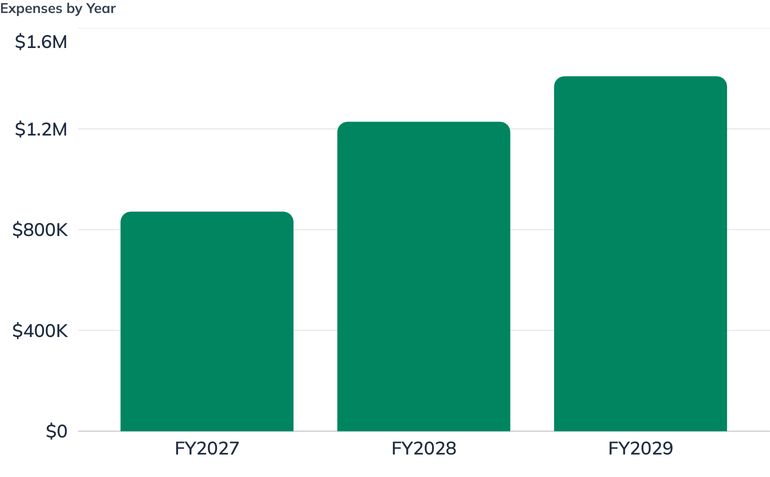
It depends on whether you're launching from scratch or, like Martin Cove, expanding an established brand into new markets. Martin Cove's forecast shows an operating loss of roughly $84,000 in the first year of expansion as new-market discounts and sales rep costs ramp up, turning profitable in Year 2 with $133,548 in net profit and growing to $305,229 by Year 3 as distribution volume builds.
Small breweries compete against national craft brands by winning on distinctiveness and relationships rather than shelf-slotting budgets. Martin Cove's traditional German Marzen-style lager stands apart from the hop-forward IPAs that dominate most competitors' lineups, and the company leans on three decades of brand reputation in Medford plus small-batch, 20-barrel production quality to win placement with independent specialty retailers and bars before pursuing costlier supermarket distribution.
Martin Cove targets two core segments in its expansion markets: university campus communities in Eugene, Corvallis, and Portland, home to more than 60,000 combined college students, and professionals aged 25-35 in affluent metro areas. Both groups increasingly discover new breweries through social media and on-premise sampling at bars and specialty retailers rather than traditional advertising.
Martin Cove enters each new market with a 12% introductory wholesale discount for the first three months, designed to accelerate trial and placement rather than establish the brand as a discount option — pricing reverts to standard wholesale rates afterward. The company also sequences its launches, entering the larger Portland tri-county market first before the Willamette Valley, and prioritizes independent bars and specialty retailers over chains before pursuing supermarket shelf space.

Business Plan Outline
Start your plan