





Convenience Store Cafe Business Plan


Business Plan Summary
This convenience store cafe business plan example features Luna's Convenience Store, the only food store within two miles of the newly built Aspen Estates community in Jenniville, founded by owners Thomas and Heidi Renner. It covers Luna's full grocery-and-convenience product mix alongside a leased in-store cafe, its four distinct Aspen Estates customer segments, and a $200,000 launch funded through owner savings and a bank loan. Use it as inspiration for your own plan. See also our convenience store business plan example and our convenience store soda fountain business plan example for other perspectives. Download a free business plan template to get started, or browse more business plan examples.
Luna's Convenience Store
Executive Summary
Luna’s is a brand new convenience store based close to Aspen Estates in the town of Jenniville. Aspen Estates is a new housing estates which is aimed at high income individuals and young couples. This presents a great opportunity for the store. Typical household incomes in this area are $85,000 to $100,000. In addition, it is the only food store with two miles of the housing estate.
It is a start-up company owned by Thomas and Heidi Renner. Thomas and Heidi make a perfect business partnership. Heidi has fifteen years of experience in the retail food industry and Thomas is a certified public accountant. He will deal with the financial side of the business and Heidi will deal with day to day operations.
Luna’s will offer a range of fresh, organic produce, staples, packaged foods, drinks (alcoholic and nonalcoholic), prepackaged fresh meals and pastries, newspapers, pet foods, medicines, health and beauty items, etc. In addition, Luna’s will rent a small section of the store to a cafe. The cafe will have seating for approximately 20 people and will provide breakfast, lunch, coffee, tea, cold drinks and pastries.
Luna’s competitive edge is its location, its focus on customer service and the experience and knowledge of the owners.
Keys to Success
Keys to success:
1. The convince Aspen Estates residents that Luna’s is “their” convenience.store
2. To turn over inventory an average of 15 – 20 times per year.
3. To provide a broad supply of groceries, food and necessary household items.
Objectives
1. To make Luna’s the preferred convenience store for the residents of the newly built Aspen Estates and surrounding neighborhoods.
2. To break-even by the end of the first year.
3. To achieve a net profit of 5% by year three.
Mission
The mission of Luna’s Convenience Store is to provide packaged foods, fresh foods, fast food, soft drinks, beer, cigarettes, groceries, and selected nonfood items to residents of the Aspen Estates and surrounding neighborhoods. The store will provide fair priced items to its customers and provide a healthy profit for its owners.
Opportunity

Problem Worth Solving
Aspen Estates is a newly built residential community in the western suburbs of Jenniville, home to a growing mix of young professional couples, remote and hybrid tech workers, and families with household incomes of $85,000–$100,000+. Despite the affluent, fast-growing resident base, there is no grocery or convenience store within two miles of the community.
Residents currently have to drive well out of their way for:
- Fresh, organic produce and everyday grocery staples
- Packaged foods, beverages, and household essentials
- Grab-and-go meals, pastries, and a place to sit down with a coffee
- Health and beauty items, pet food, and over-the-counter medicines
Time-pressed professionals and busy parents in Aspen Estates want convenience without giving up quality — they don't want a bargain-aisle gas station store, but they also don't have time for a full grocery run for a gallon of milk or a school-night dinner. That gap between "no store nearby" and "a store worth stopping at" is what Luna's Convenience Store is built to close, from a Main Street location just 30 yards from the community's main entrance.
Our Solution
Luna's Convenience Store closes the food-access gap by opening the only store within two miles of Aspen Estates, built around a premium, service-first experience rather than the traditional bargain convenience-store model.
Product offering
- Fresh, organic produce, grocery staples, and packaged foods
- Beer, wine, and a curated selection of everyday beverages
- Grab-and-go prepared meals, sandwiches, and pastries
- Newspapers, pet food, over-the-counter medicines, and health and beauty items
- An in-store cafe (leased to a third-party tenant, seating for ~20) serving breakfast, lunch, coffee, tea, and pastries — giving residents a reason to linger, not just stop in
Service model
Luna's is deliberately positioned as the neighborhood's grocery-and-gathering spot, not a fluorescent-lit stopover. Staff are trained to help customers find what they need quickly and to suggest complementary items — fresh bread with the soup, a bag of coffee with the pastry — that raise the average ticket without feeling like a hard sell.
Ownership advantage
Heidi Renner brings 15 years of retail food and grocery management experience; Thomas Renner, a certified CPA, runs the financial and operational side. That combination — deep category and vendor knowledge paired with disciplined financial management — is core to executing a premium format profitably in a single-location business.
Target Market
Target Market
Aspen Estates is a newly built residential community in the western suburbs of Jenniville. The development is largely built out, with the majority of condominiums and townhouses already occupied and additional units completing over the next several quarters.
All Aspen Estates residences are owner-occupied rather than rented, and household income in the community is estimated at $85,000–$100,000, well above the Jenniville metro average. A significant share of residents work at technology and professional-services employers within a 20-mile radius, many on hybrid schedules that put them home — and shopping locally — on weekdays as well as weekends. The core demographic skews 25–45, married or partnered, and includes a growing number of young families.
Market segments
- Young professional couples (dual-income, no kids): Frequent, smaller-basket trips — coffee, lunch, wine, and prepared meals on weeknights. High receptivity to premium and organic products.
- Growing families: Larger, more frequent grocery trips; strong demand for staples, diapers, baby food, and snacks. Price-aware but will pay for convenience and quality on everyday items.
- Hybrid and remote tech workers: Shop during weekday daytime hours when traditional grocery stores see less traffic; value the cafe as an informal workspace and meeting spot.
- Downsizers and empty-nesters: A smaller but growing segment as later phases of Aspen Estates complete; lower basket size, high frequency, strong loyalty once a store earns their trust.
Because every one of these segments is a short walk or drive from the store and none is currently served by a nearby grocery option, Luna's is designing its product mix — organic produce, family staples, prepared meals, and a full-service cafe — to give each segment a clear reason to make Luna's their default stop rather than driving further afield.
Competition
Competition
Luna's has a first-mover advantage: no direct grocery or convenience competitor operates within a two-mile radius of Aspen Estates. The nearest alternatives are a big-box grocery store and a national convenience chain, both requiring a drive that most residents will avoid for routine, small-basket purchases.
Buying patterns
Traditional convenience stores are built around fast, low-margin purchases — fuel, cigarettes, and beer to a mostly male, 18–34 customer base. Luna's deliberately does not compete on that model. Aspen Estates residents shop for quality and convenience together: they'll pay a premium for organic produce and a good cup of coffee, but they still want the trip to take five minutes, not thirty.
Competitive response risk
The main competitive risk is a national chain (convenience or dollar-format) opening a second location nearer to Aspen Estates as the development completes its remaining phases. Luna's counters this with two things a chain store can't easily replicate: an owner-operator relationship with the neighborhood and the in-store cafe, which turns a transactional visit into a reason to stay.
Competitors
Adjacent businesses
Luna's shares its Main Street building with a coffee shop, gourmet chocolate shop, gift shop, and bookstore. None of these offer a grocery or convenience assortment, so they complement rather than compete with Luna's — and the in-store cafe tenant gives the building a genuine "stop and stay" draw that benefits foot traffic for everyone on the strip.
Differentiation summary
Rather than competing on speed and price the way a gas-station convenience store would, Luna's competes on being the trusted, walkable, quality-first option for a neighborhood that currently has none — with the cafe, curated organic assortment, and owner-operator service model as the durable differentiators a larger chain would be slow to copy.
Execution
Market Plan
Marketing Plan
Luna's marketing strategy leans on being the only convenience option in a tight-knit, highly connected community — word of mouth and local visibility matter more here than broad advertising spend.
Strategic assumptions:
- Genuinely attentive customer service turns first-time visitors into regulars faster than any ad campaign.
- A well-run cafe corner drives repeat foot traffic and lets customers "sample" the rest of the store.
- Because Aspen Estates is dense and self-contained, hyper-local digital channels (a neighborhood Facebook/Nextdoor group, a simple Google Business profile, and email/SMS to opt-in customers) outperform traditional above-the-line advertising for the cost.

The Hybrid Tech Strategist
Marcus Reed
Marcus is a high-earning data analyst who works from his Aspen Estates home three days a week. He values high-quality caffeine and healthy lunch options that don't require him to break his focus by driving 20 minutes into Jenniville.
Age
34
Location
Aspen Estates, Jenniville, GA
Family Status
Married, no children
Education
Master's in Data Science
Profession
Senior Data Analyst at a regional tech firm
Opportunities
- Implement a 'Remote Worker' punch card for the cafe to encourage Marcus to use the 20-seat seating area as his secondary office.
- Stock high-protein, organic prepackaged meals specifically labeled for quick lunches to cater to his tight meeting schedule.
Pain Points
- Isolation from working at home leads to productivity slumps
- Lack of high-quality, organic coffee options within walking distance
- Wasting 30-40 minutes of the workday just to find a healthy lunch
Needs
- A 'third space' to work outside the home with a professional atmosphere
- Reliable access to fresh, organic produce for mid-week cooking
- High-end craft beer and wine selection for post-work relaxation
“I love the new house, but I'm tired of drinking burnt home-brew coffee. Having a cafe 30 yards away changes my entire work-from-home dynamic.”

The Wellness Enthusiast
Elena Rodriguez
Elena recently moved to Aspen Estates and is highly conscious of her environmental footprint and diet. She prefers independent shops over big-box retailers and is willing to pay a premium for organic, locally-sourced goods.
Age
28
Location
Aspen Estates, Jenniville, GA
Family Status
Partnered, living together
Education
Bachelor of Fine Arts
Profession
UX Designer / Freelance Illustrator
Opportunities
- Highlight the 'Fresh and Organic' produce section to compete with specialty stores like Whole Foods that are currently too far away.
- Use the cafe space to host small weekend gatherings or local artist showcases to cement Luna's as the neighborhood hub.
Pain Points
- Frustration with the lack of 'boutique' shopping experiences in suburban developments
- Struggling to find high-quality organic snacks that aren't processed
- Missing the community vibe of her previous urban neighborhood
Needs
- A curated selection of health and beauty items that are paraben-free/organic
- Fresh pastries and artisanal bread (2 for $7.00) for weekend brunches
- A sense of belonging to a local 'community' store rather than a chain
“I'd much rather support Thomas and Heidi than a giant corporation. Plus, their organic produce is actually fresh, not wilted from a long truck ride.”
The Efficiency-Driven Parent
Sarah Jenkins
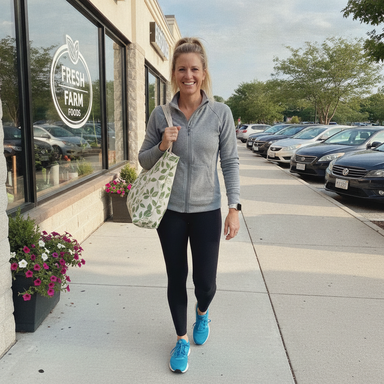
Sarah manages a chaotic household and a demanding career. She is the primary shopper and often finds herself needing 'just one thing' like organic milk or pet food, but hates the logistical nightmare of a full-scale grocery run.
Age
41
Location
Aspen Estates, Jenniville, GA
Family Status
Married, 2 children (ages 7 and 10)
Education
Bachelor of Business Administration
Profession
Operations Manager
Opportunities
- Offer 'Dinner in a Dash' bundles featuring Luna's prepackaged fresh meals and a gallon of organic milk.
- Provide a service where staples like bread, eggs, and pet food can be pre-ordered for quick curbside pickup.
Pain Points
- Running out of staples like organic milk (priced at $6.79) mid-week
- The 4-mile round trip to the nearest store is a 20-minute loss during evening routines
- Limited local access to over-the-counter medicines and health items for kids
Needs
- Reliable stock of organic household staples (eggs, bread, milk)
- Quick, healthy dinner alternatives to fast food
- A one-stop shop for pet food and basic medicines to avoid extra trips
“If I realize we're out of eggs at 7 AM, I don't want to buckle two kids into car seats for a 15-minute drive. I just want to walk to Luna's.”
Marketing Strategy
Marketing Strategy
Luna's has direct access to demographic research from the Aspen Estates developer, giving it a detailed picture of the community it's serving before opening day — household income, family composition, and employer concentration. That data shapes what Luna's stocks and how it markets, rather than guessing at neighborhood needs.
Channels:
- Local digital presence: A claimed and maintained Google Business profile, presence in the Aspen Estates resident Facebook/Nextdoor groups, and a simple opt-in SMS/email list for weekly specials and cafe promotions.
- Grand opening event: A launch event timed to Aspen Estates community gatherings, with cafe sampling and a first-visit discount to drive initial trial.
- In-community signage: Clear, attractive signage at the Aspen Estates entrance and on Main Street — since the store's biggest advantage is proximity, making that proximity visible is the highest-leverage marketing dollar Luna's can spend.
- Loyalty program: A simple punch-card or app-based loyalty program for the cafe and grocery side to convert first-time visitors into habitual, multi-visit-per-week customers.
Because the store's location does most of the work, Luna's plans to spend modestly on traditional above-the-line advertising and instead prioritize the channels above, which are low-cost and directly reach Aspen Estates residents.
Sales Plan
Sales Plan
Luna's sales plan focuses on maximizing average ticket size and repeat visit frequency from Aspen Estates residents, rather than competing for one-off, price-driven traffic.
Sales approach:
- Lead with convenience-plus-quality merchandising: organic produce and grocery staples alongside grab-and-go prepared meals and the cafe counter.
- Train staff to proactively suggest complementary items (a loaf of bread with the soup, a pastry with the coffee) rather than relying on impulse racks alone.
- Track average ticket size as a core sales metric, targeting a meaningfully higher ticket than a typical convenience store by leaning into premium, higher-margin categories.
Detailed revenue targets by category and year are maintained in the Financial Plan chapter, which reflects the current forecast for this plan.
Locations and Facilities
Location & Facilities
Luna's occupies a leased storefront on Main Street in Jenniville, approximately 30 yards from the main entrance of Aspen Estates — the closest commercial building to the community. The building is new construction, completed alongside the Aspen Estates residences, and houses five other storefronts on the same strip: a coffee shop, a gourmet chocolate shop, a gift shop, and a bookstore, in addition to Luna's.
The store itself is sized to support a full grocery-and-convenience assortment plus the leased cafe corner (seating for approximately 20), with refrigeration for fresh foods and drinks, dedicated shelving for packaged goods and household items, and a checkout area positioned for fast, low-friction transactions. Because the building is new, no renovation or deferred maintenance is required before move-in — startup capital goes toward fixtures, inventory, and the cafe build-out rather than repairs.
Technology
Technology
Luna's runs on a lean, modern retail stack sized for a single-location store — no more complexity than the business needs, but enough to keep inventory and cash tight:
- Point-of-sale system (e.g., Square or Clover) with integrated inventory tracking, sized to support 15–20 inventory turns per year across grocery, prepared foods, and the cafe.
- Contactless and mobile payments — tap-to-pay, Apple Pay, and Google Pay alongside standard card processing, matching how Aspen Estates' tech-forward resident base actually pays.
- Automated reordering for fast-moving items (diapers, baby food, organic produce, dairy) to avoid stockouts without over-ordering perishables.
- Simple loyalty/CRM tool tied to the POS to run the punch-card or app-based loyalty program described in the Marketing Strategy.
- Security — cameras and electronic article surveillance on higher-value categories (health and beauty, alcohol).
Thomas Renner's CPA background ensures these systems are configured correctly from day one and reconciled against the financial plan's inventory and cost assumptions.
Equipment and Tools
Startup equipment and fixtures represent a significant investment in Luna's store setup:
Long-term assets ($30,000):
- Store fixtures and shelving for grocery, packaged goods, and hard goods displays
- Refrigeration units for fresh foods, dairy, drinks, and prepackaged meals
- Checkout counters and POS hardware
- Cafe tenant build-out allowance (rented section with seating for ~20)
Expensed equipment ($1,300):
- Small equipment purchased at startup and expensed immediately
Initial inventory ($100,000):
The largest startup cost—stocking organic produce, staples, packaged foods, beverages, health and beauty items, pet foods, and medicines.
Since Luna's occupies a brand-new building, no pre-move-in maintenance is required. Equipment is selected to support the store's premium positioning with higher-end fixtures than typical convenience stores.
Milestones
Write Business Plan Complete the business plan for Luna's Convenience Store. Budget: $0. | Thomas/Heidi Completed |
Form Corporation Incorporate Luna's Convenience Store in Delaware. Budget: $0. | Thomas Completed |
Negotiate Lease on Property Negotiate lease on Main Street property near Aspen Estates. Budget: $0. | Thomas Completed |
Store Construction Complete store build-out including fixtures and fittings ($30,000 long-term assets). Budget: $0 (contractor costs covered in startup budget). | Contractors Completed |
Create Collateral Materials Develop marketing collateral materials for store opening. Budget: $500. | Outside Agency Completed |
Hire Employees Recruit and hire cashier staff before grand opening. Budget: $0. | Heidi Completed |
Grand Opening Official grand opening of Luna's Convenience Store on Main Street, Jenniville. Budget: $0. | Heidi/Thomas Completed |
Key Metrics
Key Metrics
Luna's tracks a small set of metrics closely tied to the financial plan and to what actually drives a single-location convenience-and-cafe business:
- Gross margin: targeting a blended margin meaningfully above the traditional convenience-store industry average (roughly 20–24%) by weighting the mix toward organic and prepared foods.
- Inventory turnover: 15–20 turns per year, tracked category by category since fresh and perishable goods turn far faster than packaged staples.
- Average ticket size: tracked against a target above the traditional convenience-store average, reflecting the premium, higher-margin mix.
- Break-even revenue: monitored monthly against fixed costs and blended variable cost rate; see the Financial Plan chapter for current figures.
- Customer retention/loyalty enrollment: share of transactions from loyalty program members, as a proxy for how well Luna's is converting Aspen Estates residents into regulars within the first 12 months of opening.
Exact dollar and percentage targets for each of these are maintained in the Financial Plan chapter so they stay in sync with the live forecast.
Company
Ownership and Structure
Ownership & Structure
Luna's Convenience Store is a start-up, owned and operated by Thomas and Heidi Renner. The store occupies a leased storefront on Main Street in Jenniville, approximately 30 yards from the main entrance of Aspen Estates, in a newly constructed building shared with a coffee shop, gourmet chocolate shop, gift shop, and bookstore.
The company is organized as a Delaware LLC, with Thomas and Heidi Renner as co-owners. Start-up capital combines the Renners' own investment with a bank loan; current funding detail is maintained in the Financial Plan chapter (Sources of Funds).
Management Team
Management Team
Thomas and Heidi Renner are the owners and day-to-day managers of Luna's Convenience Store, and their combined background is a close fit for a premium, single-location grocery-and-cafe format.
Heidi Renner spent 15 years in retail food management, most recently running a regional grocery store location. She brings hands-on experience in inventory management, staff scheduling, and vendor relationships — including existing relationships with regional food and beverage distributors that help Luna's secure better terms and faster restocking than a brand-new operator typically could.
Thomas Renner is a certified public accountant who ran his own practice for ten years, working closely with small businesses across retail and food service. That experience gives him a clear-eyed view of where small retail businesses typically run into cash flow trouble, and he owns Luna's financial systems, reporting, and cost controls from day one.
Day to day, Heidi manages store operations, staffing, and merchandising, while Thomas manages finances, vendor contracts, and the cafe tenant lease — a division of labor that matches each partner's strengths.
Advisors
Advisors
Luna's does not maintain a formal external advisory board. Instead, the ownership team covers most of the expertise a small advisory board would typically provide:
- Thomas Renner (Co-owner, CPA): Ten years running his own accounting practice, working with small businesses across retail and food service — providing in-house financial and strategic guidance rather than relying on an outside advisor.
- Heidi Renner (Co-owner, Operations): 15 years of retail food management experience, including established vendor relationships from her prior grocery management role.
For specialized needs outside the owners' expertise — legal setup, marketing collateral, and store build-out — Luna's engages outside consultants and contractors as needed, budgeted for in the start-up expense plan.
Financial Plan
Revenue
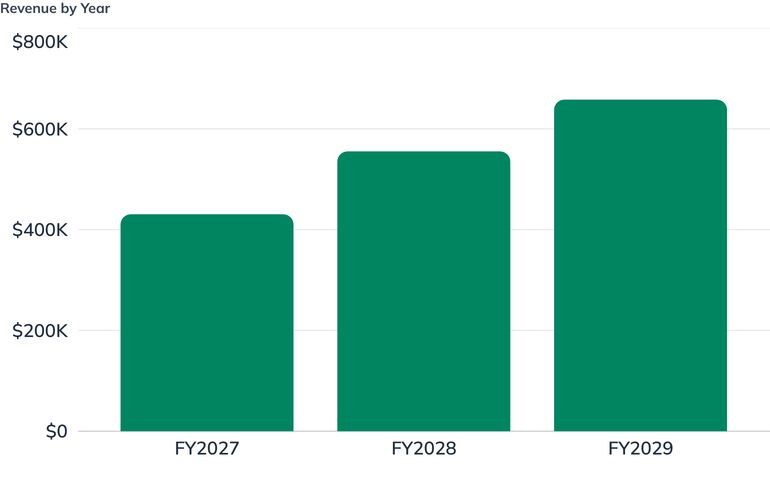
Need actual charts? We recommend using LivePlan as the easiest way to create graphs for your own business plan.Create your own business plan
Expenses & Costs
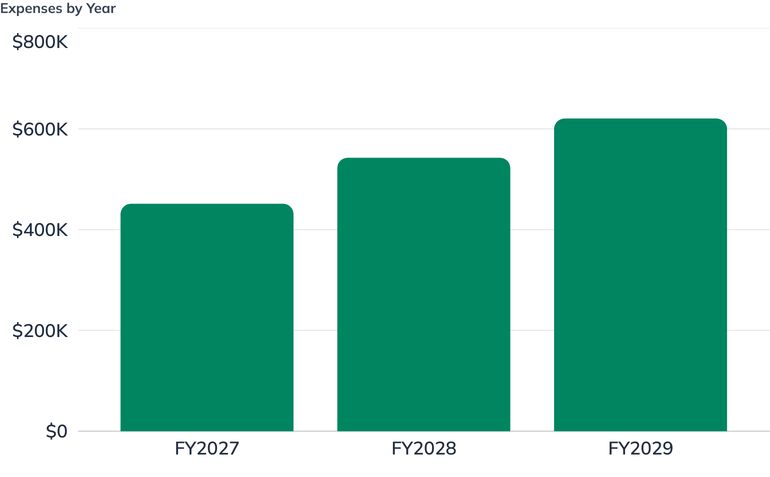
Need real milestones? We recommend using LivePlan as the easiest way to create milestones for your own business plan.Create your own business plan
Profitability
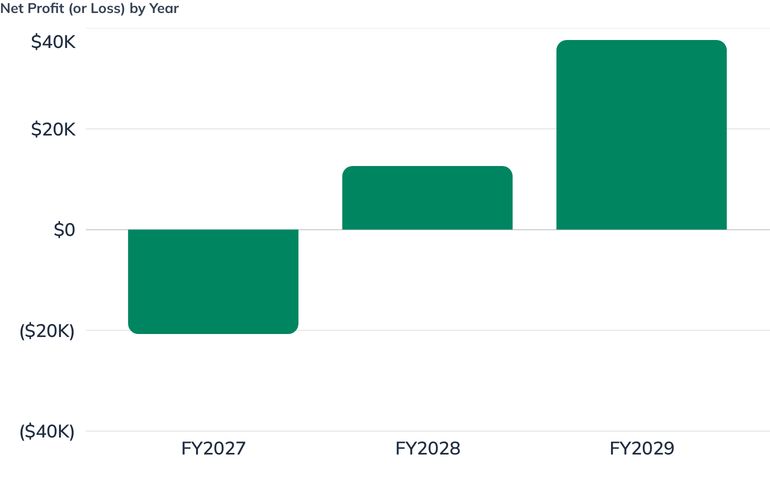
Need real financials? Explore a spreadsheet-free path to generating financial data for your business.Create your own business plan
Use of Funds
Total startup funding required is $200,000, allocated as follows:
Start-up Expenses ($6,900)
Item | Amount |
|---|---|
Legal | $500 |
Stationery | $100 |
Consultants | $500 |
Insurance | $1,000 |
Rent (initial) | $3,000 |
Expensed Equipment | $1,300 |
Other | $500 |
Start-up Assets ($193,100)
Item | Amount |
|---|---|
Cash Required | $58,100 |
Start-up Inventory | $100,000 |
Other Current Assets | $5,000 |
Long-term Assets (fixtures & fittings) | $30,000 |
The largest single cost is initial inventory at $100,000, followed by fixtures and fittings at $30,000. Since Luna's occupies a brand-new building on Main Street in Jenniville, no pre-move-in maintenance is required.
Sources of Funds
Startup funding comes from owner investment and a bank loan:
Source | Amount |
|---|---|
Owner Investment (Thomas & Heidi Renner) | $150,000 |
Bank Loan (10% interest) | $50,000 |
Total Funding | $200,000 |
Loan Repayment & Interest (from forecast):
Year | Principal Repayment | Interest Expense |
|---|
Thomas and Heidi Renner contribute $150,000 from personal savings. The remaining $50,000 is secured as a bank loan at 10% annual interest, classified as current borrowing. The company is incorporated in Delaware and owned jointly by Thomas and Heidi Renner.
Projected Statements
Key Assumptions
General Assumptions (from LivePlan forecast)
Assumption | Year 1 | Year 2 | Year 3 |
|---|---|---|---|
Current Interest Rate | 10.0% | 10.0% | 10.0% |
Long-term Interest Rate | 10.0% | 10.0% | 10.0% |
Corporate Tax Rate | 30.0% | 30.0% | 30.0% |
Additional assumptions:
- Growth will be moderate with steady cash flows as Aspen Estates fills with residents.
- Marketing will be minimal—Luna's relies on convenient location rather than paid advertising.
- Tight inventory controls will manage costs; target 15–20 inventory turns per year.
- Higher gross margins than industry averages due to targeting affluent professionals and organic product mix.
- Luna's does not sell on credit—all sales are cash.
- Part-time staff only (in addition to owner salaries); no benefits paid to part-timers.
Forecast interest expense: Year 1 $6,116 | Year 2 $6,672 | Year 3 $6,672 Forecast income taxes: Year 1 $273 | Year 2 $9,520 | Year 3 $11,900
Frequently Asked Questions
A convenience store business plan should cover local demand and location analysis, your product mix and differentiation strategy, target customer segments, and a funding plan. Luna's Convenience Store's plan, for example, documents its position as the only food store within two miles of the Aspen Estates community, a full grocery-plus-cafe product mix, four distinct customer segments, and a $200,000 funding plan blending owner savings and a bank loan.
Luna's Convenience Store raised $200,000 in total start-up funding: $150,000 from owners Thomas and Heidi Renner's personal savings plus a $50,000 bank loan at 10% annual interest. Costs stayed manageable partly because the leased storefront is new construction requiring no renovation, so start-up capital went toward fixtures, inventory, and the in-store cafe build-out rather than repairs.
Yes — a convenience store selling beer and wine, prepared food, and over-the-counter medicines like Luna's typically needs a retail food license, alcohol sales permit, and health department approval for prepared foodservice, on top of standard business registration and insurance. Exact requirements vary by state and municipality, so it's worth confirming specifics with local licensing authorities during planning.
Luna's Convenience Store earns revenue across beverage sales, prepared foodservice, and other categories like groceries, household items, and health and beauty products, plus rental income from leasing its in-store cafe corner to a third-party tenant. Its five-year forecast projects about $1.64 million in total revenue against roughly $1.61 million in expenses, a thin-margin model consistent with the plan's own conservative profitability targets.
Luna's Convenience Store's stated objectives are to break even by the end of year one and reach a 5% net profit margin by year three. Its multi-year forecast shows a thin cumulative net profit of about $29,500 on $1.64 million in revenue, right in line with that conservative, break-even-first approach rather than an aggressive early ramp.
Rather than competing on speed and price the way a gas-station store would, Luna's competes on being the trusted, walkable, quality-first option for a neighborhood that currently has no grocery or convenience store within two miles. Fresh organic produce, an in-store cafe with seating for about 20, and an owner-operator team combining Heidi Renner's 15 years of retail food experience with Thomas Renner's CPA financial discipline are the durable differentiators the plan argues a larger chain would be slow to copy.
Luna's targets four segments within the affluent Aspen Estates community, where household income runs $85,000 to $100,000: young professional couples making frequent, smaller-basket trips for coffee and prepared meals; growing families needing staples, diapers, and baby food; hybrid and remote tech workers who shop on weekday daytime hours and use the cafe as an informal workspace; and downsizers and empty-nesters who shop frequently in smaller amounts once they trust a store.
No — the roughly 20-seat cafe corner inside Luna's is leased to a third-party tenant that serves breakfast, lunch, coffee, tea, and pastries. That gives the store a genuine 'stop and stay' draw that boosts foot traffic for the whole Main Street strip, without Luna's having to run food service operations itself.

Business Plan Outline
Start your plan