




Vending Machine Business Plan


Business Plan Summary
This healthy vending machine business plan example features LiveHealthy, a curated better-for-you vending operator launching 8 machines across three high-traffic Fort Collins, Colorado locations. It covers positioning against traditional and national healthy-vending competitors, a cashless-first and QR-code nutrition-transparency approach, revenue-share placement agreements with property owners, and a realistic financial ramp from a modest Year 1 loss to stable profitability. Use it as inspiration for your own plan. Learn how to start a vending machine business, download a free business plan template to get started on your own plan, or browse more business plan examples.
LiveHealthy
Executive Summary
LiveHealthy vending provides healthy, delicious, and affordable alternatives to traditional vending machines. We understand that despite your busy schedule, you aim to remain satisfied between meals by accessing nutrient-rich foods. We are committed to providing options aligned with your health goals as you manage hunger and improve diet quality. People should not have to trade convenience for quality.
Target locations include The Exchange at Jessup Farm, Foothills Mall, and the Colorado State University campus. LiveHealthy launches with 8 vending machines and $78,000 in owner investment.
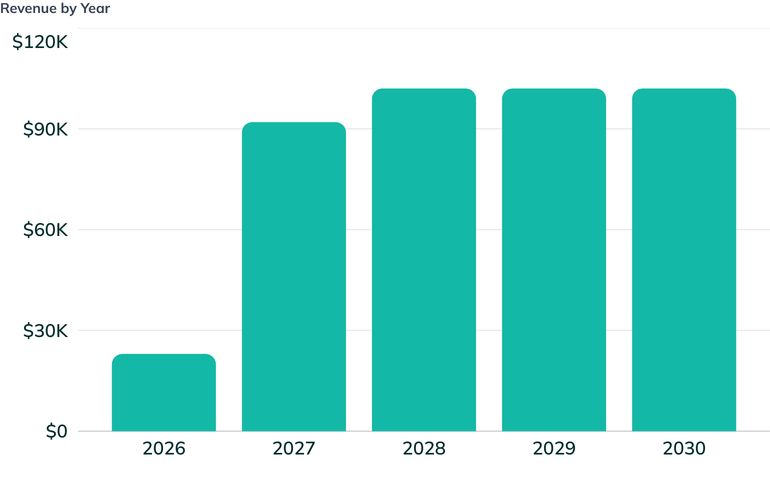
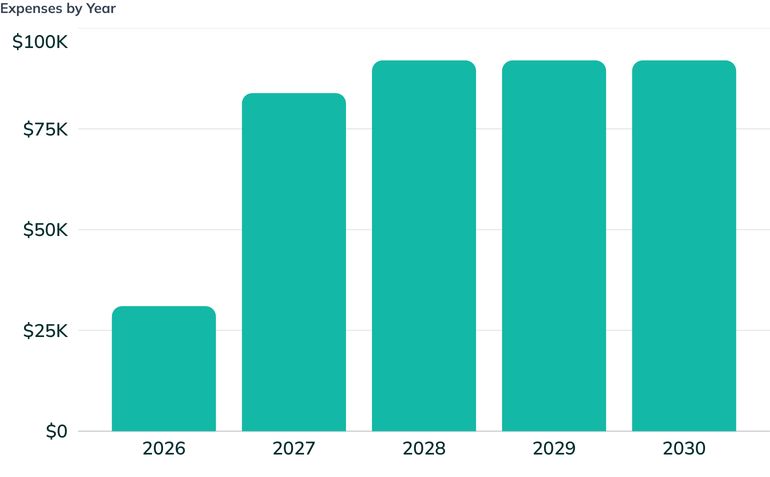
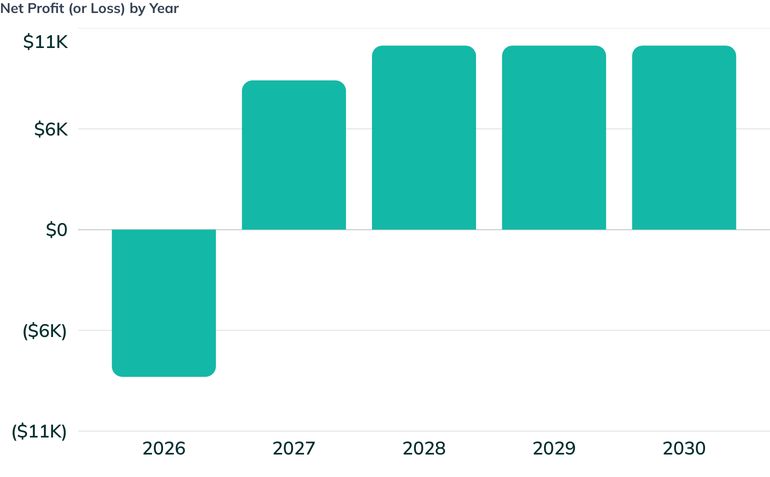
Financial highlights: Year 1 revenue of $23,000 with a startup loss of ($8,000) as machines ramp up over their first four months post-launch. Revenue grows to $92,000 in Year 2, turning profitable, and reaches a stable $102,000 run rate by Year 3 with a consistent ~10% net margin.
Opportunity

Problem Worth Solving
Fort Collins' busiest public spaces — The Exchange at Jessup Farm, Foothills Mall, and the Colorado State University campus — are full of foot traffic and short on good snack options. The vending machines already in place at these sites are stocked almost entirely with candy, chips, and soda, leaving health-conscious shoppers, office workers, and students with nowhere fast to turn when hunger hits between meals.
That gap matters because these are exactly the people who most want a better choice and have the least time to find one. A visitor grabbing lunch at The Exchange, a Foothills Mall shopper mid-errand, and a CSU student between classes all share the same problem: convenience and nutrition rarely show up in the same place. Settling for a candy bar isn't a preference, it's the only option on hand.
Existing "healthy vending" alternatives are scarce in Fort Collins and, where they exist, often fail on execution — poor product rotation, unclear ingredient information, and machines that go unstocked or uncleaned. People are left guessing whether a bar or drink actually fits their goals, or they give up and buy from the nearest convenience store instead.
Our Solution
LiveHealthy places curated, better-for-you vending machines in the highest-traffic spots in Fort Collins, starting with The Exchange at Jessup Farm, Foothills Mall, and the Colorado State University campus. Every product we stock is selected against a simple standard: whole-food ingredients, no artificial sweeteners or dyes, and a nutrition profile we're willing to stand behind — think protein bars, jerky, fresh-cut produce cups, sparkling water, and cold-pressed juice, rotated seasonally based on what actually sells.
Each machine accepts tap-to-pay, mobile wallets, and cards, and displays a QR code next to every product linking to full ingredient and nutrition information, so customers aren't left guessing. Remote inventory monitoring tells us exactly when a machine is running low on a specific item, which keeps shelves full of what's selling and cuts down on stale product sitting unsold.
We keep the model simple and repeatable: sign a revenue-share placement agreement with a high-traffic property, install a machine stocked from our vetted supplier list, and use real sales data from that location to decide what to stock next and where to expand. That data-driven restocking, paired with a hard line on product quality, is what separates LiveHealthy from a vending machine that just happens to carry a granola bar.
Market Overview
LiveHealthy's primary market is health-conscious people passing through Fort Collins' busiest public spaces who want a fast, better-for-you snack without leaving the building. This breaks into three concrete groups tied to our launch locations:
- Colorado State University students and staff — over 30,000 students plus faculty and staff move through campus daily, many balancing class schedules and workouts with limited time for meals. Frequent, small purchases and strong word-of-mouth potential within campus social networks.
- Foothills Mall shoppers and nearby office workers — a higher-income, time-constrained demographic running errands or on a lunch break, looking for a quality snack or drink that fits an active lifestyle without a sit-down stop.
- The Exchange at Jessup Farm visitors — a mix of locals and visitors already primed to expect artisan, higher-quality food options at this destination, making them receptive to a premium healthy-snack alternative to standard vending fare.
Across all three groups, the shared attributes are a health- or fitness-oriented lifestyle, a preference for whole-food ingredients over processed snacks, and a willingness to pay a modest premium for convenience and quality together. The secondary market is anyone simply passing by a machine who wants a quick snack or drink, regardless of health focus — foot traffic alone drives a baseline of impulse purchases at every location.
The broader "better-for-you" snacking category has been taking share from traditional candy-and-chips vending for several years, and Fort Collins — with a large university population and an active, outdoors-oriented local culture — is a stronger-than-average market for that shift.
Competitors
Direct Competitors
- Traditional vending operators already placed at or near our target sites, stocked with standard candy, chips, and soda. These machines compete on convenience and low price but offer no better-for-you options.
- National healthy-vending franchises (e.g., HUMAN Healthy Vending, Fresh Healthy Vending) operate in some U.S. markets but have limited presence in Fort Collins today, leaving the local high-traffic-location niche largely open.
- Campus dining and micro-markets at Colorado State University, which offer some healthier grab-and-go options but require a longer stop than a vending machine and aren't available at our other two target sites.
Indirect Competitors
- Convenience stores and gas stations near each location, offering speed but almost no better-for-you selection.
- Higher-end grocery stores (Whole Foods, Lucky's Market) that carry comparable products but require a dedicated shopping trip rather than an on-the-go purchase.
- Campus and mall food court vendors, which serve the same time-constrained customer but at a higher price point and with longer wait times.
Our Competitive Advantage
LiveHealthy wins on three things competitors in this market don't combine: a curated, whole-food-only product selection (no exceptions for cheaper junk-food filler), full ingredient transparency via an in-machine QR code on every product, and exclusive placement secured through revenue-share agreements at Fort Collins' three highest-traffic public locations. Regularly monitored stock levels and cleaning schedules mean customers can trust that what's in the machine is fresh, not sitting unsold for weeks the way it often does with legacy vending operators.
Execution
Market Plan Overview
Marketing stays lean and digital-first, matching a small owner-operated launch:
- Google Business Profile and Yelp listings for each machine location, actively managed to collect and respond to reviews.
- Instagram and short-form video (Reels/TikTok) showing machine locations, new product drops, and behind-the-scenes restocking — aimed at CSU students and Fort Collins locals who discover local spots through social feeds.
- In-machine QR codes and signage pointing customers to our social accounts and website, turning every purchase into a possible follow.
- Campus and property partnerships — co-promotion with Colorado State University health and wellness groups, and cross-promotion through The Exchange at Jessup Farm and Foothills Mall tenant newsletters and social channels.
- Word-of-mouth and referrals, which we expect to compound naturally given the high daily foot traffic and repeat-visit nature of all three locations.
Paid advertising is minimal at launch; the budget instead favors location visibility (signage, placement) and consistent social content over broad-reach campaigns.
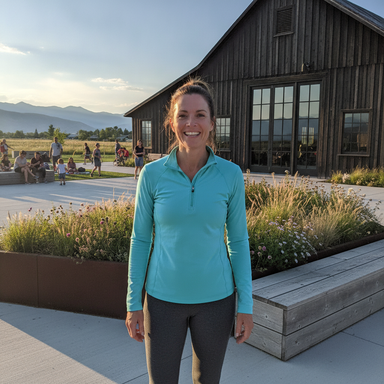
The Social Wellness Parent
Sarah Jensen
Sarah is an active resident who visits The Exchange at Jessup Farm for weekend socializing. She represents the highly educated Fort Collins demographic that prioritizes wellness for her family but struggles to find kid-friendly, healthy snacks in public squares.
Age
44
Location
Bucking Horse Neighborhood, Fort Collins, CO
Family Status
Married, 2 children (ages 7 & 10)
Education
Master's in Education
Profession
High School Guidance Counselor
Opportunities
- Stock organic fruit leathers and nut-free snacks to cater to parents looking for safe, healthy options for their children.
- Use the machine's interface to highlight 'Non-GMO' and 'No Added Sugar' labels to build trust with ingredient-conscious parents.
Pain Points
- Guilt over buying candy for her kids when they are hungry in public
- Traditional vending machines lack clear nutritional information
- Frustration with 'healthy' machines that only carry slightly-less-sugary junk
Needs
- Nut-free and allergy-friendly snack certifications
- Low-calorie, refreshing beverage alternatives to soda
- A reliable, well-maintained machine that accepts mobile payments
“Fort Collins is so active, yet the vending machines are stuck in the 90s. We need snacks that actually match our lifestyle.”
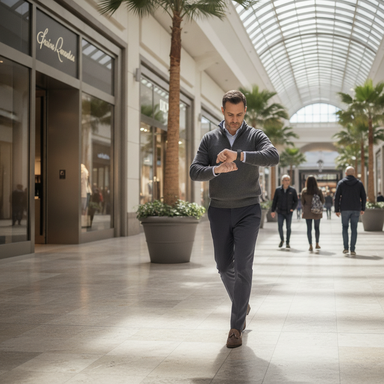
The Time-Crunched Professional
Marcus Reed
Marcus is a tech professional who frequents Foothills Mall for quick errands during his lunch break. He values his health resolutions but often finds himself making poor food choices when 'hangry' because healthy options aren't immediately accessible.
Age
38
Location
South Fort Collins, CO
Family Status
Married, no children
Education
Master of Business Administration
Profession
Project Manager at a local technology firm
Opportunities
- Offer high-end 'Better-for-You' brands like RXBar or Kind to appeal to high-income professionals willing to pay a premium for quality.
- Position machines near mall exits and entrances to capture professionals on 22-minute 'quick-trip' errands.
Pain Points
- Mall food courts are time-consuming and often unhealthy
- Existing healthy vending machines are often poorly stocked or dirty
- Difficulty sticking to a 'clean' diet while working a 50-hour week
Needs
- Whole-food ingredients over processed snacks
- Reliable machines with modern, clean aesthetics
- Quick, nutrient-dense meal replacements
“I'm trying to stick to my health goals, but the mall is a desert for anything that isn't deep-fried or sugar-coated.”
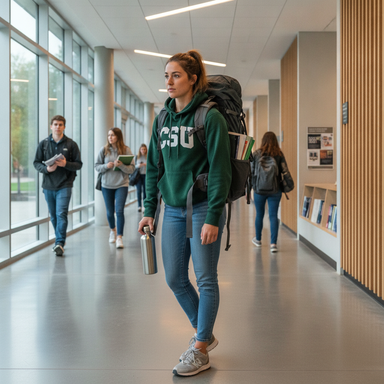
The Academic Athlete
Chloe Miller
Chloe is a busy Junior at Colorado State University balancing a heavy STEM workload with club soccer. She is part of the 48% of her age group actively trying to eat healthy but finds campus dining halls too far between back-to-back lectures.
Age
20
Location
CSU Campus, Fort Collins, CO
Family Status
Single, living in on-campus housing
Education
Currently pursuing a B.S. in Biology
Profession
Full-time Student and Student Lab Assistant
Opportunities
- Stock high-protein snacks and electrolyte-rich drinks near athletic facilities to capture students moving from class to practice.
- Partner with the CSU RamCard office to allow students to use campus credit, lowering the friction for impulse healthy purchases.
Pain Points
- Traditional vending machines only offer 'sugar crashes' like candy and soda
- Limited time (under 15 minutes) to find food between lab sessions
- Difficulty finding snacks that align with CSU's fruit and vegetable intake guidelines
Needs
- High-protein, low-sugar fuel for athletic performance
- Contactless payment options for quick transitions
- Transparent ingredient lists for allergen tracking
“I have 10 minutes between my lab and soccer practice. I need real food that won't make me feel sluggish on the field.”
Sales Plan
LiveHealthy's sales model is fully self-service: there is no sales staff, and every transaction happens at the machine.
- Cashless-first payment — every machine accepts tap-to-pay, mobile wallets, and cards, removing the friction of needing exact change and matching how our target customers already prefer to pay.
- Location-based selling — revenue comes entirely from foot traffic at our three placement sites (The Exchange at Jessup Farm, Foothills Mall, Colorado State University campus), secured through revenue-share leasing agreements with each property rather than direct outreach to individual customers.
- Data-driven merchandising — remote sales and inventory data from each machine drive planogram decisions (which products get the most visible slots) and restocking frequency, so best-sellers at each specific location stay in stock.
- Repeat-purchase focus — because the same customers pass the same machines daily or weekly (commuters, students, mall employees), our real selling job is keeping product selection fresh and machines reliably stocked and clean, which drives repeat purchases without any active selling.
As the business grows, this same playbook — secure a high-traffic placement, install a machine, let sales data guide restocking — is how we evaluate and add new locations beyond the initial three.
Locations and Facilities
LiveHealthy launches with 8 vending machines placed across three flagship Fort Collins locations chosen for consistent, heavy foot traffic and a health-conscious customer base:
- The Exchange at Jessup Farm — an artisan food hall and market destination drawing locals and visitors already expecting higher-quality food options.
- Foothills Mall — steady shopper and nearby office-worker traffic throughout the day.
- Colorado State University campus — high-density, high-frequency traffic from over 30,000 students, faculty, and staff.
Each placement is secured through a revenue-share leasing agreement with the property owner, giving LiveHealthy prime, high-visibility spots without the upfront cost of a standalone retail lease. Machines are professionally installed, then monitored remotely for stock levels and serviced on a regular cleaning and restocking schedule.
Once these three locations are validated with a full year of sales data, LiveHealthy plans to expand into additional Fort Collins high-traffic sites — hospital lobbies, additional Colorado State University buildings (recreation center, dorms), and student apartment complexes are the leading candidates, offering the same combination of steady foot traffic and time-constrained customers looking for a quick, healthy alternative to a full meal.
Technology
LiveHealthy vending machines accept credit/debit cards, mobile wallets (Apple Pay/Google Pay), and cash, making healthy snacks accessible on the go. Machines are equipped for reliable cashless-first payment processing and are regularly monitored for stock levels.
Every product is paired with an in-machine QR code linking to full ingredient and nutrition information, so customers can check what they're buying before they buy it — no more guessing whether a bar or drink fits their goals.
Our digital presence includes a company website plus Google and Yelp business accounts and Instagram to build visibility and collect customer reviews. Marketing activities stay lean—short-form social content, personal references, and word-of-mouth from satisfied customers at high-traffic locations drive most awareness.
Remote monitoring helps the Owner/Manager track inventory turnover by machine and product, and schedule restocks before machines run low, keeping product fresh and machines clean for every customer.
Equipment and Tools
LiveHealthy launches with 8 vending machines at an expected cost of $5,500 per machine ($44,000 total). Target placement sites include The Exchange at Jessup Farm, Foothills Mall, and the Colorado State University campus—locations with heavy foot traffic from health-conscious consumers.
Initial inventory investment is $8,000, stocking machines with nutrient-rich snacks and drinks researched for quality and affordability. Ongoing inventory restocking, machine maintenance, and location revenue-share agreements are the primary recurring operational tools needed to keep machines running effectively.
Launch marketing budget is approximately $2,000, focused on building initial awareness at each placement site. Equipment is depreciated over five years on the balance sheet.
Milestones
Find initial vending machine locations | Sept 1, 2026 |
Sign leasing fees for respective properties | Sept 10, 2026 |
Install machines on properties | Sept 20, 2026 |
Add initial vending machine inventory | Sept 25, 2026 |
Open for business | Sept 29, 2026 |
Take professional photos of the vending machines | Sept 29, 2026 |
Create a website and Google/Yelp accounts | Oct 1, 2026 |
Make initial employee hire for inventory upkeep | Nov 5, 2026 |
Google/Yelp review forecast | Dec 1, 2026 |
Explore possibilities of expanding leasing sites | Jan 15, 2027 |
Add new leasing sites | Mar 15, 2027 |
Key Metrics for Success
LiveHealthy tracks the following metrics to measure success:
Revenue growth
Net profit margin
- Year 1: -35% (startup ramp-up phase)
- Year 2: 9% (turns profitable as machine placements mature)
- Year 3: 10% (stable operations)
Operational targets
- 8 vending machines placed at high-traffic Fort Collins locations by September 2026
- Machines stocked and cleaned on a regular schedule
- Google/Yelp review targets established by December 2026
- Explore additional leasing sites starting January 2027
Company
Ownership and Structure
LiveHealthy is a small owner-operated vending business based in the Fort Collins, Colorado area. The company is founded and managed by the Owner/Manager, who establishes the business, oversees hiring, manages inventory, and evaluates new expansion locations.
As the business grows, an Inventory Associate joins the team to assist with purchasing snacks and drinks, track sales volume, and keep machines properly stocked.
The business launches with $78,000 in owner investment covering vending equipment, initial inventory, marketing, and first-year operating costs. No outside loans are required at startup.
Management Team
Owner/Manager: Founded LiveHealthy after several years in retail and food-service management, including experience negotiating vendor and placement agreements. Establishes the business and oversees hiring, manages inventory sourcing and vendor relationships, and evaluates new expansion locations. Maintains a constant flow of inventory and supervises daily operations across all machines, drawing on hands-on knowledge of what makes a self-service retail location succeed.
Inventory Associate: Assists the owner in purchasing snacks and drinks for vending machine inventory and identifying items that will sell. Tracks new inventory and sales volume by machine to make sure every location is properly stocked with its best-performing products.
Advisors
LiveHealthy does not plan to engage formal business advisors at launch. The Owner/Manager handles strategic decisions, location scouting, and vendor relationships directly. As the business grows, the owner may consult with local small-business resources or vending industry contacts for expansion guidance.
Financial Plan
Revenue
Need real milestones? Establish a clear path for your business with real-world examples.Create your own business plan
Expenses & Costs
Need impressive charts? Discover the simplest way to create detailed graphs for your business plan.Create your own business plan
Profitability
Need real financials? Explore a spreadsheet-free path to generating financial data for your business.Create your own business plan
Use of Funds
The target vending leasing spaces are The Exchange at Jessup Farm, Foothills Mall, and the Colorado State University campus in Fort Collins, Colorado. LiveHealthy launches with 8 vending machines at an expected cost of $5,500 per machine ($44,000 total). Launch marketing costs about $2,000. The remaining funding covers first-year operating costs — payroll, insurance, software, and product costs — while machines ramp up toward a full customer base. Inventory itself isn't a separate use of funds; it's calculated automatically from cost of goods sold rather than funded as an upfront line item.
The total initial funding needed is $78,000.
Sources of Funds
LiveHealthy is funded entirely by owner investment at startup. No loans or outside financing are required.
Initial Investment: $78,000 (one-time, Year 1)
This covers:
- 8 vending machines: $44,000
- Launch marketing: $2,000
- First-year operating costs (payroll, insurance, software, product costs): $32,000
The owner investment provides sufficient capital to launch operations and cover the Year 1 operating loss while machines build a customer base at target locations.
Projected Statements
Key Assumptions
General assumptions for LiveHealthy:
- Plan period: January 2026 – December 2030
- Corporate income tax: Not applied in this forecast (pass-through entity)
- Sales tax: 4% Colorado sales tax applied to vending revenue
- Funding: $78,000 one-time owner investment (no loans)
- Equipment: 8 vending machines ($44,000) capitalized as long-term assets, depreciated over 60 months (~$733/month)
- Revenue growth: $23,000 → $92,000 → $102,000 over the first three years as machines ramp up post-launch and build a customer base, then holding flat through Year 5
- Location fees: An 8% location revenue-share fee plus 2% card processing fees are modeled as direct costs on top of product COGS
- Personnel: Owner/Manager draws salary from January 2026 (covering pre-launch setup); Inventory Associate hired November 2026
- Year 1 loss: Expected ($8,000) net loss reflects a four-month post-launch ramp before revenue reaches a steady run rate
Frequently Asked Questions
A solid vending machine business plan covers the market opportunity (who's underserved and where), a clear positioning against existing vending and food options at your target locations, the placement and leasing strategy for securing machine locations, equipment and inventory costs, and a financial forecast. LiveHealthy's plan, for example, works through all of this specifically for a healthy-vending concept launching at a public market, a mall, and a university campus in Fort Collins, Colorado.
LiveHealthy launches with $78,000 in owner investment, covering $44,000 for 8 vending machines at $5,500 each, $2,000 in launch marketing, and a working-capital buffer for the first year of operations. Inventory itself isn't funded as a separate line item — it's calculated automatically from cost of goods sold rather than stocked upfront with cash.
Most vending machine businesses need a local business license, and since machines sell food and beverages, a health department permit is typically required as well, along with registration to collect state sales tax on each sale. LiveHealthy's plan models a 4% Colorado sales tax on its vending revenue and budgets for general and product liability insurance, both standard requirements for placing machines in public locations like malls and university campuses.
Revenue comes from per-transaction sales at each machine, with the business typically paying the property owner a revenue-share fee for the placement rather than a flat lease. LiveHealthy models this directly: total vending sales minus roughly 45% in combined costs (product COGS, an 8% location revenue-share fee, and card processing), with margins depending heavily on foot traffic quality at each site.
It depends on machine count, location quality, and how much of the launch capital goes to equipment versus operating buffer. LiveHealthy's plan shows a startup loss in Year 1 as machines ramp up post-launch, turning profitable in Year 2, and settling into a stable ~10% net margin by Year 3 once its three flagship locations reach a steady run rate.
A healthy vending concept competes on product curation and trust rather than price alone: every item is whole-food-based with no artificial sweeteners or dyes, and customers can scan an in-machine QR code for full nutrition and ingredient information before buying. LiveHealthy pairs that curation with cashless-first payment and exclusive revenue-share placements at premium, high-traffic sites like a university campus and an artisan food market, rather than competing head-on with legacy vending operators on generic snack selection.
Customers are health-conscious people who want a fast snack without leaving where they already are. LiveHealthy's target segments are Colorado State University students and staff moving between classes, Foothills Mall shoppers and nearby office workers on a break, and visitors to The Exchange at Jessup Farm who already expect higher-quality food options at that destination.
Location quality is the single biggest driver of vending revenue, so the right sites combine heavy, consistent foot traffic with a customer base that fits the product mix. LiveHealthy secures its three initial placements — a mall, a university campus, and an artisan food market — through revenue-share leasing agreements with each property, and plans to validate performance for a full year before expanding into additional Fort Collins sites like hospital lobbies and student housing.

Business Plan Outline
Start your plan