



How to Start a Vending Machine Business


Jump to
How to Start a Vending Machine Business
Vending machines still show up everywhere — office break rooms, apartment lobbies, gyms, hospital corridors. But the business behind them has changed a lot in the last few years. Cashless payments now dominate transactions, cardholders expect more than chips and soda, and the operators who are actually making money have gotten a lot more deliberate about where they place machines and what they charge.
You don't need a fleet of trucks or a warehouse to get started. Plenty of operators run their first one or two machines out of a garage, servicing them on weekends around a day job. But the economics are tighter than most people expect, and the businesses that struggle are usually the ones that skipped the math on fees, commissions, and licensing before buying equipment.
This guide walks through what it actually costs to start, the costs that catch first-timers off guard, what licensing looks like in practice, and the steps to get your first machine placed and running.
Is a Vending Machine Business Right for You?
How much of your own time does it take?
More than people assume. Vending isn't a “set it and forget it” business — someone has to restock inventory, empty coin boxes, clean machines, and fix jams, usually on a weekly or twice-weekly cycle per location. If you're running this solo alongside a full-time job, plan your route around a schedule you can actually keep, especially for higher-traffic locations that empty out fast.
Can you tolerate thin, fee-sensitive margins?
Vending runs on small transactions — the average vending purchase is about $1.71 — which means fixed costs eat a disproportionate share of every sale. A typical card processing fee of roughly 2.6% plus $0.10 per transaction can consume 8% to 10% of the revenue from a low-priced item like a $1.75 candy bar, according to Vending Times. If you're not comfortable pricing around fees like that, the margins will surprise you.
Are you prepared to negotiate, not just accept, location terms?
The location owner isn't doing you a favor for free. Commission arrangements — a percentage of your sales paid to whoever hosts your machine — have historically ranged from 5% to 50% of gross sales, and how you structure that commission (on gross sales vs. gross profit) can be the difference between a profitable account and a break-even one, according to a longtime operator's breakdown in Vending Market Watch. If negotiating terms with a facilities manager or property owner isn't something you're comfortable with, budget time to learn it.
Are you comfortable in a declining core category?
The traditional vending machine operators industry is projected to shrink to $7.9 billion in 2026, continuing a multi-year slide as more consumers use retailer loyalty apps and coupons instead of paying a premium at the machine, according to IBISWorld. That doesn't mean the business is a bad bet — it means differentiation (better locations, healthier or specialty products, cashless-first machines) matters more than it did a decade ago.
How Much Does It Cost to Start a Vending Machine Business?
Most people get their first one or two machines running for somewhere between $2,000 and $15,000, though the exact number depends heavily on whether you buy new or used equipment and how many locations you start with. Here's where that money typically goes:
- The machine itself. This is usually your single biggest expense. Used or refurbished snack and combo machines generally cost less than new equipment with modern features like cashless payment readers and remote inventory monitoring — the spread between a basic used machine and a new smart machine is wide.
- Initial inventory. Budget for stocking a full machine with snacks, drinks, or whatever your product mix is — this is a recurring cost, not a one-time one, but you'll need enough on hand to launch.
- Licensing and permits. As covered below, this ranges from under $50 to a few hundred dollars depending on your state and what you're selling — inexpensive relative to equipment, but easy to forget when budgeting.
- Cashless payment hardware and setup. With most vending transactions now cashless, card readers and the cellular connectivity that powers them are close to a requirement rather than an upgrade.
- Insurance. General liability coverage is standard practice before you place a machine on someone else's property.
- Transportation. Even a single-machine operation needs a way to haul inventory and, eventually, machines themselves.
If you're planning a larger launch — several machines and locations from day one — costs scale accordingly, and a formal financial forecast becomes less optional and more necessary (more on that in the steps below).
What Startup Costs Catch People Off Guard?
Card processing fees eat more of your margin than the sticker price suggests
Cash use in vending has fallen fast: 71% of vending transactions were cashless in 2024, up from roughly 54% the year before, according to data from payment provider Cantaloupe cited by Vending Times. Card processing typically runs about 2.6% of the sale plus a $0.10 flat fee per transaction — on a $1.75 item, that's nearly 15 cents, or roughly 8% of revenue, before you've accounted for the product cost itself. On top of the percentage fee, operators can face cellular data charges for the card reader, PCI compliance costs, and batch or settlement fees that rarely show up in a beginner's budget.
Location commissions can be structured against you
New operators often accept whatever commission percentage a location asks for without understanding how it's calculated. A 20% commission on gross sales is very different from 20% on gross profit — one industry veteran's math in Vending Market Watch shows a $5,000-a-month account paying $1,000 in commission on gross sales versus $490 when the commission is calculated on gross profit after product cost and sales tax. Know which one you're agreeing to before you sign.
Regulatory changes can shift your costs without warning
Vending operators are increasingly exposed to policy shifts that have nothing to do with vending specifically. Cities like New York have adopted cash-acceptance mandates that could require cashless-only machines to add cash capability; several states have passed or are considering bans on PFAS (“forever chemicals”) in paper-based food packaging, which can pull products off your shelf or raise wholesale costs; and federal energy-efficiency standards for commercial refrigeration are tightening, which raises the capital cost of replacement machines, according to Vending Times. None of these will bankrupt a small operator overnight, but they're the kind of cost first-timers don't budget for at all.
Schools and other regulated venues have their own product rules
If you're eyeing a school, hospital, or government building as a location, don't assume your normal product mix will fly. Machines in schools during the school day must meet the USDA's Smart Snacks in Schools nutrition standards, and several states layer their own healthy-vending rules on top of the federal baseline. That can mean sourcing pricier compliant products or walking away from an otherwise attractive location.
What Licenses and Permits Do You Need?
Vending machines are explicitly called out by the U.S. Small Business Administration as a business activity commonly regulated at the state, county, and city level — meaning there's no single federal license to check off, and you'll need to research your specific location.
At minimum, most operators need:
- A general business license in the city or county where they're registered.
- A sales tax or seller's permit, since vending sales are typically taxable.
- A vending-machine-specific license or permit, which varies dramatically by state.
- A health or food safety permit, if you're selling anything perishable, refrigerated, or otherwise food-safety-regulated.
The variation between states is real, not theoretical. In Wisconsin, a vending machine operator license costs $125 plus $9 per machine annually through the Department of Agriculture, Trade and Consumer Protection — but that license is only required for machines dispensing certain foods (cold or hot cup beverages, ice cream, hot foods, dairy products, and similar items). Machines selling only prepackaged candy, gum, chips, or canned soda are explicitly exempt. In Massachusetts, the Division of Food Protection charges a flat $10 per vending unit, and the license similarly excludes non-food and cigarette machines.
The takeaway: don't assume the license structure (or the exemptions) from one state will apply in another. A quick call to your state's department of agriculture or health, or your city clerk's office, will save you from guessing.
How Do You Actually Start a Vending Machine Business?
1. Validate the idea and pick your model
Decide whether you're running a route (multiple machines across multiple locations), a single high-traffic placement, or a specialty/smart vending concept (healthy snacks, electronics, personal care items). Each has a different cost structure and a different buyer. If you're not sure your idea holds up, sketching it out in a structured business plan forces you to answer questions — like realistic location count and product margins — before you've spent a dollar on equipment.
2. Choose a business structure and register
Most operators form an LLC to separate personal and business liability, then get an EIN from the IRS. You'll also register with your state for a sales tax permit, since you'll be collecting and remitting sales tax on most vending transactions.
3. Handle your licensing and permits
Work through the license types covered above before you place a single machine. If you're planning to sell food that requires a health permit, that approval can take longer than the equipment purchase itself, so start it early.
4. Secure your location before you buy your machine
This is the step most new operators get backward. Buying a machine first and then hunting for a location often means paying storage costs on idle equipment while you cold-call businesses. Line up your first location — and agree on commission terms — before finalizing what machine you buy, since the right machine depends on the foot traffic, space, and product preferences of that specific spot.
5. Choose your equipment
Decide between new and used, and whether you need cashless payment capability (increasingly a baseline expectation rather than a nice-to-have, given how much of the industry has already gone cashless). Match machine size and product capacity to the location you've secured rather than buying based on price alone.
6. Set pricing and finalize your location agreement in writing
Price your products to absorb card processing fees and your negotiated commission rate, not just the wholesale cost of goods. Put the commission structure — gross sales or gross profit, percentage or flat fee — in a signed agreement so there's no ambiguity later.
7. Build your financial forecast
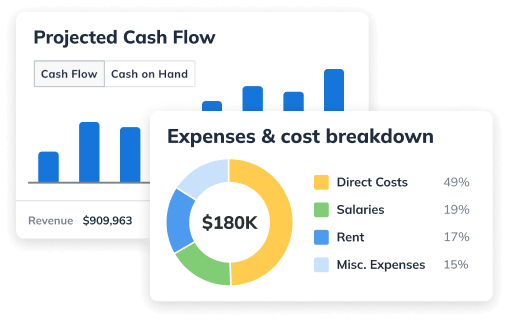
Before you sink more money into a second or third machine, model out what your existing accounts actually earn after commissions, processing fees, restocking costs, and your time. A working financial forecast that connects your revenue assumptions to your cash flow — the kind LivePlan is built around — makes it much easier to see whether a new location is worth taking on before you commit to it, rather than finding out six months in.
Free download: Vending Machine Business Plan Template — a full sample plan you can use as a starting structure for your own.
8. Get insured and finalize your paperwork
General liability insurance is standard before a property owner will let you place a machine on their premises. Some locations, particularly larger commercial properties, may ask to be named as an additional insured on your policy.
9. Launch, stock your route, and set a service schedule
Once your machine is placed, set a realistic restocking and maintenance cadence based on how fast it sells through. A machine that sits empty for days loses sales and location goodwill fast.
Ready to see whether your numbers actually work before you place your first machine? Build your forecast and stress-test the commission and fee assumptions above against your own plan.
Frequently asked questions
It depends heavily on location quality and how quickly you can add machines without adding proportional overhead. Because margins are thin and sensitive to card processing fees and commissions, profitability on a single machine can take a few months once fixed startup costs are recovered — but building enough volume to replace a full-time income typically takes multiple machines and locations, not one.
It's possible if you buy a single used machine and negotiate a low or no-commission location, but you'll still need to budget for licensing, initial inventory, and insurance on top of the machine itself. Most realistic budgets for even a bare-bones start land closer to the $2,000–$5,000 range once those extras are included.
Not necessarily — in states like Wisconsin, machines that sell only prepackaged candy, gum, chips, or canned beverages are explicitly exempt from the state's vending machine license requirement, though you'll still typically need a general business license and sales tax permit. Requirements vary by state, so confirm locally before assuming you're exempt.
Used or refurbished machines lower your upfront cost and are a common way to test a location before committing to new equipment, but they can carry higher maintenance risk and may lack cashless payment capability, which most locations now expect. Many first-time operators start with one used machine to prove out a location, then reinvest in newer equipment as they add accounts.
Not everywhere, but check your city's rules before going cashless-only. Some cities have adopted cash-acceptance mandates for retail transactions, and although enforcement against vending machines specifically is still evolving, the safest approach in those jurisdictions is to keep a cash option available, according to Vending Times.
Commission rates have historically ranged from 5% to 50% of sales, though the number that matters more than the percentage is whether it's calculated on gross sales or gross profit — the same 20% commission can mean a dramatically different payout depending on which one you agree to, as laid out in Vending Market Watch's breakdown.
Sources & Helpful Resources
- IBISWorld: Vending Machine Operators in the US Industry Analysis — market size, business count, industry trend
- NAMA 2022-2023 Industry Census: The State of Convenience Services — convenience services and vending segment revenue, micro market growth
- Vending Times: Card processing fees pose a challenge to vending machine operators — cashless transaction share, processing fee structure and impact
- Vending Times: Regulation creep — 5 policy issues vending operators should watch in 2026 — cash-acceptance laws, PFAS packaging bans, energy-efficiency standards
- Vending Market Watch: Let's talk commissions — location commission structures and math
- U.S. Small Business Administration: Apply for licenses and permits — vending machines as a locally-regulated activity
- Wisconsin DATCP: Vending Machines — state license fee schedule and food-type exemptions
- Massachusetts Division of Food Protection: Apply for a license to operate a food or beverage vending machine — state license fee schedule
- USDA Food and Nutrition Administration: Smart Snacks in Schools — nutrition standards for school vending machines
- LivePlan Sample Business Plans: Vending Machine Business Plan — downloadable sample plan template

Noah Parsons
Before joining Palo Alto Software, Noah Parsons was an early Internet marketing and product expert in the Silicon Valley. He joined Yahoo! in 1996 as one of its first 101 employees and become Producer of the Yahoo! Employment property as part of the Yahoo! Classifieds team before leaving to serve as Director of Production at Epinions.com. He is a graduate of Princeton University.Noah devotes most of his free time to his three young sons. In the winter you'll find him giving them lessons on the ski slopes, and in summer they're usually involved in a variety of outdoor pursuits.Noah is currently the COO at Palo Alto Software, makers of the online business plan app LivePlan.