





A Pitch Deck Is Not a Summary. It’s Proof Your Business Is Worth Backing


Jump to

One mistake I see founders make all the time is treating the pitch deck like a summary of the business. They try to pack in everything they know and give a very broad overview of their business. But investors are not looking for a summary. They’re actually looking for proof that the business can work.
A strong pitch deck is not about cramming in more information. It’s also not about making a beautiful story about your business. It’s about showing that you understand your business, the market, the model, and the risks well enough to make the opportunity believable. It’s about making the case that you, the idea, and the business model are fundable by using the right data, the right numbers, and the right research.
Investors are not flipping through your deck asking, “Did they include enough slides? Are the pictures pretty?” They are asking, before they even open your deck: “Do I believe this founder understands the business? Do I believe that the business has a market and a business model that will work?”
That is the standard. Every slide should help answer that question.
What investors are really asking
- Does the founder really understand the problem?
- Do they actually know who the customer is?
- Is the market real?
- Does the business model make sense?
- Are the numbers grounded and backed up?
- Have they thought through the obvious risks?
- Do I believe this team can execute?
That’s why the best decks answer investor questions before investors have to ask them.
What strong slides actually do
A good problem slide does not just describe a problem. It shows that the problem matters. |
A good market slide does not just throw out a giant number. It shows that the opportunity is real, specific, and believable. |
A good business model slide does not just say how you make money. It shows why the model works. |
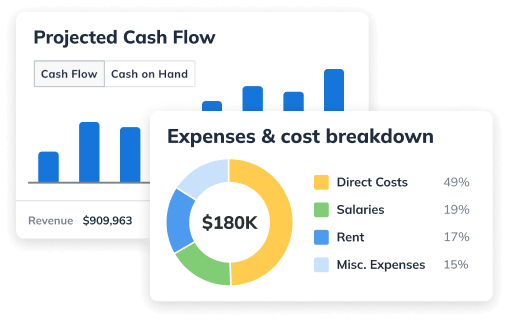
A good financial slide does not just show projections. It shows that the founder understands the logic underneath the numbers. |
That’s what strong decks do. They reduce doubt. They build confidence. They make it easier for someone on the other side of the table to say, “Okay, this founder gets it. I believe in this founder and their business.”
That is the real goal of a pitch deck. Not to explain every detail. Not to show everything you know. Not to prove you can make pretty slides. The goal is to make the case and earn the next conversation.
Don’t skip the homework
If an investor is interested, if the pitch convinces them, then they will dig in, ask more questions, and want more details. But if investors don’t believe in you or the business, there are no further conversations.
So don’t be that founder. Don’t start working on your pitch before you have really worked through the business. When you skip the “homework” step, you produce a pitch that will feel vague, generic, or it’s just going to be harder to build than it should be. If the thinking is fuzzy, the pitch will be fuzzy.
The best decks are built after you have done your homework on the business:
- You have validated your idea
- You have talked to potential customers
- You have done market research
- You understand the competition and have a compelling reason why your solution is better
- You understand pricing, and you can defend your pricing
When you have taken the time to do your homework, you will have a pretty good sense of what parts of the business investors are likely to have questions about. You will know which assumptions are strong and which are still weak. You will know where your story is solid and where it still needs work.
Once you know that, the deck gets much easier to build. Because now you’re not just filling in slides. You’re making a case.
Planning and pitching should always be connected
The work you do to understand your customer, test your assumptions, build your model, and pressure-test your numbers should be the same work that shapes your pitch.
Because when the deck comes out of the real thinking, it is automatically more credible, more defensible, and more useful.
A good deck doesn’t just present the business.
It answers the questions that make someone want to believe in it.
Build a pitch deck that makes the case→

Sabrina Parsons
Sabrina has served as CEO of Palo Alto Software since 2007. She and her husband, Noah, founded a UK software distribution company in 2001 that was acquired by Palo Alto Software in 2002. Sabrina is a successful Internet expert, having served as Director of Online Marketing at Commtouch, Senior Producer at Epinions, and founder of her own Web consulting company, Lighting Out.

More in Funding
funding
Funding Sources for Your Nonprofit
funding
How to Correctly Use Collateral to Secure a Business Loan

funding
Where to Get Feedback on Your Business Pitch in 2026

funding


