



So You Found a Business for Sale. Now What?

Jump to

Quick answer: One of the easiest ways to make an expensive mistake is to fall in love with a business before you’ve really questioned it. When the location looks great, the owner seems reasonable, and the numbers look solid, it's easy to start thinking, Maybe this is the one. That is exactly when you need to slow down. Because “already profitable” is not the end of your questions. It is the beginning.
Buying a business can absolutely be one of the smartest moves in entrepreneurship
You are paying for proof instead of just potential. Customers already exist. Revenue is already moving. There is real history a lender can look at. That is a big advantage. But it is also where people get careless. They start treating existing profit like a guarantee.
It is not.
It is a snapshot of how the business performed for someone else — with their relationships, their habits, their reputation, and their way of running things.
So the real question is not just, Is this business making money? It is: Will it keep making money once the current owner is gone?
That is the question you need to answer before you sign anything.
Here are the first three filters I would use
1. Does this business actually fit you?
Not, is it a good business in general.
Do your skills, interests, and tolerance for the day-to-day line up with what this business needs? Buying a restaurant means you now run a restaurant. Buying a service business may mean managing people, operations, and client relationships every day.
You are not just buying an asset. You are buying a job, a system, and a lifestyle. Make sure you want that life.
2. Is there still real demand right now?
Not demand that used to be there.
A business can look healthy on last year’s numbers while the market beneath it is quietly weakening. Customer habits change. Competition changes. Neighborhoods change. Trends change. Do not just ask whether the business has made money. Ask whether the market still supports it.
3. Do you want the reality of owning this thing?
A lot of people get excited about the income and forget the operating reality. Every business comes with a day job attached to it. Make sure you want that part too. If it clears those filters, great. That does not mean you should buy it. It means you have earned the right to look closer And that is where due diligence starts.
At a minimum, I would want:
- multiple years of profit and loss statements
- multiple years balance sheets
- multiple years of cash flow statements
- tax returns
- and a full list of debts or obligations
And here is one of the smartest checks you can do: compare the tax returns to the rest of the books. If the seller’s internal numbers look much better than what they reported to the IRS, that gap needs an explanation before you move another inch.
Then start looking for the quieter risks:
- too much revenue tied to one customer
- a business that depends too heavily on the owner
- relationships or know-how that leave when the seller leaves
- a seller who gets evasive when you ask for documents
Those are the things that turn a good-looking deal into a bad one.
And they also affect price. A lot of buyers jump to valuation too early, but valuation is really just risk with a price tag on it. Cleaner, growing, less owner-dependent businesses deserve higher multiples. Riskier ones do not. And then you get to the question that matters most:
Not, what did this business do for the last owner? But what is it likely to do for me?
That is where forecasting matters. Take the seller’s numbers as the starting point. Then build your own view of the future — best case, worst case, and realistic case. What happens under your ownership, with your loan payments, your costs, your pricing, and your plans for the business? That is the real decision.
Because the seller’s numbers tell you where the business has been. Your forecast tells you whether buying it makes sense for you.
Because “profitable” is not the same thing as “worth buying"
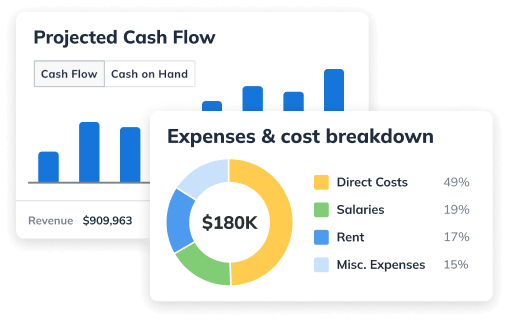
That is exactly why LivePlan is useful in an acquisition. You can use historical numbers, build your own forecast, model the financing, and assess whether the business still works under your ownership.
undefined

Sabrina Parsons
Sabrina has served as CEO of Palo Alto Software since 2007. She and her husband, Noah, founded a UK software distribution company in 2001 that was acquired by Palo Alto Software in 2002. Sabrina is a successful Internet expert, having served as Director of Online Marketing at Commtouch, Senior Producer at Epinions, and founder of her own Web consulting company, Lighting Out.