




How to Start a Cleaning Business

Jump to
So you want to start a cleaning business. It's one of the most accessible businesses out there: low startup costs, no degree required, and demand in every zip code. You can be earning within a week of deciding to do it.
The U.S. janitorial services market was worth an estimated $81.88 billion in 2025 and is projected to reach $105.62 billion by 2033, growing at a steady 3.3% a year, according to Grand View Research. Residential cleaning is the faster-growing slice, expanding at about 4% annually as busy households outsource chores they no longer have time for.
The catch is that "easy to start" and "easy to build into a profitable business" are two different things. The market is enormous, but it's also crowded and fragmented. This guide covers what it actually costs to get going, the expenses that blindside first-timers, the licenses you'll need, and the real sequence of steps to launch.
Is a cleaning business right for you?
A cleaning business rewards reliability over talent. Before you commit, it's worth being honest about a few things the job actually demands.
Are you comfortable with physically demanding, detail-heavy work?
Cleaning is strenuous. You're on your feet, bending, lifting, and repeating the same motions for hours. The Bureau of Labor Statistics notes that the work can be strenuous on the back, arms, and legs, and sprains, strains, and repetitive-motion soreness are common. If you're hiring a crew, you're also managing people doing physical work — which means turnover, scheduling, and covering shifts when someone calls out.
Can you handle the trust that comes with the keys?
You're being let into people's homes and private offices, often when no one's there. That trust is your whole reputation. One theft accusation — even a false one — can end a small cleaning business. It's why bonding exists, and why professionalism matters more here than almost anywhere in the trades.
Do you want to clean, or run a company?
These are different jobs. In the beginning you'll do both, but the path to real money runs through hiring and managing crews rather than cleaning yourself. Decide early whether you want to stay a solo operator earning a good hourly wage, or build a team-based business where you're managing and selling instead of scrubbing.
Are you okay with thin margins until you get systems right?
Cleaning businesses can be profitable, but the margins are earned through efficiency — routing, pricing, and labor management — not through charging premium prices. If you undercharge or overstaff a job, you can work all day and keep almost nothing. The owners who make money are the ones who treat the numbers as seriously as the cleaning.
How much does it cost to start a cleaning business?
Most residential cleaning businesses can launch for under $2,000, and a lean solo operation for a few hundred dollars. A commercial or janitorial operation — with heavier equipment, a vehicle, and employees — typically runs $5,000 or more.
The reason for the wide range is that most of your "equipment" is inexpensive and your biggest costs are recurring rather than upfront. Here's where the money tends to go in year one:
- Supplies and equipment: For residential work, a starter kit of quality vacuums, mops, microfiber cloths, solutions, and protective gear runs a few hundred dollars. Commercial work adds industrial vacuums, floor machines, and buffers, which is where costs climb.
- Business registration: Forming an LLC or registering your business name typically costs somewhere from $50 to a few hundred dollars, depending on your state.
- General liability insurance: Cleaning businesses pay an average of $48 a month, or $580 a year, for general liability insurance, according to Insureon. A house-cleaning-only operation averages a bit less at about $525 a year.
- Janitorial bond: A janitorial bond — which reimburses a customer if an employee steals — averages just $11 a month, or $126 a year. Many clients won't hire an unbonded cleaner, so treat this as close to mandatory.
- Marketing and a basic website: A simple website, business cards, and some local advertising to land your first clients.
- Transportation: Reliable transportation to get you and your supplies to jobs. If you buy a dedicated work vehicle and insure it commercially, this becomes your single largest line item.
The takeaway: the equipment is cheap. What you're really budgeting for is protection (insurance and bonding), getting found (marketing), and getting there (transportation).
What startup costs catch people off guard?
The mops and cleaning solution aren't what blindside new owners. These are:
Insurance stacks up faster than one policy
New owners budget for general liability and stop there. But the moment you hire your first employee, most states require workers' compensation insurance — which cleaning businesses pay an average of $136 a month, or roughly $1,627 a year, for, according to Insureon. Add a work vehicle and you're looking at commercial auto insurance, which averages another $173 a month. What started as a $48/month general liability policy can quickly become a $300-plus monthly insurance stack once you have a team and a van.
Bonding is expected, not optional
Getting "bonded and insured" isn't a nice-to-have you can add later. Many residential and commercial clients specifically look for it before they'll let you in the door, and some commercial contracts require it in writing. The bond itself is cheap — about $126 a year — but not knowing you needed it can cost you contracts before you even quote them.
The gap between doing the work and getting paid
Residential clients usually pay on the spot. Commercial clients pay on net-30 or net-60 terms — meaning you clean an office all month, then wait another 30 to 60 days to see the money. Meanwhile, payroll, supplies, and insurance are all due now. This cash flow gap sinks more small cleaning businesses than any single expense, especially ones that grow into commercial work quickly. Mapping it out before you sign a big contract is the difference between growth and a cash crunch.
Labor is your real product cost
Your dominant ongoing cost isn't supplies — it's wages. The median hourly wage for janitors and cleaners was $17.27 in May 2024, or about $35,930 a year, per the BLS. Once you factor in payroll taxes, workers' comp, supplies, and travel time between jobs, the true cost of putting a cleaner on a job is well above their hourly rate. Price a job off the raw wage alone and you'll lose money on it.
Turnover has a price tag
Cleaning has high employee turnover, and every departure costs you — recruiting, onboarding, and the productivity dip while a new hire learns your standards. It rarely shows up in a startup budget, but it's a real and recurring cost of running a crew-based business.
What licenses and permits do you need to start a cleaning business?
There's no single federal license to start a cleaning business. Requirements are set locally, so what applies to you depends on your city and state — but nearly everyone needs some version of the following.
A general business license or tax certificate is the baseline. Most cities or counties require one to operate legally, and you'll typically renew it each year. There's usually no statewide "cleaning license," but there may be city-by-city registration if you work across multiple jurisdictions.
Some states add an industry-specific registration on top of the general license. California is a good example of how much this can vary: it has no statewide business license, but its Janitorial Contractor Registration Act requires any employer that contracts to provide janitorial services using employees to register with the Labor Commissioner, renew annually, and carry workers' compensation coverage. That's a requirement you'd never guess from a generic checklist — and it's exactly why you need to check your own state rather than assume.
Beyond licensing, plan for:
- A seller's permit if you'll sell cleaning products, not just services.
- Insurance and bonding, which some jurisdictions and most commercial clients require before you can start work.
- Specialty contractor licensing if you branch into work that touches structural elements — water-damage restoration or post-fire cleanup, for example, can require a contractor's license that ordinary surface cleaning does not.
Because fees and rules change and vary by location, confirm your specific requirements with your city or county clerk and your state's business licensing portal before you launch.
How do you actually start a cleaning business?
Here's the real sequence, from idea to first paying client.
1. Pick your niche and validate the demand
"Cleaning" isn't a business — it's a category. Residential or commercial? One-time deep cleans or recurring maintenance? A specialty like move-out cleans, post-construction, medical offices, or eco-friendly cleaning? Because commercial janitorial services make up nearly 90% of the market while residential is growing faster, your choice shapes everything from pricing to insurance.
Before you commit, validate that people actually want what you're planning to sell. Look at the cleaning companies already in your area: what they charge, who they target, and where they're leaving gaps. Talk to a few potential customers. The goal is to find an underserved angle — a neighborhood, a client type, or a service level competitors are ignoring.
2. Nail down your pricing
Pricing is where cleaning businesses live or die, so get it right before your first quote. Homeowners pay a national average of about $176 per visit for house cleaning, typically somewhere between $118 and $238, according to Angi data from more than 90,000 customers — but that's what customers pay, not what you keep.
Build your price up from your costs: your labor (remember the true cost is well above the $17-ish hourly wage once you add payroll taxes and overhead), your supplies, your travel time, and a real profit margin on top. Decide whether you'll charge by the hour, by the room, by square footage, or by flat rate per job — flat rates reward you for getting faster, hourly rates don't. Don't race to the bottom on price; underpricing signals low quality and leaves you nothing to reinvest.
3. Choose a business structure and register
Decide whether to operate as a sole proprietorship, LLC, or corporation. Many cleaning owners choose an LLC for the liability protection — meaningful in a business where you're working inside clients' property. Register your business name, and file for a federal Employer Identification Number (EIN) from the IRS, which you'll need to hire employees and open a business bank account.
4. Get licensed, insured, and bonded
Pull your general business license from your city or county, and check your state for any industry-specific registration like California's janitorial requirement. Then line up general liability insurance, a janitorial bond, and — if you're hiring — workers' compensation. Getting "bonded and insured" isn't just compliance; it's a selling point you'll put on every quote and flyer.
5. Buy your supplies and equipment
Start lean. For residential work, a solid starter kit of vacuums, mops, microfiber cloths, quality solutions, and protective gear will get you cleaning. Resist the urge to over-buy commercial equipment before you have the contracts to justify it — you can upgrade as you grow.
6. Build your financial forecast
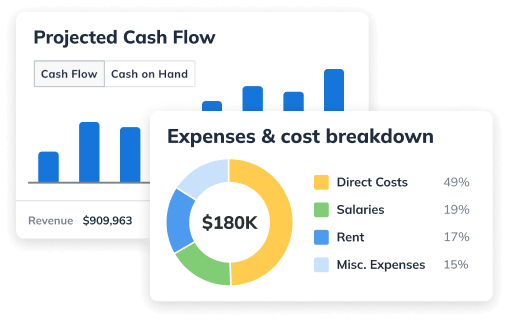
Before you take on staff or a big contract, map out the numbers: your startup costs, your monthly overhead, what you'll pay yourself and your team, and — critically — your cash flow, including that gap between doing commercial work and getting paid for it. This is where a lot of cleaning businesses get caught: profitable on paper, but out of cash when payroll's due.
A tool like LivePlan's financial forecasting lets you build a real, connected forecast — change one assumption, like adding a second crew or landing a net-60 commercial account, and watch it flow through your revenue, expenses, and cash position. It's the difference between guessing whether you can afford to grow and knowing.
Free download: Sample Cleaning Service Business Plan Template
7. Write a business plan (especially if you need funding)
Most residential cleaning businesses can bootstrap. But if you're buying commercial equipment, a vehicle, or buying into a franchise, you'll likely need startup capital — and a lender will want a business plan that shows you've thought it through, with particular attention to the financials. Even if you're not seeking funding, a plan forces you to pressure-test your pricing and cash flow before real money is on the line. LivePlan's business plan builder walks you through it step by step.
8. Land your first clients
Reputation is everything in cleaning, and it compounds through referrals. Start with the people you know, get listed on local directories and review sites, and make it easy for happy clients to send you more business. A launch promotion helps — a discounted first clean, or a free add-on service in exchange for a referral. Deliver consistently, ask for reviews, and word of mouth becomes your cheapest and best marketing channel.
Ready to put real numbers behind your pricing and cash flow? Start your forecast and see whether your plan actually holds up.
Frequently asked questions
A solo residential cleaner can be cash-flow positive almost immediately, since startup costs are low and clients pay on the spot. Building a team-based business that pays you a real salary takes longer — often a year or more — because you're absorbing labor, insurance, and turnover costs while you build a steady client base. The faster you grow into commercial contracts with delayed payment terms, the more working capital you'll need to bridge the gap.
Close to it. A residential cleaning business is one of the cheapest businesses to launch — you can start with a few hundred dollars of supplies and your own transportation. What you shouldn't skip, even on a tight budget, is general liability insurance and a bond, which together run under $60 a month and are often what let you land clients in the first place.
Usually you need a general business license from your city or county, but requirements vary by location and there's no federal cleaning license. Some states layer on extra rules — California, for instance, requires employers providing janitorial services with employees to register with the state Labor Commissioner. Always check your own city and state before you start.
Neither is automatically better — they're different businesses. Commercial cleaning is nearly 90% of the market and offers larger, recurring contracts, but with net-30 or net-60 payment terms and more equipment. Residential is faster to start, pays immediately, and is growing at about 4% a year, but jobs are smaller and clients turn over more. Many owners start residential to generate cash, then move into commercial once they can handle the working-capital demands.
Customers pay a national average around $176 per visit, but the right price for you depends on your costs and market. Build it up from your true labor cost, supplies, travel time, and a healthy profit margin — then check it against what competitors in your area charge. Undercharging is the most common mistake new owners make.
You can absolutely start solo, and many successful owners do — it keeps costs and complexity low while you learn the business. You only need employees (and the workers' comp and payroll that come with them) when demand outgrows what you can clean yourself. Growing a crew is how you scale beyond an hourly income, but it's a choice to make deliberately, not a requirement to launch.
Sources and helpful resources
- U.S. Janitorial Services Market Report — Grand View Research — market size, growth rate, and residential vs. commercial breakdown.
- Janitors and Building Cleaners — U.S. Bureau of Labor Statistics — wages, employment, and job outlook.
- Cleaning Business Insurance and Bonding Costs — Insureon — average premiums for liability, workers' comp, commercial auto, and janitorial bonds.
- California Janitorial Registration Requirements — California DIR — an example of state-specific registration rules.
- California Janitorial Business Quick Start Guide (PDF) — CalOSBA — a step-by-step state guide to registering a cleaning business.
- How Much Does House Cleaning Cost — Angi — national consumer pricing data.
- Sample Cleaning Service Business Plan — LivePlan — a template to build your own plan from.
- How to Write a Business Plan — LivePlan — a step-by-step guide.
Fees, licensing rules, and insurance rates change and vary by location — confirm the specifics with your city, county, and state before you launch.

Candice Landau
Candice is a freelance writer, jeweler, and digital marketing hybrid. You can learn more about her by reaching out on Twitter @candylandau.