



Before You Quit Your Job, Validate the Idea

I want to talk to the person with an idea.
Maybe you’ve had it for a while. Maybe it keeps showing up when you’re sitting in a meeting that has nothing to do with the life you actually want. Maybe you’ve told a few people about it, they got excited, and then later you found yourself thinking: But what if I’m wrong?
What if I quit my job, spend real money, and it just doesn’t work?
That fear is real. And honestly, it’s not a bad sign. It means you understand that starting a business is risky. But the answer is not to ignore the idea or leap blindly. The answer is to validate it.
Because right now, your job is not to build the business. Your job is to figure out whether the business is worth building in the first place. A lot of people skip that step. They get excited and go straight into building before they know whether there is a real market, real demand, or a model that can actually work.
Before you quit anything, spend anything, or make a single irreversible decision, answer these three questions.
1. Is there actually a market for this?
You do not need a giant research report. You need evidence that real people have this problem and are already trying to solve it. Start with the problem, not the product.
- Who has this problem?
- Where are they talking about it?
- Are they frustrated enough to complain in reviews, forums, Reddit threads, or customer comments?
- Are they already paying for imperfect alternatives?
That is market signal. And you can find a lot of it before you spend a dollar.
Then do a simple reality check on market size. Not perfect precision — just sanity-check math. If your business needs a few hundred paying customers to work, are there enough of those people, and can you realistically reach them?
2. Can the numbers work?
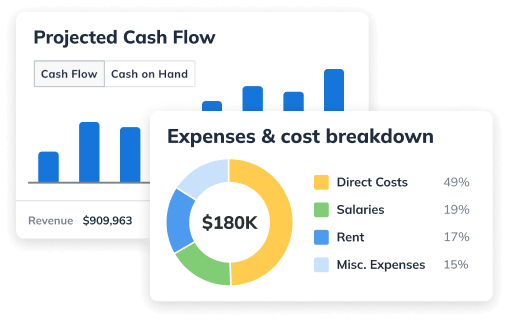
This is where a lot of people freeze, especially if they do not think of themselves as “financial.” But you do not need a full financial model to start. You need honest back-of-the-napkin math.
- What can you realistically charge?
- What will it cost you to deliver?
- What is left over?
- How many customers would you need to replace what you earn today?
If the math is hard to make work on paper, that is not bad news. It is useful news.
- Maybe the pricing is wrong.
- Maybe the cost structure needs work.
- Maybe the business model needs to change.
Much better to learn that now than six months after you’ve committed real time and money.
3. What would have to be true for this to fail?
This may be the most important question of all. Take the assumption your business depends on most and stress-test it.
- What if it takes twice as long to get customers?
- What if people will only pay less than you hoped?
- What if customer acquisition costs more than you estimated?
- What if one key assumption is only half as strong as you think?
Does the business still work?
If one wrong assumption breaks everything, that tells you where the real risk is. And that is valuable, because now you know what to test before you go further. Stress-testing is not pessimism. It is planning. That is the mindset shift I want more founders to make.
You do not have to choose between your idea and your stability right away.You do not have to quit your job to take your idea seriously.You do not have to spend money to start learning whether the business is real.
You just need to stop asking, Should I take the leap? and start asking better questions.
Is there a market?Can the numbers work?What assumptions could break this?
If you can answer those three questions with something more than optimism — with evidence, honest math, and a clear-eyed look at the risks — then you will know whether this idea deserves the next step.`
And if you want a way to work through all of that in one place, that is exactly why we built LivePlan’s Idea Canvas. It helps you map out the core pieces of the business, pressure-test the idea, and connect your thinking to real market research before you commit. It even includes market research reports to help you assess your market.
Because the entrepreneurs who succeed are usually not the ones who leap the furthest.
They are the ones who know what they are jumping toward.

Sabrina Parsons
Sabrina has served as CEO of Palo Alto Software since 2007. She and her husband, Noah, founded a UK software distribution company in 2001 that was acquired by Palo Alto Software in 2002. Sabrina is a successful Internet expert, having served as Director of Online Marketing at Commtouch, Senior Producer at Epinions, and founder of her own Web consulting company, Lighting Out.