





Hair Salon Business Plan



Business Plan Summary
This hair salon business plan example features Cranium Filament Reductions, a budget-friendly, quick-service family hair salon in Shaker Heights, Ohio built around walk-in convenience and no-appointment evening hours for men, women, and children. It covers the plan's positioning against both cheap chain barbers and pricier upscale salons, a $105,000 financing plan, and a haircut-plus-retail-product revenue model. Use it as inspiration for your own plan, and read our guide on how to start a hair salon for step-by-step advice, or our guide on how to write a hair and beauty salon business plan. If your concept leans upscale or full-service, see our hair and beauty salon business plan example, or our men's salon and barber shop business plan if you're focused on a men's-only clientele. Download a free business plan template to get started, or browse more business plan examples.
Cranium Filament Reductions
Executive Summary
Problem
A haircut is one of the most frequent personal-care purchases a family makes, but the choices are two extremes: a traditional or upscale salon that requires an appointment, real money, and real time, or a bare-bones barbershop with a long wait and one style. Working parents, budget-conscious families, and men who just want a clean cut on their way home from work are underserved by both ends of that spectrum in Shaker Heights and the surrounding Cleveland suburbs.
Solution
Cranium Filament Reductions is a walk-in, no-appointment-necessary hair salon that cuts hair for the whole family — men, women, and kids — at chain-competitive prices, without the wait times or indifferent service that most budget salons are known for.
Market
We serve three distinct groups under one roof: men who want speed and convenience over styling drama, women who want salon-quality cuts without salon-upscale prices, and parents looking for a fast, kid-friendly cut for their children at a fair price. All three groups share the same underlying need — a reliable, affordable, no-hassle haircut close to home.
Competition
The quick-cut segment is crowded — national chains like Great Clips, Sport Clips, and Cost Cutters dominate on brand recognition and real estate, and independent barbershops compete on low price and no-frills speed. We're not trying to out-cheap the barbershops or out-brand the chains. We compete on genuinely better-trained stylists and real customer attention inside the same price band as our chain competitors — a combination most quick-cut operators don't bother to invest in.
Why Us?
Cranium Filament Reductions exists to prove that "budget" and "well cared for" aren't mutually exclusive. Every stylist we hire is trained not just to cut hair quickly, but to make each customer's five minutes in the chair feel like real attention, not an assembly line — which is what turns a one-time walk-in into a loyal regular.
Forecast
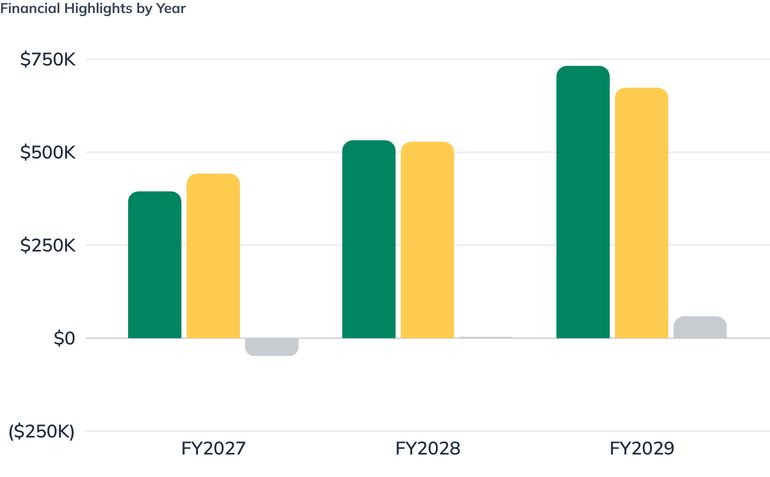
We sign our lease and begin build-out around August 2026, hire and train our stylist team through October, and hold our grand opening in December 2026 — meaning our first partial year carries real pre-launch and setup costs against only a few weeks of actual revenue. We expect a loss in that opening partial year, a roughly breakeven second year as our team and volume mature, followed by solid profitability by our third year as walk-in awareness builds through local search, signage, and referrals.
Need real financials? Explore a spreadsheet-free path to generating financial data for your business.Create your own business plan

Financial Highlights
As a high-volume, low-ticket quick-cut model, we don't carry the per-visit margins of an upscale full-service salon, but our lean cost structure — no color or chemical services, hourly-plus-commission staffing that scales with volume, and a compact footprint — lets us convert a healthy share of revenue to profit once we're past the opening ramp. Our stylist commission structure is a real, meaningful cost (including the payroll taxes and benefits that come with treating our stylists as W-2 employees rather than contractors), balanced against a modest, separate cost of goods for the styling products — gel, mousse, and similar consumables — used during a cut. We expect net margin to approach the industry average for hair salons by our third full year.
Financing Needed
We plan to raise $105,000 in startup financing: a $45,000 business loan and $60,000 in owner investment from Susan Sever, covering build-out of our five cutting stations and reception area, opening equipment and signage, initial working capital, and a cash cushion through our ramp-up period.
Opportunity
Problem Worth Solving
Getting a haircut shouldn't require a scheduling negotiation or a $150 receipt. But in Shaker Heights and the surrounding Cleveland suburbs, families are stuck choosing between upscale salons that demand an appointment days out and real money, or bare-bones barbershops with unpredictable waits and exactly one style on offer. Working parents on tight schedules, budget-conscious families with multiple kids who all need haircuts, and men who just want a clean, fast cut on the way home from work are underserved by both ends of that spectrum — there's real, unmet demand for a walk-in salon that's fast, affordable, and still treats every customer like they matter.
Our Solution
Cranium Filament Reductions is a walk-in, no-appointment-necessary hair salon for the whole family — men, women, and kids — built around speed, fair pricing, and a cuts-only menu that keeps our overhead low and our prices in line with national quick-cut chains like Great Clips and Cost Cutters.
What sets us apart isn't a lower price than the competition — it's that we don't treat "budget" as an excuse for indifferent service. Most quick-cut salons compete purely on speed and price, cycling through stylists and customers as fast as possible with little regard for the individual experience. Susan Sever built Cranium around a different bet: that a genuinely well-trained, attentive stylist staff — paid an hourly base plus commission that rewards customer care, not just chair turnover — creates the kind of loyal, repeat customer base that pure discount competitors never build.
Market Overview
We serve three distinct customer groups under one roof, each with a different reason to walk through our door:
Men. Men get haircuts more frequently than women on average and are typically far more price- and convenience-sensitive than style-driven. Most barbershops and quick-cut chains keep daytime hours that don't work for someone with a normal 9-to-5 job — we stay open into the evening and don't require an appointment, so a cut fits into someone's schedule instead of the other way around.
Women. Many women want a genuinely good haircut but don't want to pay upscale-salon prices or navigate upscale-salon scheduling for a routine trim or shape-up. We offer the same attentive, skilled service without the markup — women who want color, treatments, or a full styling experience will still go to a full-service salon, but for a routine cut, we're a real alternative.
Parents with kids. Kids' hair grows fast and takes less time to cut, so we price it accordingly — a meaningfully lower rate than an adult cut — and our space is set up for it: toys and a low-key waiting area so a parent isn't managing a bored toddler in a sterile, adults-only environment. Stylists are specifically trained on working with kids who don't sit still.
Nationally, the quick-service hair care segment has remained resilient — a haircut is a recurring, low-discretionary purchase that holds up even when households pull back on other spending, which is part of what makes this category a durable small-business bet rather than a trend-dependent one. Locally, Shaker Heights and the surrounding inner-ring Cleveland suburbs are a dense, walkable, middle-to-upper-middle income market with the kind of daily foot and drive-by traffic a walk-in model depends on.
Competitors
Current Alternatives
- National quick-cut chains — Great Clips, Sport Clips, and Cost Cutters are our closest direct competitors: similar price point, similar no-appointment model. Their advantage is brand recognition and multi-location convenience; their weakness is exactly what we're built to exploit — high stylist turnover and a purely transactional customer experience, since franchisees are incentivized to maximize chair throughput above all else.
- Traditional barbershops — inexpensive, walk-in, usually a long-standing local fixture with a loyal following. Strong for a classic men's cut, but limited in style range and often not set up to serve women or young kids well.
- Upscale/full-service salons — deliver a superior styling experience with color, treatments, and a relationship-driven booking model, but at 2-3x our price point and with real scheduling friction for a customer who just wants a routine cut.
Our Advantages
Men and women buy haircuts differently, and we're built around that split. Men are typically price- and convenience-driven and care less about the ceremony of the visit — for them, we compete purely on being fast, evening-friendly, and reliably good. Women tend to bond with a stylist they trust and return to that person specifically — for them, our advantage is that our stylists are trained and incentivized to build exactly that kind of relationship, something most quick-cut chains never bother to cultivate because of constant stylist turnover.
Our core competitive edge is simple: we pay and train our stylists to actually care about the customer in the chair, inside a cost structure that keeps our prices at chain-competitor levels. That combination — chain pricing, real service — is the gap in this market we're built to fill.
Market Trends
The quick-cut hair care segment has proven durable across economic cycles — a haircut is a recurring, low-discretionary purchase, and this segment specifically benefits when households trade down from full-service salons during tighter budgets, rather than losing customers to self-cutting the way higher-price categories might.
A few shifts are relevant to how we've built Cranium:
- Walk-in has gone digital. Customers now expect to check wait times and join a queue remotely before ever walking in the door — our investment in Waitwhile isn't a nice-to-have, it's table stakes for a walk-in model in 2026, and a real differentiator against smaller independent competitors still running a paper sign-in sheet.
- Local search has replaced the phone book entirely. For a walk-in business, ranking well on Google Maps and Google Business Profile searches for "haircut near me" matters more than almost any other marketing investment we could make.
- Franchise chains are consolidating real estate in high-visibility plazas, which raises the bar for what "convenient" means to customers — we compete on that same visibility standard rather than accepting a cheaper, lower-traffic location.
- Stylist compensation models are shifting toward hybrid hourly-plus-commission structures across the industry, replacing pure-commission models that left new stylists unable to earn a living wage while building a client base — the approach we've built Cranium's staffing around from day one.
- Family-bundle and loyalty pricing is becoming more common in the quick-cut segment as chains compete for repeat visits rather than just one-off walk-ins, a trend we're already leaning into with our referral and family-friendly pricing approach.
Execution
Market Plan Overview
Our marketing centers on local visibility and word of mouth, not brand-building content — customers choosing a quick-cut salon are looking for "closest, fastest, cheapest good option," which means winning local search and driving repeat visits matters far more than a polished content strategy.
We keep our Google Business Profile current with fresh photos and actively encourage reviews after every visit — for a walk-in business, ranking well for "haircut near me" and "quick cut Shaker Heights" searches is our single highest-leverage channel. We run a modest, geo-targeted paid social presence (Facebook and Instagram) focused on straightforward, no-nonsense offers — a new-customer discount, a family bundle rate — rather than trying to build a lifestyle brand.
Our strongest driver, though, is our referral program: every customer who refers a new customer gets a discount on their next visit, and the new customer gets an introductory rate on their first cut. Because switching costs in this category are so low, referral-driven trial is how we convert someone from "tried it once" to "this is my regular spot." We also cross-promote with nearby businesses in our shopping plaza and post signage visible from the street and parking lot, since a meaningful share of our customers will be true walk-ins who saw us on their way to somewhere else.

The Time-Crunched Strategist
Sarah Jenkins
A high-achieving professional working in Cleveland's healthcare sector who manages a complex family schedule. She views haircuts as a logistical hurdle and is frustrated by the choice between overpriced salons requiring weeks of notice and low-quality chains with unpredictable wait times.
Age
42
Location
Shaker Heights, OH (near Van Aken District)
Family Status
Married, 2 children (ages 7 & 10)
Education
Master of Health Administration
Profession
Senior Administrator at Cleveland Clinic
Opportunities
- Offer a streamlined 'family flight' where multiple stylists handle her and her children simultaneously to minimize total time in-shop.
- Provide high-speed Wi-Fi and a 'quiet zone' seating area so she can answer emails while her children are in the chair.
Pain Points
- Traditional salons require booking weeks in advance, which doesn't fit her fluid schedule
- Budget chains often have 2-hour wait lists that appear unexpectedly
- Paying $150+ for a simple trim feels like a poor use of family resources
Needs
- Reliable 'walk-in' availability that actually honors short wait times
- A stylist who understands modern styles without needing a 90-minute consultation
- A kid-friendly environment that doesn't feel like a 'cheap' playplace
“I don't need a head massage and cucumber water; I need a sharp bob for my 9 AM meeting and two decent trims for my kids before soccer practice starts.”

The Value-Driven Matriarch
Elena Rodriguez
A long-time resident of the inner-ring suburbs who manages the household budget with precision. She is looking for a salon that respects her wallet without making her feel like she's sacrificing the 'pampering' experience of a professional cut.
Age
58
Location
University Heights, OH
Family Status
Married, adult children and 3 grandchildren
Education
Associate's Degree in Accounting
Profession
Bookkeeper for a local non-profit
Opportunities
- Create 'Grandmother & Me' discount days to capitalize on her role as the primary caregiver for local grandkids.
- Offer high-quality hair care products at a lower margin than boutiques to capture her recurring personal care spend.
Pain Points
- Feeling invisible or rushed in high-volume, 'fast-food' style hair salons
- Rising prices at her long-time stylist that now exceed her fixed monthly 'self-care' budget
- Difficulty finding stylists who are patient with younger grandchildren
Needs
- A warm, welcoming atmosphere where the staff remembers her name
- Clear, transparent pricing with no hidden 'long hair' or 'styling' upcharges
- High-quality results that last longer between cuts to save money
“Just because I’m watching my budget doesn’t mean I want a haircut that looks cheap. I want a place that treats me with a little respect.”
The Quality-Conscious Commuter
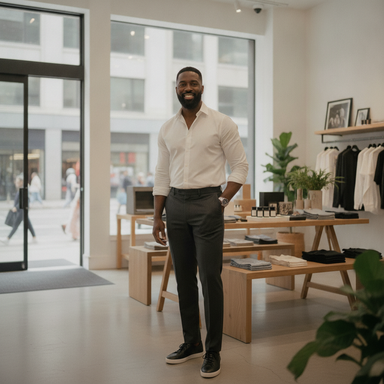
Marcus Vance
A stylish professional who works in the burgeoning office spaces of Shaker Heights. He values his appearance but hates the 'assembly line' feel of national haircut chains and finds traditional barbershop hours too restrictive for his work life.
Age
34
Location
Larchmere/Shaker Heights Border
Family Status
Single, living in a modern apartment
Education
Bachelor of Arts in Marketing
Profession
Marketing Manager at a Van Aken District firm
Opportunities
- Market a 20-minute 'clean-up' service specifically for men heading to happy hour or dinner directly from the office.
- Implement a digital 'style profile' so any stylist on duty knows exactly how he likes his fade without him repeating it.
Pain Points
- Barbershops that are cash-only or have 'first-come' lines that take all afternoon
- Budget stylists who only know one basic buzz cut and ignore his specific requests
- The lack of professional grooming options open after 6:00 PM
Needs
- A stylist with actual training in modern men's grooming and textures
- A 'no-drama' environment where he can get in and out in under 30 minutes
- Consistency in results regardless of which chair he sits in
“I want a haircut that looks like I spent $60 at a boutique, but I want to get it done on my way home from the office in twenty minutes.”
Sales Plan
Our sales strategy is built on volume and repeat visits, not high-ticket upsells — but every interaction is still a chance to build the kind of relationship that turns a one-time walk-in into a regular. Most quick-cut salons treat customer interaction as a bottleneck to get through; we treat it as the whole differentiation strategy, and we train every stylist accordingly.
We also generate meaningful incremental revenue from retail hair care products — shampoo, conditioner, and styling product displayed at the reception desk and mentioned naturally by stylists during a cut. Stylists get a modest commission on retail sales and a employee discount on the same products, so they can speak to them from real personal experience rather than reciting a script. This isn't a hard-sell environment — it's a low-key mention backed by genuine product knowledge, which converts better than a pushy pitch ever would in a five-to-fifteen-minute service window.
Locations and Facilities
Cranium occupies 1,500 square feet in a neighborhood shopping plaza along Chagrin Boulevard in Shaker Heights, Ohio, a short drive from the Van Aken District. The lease rate here runs above some of the cheaper commercial space in the area, but the plaza's daily foot and drive-by traffic — and the fact that the shopping center association funds common-area marketing that drives additional visibility — is exactly what a walk-in-dependent business needs, and worth the premium.
The space is laid out for speed and simplicity, not luxury: five cutting stations along the front of the store for visibility from the street, three shampoo/wash stations toward the back, a reception desk near the entrance for fast check-in, and a compact waiting area with a small kids' play corner so parents aren't managing a restless child in a sterile space. A small retail display near checkout carries our hair care product line.
We deliberately kept the footprint lean — this isn't a spa-like environment, it's a clean, efficient, welcoming space built to move customers through quickly without ever feeling rushed or impersonal.
Technology
We run on Square for point-of-sale — fast checkout, integrated card processing, retail product sales tracking, and daily sales reporting — chosen specifically because it's built for quick, walk-in transaction volume rather than appointment-heavy salon software we don't need.
Since we don't take appointments, we use Waitwhile for our virtual waitlist: a customer can join the line from the parking lot or their phone before walking in, see their estimated wait, and get a text when their stylist is ready — which cuts down on people crowding the reception area and gives customers the flexibility to run one more errand instead of sitting and waiting. Our Google Business Profile is actively managed for reviews and local search visibility, which matters more for a walk-in business than almost any other marketing channel we have.
A back-office computer handles payroll, inventory tracking for retail product, and day-to-day administration, with QuickBooks Online for bookkeeping synced directly to Square to avoid manual reconciliation.
Equipment and Tools
Start-up equipment and fixtures include:
- Square POS terminal and card reader at the reception desk
- Back-office computer and printer for payroll, inventory, and administration
- Five cutting stations, each with a barber chair, cabinet, large mirror, blow dryer, clippers, electric razor, several pairs of shears, spray bottle, and assorted combs and brushes
- Three shampoo/wash stations
- Reception desk and waiting-area seating
- A small kids' play corner (toys, low seating) near the waiting area
- Retail display shelving for hair care product sales
- Signage visible from the street and parking lot — critical for a walk-in-dependent business
Items used for more than one year are treated as long-term assets and depreciated using the straight-line method accepted by GAAP.
Milestones
Secure Financing Secure $45K business loan and $60K owner investment from Susan Sever. | Susan Sever Aug 7, 2026 |
Set Up Store Front Complete build-out of the 1,500 sq ft storefront along Chagrin Boulevard including cutting stations, reception area, kids' corner, and retail display. | Management Sept 11, 2026 |
Hire Receptionist and Stylist Team Hire and train receptionist and opening part-time stylist crew for all five cutting stations. | Susan Sever Oct 16, 2026 |
Progress Review and Tracking Review progress on build-out, hiring, and marketing preparations ahead of grand opening. | Management Nov 6, 2026 |
Grand Opening Grand opening of Cranium Filament Reductions to the public with in-store promotions and referral discounts. | Management Dec 12, 2026 |
Key Metrics for Success
The metrics we track weekly and monthly to know whether the business is on track:
- Customers per day and per month — the core volume metric for a walk-in business; we track this by day of week and time of day to staff chairs accordingly.
- Chair/stylist utilization — how much of each stylist's scheduled shift is spent actively cutting hair versus idle, since idle chair time is the single biggest efficiency drain in a walk-in model.
- Walk-ins vs. waitlist joins — tracked through Waitwhile, this tells us how much of our traffic is true walk-in versus planned-ahead, which shapes staffing and marketing decisions.
- Retail attachment rate — the percentage of visits that include a retail product purchase, since retail carries higher margin than the cut itself.
- Revenue per stylist — tracked individually, both to identify who needs more training support and to make sure our commission structure is actually rewarding the behavior we want (customer care, not just speed).
- Repeat-visit rate — the percentage of customers who return within a normal haircut cycle (roughly 4-6 weeks for men, 6-10 weeks for women), our clearest signal that the "loyal regular" strategy is actually working.
We review these metrics monthly against forecast (see Milestones) so we can adjust staffing levels or marketing spend before a slow stretch becomes a real problem.
Pricing
Our menu is short and priced to compete directly with national quick-cut chains — no color, no chemical treatments, no nail or skin services. Every price is posted where customers can see it before they sit down; there's no upsell pressure and no surprise total at checkout.
Cuts
- Men's Cut — $17
- Women's Cut — $24
- Kids' Cut (12 and under) — $13
- Buzz Cut / Clipper Cut (any age) — $14
- Beard Trim (add-on) — $6
- Shampoo (add-on to any cut) — $5
Retail
- Travel-size shampoo or conditioner — $6–$9
- Full-size styling product (pomade, gel, hairspray) — $12–$18
New-customer and referral discounts (see Market Plan Overview) apply against these base prices rather than replacing them — we don't want a customer's second visit to feel like a bait-and-switch from their first.
Regulatory Requirements
As an Ohio salon, we operate under the Ohio State Board of Cosmetology, which licenses both the business and the people cutting hair:
- Individual licensing. Every stylist must hold a current, valid Ohio cosmetologist or barber license before working with a client. We verify license status before extending any job offer and track renewal dates so no one is ever working on a lapsed license.
- Salon establishment license. The salon itself must hold a valid Ohio cosmetology salon license, separate from individual stylist licenses, obtained before we open. We're securing this alongside our standard City of Shaker Heights business license and certificate of occupancy as part of our pre-launch buildout.
- Health and sanitation compliance. State rules require proper sanitation and disinfection of all tools and implements between every single client — a strict requirement in a high-volume, walk-in model where chair turnover is constant — along with clean, organized stations and posted licenses visible to both clients and inspectors.
- Workplace safety. We maintain basic chemical safety practices for the clipper oils, sanitizing solutions, and styling products we do use, and keep safety data sheets on file, consistent with OSHA workplace safety expectations even though we don't perform chemical color services.
- Employment classification and wage compliance. Our stylists are W-2 hourly-plus-commission employees, not independent contractors or booth renters — a deliberate choice that keeps quality and training consistent across a team with normal industry turnover, and that means we're responsible for standard payroll tax withholding, minimum-wage compliance on the hourly base, and workers' compensation coverage.
- General liability and business insurance. We carry a business owner's policy covering general liability, required by our landlord as a condition of our lease and a sensible baseline protection regardless of that requirement.
Susan tracks license renewal dates and insurance terms on a standing calendar — in a business with steady stylist turnover, staying on top of licensing for new hires is a recurring operational task, not a one-time setup step.
Risks & Mitigation
Stylist turnover. High turnover is structurally normal in the quick-cut segment — hourly-plus-commission part-time roles don't retain staff the way a full-commission, relationship-driven salon does. Mitigation: we've built a training program designed to get a new hire fully productive within their first couple of weeks rather than depending on long tenure, and we treat hiring as a continuous, not occasional, activity.
Thin per-visit margins. Our low price points mean any single visit generates a modest margin — profitability depends on volume and repeat visits, not high-ticket transactions. Mitigation: our whole staffing, technology (Waitwhile queue), and layout decisions are built around minimizing idle chair time and maximizing throughput without sacrificing the customer experience that drives repeat visits.
Chain competition on price. Great Clips, Sport Clips, and Cost Cutters have far more capital and can absorb aggressive promotional pricing longer than we can. Mitigation: we don't compete purely on price — our differentiation (genuine stylist attention, kid-friendly setup, evening hours) gives customers a reason to choose us beyond the lowest number on the sign.
Location and foot-traffic dependency. As a walk-in-dependent business, our revenue is unusually sensitive to our plaza's foot traffic and visibility. Mitigation: we chose our location specifically for its street visibility and anchor-driven traffic, and we maintain a direct relationship with the shopping center's property management rather than a purely transactional one.
Slower-than-planned ramp-up. If walk-in awareness builds more slowly than forecast, we could face a cash crunch before reaching steady-state volume. Mitigation: our financing is sized with a real cash cushion for the ramp-up period, and we review actuals against forecast monthly (see Milestones) so we can adjust marketing spend or staffing hours early rather than discovering a shortfall late.
Liability from injury during a service. Clippers, razors, and scissors carry inherent injury risk if used incorrectly. Mitigation: mandatory sanitation and safety training for every stylist, strict adherence to tool safety protocols, and general liability insurance that covers service-related claims.
SWOT Analysis
Strengths
- Genuinely trained, incentivized stylist team in a segment where most competitors treat staff as interchangeable
- Prices competitive with national quick-cut chains, without their brand overhead
- Family-focused setup (kid-friendly space, evening hours for working men) that most single-audience competitors don't offer
- Low fixed overhead relative to a full-service salon, supporting resilience through slower stretches
Weaknesses
- No brand recognition compared to national chains with decades of local presence
- Structurally high stylist turnover, common to the segment, requires constant hiring and training investment
- Thin per-visit margins mean the business depends on consistent volume, with little cushion if traffic drops
- Single location means no ability to spread fixed costs across multiple sites
Opportunities
- No direct competitor in our immediate plaza corridor combines chain-level pricing with genuinely trained, attentive staff
- Referral and local-search-driven growth scale with minimal incremental marketing cost
- Retail product attachment offers margin growth without adding chair capacity
- A strong first location could support a second Cranium location in a nearby Cleveland suburb once the model is proven
Threats
- National chains could run aggressive promotional pricing we can't match dollar-for-dollar
- A new quick-cut competitor entering our immediate trade area would directly compete for the same walk-in traffic
- Rising rent or losing our current plaza's foot traffic (e.g., an anchor tenant leaving) would hurt visibility-dependent revenue
- Broader economic softness could push customers toward stretching out haircut frequency or self-cutting
Partners & Resources
Beauty supply distributor. Our product partner supplies both our retail line and the back-bar supplies (clipper oil, sanitizing solution, styling products used during a cut), with volume pricing as our order size grows.
Landlord / shopping plaza management. Our lease relationship matters beyond rent — the plaza association's common-area marketing and maintenance directly affect the foot traffic our walk-in model depends on, so we maintain a direct, cooperative relationship with property management rather than a purely transactional one.
Square (POS) and Waitwhile (virtual queue). Beyond their core functions, both platforms' own local-discovery features (Square's business directory presence, Waitwhile's public queue link shareable via our Google Business Profile) function as secondary channels for customers finding us.
Local business network. Cross-promotional relationships with neighboring businesses in our plaza — sharing foot traffic through joint signage and simple referral arrangements — cost nothing and reinforce the local, neighborhood feel that's part of our positioning.
Accountant and attorney. Engaged on an as-needed basis rather than in-house, handling tax planning, financial review, and lease/employment matters as they come up rather than requiring a full-time hire.
Company
Ownership and Structure
Cranium Filament Reductions is an Ohio limited liability company owned entirely by Susan Sever, located in Shaker Heights, Ohio.
Susan handles all hiring and training, purchasing, and retail product strategy. She employs a receptionist to manage walk-in flow, the Waitwhile queue, and point-of-sale transactions, alongside a lean team of part-time hair stylists who work on an hourly-plus-commission basis.
Stylist compensation is deliberately structured around incentives, not just chair throughput — the more attentive and effective a stylist is with each customer, the more they earn through commission on both services and retail product sales. Susan invests real time and money into training so that "budget" never translates to indifferent service.
Management Team
Susan Sever, Owner & Manager. Susan earned her bachelor's degree from Miami University in Oxford, Ohio, and spent four years working as a server in an upscale restaurant during school. After graduation, she made the case to her employer that she should run the front of house — her deep knowledge of the business, strong communication skills, and evident ambition were persuasive enough that she was promoted to manager on the spot.
Susan spent three years managing that restaurant, learning the real mechanics of running a service business: staffing, scheduling, inventory, customer experience, and the financial discipline that keeps a thin-margin service business healthy. The hours eventually burned her out, but the experience left her with exactly the operational skill set a quick-cut salon needs. She's since completed the licensing requirements to operate a cosmetology establishment in Ohio and combined her business management background with a long-standing interest in the hair care industry to build Cranium Filament Reductions from the ground up.
Receptionist. Manages walk-in flow, the digital waitlist, point-of-sale transactions, and day-to-day scheduling — the first and last person most customers interact with, which makes this role central to the "genuine attention" positioning the whole business is built around.
Part-time stylist team. A lean crew of licensed, hourly-plus-commission stylists, hired and trained specifically for speed without sacrificing the personal attention that differentiates Cranium from a pure discount competitor. We expect normal turnover in this role, common across the quick-cut segment, and have built our training program to get a new hire fully productive quickly rather than depending on long tenure.
Advisors
Cranium Filament Reductions does not have a formal advisory board at launch. Susan Sever relies on her attorney for business formation and lease review, and her accountant for tax planning and financial guidance. As the business proves out its model, Susan plans to add an experienced multi-location salon or franchise operator to an informal advisory circle, since scaling a walk-in salon model is a different challenge than running one location well.
Company History
Susan Sever spent three years managing an upscale restaurant after talking her way into the promotion straight out of Miami University — she'd worked there as a server through school and made a persuasive enough case for her own management ability that the owner promoted her on the spot. The job taught her the real mechanics of running a service business: staffing a team, managing thin margins, and keeping customers coming back. It also burned her out. Long nights and constant scheduling pressure eventually pushed her to look for something she could build and own on her own terms.
Susan had always been drawn to the hair care industry, and the more she researched it, the more she noticed the same gap repeating across the quick-cut segment: chains and independents alike treated stylists as interchangeable and customers as a throughput number, not a relationship. Having spent three years learning exactly how much a genuinely well-trained, motivated staff changes a service business's outcomes, she saw an opportunity to bring that same discipline to a category that rarely bothered with it.
She completed her Ohio cosmetology establishment licensing requirements, spent months researching the Shaker Heights market and scouting plaza locations along Chagrin Boulevard, and built Cranium Filament Reductions around a simple bet: a quick-cut salon that actually invests in its stylists will out-compete chains that don't, even without matching their marketing budgets.
Key Planned Hires
Our founding team (Susan, a receptionist, and our opening part-time stylist crew) is sized to run all five cutting stations at launch. Because stylist turnover is structurally normal in this segment, "planned hires" for Cranium looks less like adding new roles and more like maintaining a healthy, continuous hiring pipeline:
- Ongoing stylist recruiting. Rather than a one-time hiring push, we treat recruiting as a continuous activity — posting through cosmetology school placement programs and industry job boards year-round, so we can backfill turnover quickly without a chair sitting empty and losing walk-in revenue.
- Lead stylist / trainer (as the team stabilizes). Once we have a core of stylists who've been with us long enough to model our training standard, we plan to designate one as a lead stylist with a modest pay bump to help onboard new hires — reducing how much of Susan's own time goes into repetitive basic training as the team grows.
- Second location scouting (longer-term). If our first location proves the model — consistent volume, healthy repeat-visit rate, stable unit economics — we'd look at a second Cranium location in a nearby Cleveland suburb, but we're deliberately not building that into our near-term forecast until the first location has a real track record.
Financial Plan
Revenue
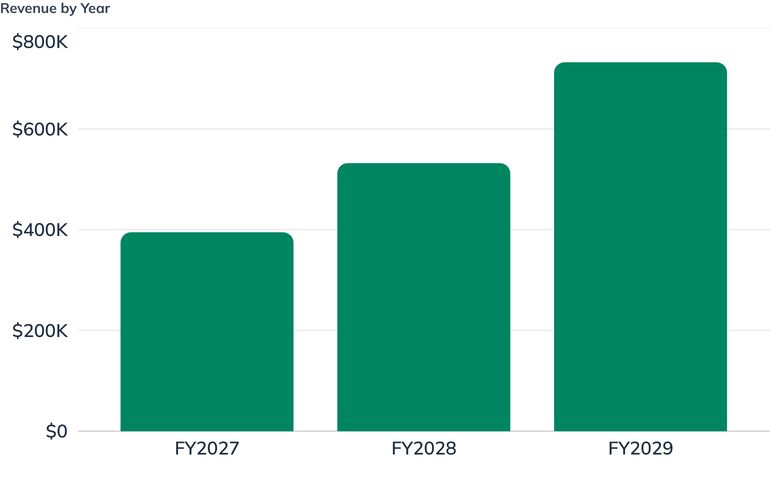
Need real financials? Explore a spreadsheet-free path to generating financial data for your business.Create your own business plan
Expenses & Costs
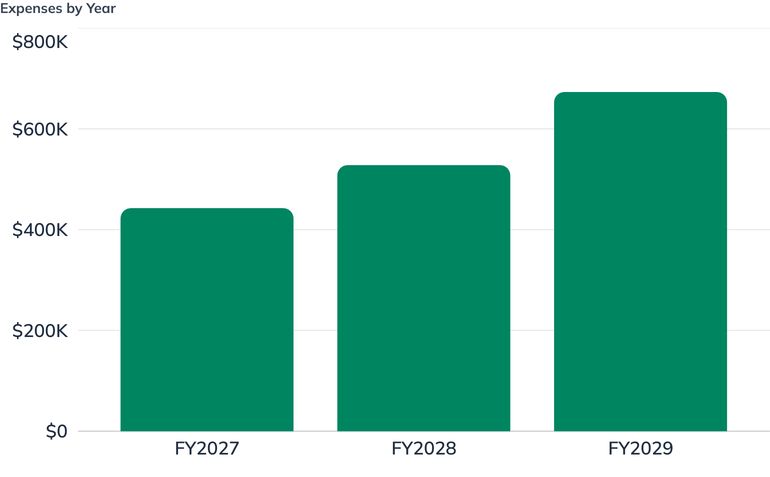
Need real milestones? We recommend using LivePlan as the easiest way to create milestones for your own business plan.Create your own business plan
Profitability
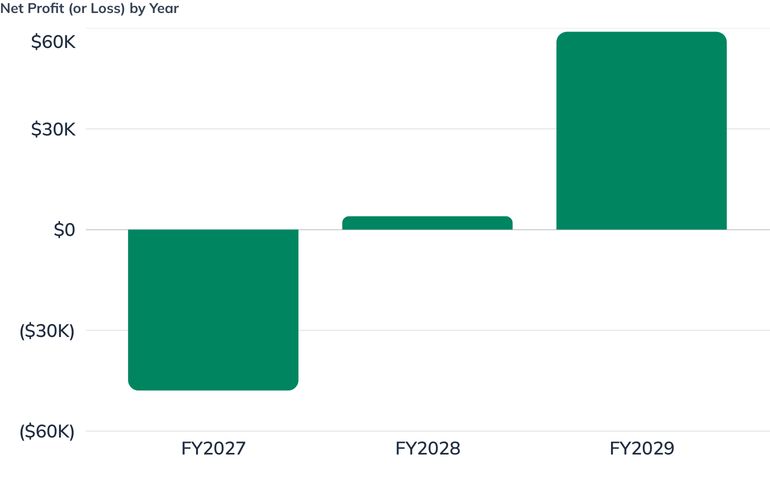
Need real milestones? We recommend using LivePlan as the easiest way to create milestones for your own business plan.Create your own business plan
Use of Funds
Cranium Filament Reductions will incur the following start-up costs:
- Computer with point-of-sale terminal
- Computer with printer for back office
- Five cutting stations, each station requiring a barber chair, cabinet, large mirror, blow dryer, clippers, electric razor, several pairs of scissors, spray bottle, two-sided mirror, and assorted combs and brushes
- Desk for reception area
- Three couches for the reception area
- Display shelf for sale of retail products
- Assorted plants
- Assorted toys for the children
- Legal fees for business formation and generation/review of contracts
Please note that items to be used for more than a year will be considered long-term assets and will be depreciated using the straight-line method accepted by GAAP.
Sources of Funds
Susan Sever will be contributing $60,000 in owner investment. The additional $45,000 will come from a business loan at 7% interest over 84 monthly payments (7 years).
Total startup funding: $105,000.
Projected Statements
Key Assumptions
Our key assumptions:
- Men would like to have great haircuts and do not mind paying for them
- Men and women need hair products
- Our cost for men's haircuts will be industry standard of 43% and our cost for women's haircuts, children's haircuts and products are 27% (blended direct cost rate: 29.7% of revenue, yielding 70.3% gross margin)
- Our friends and family see the merit of our business and would be happy to give us the cash to run the business
- Corporate income tax rate: 15%, paid quarterly
- Business loan: $45,000 at 7% interest over 84 months
- Owner investment: $60,000 from Susan Sever
- Equipment depreciation: $14,650 in salon fixtures depreciated over 10 years (straight-line)
Related Articles


Frequently Asked Questions
A hair salon business plan like Cranium Filament Reductions' should cover the specific market gap you're targeting (here, budget-conscious families priced out of upscale salons but wanting more than a bare-bones barber cut), your location and station setup, staffing and commission structure, a marketing plan built around convenience and word-of-mouth, and a financial plan covering start-up costs, financing sources, and a haircut-plus-retail revenue model. Since quick-service salons compete on convenience more than price alone, the plan should also spell out hours and appointment policy.
Cranium Filament Reductions' plan calls for $105,000 in start-up financing: a $45,000 business loan plus $60,000 in owner investment from founder Susan Sever. That budget covers five cutting stations (chairs, mirrors, dryers, and styling tools), three shampoo/washing stations, a reception desk and point-of-sale setup, and reception-area furnishings for a 1,500-square-foot storefront — a leaner build-out than a full-service or luxury salon since the model is built around speed and convenience rather than added spa amenities.
Yes. Every stylist working in a hair salon must hold a valid state cosmetology or barbering license, and the salon itself typically needs a separate salon/establishment license from the state cosmetology board before serving customers — requirements Cranium, operating in Ohio, would need to satisfy for its owner and for each of the part-time stylists it hires on an hourly/commission basis. Requirements and renewal schedules vary by state, so confirm the specifics with Ohio's State Board of Cosmetology before opening.
Cranium Filament Reductions makes money primarily through walk-in and appointment haircuts across men, women, and children, supplemented by retail sales of hair products from a display near the reception desk. The plan assumes a 43% cost of service for men's cuts and a 27% cost for women's and children's cuts and retail product, with six part-time stylists paid on an hourly/commission basis so each stylist's pay scales with the customers they actually serve.
Cranium's own plan is candid that a budget, quick-service salon isn't a high-margin business by design — it's built to generate steady income for its stylists rather than outsized profit, growing through a targeted 20% increase in clients served per year via strong word-of-mouth and repeat business. That means profitability here depends less on hitting a specific breakeven month and more on steadily building a loyal, repeat client base across all three target segments (men, women, and families).
Cranium Filament Reductions positions itself between cheap, no-frills chains like Cost Cutters and higher-end salons that require appointments and charge premium prices. Its edge is faultless, attentive customer service delivered at chain-level prices with no-appointment walk-in convenience — a combination the plan argues most quick salons don't bother with because they're focused purely on volume and speed rather than the customer relationship.
Cranium Filament Reductions targets three distinct customer groups around its Shaker Heights, Ohio shopping center location: price- and convenience-sensitive men who need frequent, fast cuts on evening or after-work schedules; women who value styling quality and tend to build loyalty with a specific stylist; and families looking for one convenient stop to handle everyone's haircuts without scheduling hassle or upscale-salon prices.
Instead of one generic pitch, Cranium markets to each customer segment differently: evening hours and no-appointment walk-ins to win time-pressed men, a strong emphasis on stylist relationships and consistency to retain style-conscious women, and shopping-center foot traffic (with the center's own marketing driving visibility) to capture families running errands nearby. The plan treats this segmented approach, rather than a single mass-market message, as core to how it competes against both cheaper barbers and pricier upscale salons.

Business Plan Outline
Start your plan