




How to Write a Hair Salon or Barber Shop Business Plan + Free Sample Plans

Jump to

Looking for a free sample business plan to help you write your own? LivePlan has you covered with three free templates for the hair and beauty industry, each one built around a different business model:
- Hair Salon Business Plan — a budget-friendly, quick-cut salon serving men, women, and kids
- Hair and Beauty Salon Business Plan — a full-service beauty salon offering hair, nail, and skin services
- Barber Shop Business Plan — an upscale barbershop and grooming lounge built for professional men
You don't need a sample plan that matches your business exactly. Whether you're opening a traditional barbershop with a few chairs and a straight razor, a neighborhood salon, or a full-service spot with nail and skin treatments, the bones of the plan are the same — you're just filling in different details for products, pricing, and staffing.
Are you writing this business plan because you're seeking a loan? Or because you want a clear roadmap for growth? Either way, take the time to customize it. Your model looks different if you're renting chairs to independent stylists and barbers instead of hiring employees, so build financial forecasts and market research that reflect how your shop will actually run.

What should you include in a hair salon or barber shop business plan?
Your plan doesn't need to run hundreds of pages — keep it as short and concise as you can. Most hair salon and barbershop business plans include these sections:
- Executive summary
- Company summary and funding needs
- Products and services
- Marketing plan
- Management team
- Financial plan
- Appendix
One thing that sets this industry apart from a lot of other service businesses: you're often selling a combination of products and services. A salon might sell shampoo, skin care, or styling products alongside haircuts, color, and manicures. A barbershop might sell beard oil, pomade, or shave kits alongside haircuts, shaves, and beard trims. Either way, include your plan for upselling those products every time you have a customer in the chair.
Barbershops also have a few details worth calling out specifically, since they don't always show up in a general salon plan:
- Licensing. Most states require a separate barber license, distinct from a cosmetology license, and the training hours and renewal rules differ. Check your state's board of barbering or cosmetology before you finalize your services list.
- Walk-in culture. Traditional barbershops often run on a first-come, first-served model rather than appointments, which changes how you forecast daily customer volume and staff your chairs.
- Simpler service menu. Barbershops typically focus on haircuts, shaves, and beard grooming rather than the broader menu (color, nails, skin treatments) you'd find in a full-service salon — which usually means lower average ticket size but faster turnover per chair.
The 7 elements of an effective hair salon or barber shop business plan
1. Executive summary
Executive summary gives a high-level overview of your business. It should lay out your objectives — offering high-quality cuts, expanding your client base, or breaking into a new neighborhood or market.
Your mission statement should describe what sets you apart. Maybe that's a personalized experience for every client, an old-school barbershop atmosphere, or eco-friendly products. Your keys to success might include a prime location, experienced stylists or barbers, excellent customer service, or a service menu no one else in the area offers.
2. Company summary and funding needs
This section covers your legal structure, location, and history, plus your funding needs if you're seeking financing. State clearly how much you need, what it's for, and how it benefits the business — renovating a space, buying chairs and equipment, or funding your first few months of marketing.
3. Products and services
Detail what you'll offer: haircuts, shaves, beard trims, color, treatments, manicures, pedicures, or retail products. If you're running a barbershop, be specific about which grooming services you provide beyond a basic cut — hot towel shaves and beard sculpting are common differentiators. Highlight anything that sets you apart from the salon or barbershop down the street.
4. Marketing plan and analysis
Your marketing plan should cover how you'll attract and keep customers: social media, loyalty programs, local partnerships, or promotions. Pair it with a market analysis — who your target customers are, what they spend, who your competitors are, and how you'll stand out.
Buying patterns differ by customer. Price and convenience tend to matter more to male customers getting a quick cut, while customers who value the styling relationship itself tend to be more loyal to a specific stylist once they've built trust. If you're running a barbershop, your marketing should lean into convenience and consistency; if you're running a full-service salon, lean into the relationship and the experience.
5. Management team
This section covers your key people — owner, managers, stylists, barbers, and other staff — along with their roles and experience. It's also where you explain your staffing model, which is one of the biggest differences between a salon and a barbershop business plan:
- Commission-based staff, where stylists or barbers earn a percentage of what they bring in
- Booth or chair rental, where independent stylists and barbers pay you rent and keep their own revenue
- Straight employees, where you pay wages or salary regardless of individual client volume
Describe which model you're using and why — it directly affects your financial forecast.
6. Financial plan and forecasts
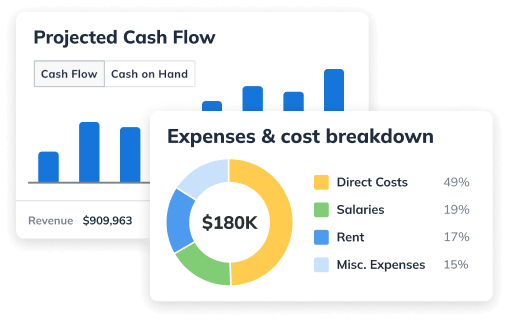
Your financial plan should include a cash flow statement, income statement, and balance sheet that demonstrate the business's profitability and viability. As a benchmark, salons and barbershops typically run around a 65% gross margin, a 15% operating margin, and a 9% net profit margin — use those as a sanity check against your own forecast, not a target to hit on day one.
Wage costs are usually the biggest line item, so be specific about your commission structure. According to a compensation survey of salon and spa owners, managers, and staff across the U.S. and Canada, staff commission rates most commonly fall between 40% and 60% of service revenue — the single largest group of staff (44%) earns 50-59%, and only 23% of owners report paying a maximum rate above 60%. Outline your pricing strategy, how it compares to competitors, and where your commission rate falls within that range and why.
7. Appendix
The appendix holds supporting documents — market research, lease agreements, employee contracts, or licensing and permit paperwork. It's not always necessary, but it adds credibility to your plan.
Related Articles
Crafting a successful plan: key considerations
Pick your model and commit to it
Before you write a word, decide what kind of shop you're running: budget-friendly and fast, full-service and relationship-driven, or upscale and specialized. Trying to be all three at once usually means you're not clearly any of them. This is the single biggest decision your plan needs to reflect, since it drives your pricing, your marketing, and your staffing model.
Pricing strategy
Competitive pricing attracts customers, but it also has to cover your costs and leave room for profit. Research the average cost of services in your area and use it to set prices that fit your positioning — budget, mid-market, or premium.
Atmosphere
Décor, cleanliness, and customer service all shape whether people come back. A quick-cut shop and an upscale barbershop can both succeed, but they need to look and feel the part.
Staff training and expertise
Word of mouth drives a lot of new business in this industry, which makes ongoing training in technique and customer service a real investment, not an expense.
Digital presence
Word of mouth still matters, but most customers now check online before they book. A solid website, local SEO, and active social accounts go a long way toward filling chairs.
Download your free hair salon or barbershop sample business plan
Download the Hair Salon Business Plan if you're planning a budget-friendly, quick-cut shop for the whole family.
Download the Hair and Beauty Salon Business Plan if you're planning a full-service salon with hair, nail, and skin treatments.
Download the Barber Shop Business Plan if you're planning an upscale barbershop or men's grooming lounge.
Each one is free to download as a Google Doc, Word document, or PDF. Or browse LivePlan's full library of more than 550 sample business plans if you're looking for more options.
There are plenty of reasons to write a business plan for your salon or barbershop — you'll need one if you're seeking a loan or investment. And even if you're not seeking funding, working through every part of the plan helps you catch what you might be overlooking as you grow.

Elon Glucklich
Elon is a marketing specialist at Palo Alto Software who works with small business owners, consultants and advisors. He's also a freelance business journalist with over a decade of reporting experience. He has Master of Business Administration from the University of Oregon.

More in Planning

planning
Business Plan Outline: The Complete Structure, Formats, and Examples for 2026

planning
What Entrepreneurs Really Think About Using AI to Write Business Plans

planning
How to Write a Small Restaurant Business Plan + Free Sample Plan PDF

planning