





What Do Lenders Look for on Your Balance Sheet?

Jump to

Lenders open your balance sheet to see how much cash you have, what you own, and what you already owe. Then they run a short set of checks: does it balance, does it match your other statements, can you cover what's due in the next 12 months, are customers paying you, how much debt you carry, how much of your own money is in the business, and what the new loan does to all of it. Run those seven checks yourself before you send your plan, and fix whatever fails.
Why does a balance sheet matter more when loan offers are everywhere?
If your inbox looks like mine, it is full of business loan offers. Loans feel easier to get than ever. Be careful. With interest rates as high as they are, plenty of lenders are making money on borrowers, and some of the offers are predatory.
Getting a loan you don't need is its own kind of waste. You pay interest on money that sits idle. So build a plan, get a real cash flow forecast, and borrow only what the numbers say you need.
A good lender will ask to see that plan, and one of the first places they look is your balance sheet. Numbers tend to get sharper when someone else is about to read them. In my experience, the most detailed forecasting questions come from people preparing for an SBA loan, an investor meeting, or a grant application. Outside eyes make you test assumptions you would otherwise accept. So read your balance sheet the way a reviewer will.
What are the 7 checks a lender runs on your balance sheet?
1. Does it balance?
Assets must equal liabilities plus equity. If they don't, a lender stops trusting the rest of your plan. A tool that builds the statements for you, like LivePlan's automatic financials, removes the most common way to get this wrong.
2. Does it tie to your other statements?
Your ending cash should match your cash flow statement. The change in retained earnings should match your net profit, less any owner draws. Lenders check this because it is the fastest way to spot a forecast built in disconnected spreadsheets, or by an AI tool that never saw your whole picture.
3. Can you cover what's due soon?
Lenders compare your current assets to your current liabilities. If you owe more over the next 12 months than you can turn into cash, expect questions. Be ready to tell the story behind your numbers.
4. Are customers paying you?
If accounts receivable grows faster than sales, customers may be paying slowly. That is cash you earned but can't use. A lender will ask why, and may push you on how you plan to improve it.
5. How much debt are you already carrying?
Lenders look at your existing loans, lines of credit, and loans from owners before they add more. A lot of debt compared to equity makes a new loan look risky, and it is probably risky for you too. If you already have debt, forecast how you get out of it and whether you can reduce the funding you need.
6. How much skin is in the game?
Owner's equity shows how much you have invested and kept in the business. Negative equity, or very little of it, can be a red flag. Make sure you document everything you put in, from supplies you bought to deferred salary.
7. Does the forecast show what the loan does?
A projected balance sheet should show the loan as a liability, the cash or equipment it buys as an asset, and the balance going down as you pay it back. It should also show you are asking for the amount you need, and no more. For a sense of how much you can afford, see how to make smart borrowing decisions.

How do you get your balance sheet ready for review?
Most of these flags share one cause: a balance sheet that isn't connected to the rest of the forecast. That is hard to avoid if you don't know how to build three linked statements in a spreadsheet.
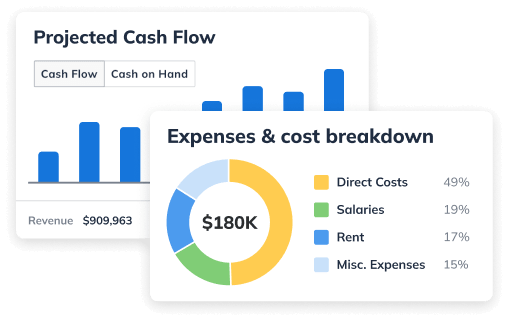
LivePlan builds your profit and loss, cash flow statement, and balance sheet as one linked model. Change a revenue number or add a loan, and the change flows through all three, so you can see how much money you need. Before you submit, Plan Review reads your plan the way a lender would and shows what is missing and what doesn't add up.
If you are new to the statement itself, start with what a balance sheet is and how to read it. For the rest of the package, see what lenders look for in a business plan. Once your balance sheet is clean, check which business loans you can actually qualify for.
Frequently asked questions
Cash, assets, and existing liabilities, then a few checks on top: whether it balances, whether it ties to your cash flow statement, whether you can cover the next 12 months, how fast customers pay, how much debt you carry, and how much equity you have.
Because ending cash on the balance sheet has to equal ending cash on the cash flow statement. A mismatch suggests the forecast was built in disconnected pieces, and lenders treat that as a reason to doubt the other numbers.
It can mean customers are paying more slowly. You have earned the money but can't spend it, and a lender will want to know why and how you will fix it.
It can be a red flag. Equity shows how much you have invested and kept in the business, so very little of it, or a negative balance, makes a new loan look riskier.
Only what your cash flow forecast says you need. Extra money still costs interest.

Sabrina Parsons
Sabrina has served as CEO of Palo Alto Software since 2007. She and her husband, Noah, founded a UK software distribution company in 2001 that was acquired by Palo Alto Software in 2002. Sabrina is a successful Internet expert, having served as Director of Online Marketing at Commtouch, Senior Producer at Epinions, and founder of her own Web consulting company, Lighting Out.
More in Funding

funding
Free eBook: Perfect Your Elevator Pitch
funding
A Pitch Deck Is Not a Summary. It’s Proof Your Business Is Worth Backing
funding
8 Things You Can Do to Ensure Your PPP Application is Approved
funding


