



What Is Net Profit?

Jump to

Net profit is the proverbial bottom line of your business.
It's the number that you get after you subtract all of your expenses from your revenue. If your business is profitable after accounting for all of your expenses, your net profit will be a positive number. If you have more expenses than revenue, your net profit will be a negative number to show that you lost money.
In business planning, you'll find net profit listed in your financial statements, on both the cash flow statement and as the bottom line of your profit and loss statement (P&L).
If you're just getting started, you can download our free Profit and Loss Template rather than setting up Excel spreadsheets and formulas from scratch.
How to calculate net profit
So, how do you know what your startup or small business's net profit is?
The standard calculation for net profit (also called net income and/or earnings) is your operating income minus interest, taxes, depreciation, and amortization.
Let's break that down.
Operating income is your revenue from sales minus your operating expenses and cost of goods sold, or “COGS.”
This means the money coming in from your sales, less all of your bills including the direct costs of sales. Operating income is also sometimes referred to as EBITDA, or earnings before interest, taxes, depreciation, and amortization.
Some financial analysts consider operating income to be as important as the net profit itself, so make sure this is a robust sum.
From this number, you subtract your taxes, interest payments the company has to pay on its loans, and any depreciation and amortization your business may have. The result is your net profit.
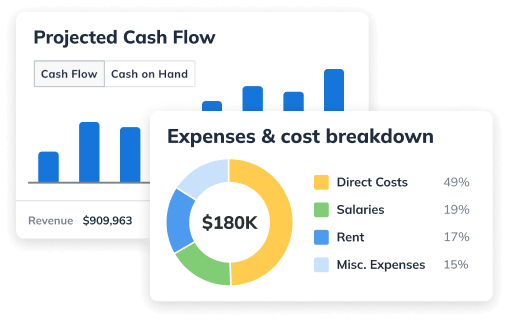
You don't have to run this calculation by hand every month. LivePlan's Easy Financials builds a connected three-statement forecast, so your net profit updates automatically on your P&L as soon as you adjust a revenue or expense assumption.

Net profit can be a negative number. Some profit and loss statements will even say “net profit or loss” to allow for the fact that, when things are going badly, this can be a negative number.
If you're not familiar with P&L statements, check out this guide on our LivePlan blog on how to read and understand your profit and loss.
The higher it is, the better for your business
Net profit is understandably a metric that you'll always want to see positive, and as high as it can be.
If this number is negative, your business may be in trouble. You'll want to review your expenses and also check your cash flow to get an accurate reading on not just your profit from sales, but the actual cash on hand your business has to stay afloat.
It's essential to remember that a profitable business can still go under if it runs out of cash. That's part of why keeping an eye on your cash flow statement is so important.
You may be wondering how a profitable business can run out of money. This can happen when a business makes sales that get booked as revenue on the profit and loss statement, but the actual cash hasn't arrived yet.
For example, if a business sends out an invoice that says “net 30” on the top, it may take up to 30 days (and sometimes longer!) to actually get the money in your bank account. So, if customers don't pay fast enough, a profitable business can actually go out of business because they ran out of cash.
That's why it's worth tracking net profit as a trend, not a one-time number. LivePlan Premium's Performance Dashboard connects to QuickBooks Online or Xero and shows you how your actual net profit compares to what you forecasted, month over month.

How can you increase your net profit?
Net profit is a question of sales versus expenses. To raise your net profit, consider possible ways to increase your revenue — for example, revisiting your pricing strategy — or figure out a way to limit your spending and bring your expenses down. Your tactics for increasing revenue or decreasing spending will vary depending on your type of business.
For more business concepts made simple, check out these articles on direct costs, cash burn rate, accounts payable, accounts receivable, cash flow, profit and loss statement, balance sheet, and expense budgeting.
Frequently asked questions
Yes. Net profit, net income, and net earnings all refer to the same figure — what's left after every expense, including interest, taxes, depreciation, and amortization, is subtracted from revenue. Different accountants and software just use different labels for it.
Gross profit is revenue minus your cost of goods sold only. Net profit goes further — it also subtracts operating expenses, interest, taxes, depreciation, and amortization. A business can have healthy gross profit and still post a net loss if overhead and other costs eat up the difference.
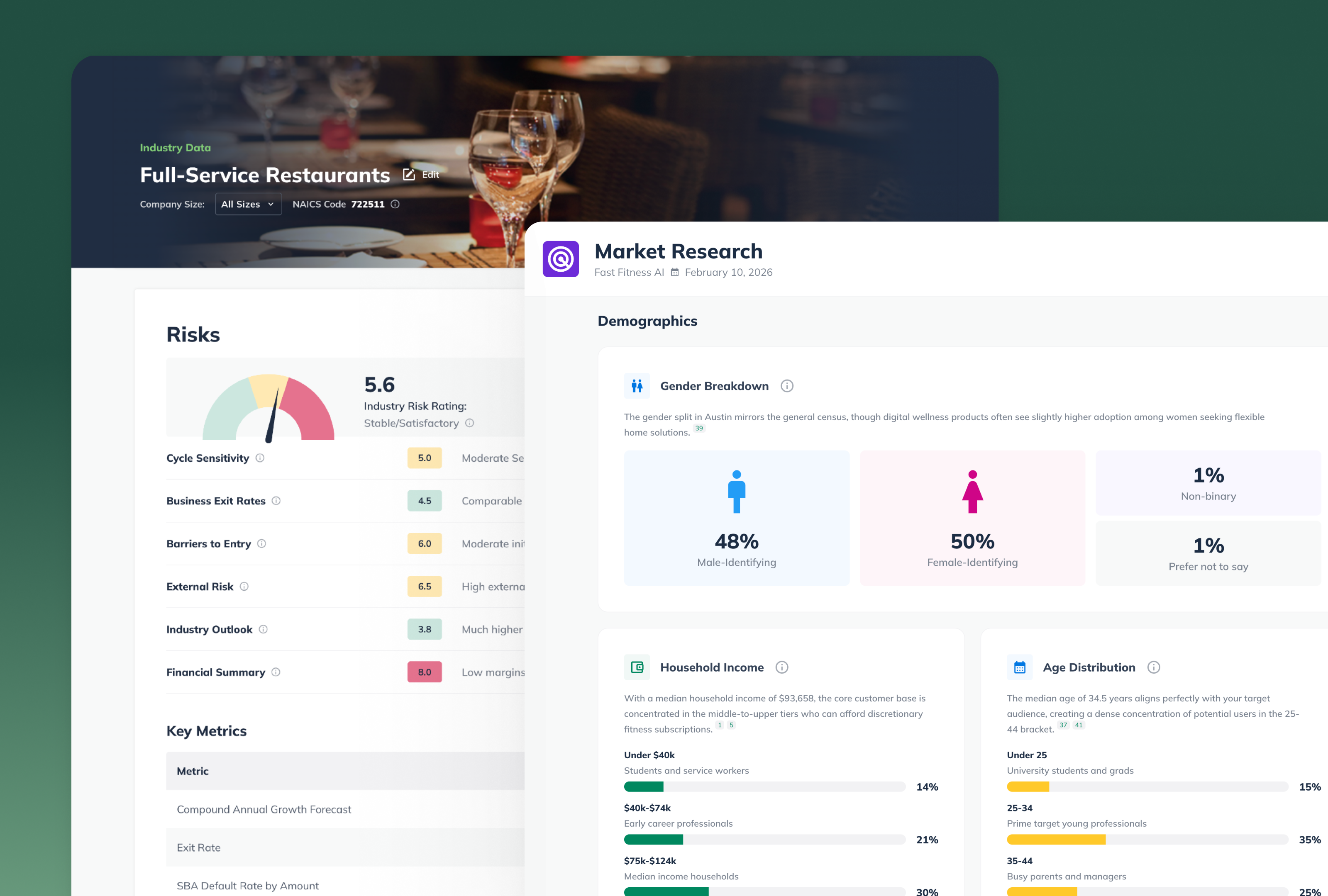
It depends heavily on your industry — a service business and a grocery store have very different cost structures. As a rough benchmark, a 10% net profit margin is considered average, 20% is strong, and 5% or below is thin. LivePlan Premium's Market Research pulls real industry benchmarks so you can compare your margin to peers in your specific category instead of relying on a generic rule of thumb.
Yes, and it happens more often than you'd think. Net profit is based on revenue you've booked, not cash you've actually collected. If customers are slow to pay, a profitable business on paper can still run out of money in the bank. That's why it's worth reviewing your cash flow statement alongside your P&L, not instead of it.
LivePlan's Easy Financials builds a connected income statement, cash flow statement, and balance sheet, so your net profit recalculates automatically as you update assumptions. If you're on LivePlan Premium, the Performance Dashboard syncs with QuickBooks Online or Xero and shows your actual net profit against your forecast every month, so you catch a downward trend early instead of at year-end.

Angelique O'Rourke
Angelique's interests include: artistic + intellectual pursuits. Social justice. Actress. Model. Musician. Eugene // Portland.