



The AI Business Plan Looked Done. It Wasn't.

Jump to

Quick answer: AI can draft a business plan in seconds, but “looks done” and “is done” are different things. A LivePlan business plan specialist reviewed a ChatGPT-written hot dog cart plan and found four recurring problems: numbers that didn’t agree with each other, research that sounded confident but wasn’t backed by data, hedging language (“if desired,” “if required”) standing in for real decisions, and a structure that had the right headings but no logical flow connecting them. Use AI to get a first draft — just check these four things before you send it to a lender or investor.
We gave ChatGPT one prompt:
“Write me a business plan for a hot dog cart”
After a few clarifying questions, it produced a full plan in about 30 seconds: executive summary, financial projections, SWOT analysis, market analysis, growth strategy. All of it. And honestly, it looked done.
That’s exactly what makes this risky. A lot of founders are doing this right now — using AI to write the plan they’re about to send to a lender, show an investor, or use to decide whether to spend real money. The plan doesn’t look bad. It looks polished.
So we sent it to Zoey Charif, one of our business plan specialists at LivePlan, and asked her to tear into it. She found four problems every founder should watch for.
1. The numbers didn’t agree with each other
This is the big one. The plan said the founder had $2,000 to start, then listed everything they’d need to buy: cart, permits, food, propane, POS system, smallwares, marketing. Even at the cheapest version of each item, startup costs were already over $2,400 — before any cushion. The plan was quietly telling the founder to spend money they didn’t have.
Then it did it again. One section put food costs at $2,000 a month, or $24,000 a year. A few pages later, the revenue projections implied food costs of $43,000 a year. Same plan, same hot dogs, two different numbers.
That’s the kind of mistake that makes a lender lose confidence fast. It happens because AI can write a section that sounds reasonable without checking whether it agrees with the rest of the plan. Before you trust an AI-generated plan, pull every major number into one place and ask: do these agree?
2. The research sounded confident, but wasn’t real
The market analysis listed Portland neighborhoods — Downtown, the Pearl, Hawthorne, Alberta. Fine. But why those neighborhoods? How much foot traffic is there? Who buys lunch there? What do they spend? Where did the data come from? The plan never said — it just sounded like research.
The competitive advantage section did the same thing: “premium hot dogs,” “fast service,” “affordable pricing.” Compared to who? The plan never named a single competitor — a real competitive analysis would have. And the target market was basically everyone — office workers, students, tourists, families, anyone looking for a quick meal. A target market of everyone is a target market of no one.
AI knows what a market section is supposed to look like. It knows there should be bullet points. But bullet points aren’t research. After every confident claim, ask: says who? For a hot dog cart, one afternoon counting foot traffic and pricing three real competitors is more useful than a generic AI market analysis.
3. The plan kept hedging
This one is subtle, but lenders notice it. The plan’s growth strategy — add carts, maybe open a permanent location — ended with “if desired.” Is that the plan or not? The equipment list did the same thing: “generator — if required.” Are you buying a generator or not?
AI loves this kind of soft language: maybe, could, if desired, if required. It sounds flexible, but in a business plan it reads as undecided — and undecided isn’t what a lender wants to hear. It’s your plan, your money, your risk. The decision has to be made, and AI can’t make it for you.
4. The structure looked organized, but wasn’t
The plan had all the right headings, but the story didn’t hold together — and it didn’t follow the order a business plan outline actually needs. The financial projections sat in the middle of the plan, not where a reader expects them. The SWOT listed “low overhead” as a strength and “single owner-operator” as a weakness — even though being a one-person operation is part of why overhead was low in the first place. The executive summary skipped the market, the competition, and how the business would reach customers.
That’s the difference between having sections and having a real plan. AI can assemble the rooms. That doesn’t mean it knows how to build the house. The summary should preview the full story, the market section should support the opportunity, the competitive section should explain how the business wins, and the financials should tie it all together — the sections have to build on each other, not just exist next to each other.
So should you use AI for your business plan?
Yes. Use it. AI is a great way to get started — it can help you move faster, organize your thoughts, and get a first draft on the page. But a draft is not a plan. The gap between “looks done” and “is done” is judgment, and that’s the part you can’t hand to the tool.
Before you use an AI-generated business plan for anything serious, check four things:
- Do the numbers agree across the whole plan?
- Can you back up every confident claim?
- Have you made real decisions, or is the plan full of “maybe” language?
- Does the structure tell a clear business story?
Why this is exactly what LivePlan is built for
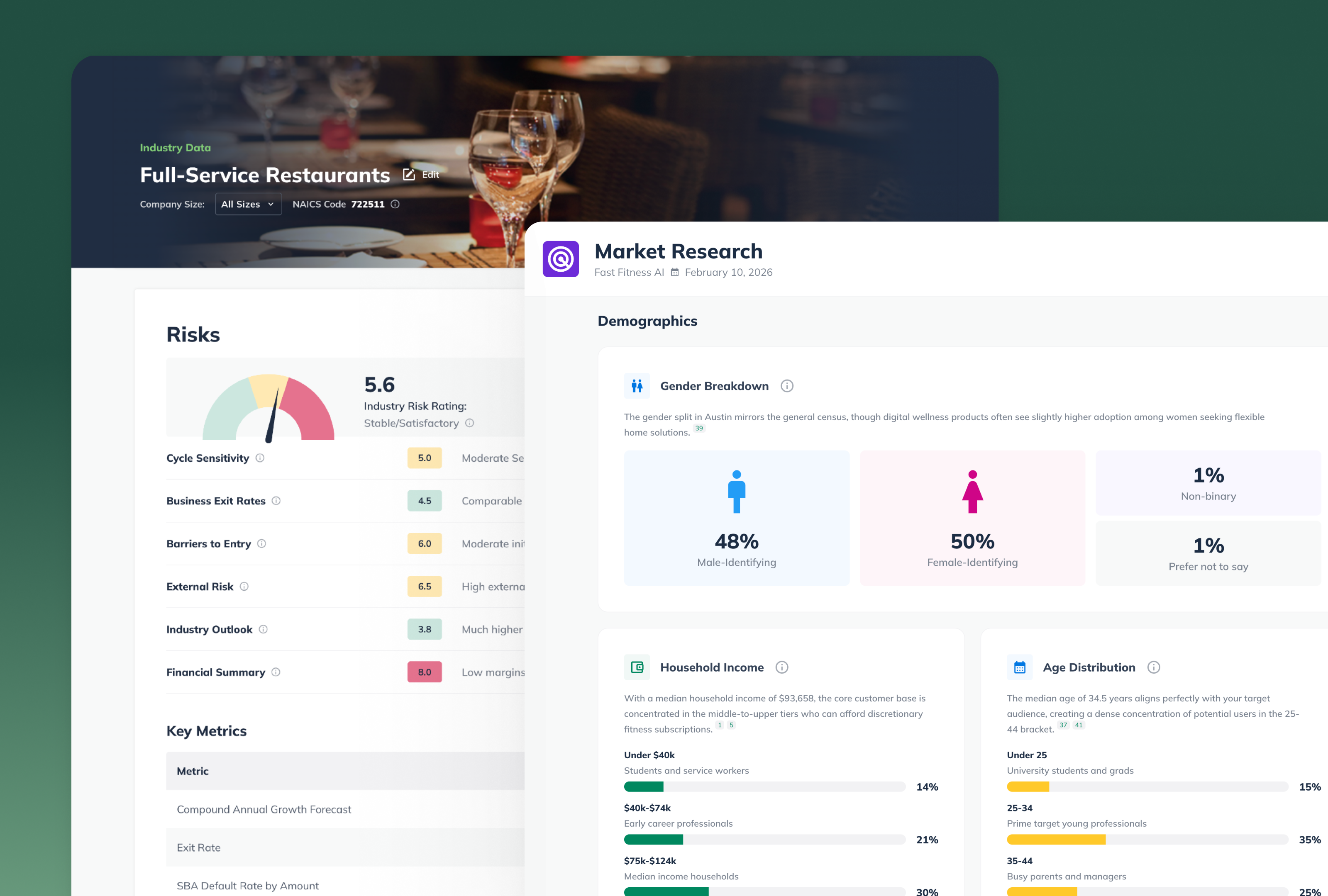
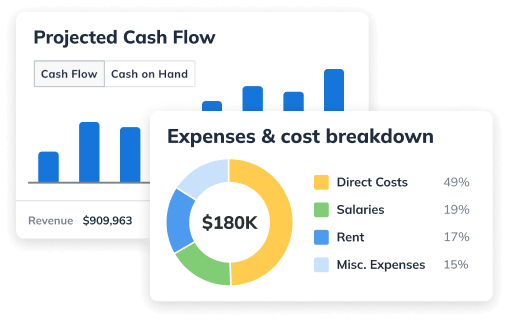
LivePlan’s business plan builder is structured in the right order, built around connected numbers with linked financials, and designed to guide the planning process rather than just generate pages. Change a revenue assumption and it flows automatically through your cash flow and balance sheet — the same numbers can’t quietly disagree with each other the way they did in the hot dog cart plan, because they’re one connected model, not separate AI-generated sections.
The AI is trained specifically for business planning rather than general-purpose writing, and Plan Review gives your finished plan a section-by-section funding-readiness assessment — catching the kind of gaps Zoey found by hand, before the plan goes to a lender or investor. See a fuller breakdown of how LivePlan’s approach compares to using ChatGPT directly.
Use AI. Just don’t let it do your thinking for you. That part still belongs to you.
Frequently asked questions
You can use it to get a fast first draft, but treat it as a starting point, not a finished plan. Check that every number agrees across sections, every claim is backed by real data, every decision is actually made (not hedged), and the sections build a coherent story rather than just filling in headings.
Because AI writes each section somewhat independently and doesn’t automatically cross-check that a cost mentioned in one section matches the same cost used in a financial projection elsewhere. A connected financial model — where changing one number flows through the rest of the plan — prevents this; a generic AI writing tool doesn’t have one.
Ask “says who?” after every claim. A real market analysis names specific competitors, cites where data came from, and defines a specific target customer — not a list of neighborhoods or a target market of “everyone.”
LivePlan’s AI is purpose-built for business planning rather than general-purpose writing, structures your plan in the order lenders expect, and produces one interconnected financial model instead of separate generated sections. Plan Review then checks the finished plan section by section for funding readiness before you send it anywhere.

Sabrina Parsons
Sabrina has served as CEO of Palo Alto Software since 2007. She and her husband, Noah, founded a UK software distribution company in 2001 that was acquired by Palo Alto Software in 2002. Sabrina is a successful Internet expert, having served as Director of Online Marketing at Commtouch, Senior Producer at Epinions, and founder of her own Web consulting company, Lighting Out.